
Tesla Model X: Price, Range, Specs, Features & Review
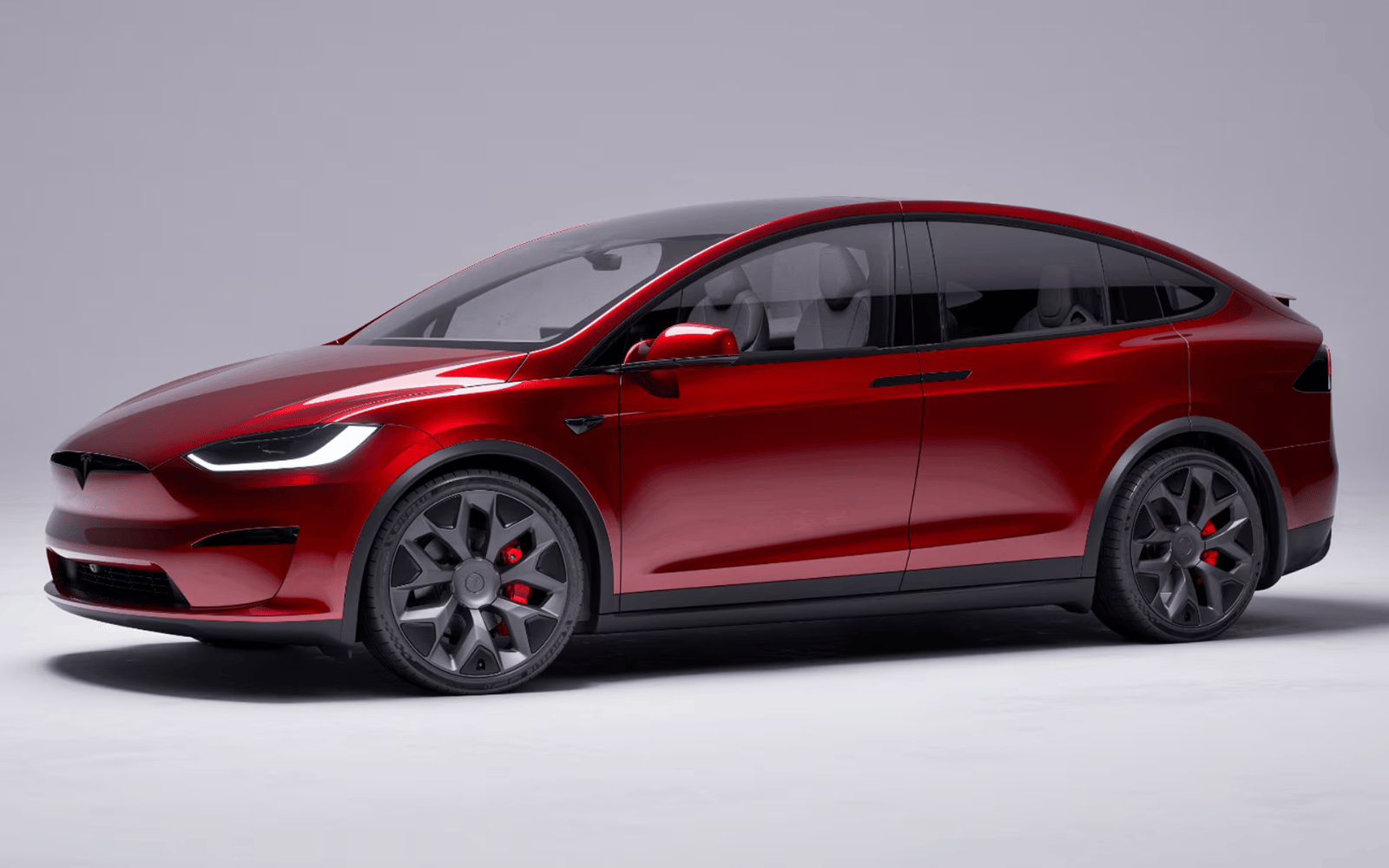
The Tesla Model X is a large electric luxury SUV known for its Falcon Wing rear doors, rapid acceleration, flexible seating, useful cargo capacity, and access to Tesla’s Supercharger network. The regular dual-motor version provides the strongest balance of range and everyday usability, while the three-motor Plaid offers sports-car acceleration in a six-seat SUV.
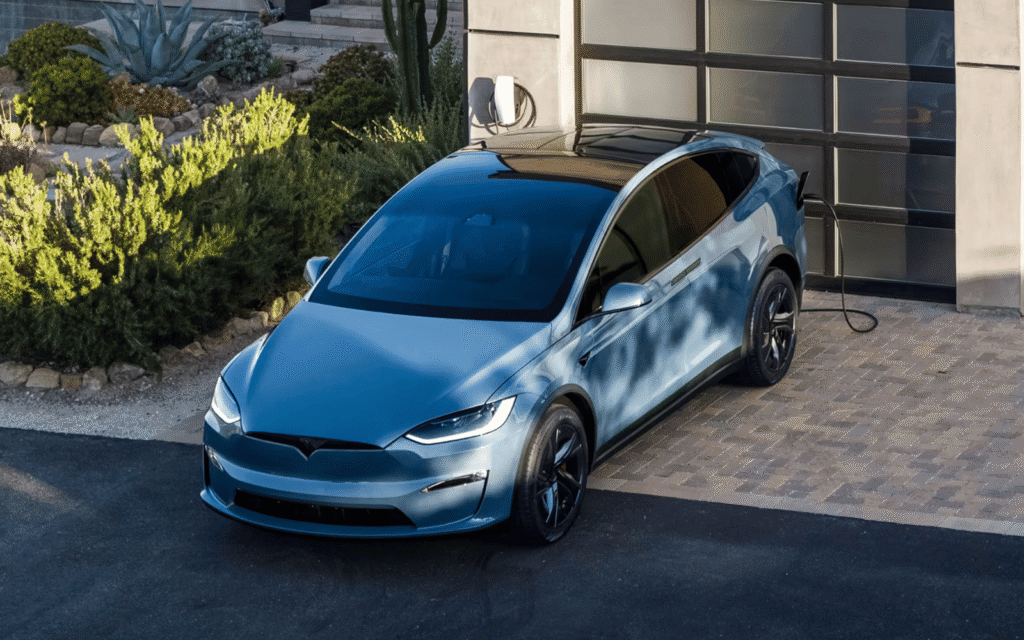
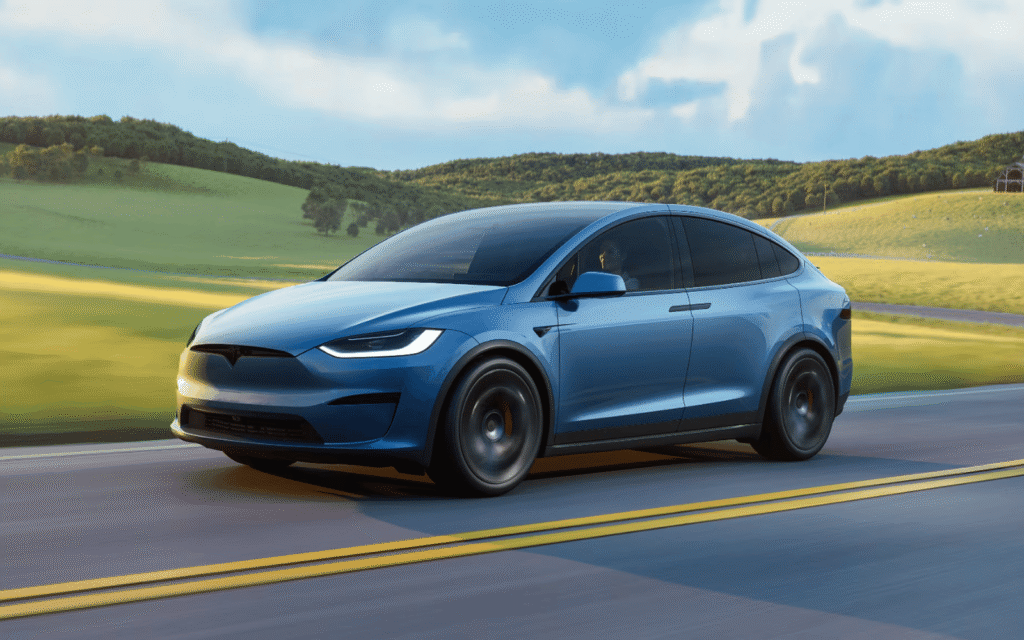
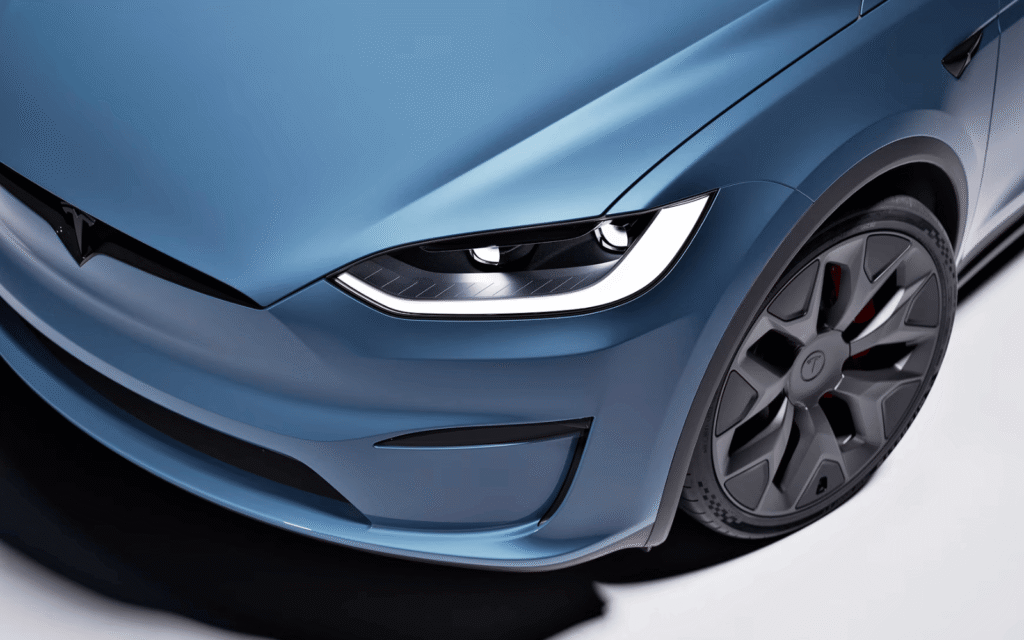
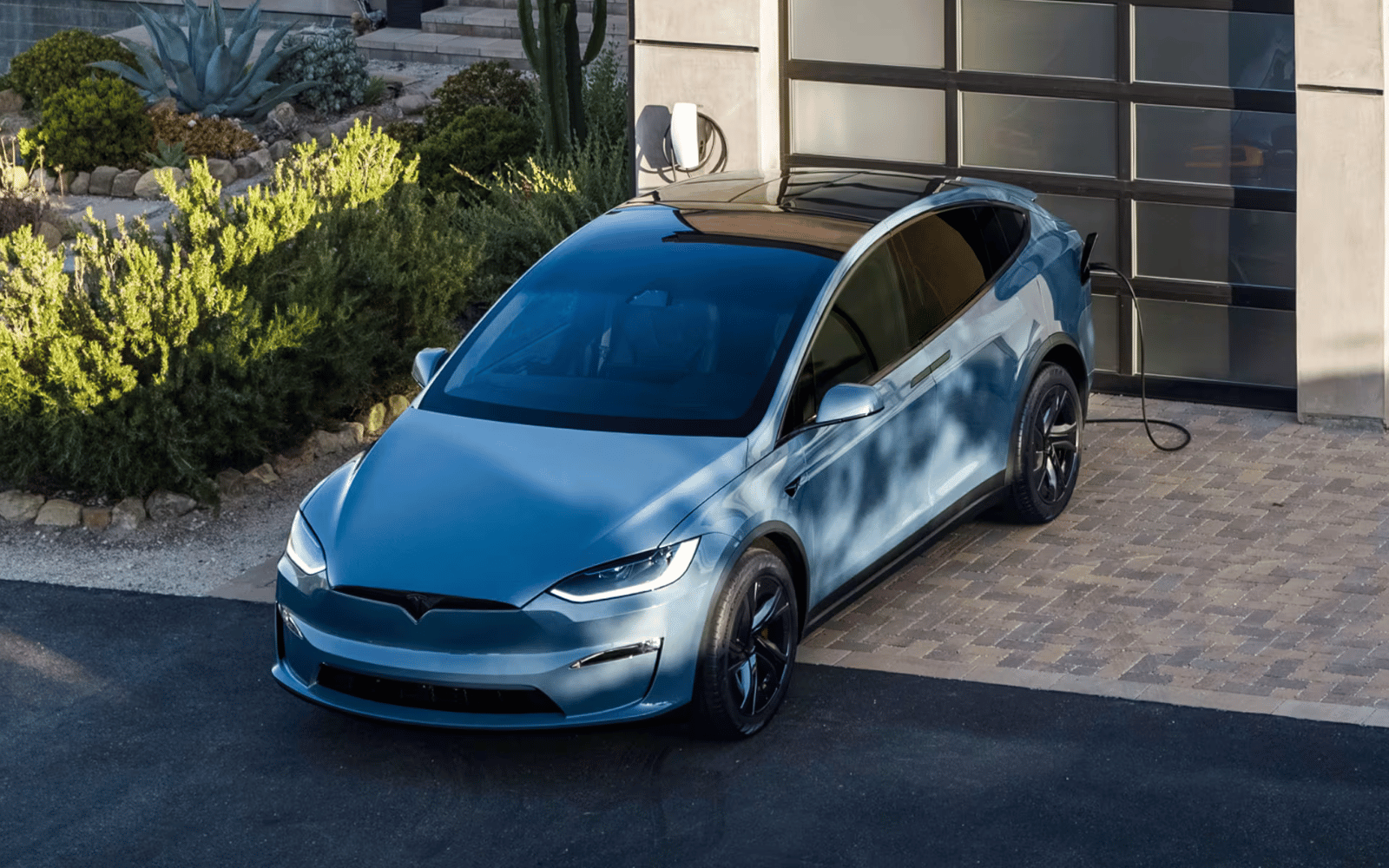
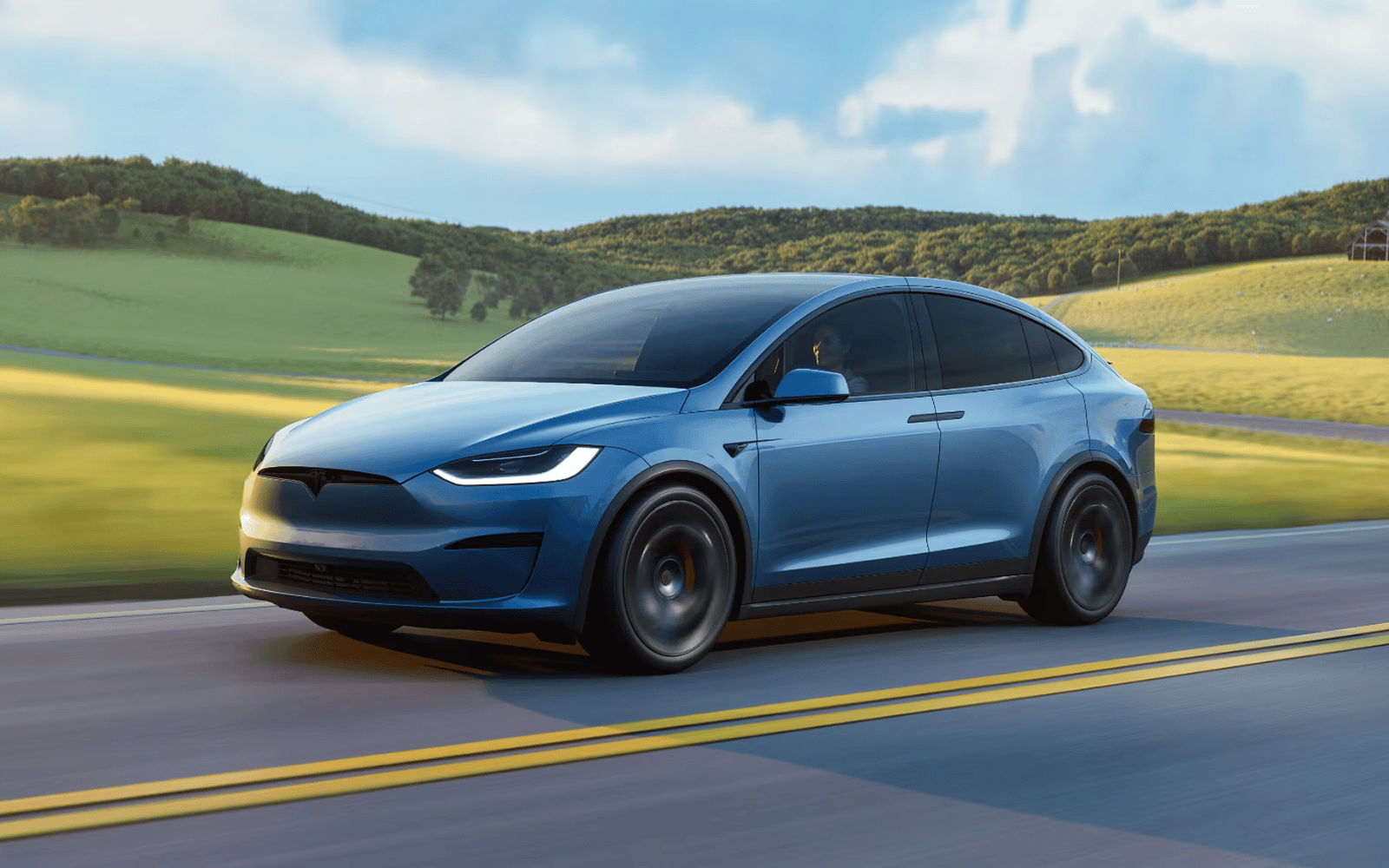
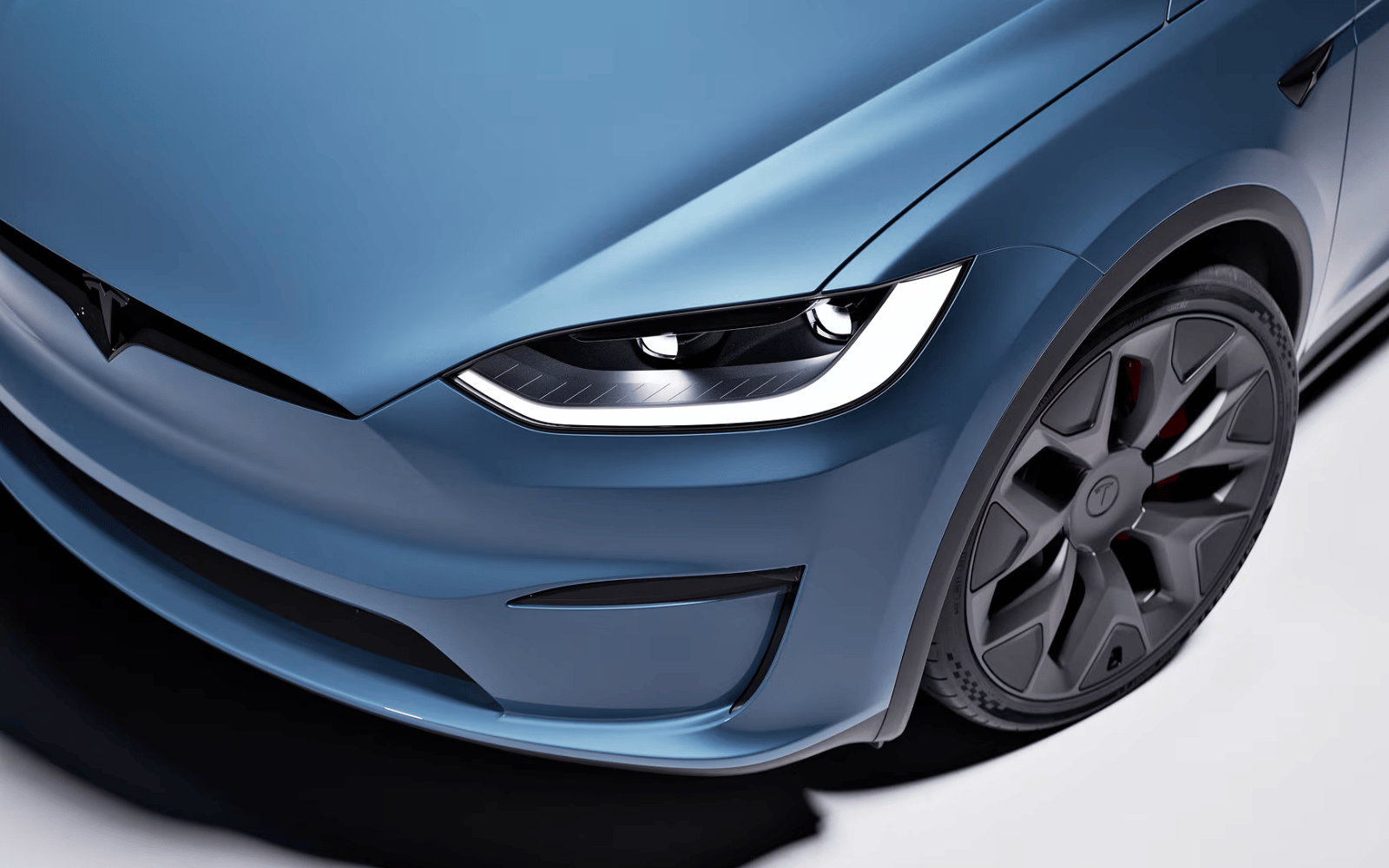
Tesla ended Model X production in 2026. New factory orders are no longer available, although remaining inventory and pre-owned examples may still appear. This page focuses on the final Model X specifications while explaining what used-car buyers need to check across earlier model years.
WheelPedia Rating: 8.4/10
The Tesla Model X earns an 8.4/10 WheelPedia Rating for its performance, cargo flexibility, long driving range, charging access, and distinctive passenger-door design. Its high purchase and repair costs, complicated door systems, mixed cabin quality, limited current crash-test data, and discontinued status reduce its overall score.
| Rating Category | Score | Weight |
| Safety | 8.0/10 | 20% |
| Reliability and ownership | 7.2/10 | 15% |
| Performance and driving | 9.8/10 | 15% |
| Comfort and practicality | 9.0/10 | 15% |
| Efficiency and range | 8.8/10 | 15% |
| Features and technology | 9.1/10 | 10% |
| Price and value | 6.7/10 | 10% |
| Overall WheelPedia Rating | 8.4/10 | — |
See how WheelPedia rates cars for the full scoring method.
Key Highlights
- Tesla ended Model X production in 2026.
- Final lineup included dual-motor AWD and three-motor Plaid versions.
- EPA-estimated range reached up to 352 miles.
- Regular Model X produced 670 horsepower.
- Model X Plaid produced 1,020 horsepower.
- Tesla estimated a 2.5-second 0–60 mph time for Plaid.
- Maximum DC fast-charging rate was 250 kW.
- Available with five-, six-, or seven-seat interiors.
- Maximum towing capacity reached 5,000 pounds with 20-inch wheels.
- Falcon Wing rear doors improve side access but add mechanical complexity.
- Best suited to buyers wanting performance, passenger space, and Tesla charging access in one SUV.
- New factory orders are closed, making this primarily an inventory or used-vehicle purchase.
Quick Specifications
| Specification | Tesla Model X |
| Vehicle type | Electric luxury crossover SUV |
| Production status | Discontinued in 2026 |
| Seating capacity | 5, 6, or 7 |
| Powertrain | Dual-motor or tri-motor electric |
| Drivetrain | All-wheel drive |
| Power | 670 hp or 1,020 hp |
| EPA-estimated range | Up to 352 miles |
| 0–60 mph | 3.8 seconds or 2.5 seconds |
| Maximum DC charging rate | 250 kW |
| Wheels | 20 or 22 inches |
| Maximum towing capacity | 5,000 lbs. with 20-inch wheels |
| Maximum total cargo volume | Up to 94.5 cu. ft., configuration-dependent |
| Length | 199.1 in. |
| Width without mirrors | 78.7 in. |
| Height at medium suspension setting | 66.1 in. |
| Wheelbase | 116.7 in. |
| Ground clearance | Approximately 5.8–8.1 in. |
Expert tip:
Choose the dual-motor Model X with 20-inch wheels for the best combination of range, ride comfort, towing ability, and tire costs. Plaid is remarkably quick, but its performance and six-seat layout are unnecessary for many families.
About the Tesla Model X
The Model X entered production in 2015 as Tesla’s first SUV. It shares some of its battery, motor, electronics, and cabin technology with the Model S but adds a taller body, an optional third row, more cargo capacity, and upward-opening Falcon Wing rear doors.
The final lineup had two main powertrains. The regular Model X used one motor at each axle, while Plaid added a second rear motor for much stronger acceleration. Both versions included all-wheel drive, adaptive air suspension, a front trunk, a large rear liftgate, multiple displays, and Tesla’s route-planning and charging systems.
Tesla now states on its that the vehicle is no longer in production. Remaining inventory and used examples may still be available, but specifications, software, seating, charging hardware, and driver-assistance equipment can differ substantially between model years.
Price and Versions
The Model X no longer has a current factory-order price. Remaining inventory and used prices depend on the model year, mileage, seating layout, wheels, battery and motor configuration, included software, condition, and location.
For reference, the last regular US lineup had the following approximate starting prices before later inventory adjustments:
| Version | Reference Starting MSRP | Power | EPA-Estimated Range | Main Reason to Choose |
| Model X AWD | Approximately $99,990 | 670 hp | 352 miles | Best range and everyday value |
| Model X Plaid | Approximately $114,990 | 1,020 hp | 335 miles | Maximum acceleration |
| Signature Edition | Approximately $159,420 | Plaid-based | Configuration-dependent | Limited final-production model |
These figures should be treated as historical references. Tesla adjusted prices and remaining inventory after announcing the end of production. Taxes, registration, delivery charges, wheels, seating options, paint, and paid software also affected the final cost.
Some final 2026 vehicles included a Luxe Package with bundled services and connected features. Buyers should confirm exactly which benefits remain active and whether any subscription, charging, or software entitlement transfers to the next owner.
The regular AWD model is already faster than most luxury SUVs. Its additional range, broader seating choice, lower tire costs, and better purchase value make it the sensible version for most drivers.
Electric Motors, Battery, and Performance
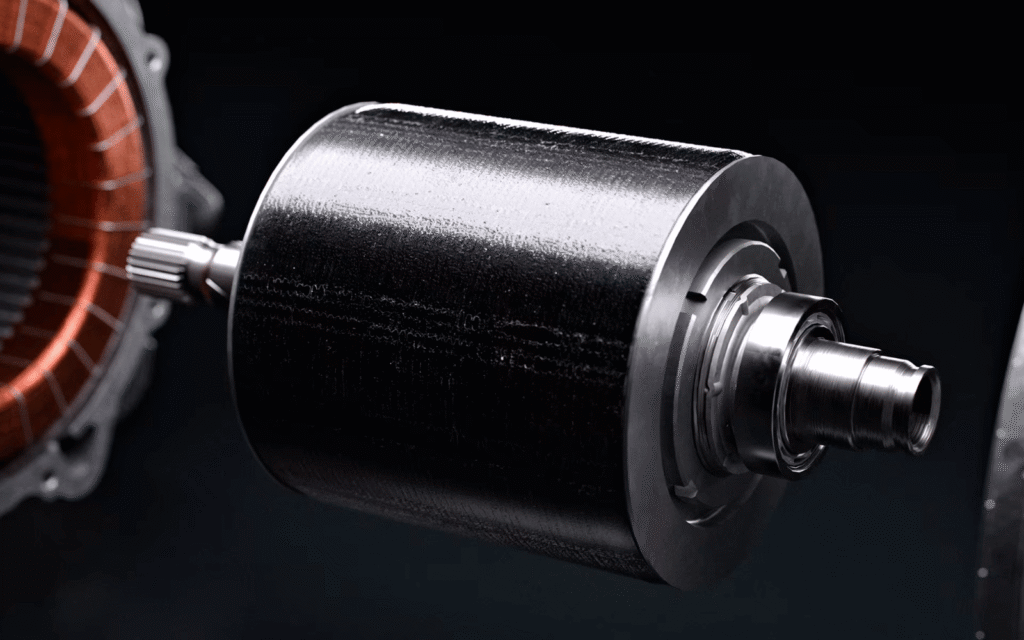
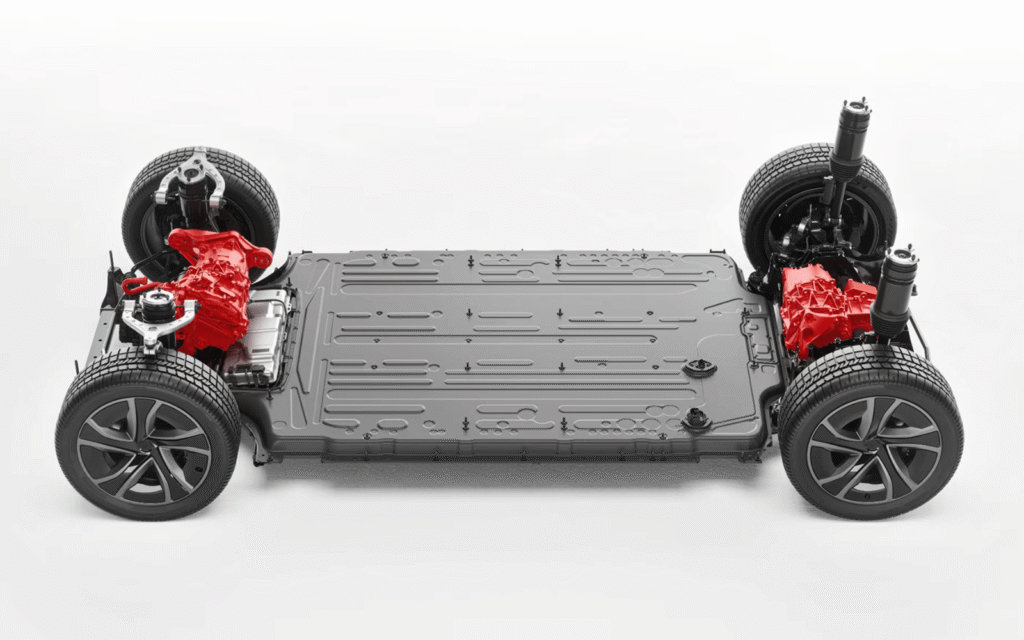
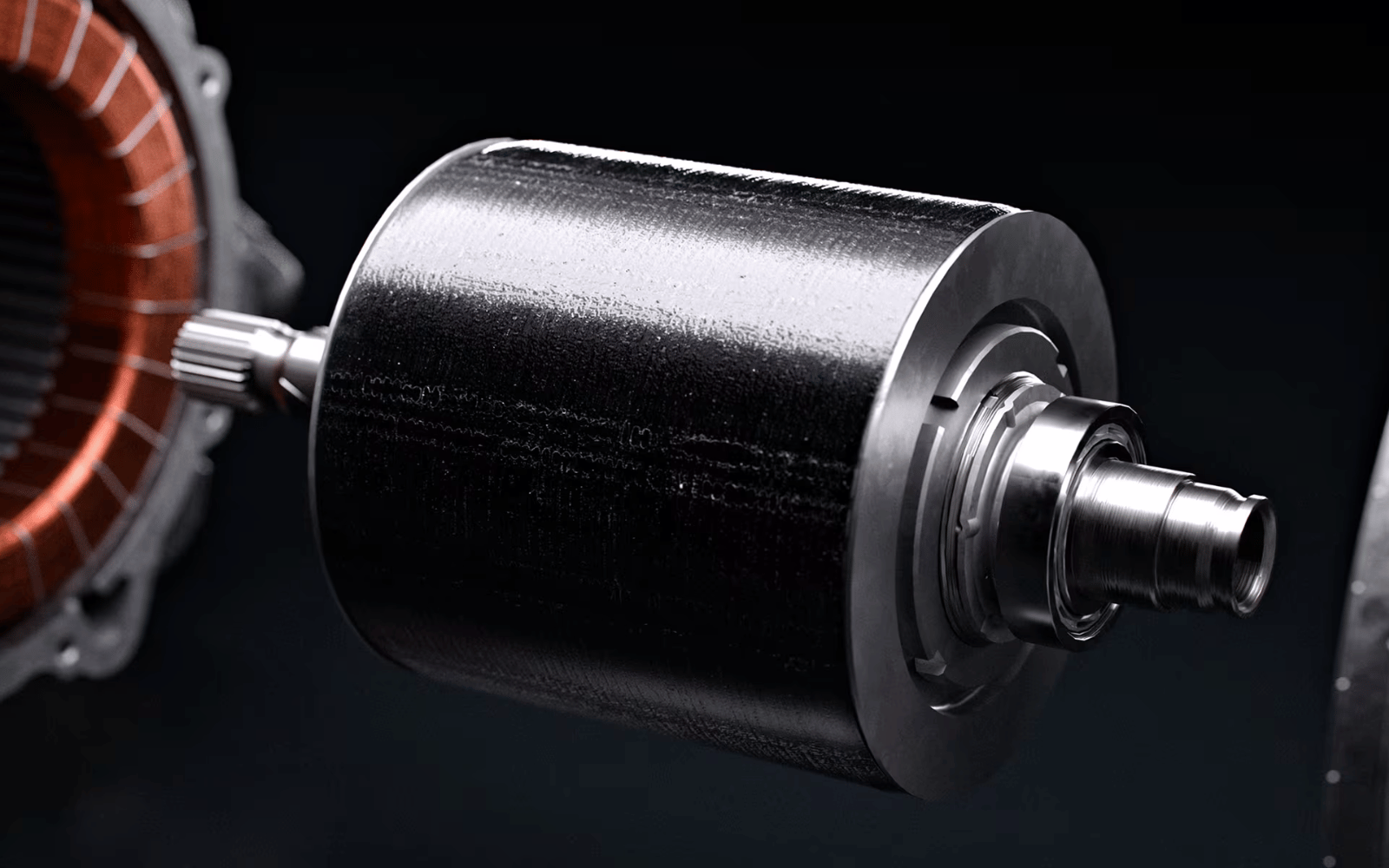
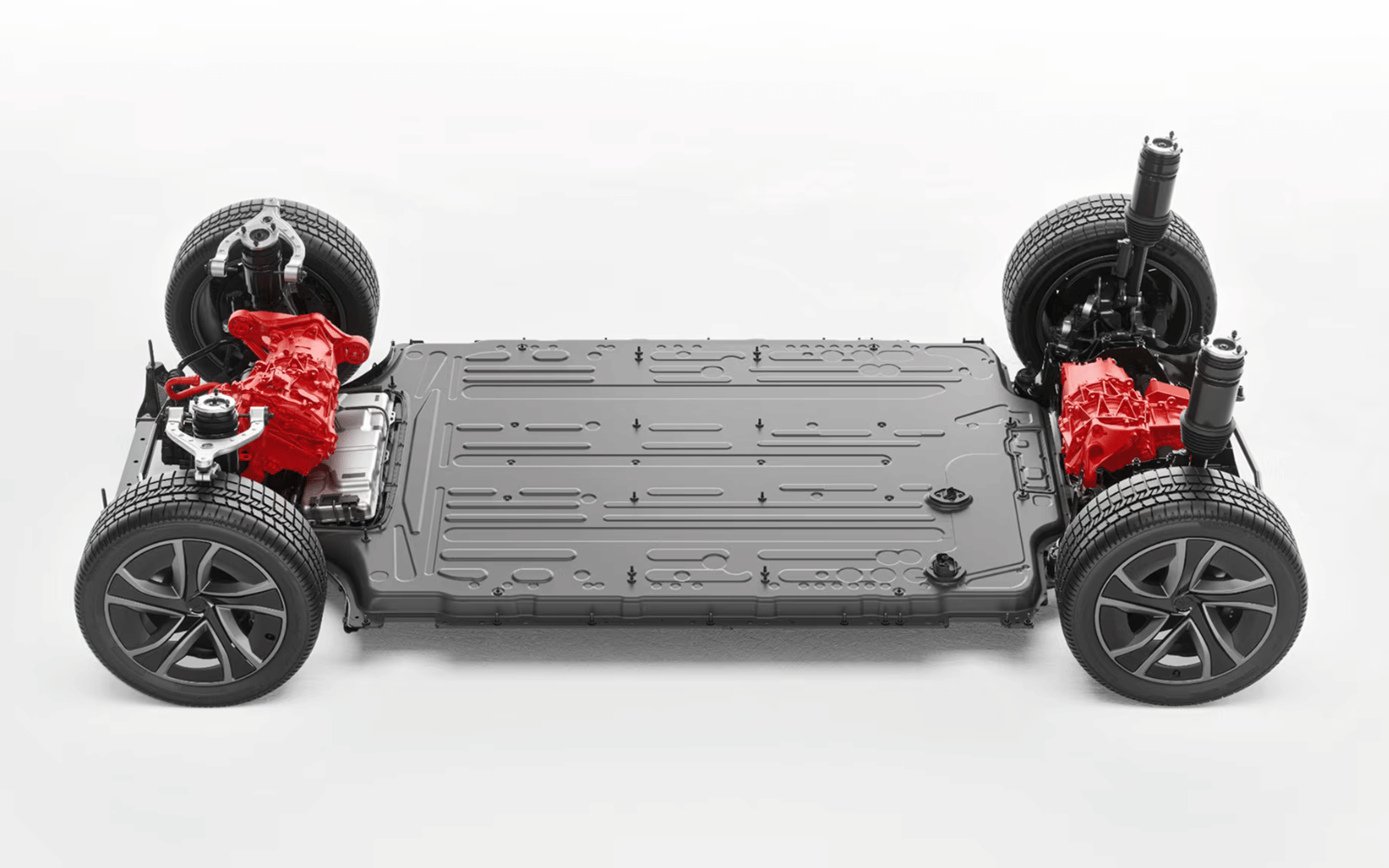
The regular Model X uses two electric motors, with one powering each axle. Combined output is 670 horsepower, and power reaches all four wheels without a conventional transmission.
Plaid uses three motors: one at the front and two at the rear. It produces 1,020 horsepower and can vary power between the rear wheels for better traction and stability.
Tesla does not publish an official usable battery-capacity figure for the final Model X. Battery estimates from outside sources should not be treated as confirmed specifications. Used buyers should focus on EPA range, battery condition, remaining warranty, displayed range at a known charge level, and charging performance.
| Performance Specification | Model X AWD | Model X Plaid |
| Motors | Dual motor | Tri motor |
| Drivetrain | AWD | AWD |
| Peak power | 670 hp | 1,020 hp |
| Tesla-estimated 0–60 mph | 3.8 seconds | 2.5 seconds |
| Top speed | 155 mph | 163 mph |
| Quarter-mile time | Not officially highlighted | 9.9 seconds |
| EPA-estimated range | 352 miles | 335 miles |
| Maximum DC charging rate | 250 kW | 250 kW |
0–60 MPH Performance
Tesla estimates that the regular Model X can accelerate from 0–60 mph in 3.8 seconds. That is unusually quick for a large SUV carrying up to seven occupants.
Model X Plaid reduces the claimed time to 2.5 seconds. Its immediate power delivery can feel much more forceful than the numbers suggest because there are no gear changes or engine-speed delays.
Actual acceleration depends on:
- Battery temperature and charge level
- Tire type and condition
- Road surface
- Wheel selection
- Passenger and cargo weight
- Weather and elevation
- Battery and motor preparation settings
Plaid is the obvious choice for maximum speed. The regular AWD version is easier to recommend because it remains extremely quick while providing more range and a wider choice of seating layouts.
Driving Experience
The Model X feels stable and powerful, but its size and weight are always present. The low-mounted battery helps limit body roll, while the all-wheel-drive system delivers quick traction without waiting for an engine or transmission to respond.
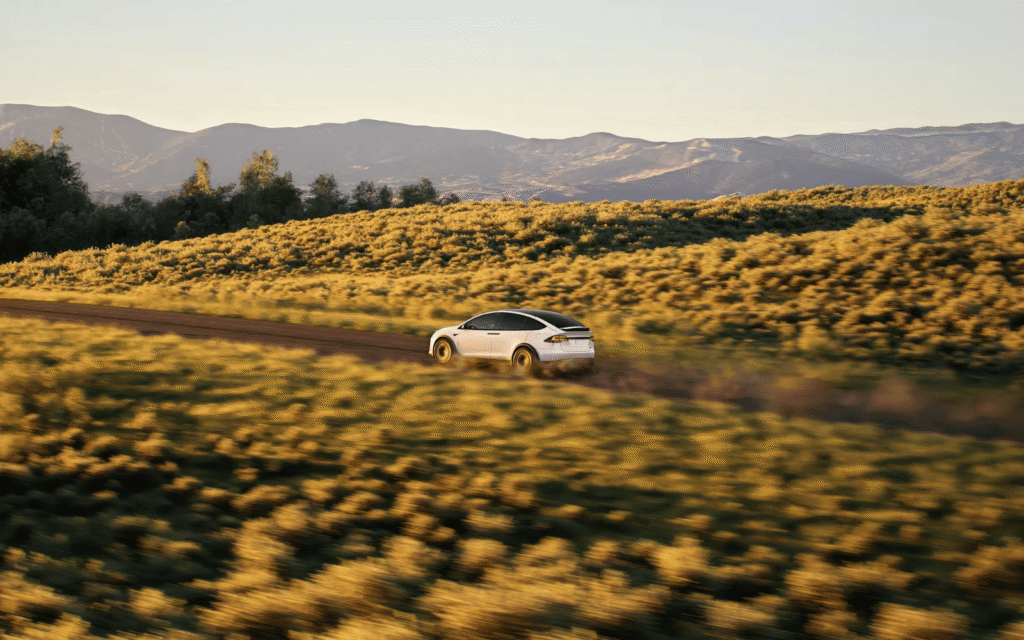
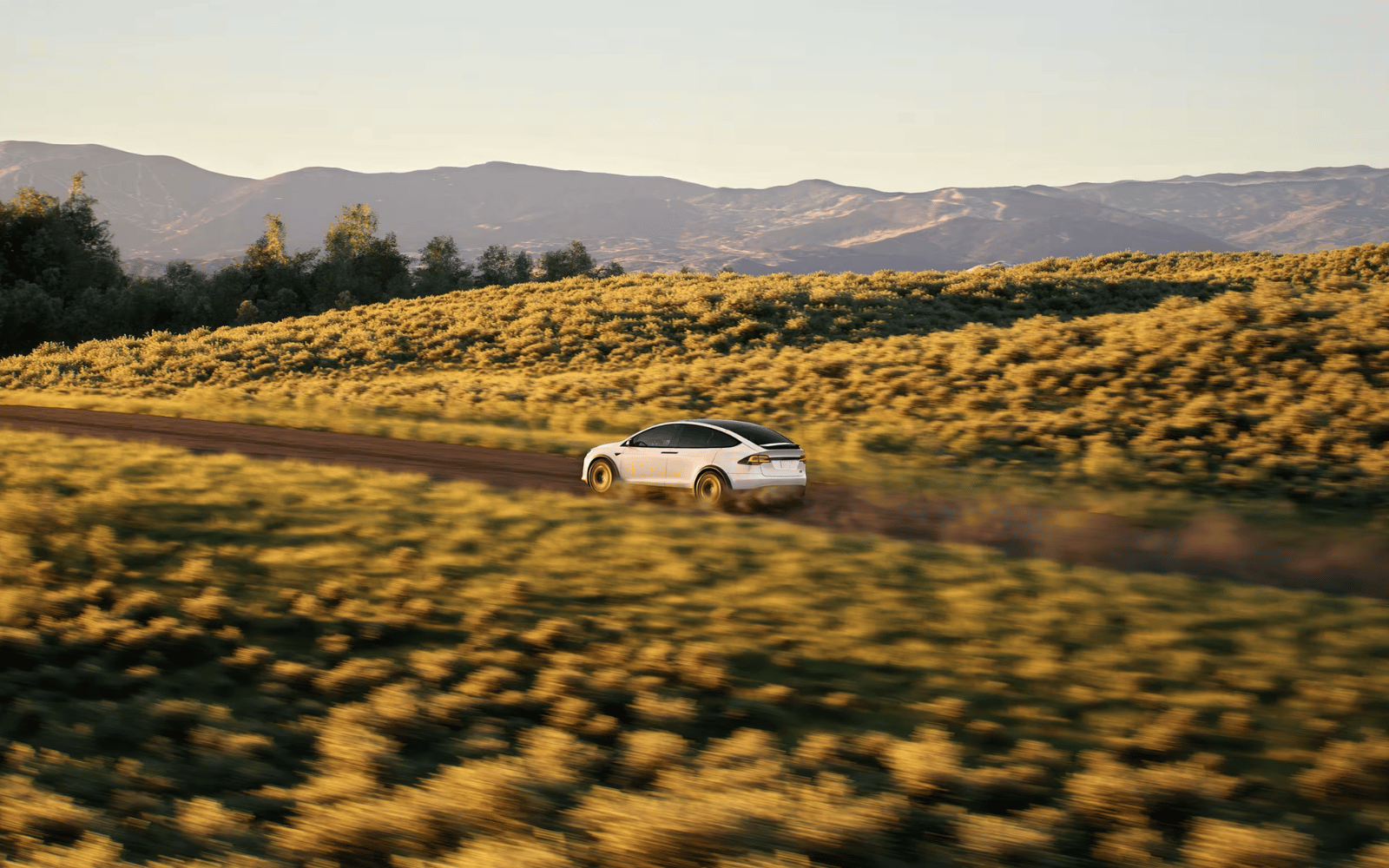
Adaptive air suspension can change ride height and damping. The higher settings provide extra clearance for steep driveways or uneven surfaces, while the car can lower itself at speed to reduce aerodynamic resistance.
The 20-inch wheels are better suited to daily driving. They provide a more forgiving ride, greater range, a higher towing rating, and generally lower replacement costs than the 22-inch wheels.
The 22-inch setup gives the SUV a more aggressive appearance and sharper initial steering response. However, potholes become more noticeable, range drops, and the thinner tires are more vulnerable to damage.
Regenerative braking allows one-pedal driving in many situations. It works particularly well in traffic, although drivers moving from a gasoline SUV may need time to become comfortable with the stronger deceleration when lifting off the accelerator.
The Model X is wide, and visibility around its front corners can be difficult in tight parking areas. Later vehicles added a front bumper camera, but drivers should still account for the 89.4-inch width with mirrors.
EV Range and Charging
| Charging and Range Specification | Model X AWD | Model X Plaid |
| EPA-estimated range | 352 miles | 335 miles |
| Maximum DC charging rate | 250 kW | 250 kW |
| Tesla-estimated range added in 15 minutes | Up to 175 miles | Up to 175 miles |
| Maximum home charging power | Up to 11.5 kW | Up to 11.5 kW |
| Approximate range added per hour at maximum home rate | Up to 35 miles | Configuration-dependent |
| Charging connector | North American Charging Standard | North American Charging Standard |
The regular AWD version is the better long-distance Model X because it combines the highest range with more practical wheel and seating choices.
Tesla states that the Model X can add up to 175 miles in 15 minutes under specified conditions. Charging speed changes during the session and depends on charger output, battery temperature, state of charge, weather, and vehicle configuration. The full 250-kW rate is not maintained from empty to full. See Tesla’s Supercharging guidance for its current charging estimates.
A correctly installed Tesla Wall Connector can supply up to 11.5 kW and add approximately 35 miles of Model X range per hour. Lower-capacity home electrical systems will charge more slowly. Tesla provides the different outputs in its.
Range falls when driving quickly, using cabin heat in cold weather, carrying heavy loads, fitting 22-inch wheels, or towing a trailer. Preconditioning the battery before a fast-charging stop can reduce charging time.
Read how long it takes to charge an electric car for more information about home and public charging.
Interior, Comfort, and Technology
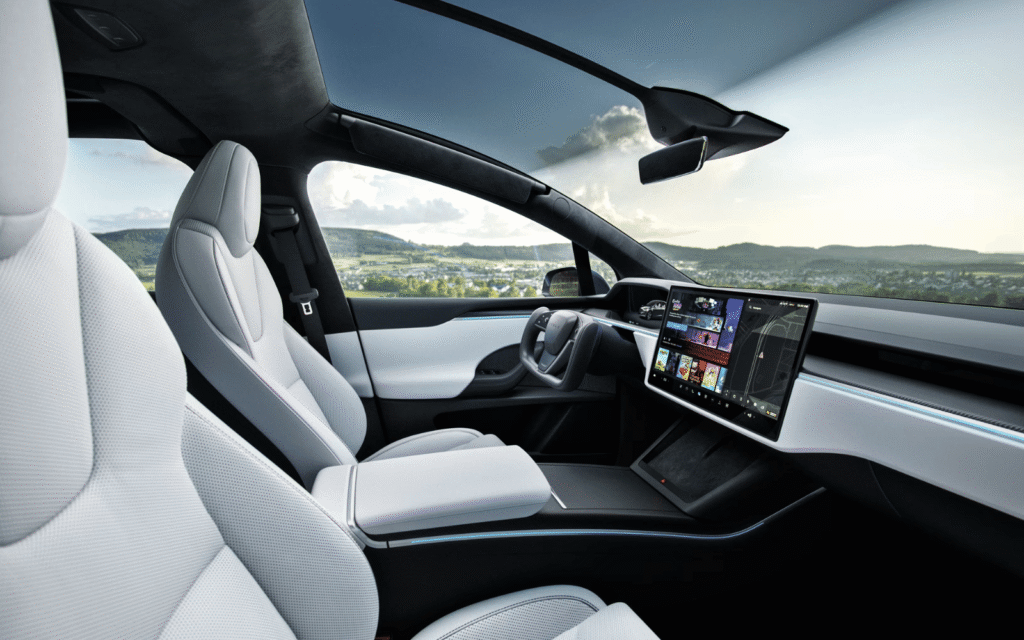
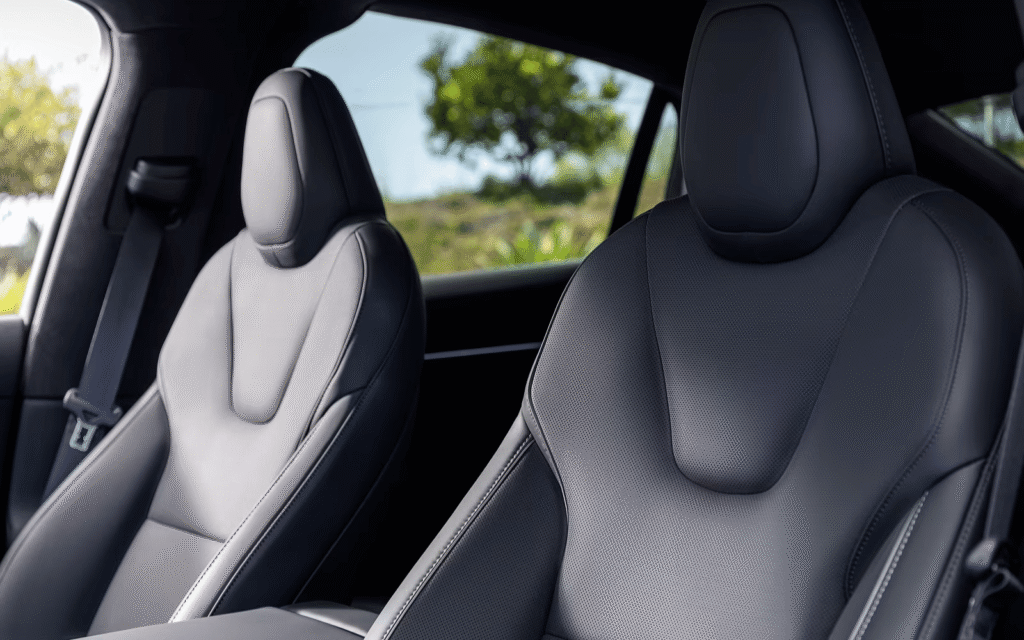
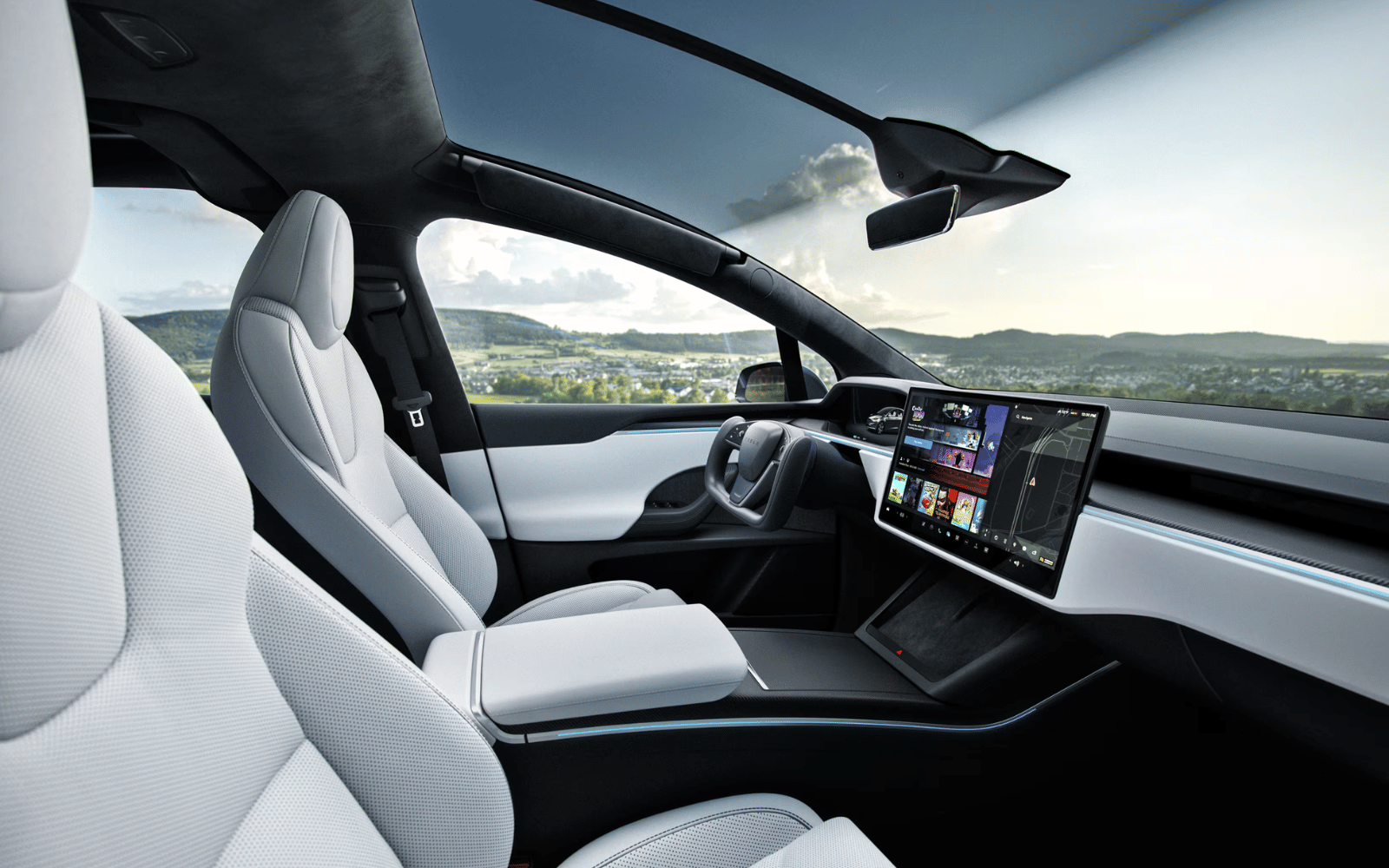
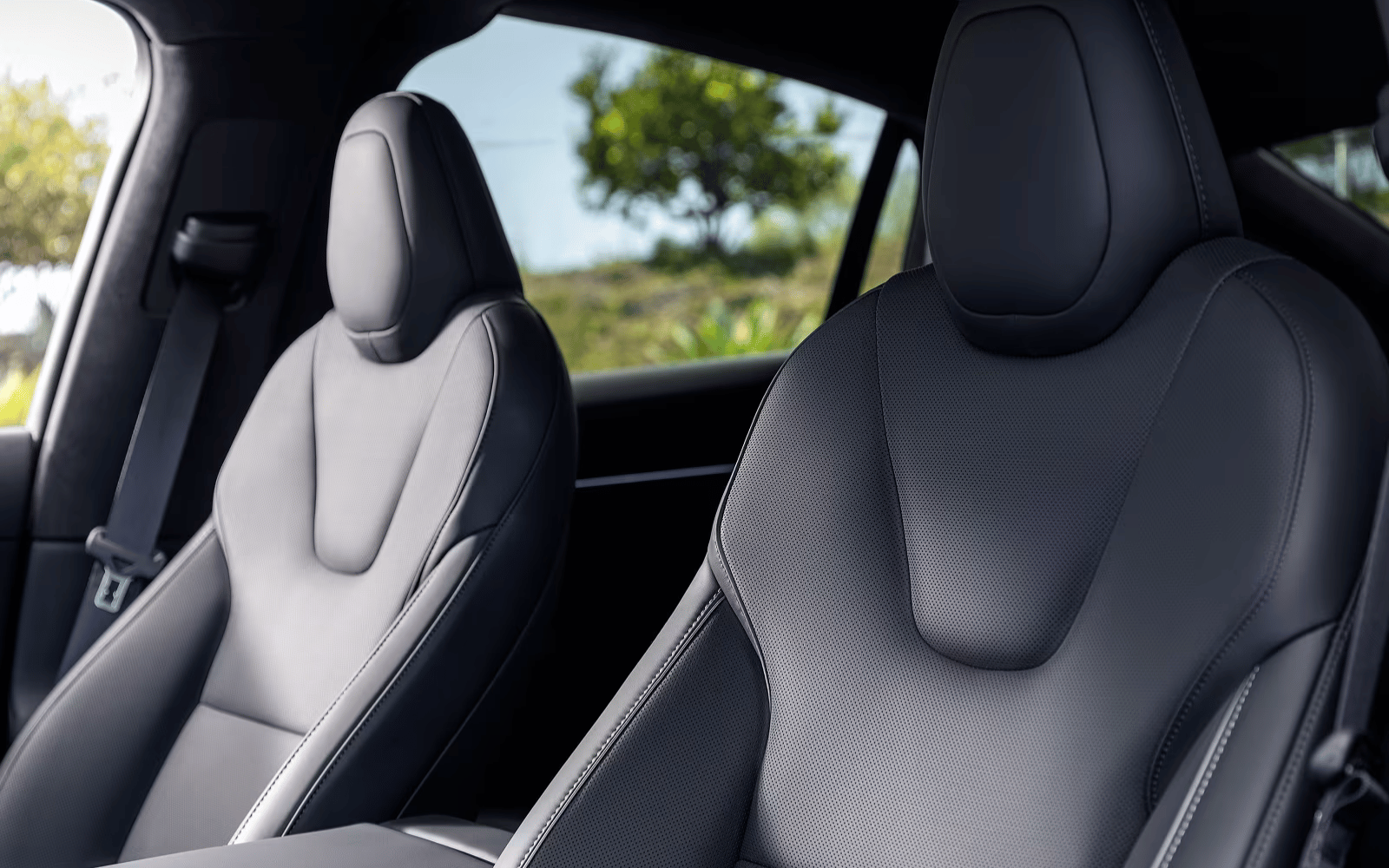
The final Model X cabin uses a wide dashboard, panoramic windshield, digital instrument display, and large central touchscreen. The design feels open and modern, but most climate, entertainment, and vehicle controls are placed within the screen.
Main cabin features include:
- 17.4-inch front touchscreen
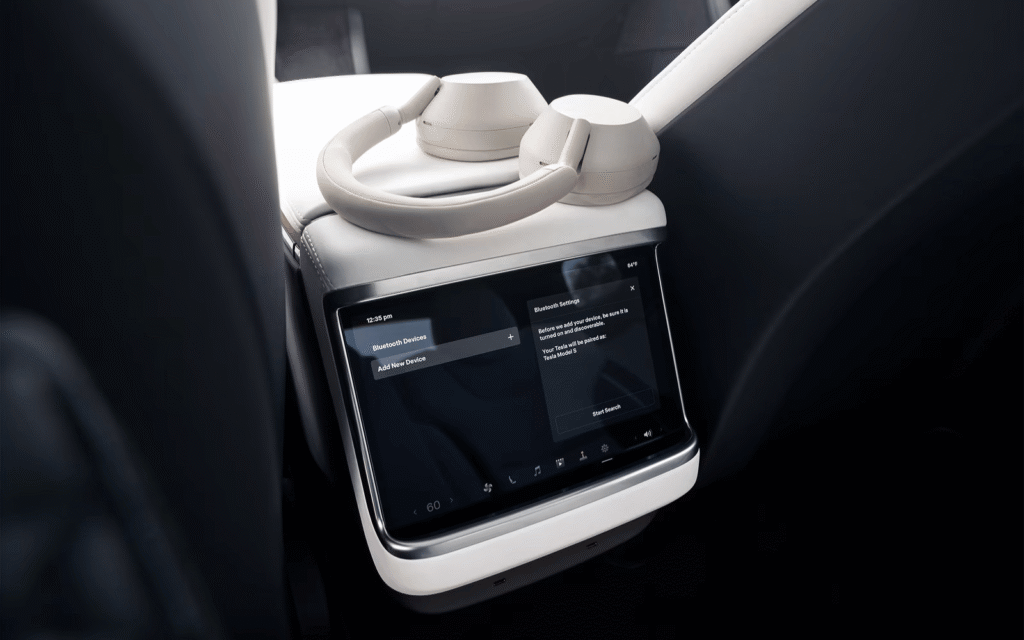
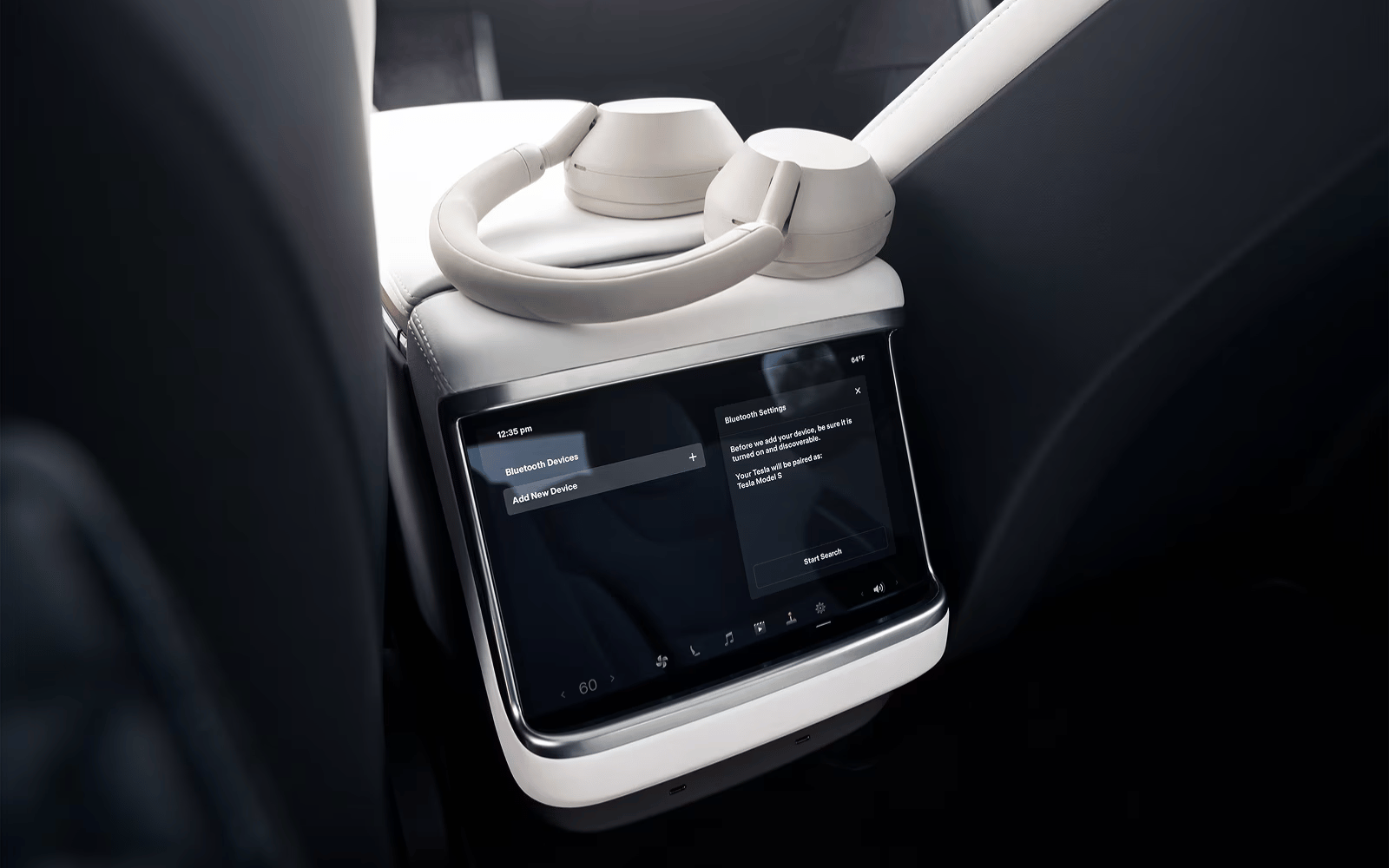
- 9.4-inch rear touchscreen
- Separate digital driver display
- Heated seats throughout the cabin
- Ventilated front seats
- Tri-zone climate control
- HEPA air filtration
- Wireless phone charging
- Multiple USB-C charging ports
- 22-speaker, 960-watt audio system
- Active road-noise reduction on later vehicles
- Customizable ambient lighting
- Panoramic windshield
- Over-the-air software updates
- Streaming and gaming functions
- Tesla mobile-app controls
- Available Premium Connectivity
The rear display lets passengers control entertainment and selected cabin functions. Compatible wireless controllers and Bluetooth headphones can be used for some media features.
The Model X does not support native Apple CarPlay or Android Auto. Tesla’s own navigation, media, phone, voice-control, and charging systems are used instead.
Five-, Six-, and Seven-Seat Interiors
The seating layout has a major effect on comfort and cargo use:
- Five seats: Provides the most useful cargo floor and the lowest purchase cost.
- Six seats: Uses two individual second-row seats, creating easier third-row access and a more spacious passenger layout.
- Seven seats: Uses a three-person second-row bench and provides the greatest passenger capacity.
The six-seat arrangement is the most comfortable for passengers, but its individual second-row seats do not create the same flat, uninterrupted cargo floor as the folding bench.
The third row is suitable for children and smaller adults. Six-seat vehicles provide slightly more third-row legroom, while the seven-seat version becomes tight for adults on longer journeys.
Dimensions, Cargo, and Practicality
| Dimension | Measurement |
| Length | 199.1 in. |
| Width without mirrors | 78.7 in. |
| Width with mirrors | 89.4 in. |
| Height at medium suspension setting | 66.1 in. |
| Maximum height setting | 67.7 in. |
| Wheelbase | 116.7 in. |
| Ground clearance | 5.8–8.1 in. |
| Front legroom | 41.2 in. |
| Second-row legroom, five/seven seats | 38.7 in. |
| Second-row legroom, six seats | 39.8 in. |
| Third-row legroom, seven seats | 29.8 in. |
| Third-row legroom, six seats | 32.3 in. |
| Front trunk | 6.5 cu. ft. |
Cargo measurements vary significantly by seating layout:
| Seating Layout | Cargo with Every Seat Occupied, Including Frunk | Maximum Total Cargo Volume |
| Five seats | 45.7 cu. ft. | 93.7 cu. ft. |
| Six seats | 21.3 cu. ft. | 94.5 cu. ft. |
| Seven seats | 21.3 cu. ft. | 90.3 cu. ft. |
These figures come from the current Tesla Model X dimensions and cargo guide.
The five-seat version provides the best cargo flexibility. Six- and seven-seat vehicles still have 14.8 cubic feet behind the third row, plus the 6.5-cubic-foot front trunk.
The front trunk is useful for charging cables, small bags, wet equipment, or items that should remain separate from the main cargo area.
Towing Capacity
| Wheel Size | Maximum Trailer Weight | Maximum Tongue Weight |
| 20-inch wheels | 5,000 lbs. | 500 lbs. |
| 22-inch wheels | 3,500 lbs. | 350 lbs. |
The 20-inch wheels are clearly preferable for towing. Moving to 22-inch wheels reduces the maximum trailer rating by 1,500 pounds.
Towing can cause a substantial drop in electric range, particularly at highway speeds or in cold weather. Trailer Mode should be active whenever a trailer is connected. Tesla provides the full limits and operating instructions in its Model X towing guide.
The hitch receiver can also support an accessory carrier, but the maximum cantilevered vertical load is 120 pounds, including the weight of the carrier.
Exterior Design
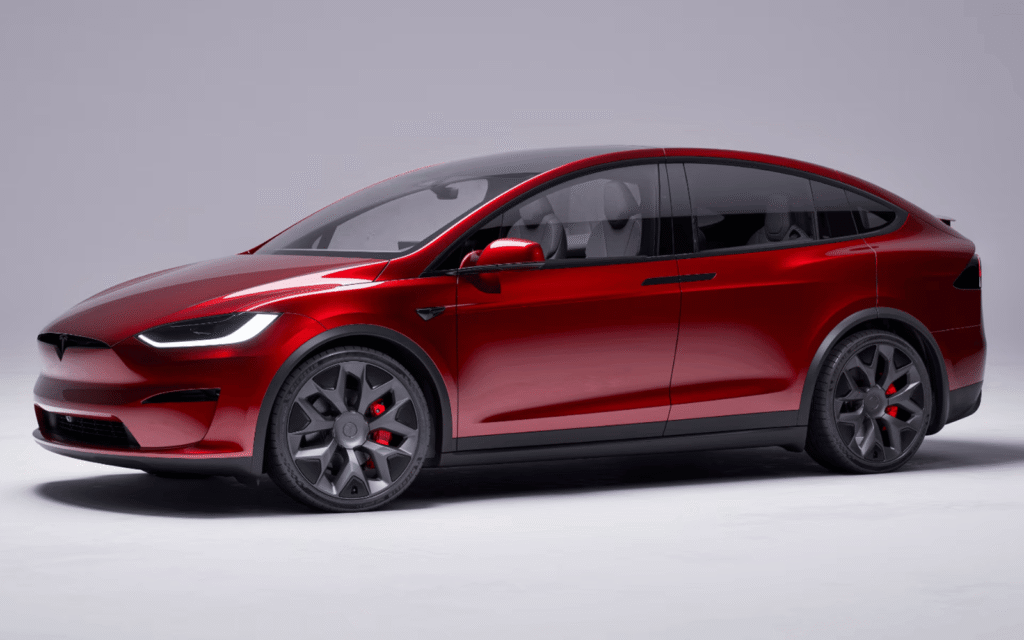
The Model X has a rounded, aerodynamic shape with a short front section, steeply sloped windshield, flush exterior handles, and a large rear liftgate. Its listed drag coefficient of 0.24 Cd contributes to its highway efficiency.
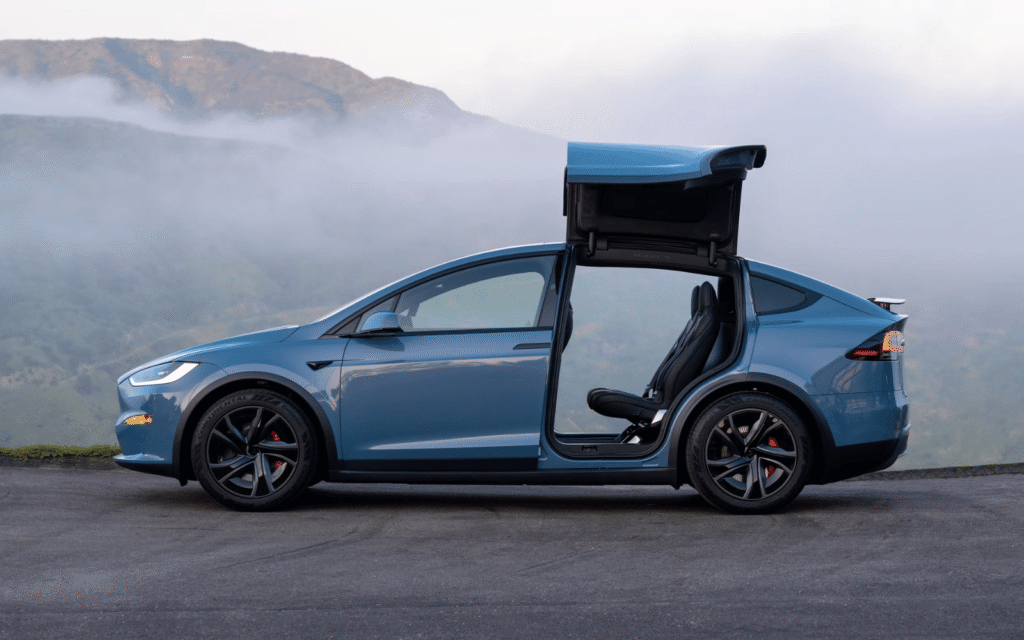
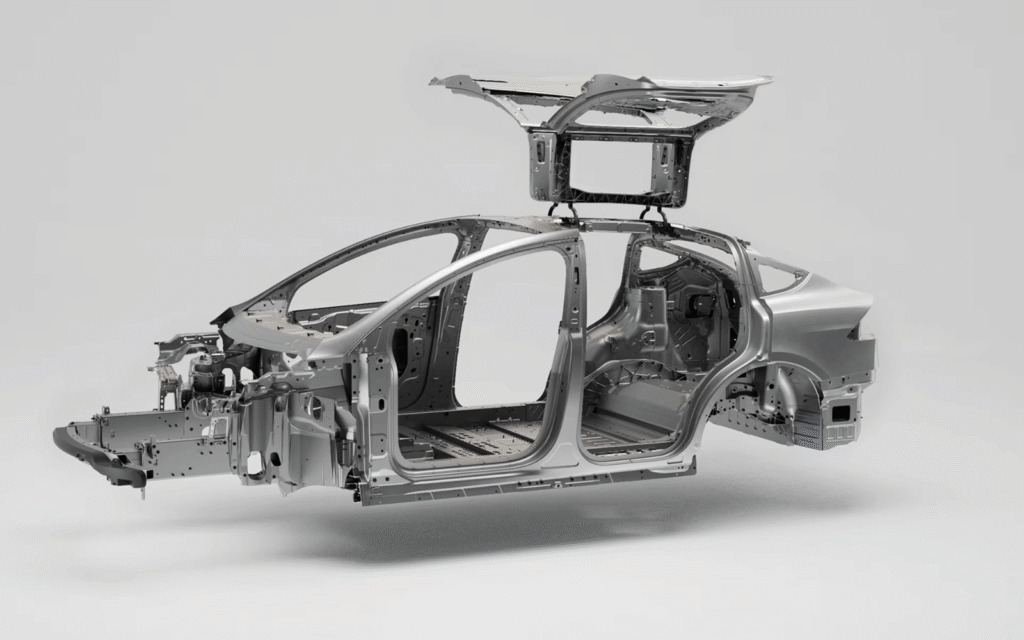
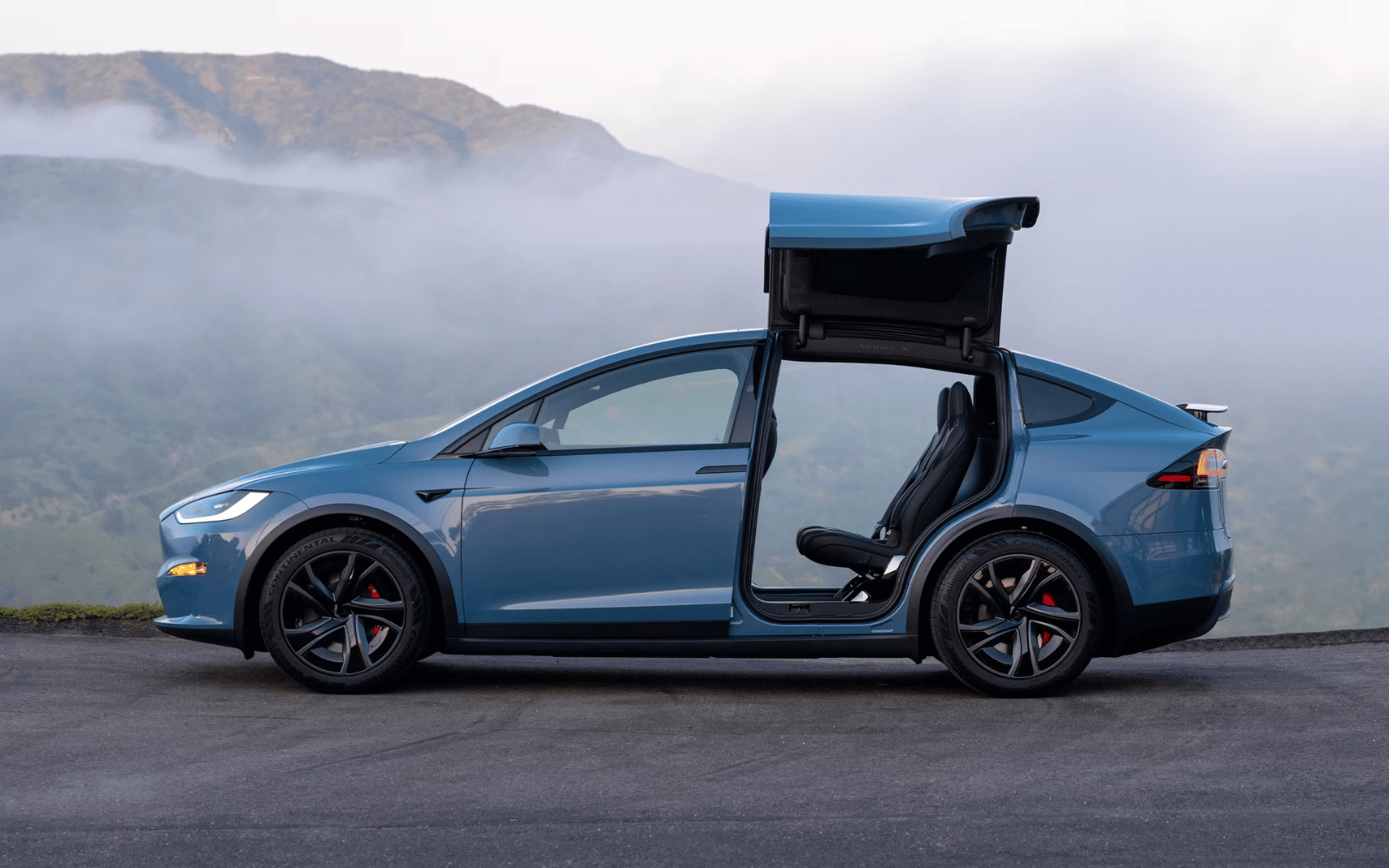
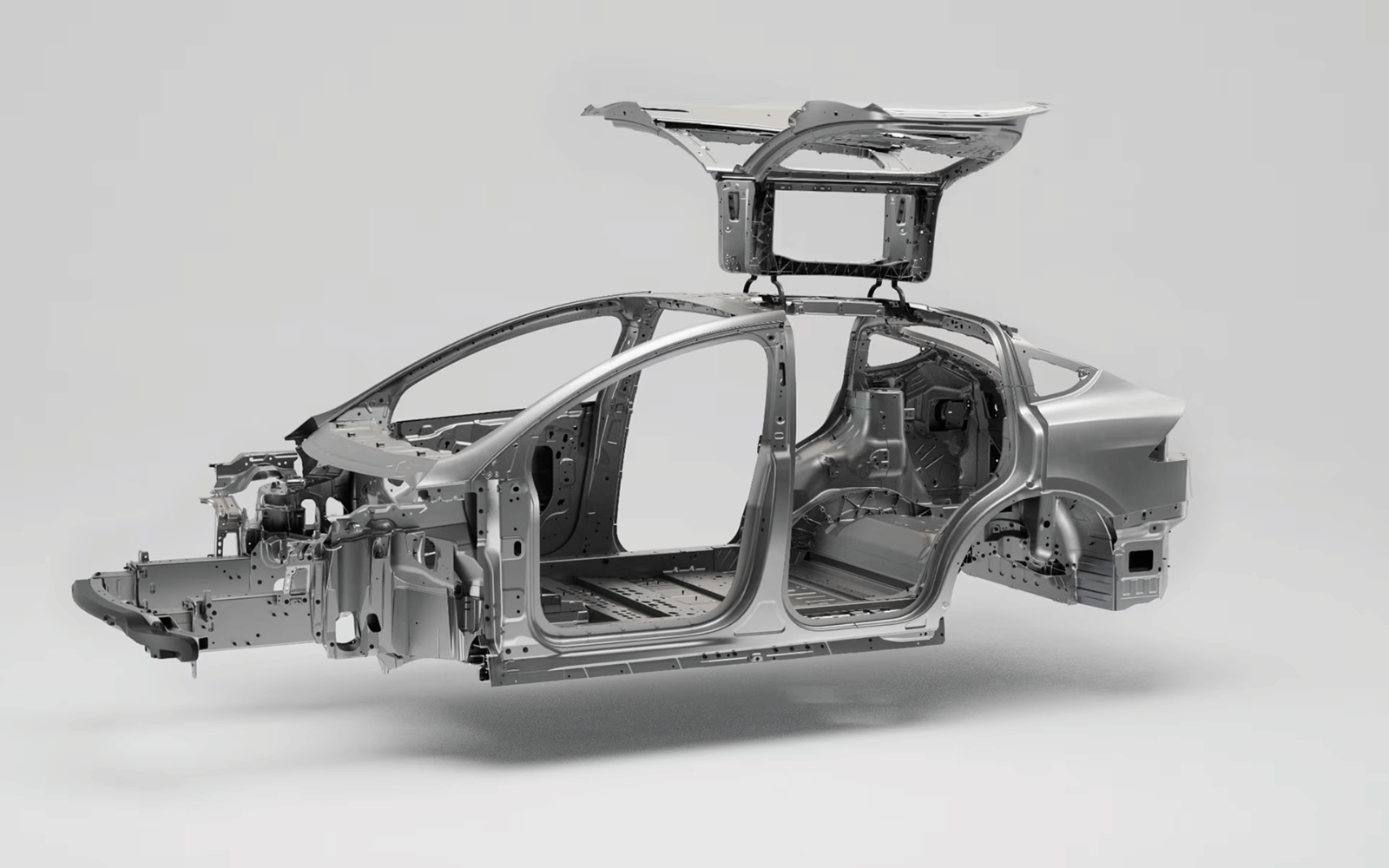
The most recognizable feature is the Falcon Wing rear-door system. Each door uses powered hinges, sensors, and separate roof sections to open upward while limiting the amount of space required beside the SUV.
These doors can make it easier to secure children in their seats because adults can stand closer to the opening. They also provide wide access to the second and third rows.
However, the doors are slower than conventional doors and may behave cautiously around low ceilings, nearby vehicles, roof racks, snow, or obstacles detected by their sensors. Their motors, sensors, seals, hinges, and alignment also add potential repair costs.
Other exterior features include:
- 20- or 22-inch wheels
- Adaptive headlights on later vehicles
- Front bumper camera
- Panoramic windshield
- Glass roof sections
- Powered front doors
- Powered rear liftgate
- Flush front-door handles
- Adaptive air suspension
- Plaid exterior badging
Safety Features and Ratings
Standard and available safety equipment includes:
- Forward Collision Warning
- Automatic Emergency Braking
- Lane Departure Avoidance
- Emergency Lane Departure Avoidance
- Blind-spot camera and collision warnings
- Side Collision Warning
- Multiple exterior cameras
- Front and rear parking assistance
- Automatic high beams
- Electronic stability control
- Traction control
- Tire-pressure monitoring
- Rearview camera
- Multiple airbags
Full Self-Driving (Supervised) can add more driving-assistance functions, depending on the vehicle’s hardware, software, and paid package or subscription. It requires continuous driver attention and does not make the Model X autonomous.
Older Model X vehicles received strong crash-test results, including a five-star Euro NCAP rating in 2019. Those results should not automatically be applied to the final 2026 configuration because vehicle structure, restraints, cameras, software, and testing requirements changed over time.
The final Model X lacks a complete current IIHS evaluation, and buyers should not assume that earlier NHTSA ratings apply to every later model year. Check the NHTSA safety-ratings database and IIHS vehicle ratings for the exact year being considered.
Used buyers should also search the vehicle’s VIN for open recalls and confirm that all recall work has been completed.
Reliability, Warranty, and Ownership
The Model X does not require engine oil changes, spark plugs, fuel filters, exhaust work, or emissions inspections. Regenerative braking can also reduce normal brake-pad wear.
However, it remains an expensive luxury SUV with complex doors, adaptive air suspension, large wheels, powerful motors, substantial body panels, and extensive electronic equipment. Repair, tire, insurance, and collision costs can be high even when routine maintenance is limited.
| Warranty Coverage | Length |
| Basic vehicle warranty | 4 years / 50,000 miles |
| Supplemental restraint system | 5 years / 60,000 miles |
| Battery and drive unit | 8 years / 150,000 miles |
| Minimum battery retention during warranty | 70% |
| Body rust perforation | 12 years / unlimited miles |
| Tesla-certified pre-owned additional coverage | Usually 1 year / 10,000 miles after remaining basic coverage |
Tesla’s current warranty terms state that the original battery and drive-unit coverage remains with qualifying vehicles when ownership changes. Buyers should still check the original sale date and exact warranty document because coverage can vary by purchase date and market.
Recommended maintenance includes:
- Tire rotation every 6,250 miles or when tread-depth differences require it
- Brake-fluid contamination testing every four years
- Cabin air filter replacement every three years on newer vehicles
- HEPA and carbon filter replacement every three years when equipped
- Annual brake cleaning and lubrication in areas using winter road salt
- Regular wheel-alignment, suspension, wiper, tire, and door-seal inspections
The latest intervals are listed in Tesla’s vehicle-maintenance guidance.
What to Check Before Buying a Used Model X
- Remaining basic, battery, and drive-unit warranty
- Battery condition and displayed range at a known charge level
- DC fast-charging performance
- Operation of both Falcon Wing doors
- Door alignment, sensors, hinges, and weather seals
- Powered front-door operation
- Air suspension at every available height
- Vibration or shudder during hard acceleration
- Suspension, half-shaft, and wheel-bearing noises
- Uneven tire wear or damaged wheels
- Operation of every screen, camera, speaker, and USB port
- Heating, air conditioning, and HEPA system
- Charge-port operation
- Accident, body-repair, and flood history
- Included driver-assistance software
- Whether paid software and charging benefits transfer
- Open recalls and completed recall work
- Correct five-, six-, or seven-seat configuration
Read what to check before buying a used EV before inspecting a Model X.
Pros and Cons
What We Like
- Up to 352 miles of EPA-estimated range
- Exceptional acceleration in both versions
- Plaid produces 1,020 horsepower
- Five-, six-, and seven-seat configurations
- Large cargo capacity and useful front trunk
- Falcon Wing doors provide wide rear-seat access
- Maximum 5,000-pound towing capacity
- Adaptive air suspension
- Access to Tesla’s Supercharger network
- Useful route planning and battery preconditioning
- Over-the-air software updates
- Strong battery and drive-unit warranty
- Low routine powertrain maintenance
What We Don’t Like
- Production has ended
- No current factory-order price
- High used and remaining-inventory prices
- Expensive tires, insurance, and collision repairs
- Falcon Wing doors add cost and complexity
- Limited current independent crash-test data
- Third row is tight for adults
- Six-seat layout limits flat-floor cargo flexibility
- 22-inch wheels reduce range, comfort, and towing capacity
- No Apple CarPlay or Android Auto
- Many controls are placed within the touchscreen
- Cabin materials do not always match the purchase price
- Used specifications vary greatly by year
- Long-term resale values may be difficult to predict
Competitors
The Model X competes with electric luxury SUVs that focus on passenger space, driving range, performance, or traditional premium-car comfort.
- Rivian R1S: Better suited to buyers wanting off-road ability, conventional rear doors, and a more traditional SUV shape.
- Lucid Gravity: A current-production alternative focused on range, cabin space, and road-trip efficiency.
- Mercedes-Benz EQS SUV: Places more emphasis on ride comfort, cabin isolation, and conventional luxury.
- BMW iX: A five-seat alternative with a polished cabin and comfortable road manners.
- Volvo EX90: Targets families who value restrained design, three-row seating, and safety technology.
- Cadillac Escalade IQ: Considerably larger and more expensive, but offers greater road presence and passenger space.
- Hyundai IONIQ 9: A lower-priced three-row EV with a spacious cabin and fast-charging architecture.
- Tesla Model Y: Smaller, cheaper, and more efficient, but lacks the Model X’s performance, space, air suspension, and Falcon Wing doors.
The Model X’s discontinued status is now a major part of the comparison. Current-production rivals offer factory configuration, newer electrical systems, and a clearer future model cycle.
Related Content
Before choosing any electric SUV, read are electric cars worth it? to compare home charging, annual mileage, electricity costs, and maintenance.
You can also read:
- Tesla Model S
- Tesla Model 3
- Best electric cars
- How electric cars work
- How long electric cars take to charge
- What to check before buying a used EV
Should You Buy the Tesla Model X?
Buy a Model X if you want extremely quick acceleration, flexible passenger space, useful cargo capacity, Tesla charging access, and distinctive rear doors in one electric SUV.
The dual-motor AWD with 20-inch wheels is the strongest choice for most buyers. It provides the longest range, full 5,000-pound towing rating, better ride comfort, and lower tire costs while remaining very quick.
Choose the five-seat version if cargo space matters more than passenger capacity. The six-seat layout is better for second- and third-row access, while the seven-seat version works for families that occasionally need the extra position.
Choose Plaid only if acceleration is a major reason for buying the vehicle. Its 1,020 horsepower is impressive, but the standard Model X already has more performance than most drivers need.
A used Model X can become attractive after depreciation, but condition matters more than the badge or advertised range. Check the battery warranty, suspension, Falcon Wing doors, tires, wheels, software, charging performance, and repair history before buying.
Skip the Model X if you want conventional doors, physical cabin controls, low repair costs, a roomy adult-sized third row, or a current factory-orderable luxury SUV.
FAQs
Is the Tesla Model X still in production?
No. Tesla ended Model X production in 2026. New factory orders are closed, although remaining inventory and pre-owned vehicles may still be available.
How much does a Tesla Model X cost?
There is no current factory-order price. Before later inventory adjustments, the final regular Model X AWD started at approximately $99,990, while Plaid started at approximately $114,990. Used prices vary by year, mileage, condition, seating, wheels, and software.
How far can the Model X travel on one charge?
The final Model X AWD had an EPA-estimated range of up to 352 miles. Model X Plaid offered up to 335 miles. Actual range depends on wheels, seating, speed, weather, temperature, payload, and towing.
How long does it take to charge a Model X?
Tesla states that the Model X can add up to 175 miles in 15 minutes at a suitable Supercharger under specified conditions. A maximum-output Wall Connector can add approximately 35 miles per hour.
How much horsepower does the Model X have?
The dual-motor Model X produces 670 horsepower. The tri-motor Model X Plaid produces 1,020 horsepower.
How fast is the Model X?
The regular Model X can reach 60 mph in approximately 3.8 seconds. Plaid reduces the claimed time to 2.5 seconds.
What is the Model X battery capacity?
Tesla does not publish an official usable battery-capacity figure for the final Model X. Battery-size estimates from outside sources should not be presented as confirmed factory specifications.
How many people can the Model X seat?
Depending on configuration, the Model X can seat five, six, or seven people. Plaid is associated with the six-seat interior.
Is the Model X third row suitable for adults?
It can carry smaller adults for short journeys, but legroom and headroom are limited. Children are generally a better fit, particularly in the tighter seven-seat configuration.
Do the Falcon Wing doors work in low garages?
The doors use sensors and articulated hinges to limit how far they open around obstacles. They may open partially beneath a low ceiling, but owners should still check overhead clearance and remove snow or objects that could interfere with the sensors.
How much cargo space does the Model X have?
The five-seat version provides 39.2 cubic feet behind the second row plus a 6.5-cubic-foot front trunk. Maximum total cargo volume ranges from approximately 90.3 to 94.5 cubic feet, depending on seating configuration.
How much can the Model X tow?
A Model X with 20-inch wheels can tow up to 5,000 pounds. The rating falls to 3,500 pounds with 22-inch wheels.
Does the Model X have Apple CarPlay or Android Auto?
No. The Model X uses Tesla’s own navigation, entertainment, voice-control, charging, and phone-integration systems.
Is the Tesla Model X reliable?
It has fewer routine powertrain service requirements than a gasoline SUV, but its Falcon Wing doors, air suspension, electronics, wheels, and body systems can be expensive to repair. Reliability and build quality also vary by production year.
What warranty does the Model X have?
New vehicles received a four-year/50,000-mile basic warranty and an eight-year/150,000-mile battery and drive-unit warranty with at least 70% battery-capacity retention during the warranty period.
Final Verdict
The Tesla Model X remains one of the quickest and most distinctive electric SUVs produced. It combines up to 352 miles of EPA-estimated range, flexible seating, strong cargo capacity, 5,000-pound towing ability, and Tesla charging access.
Plaid delivers the headline performance, but the regular dual-motor version is the better vehicle for most buyers. It offers more range, a broader choice of seating layouts, better value, and acceleration that is already far beyond normal family-SUV requirements.
The Falcon Wing doors are both its defining feature and one of its biggest ownership concerns. They provide excellent rear access, but their motors, sensors, hinges, and seals make them more complicated than conventional doors.
Production ending in 2026 also changes the purchase decision. Buyers must now compare remaining inventory and used vehicles based on their exact year, condition, warranty, battery health, hardware, software, wheels, seating, and repair history.
For the right buyer, a carefully inspected Model X AWD with 20-inch wheels can still provide a rare combination of range, performance, space, and technology. Buyers who prefer conventional controls, simple doors, or a current factory-orderable model should compare newer electric SUVs first.
Tesla Model X production has ended. Prices, inventory, range, equipment, software, charging performance, seating, and warranty coverage can differ by model year, configuration, and market.