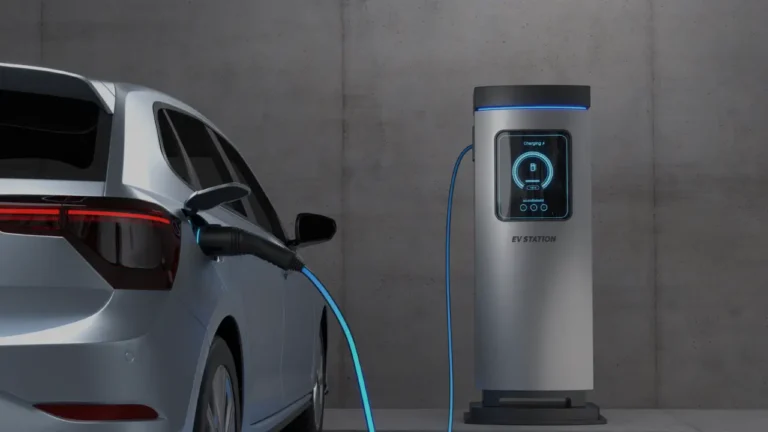
Charging an electric car can take anywhere from less than 20 minutes at a compatible ultra-fast charger to more than 30 hours from a basic household outlet.
A dedicated home wallbox will commonly recharge an electric car overnight. Public DC fast chargers can often take a suitable battery from around 10% to 80% in 20 to 40 minutes, although some cars are faster and others take considerably longer.
The exact charging time depends on the car’s battery capacity, maximum charging rate, current battery percentage, charger output and battery temperature.
It is also important to understand that most EV owners do not regularly charge from completely empty to 100%. They usually plug in after daily driving and replace only the electricity they have used.
A basic household outlet may take 20 to 40 hours or more to fully charge an electric car. A dedicated home charger commonly takes 4 to 10 hours. A public DC fast charger may recharge a compatible EV from 10% to 80% in approximately 20 to 40 minutes.
Electric Car Charging Times
| Charging method | Typical power | Approximate charging time | Best use |
| Basic household outlet | Around 1–2.4 kW | 20–40+ hours | Low daily mileage or emergency use |
| Home wallbox | Around 3.6–7.4 kW | 6–15 hours | Overnight home charging |
| Faster home or public AC | Around 11 kW | 4–8 hours | Compatible EVs and three-phase supplies |
| Public AC charger | Around 7–22 kW | 3–12 hours | Workplaces, hotels and long parking stays |
| 50 kW DC charger | Up to 50 kW | Around 45–90 minutes to 80% | Older rapid networks and smaller batteries |
| 100–150 kW DC charger | Up to 100–150 kW | Around 25–50 minutes to 80% | Long-distance charging |
| 250–350+ kW ultra-fast charger | Up to 250–350+ kW | Around 15–35 minutes to 80% | Compatible high-voltage EVs |
These are broad estimates rather than guarantees. A car will only accept the power its charging system and battery can safely handle.
Connecting an EV with a 50 kW charging limit to a 350 kW charger will not make it charge at 350 kW.
What Determines an Electric Car’s Charging Time?
The five main factors are:
- Battery capacity
- Current battery level
- Charger output
- Vehicle charging limit
- Battery temperature
Other factors include charging losses, shared station power, weather, battery condition and whether cabin heating or cooling is being used while the car charges.
Battery capacity
Electric car battery capacity is measured in kilowatt-hours, or kWh.
A larger battery stores more energy and generally takes longer to recharge when the charging power remains the same.
For example, a 40 kWh battery will normally take less time to fill than an 80 kWh battery on the same charger.
However, a larger-battery vehicle may also support faster charging. Battery size alone does not tell buyers how long a charging stop will take.
Starting charge level
Charging from 60% to 80% takes far less time than charging from 10% to 80%.
This is why the phrase “full charging time” can be misleading. An owner who uses 15 kWh during the day only needs to replace roughly that amount, not refill the entire battery.
Charger output
Charging stations are rated in kilowatts.
A higher kW figure means the station can supply energy more quickly, provided the vehicle can accept it.
A 7 kW home charger can theoretically deliver around 7 kWh in one hour. A 150 kW rapid charger can theoretically deliver much more, although the actual rate changes throughout the session.
Vehicle charging limit
Every electric car has its own maximum AC and DC charging rates.
A car may support:
- 7.4 kW AC charging
- 11 kW AC charging
- 22 kW AC charging
- 50 kW DC charging
- 150 kW DC charging
- 250 kW or more DC charging
The car and charger effectively negotiate the charging rate.
The lower limit usually controls the session. A car that accepts 11 kW AC will not charge at 22 kW when connected to a 22 kW AC point.
Battery temperature
Lithium-ion batteries charge most effectively within a suitable temperature range.
Charging may slow when the battery is:
- Very cold
- Very hot
- Close to empty
- Close to full
Some EVs can precondition the battery before reaching a rapid charger. The vehicle heats or cools the pack so it can accept higher charging power sooner.
Level 1 Charging Time
Level 1 is a North American term for charging through a standard 120-volt household outlet.
It commonly supplies around 1.4 to 1.9 kW and may add roughly 2 to 5 miles of range per hour, depending on the vehicle.
A nearly empty electric car may need approximately 20 to 40 hours or longer to reach a full charge.
When Level 1 charging can work
Level 1 may be sufficient when:
- Daily mileage is low
- The vehicle remains parked for long periods
- A faster circuit is unavailable
- The car is a plug-in hybrid with a small battery
- It is used as a backup charging option
A driver covering 20 miles per day may be able to replace that distance overnight.
A driver covering 80 miles per day will probably find Level 1 charging too slow.
Level 1 limitations
The main drawbacks include:
- Slow energy delivery
- Difficulty recovering after long journeys
- Greater dependence on long parking periods
- Possible electrical safety concerns with old or unsuitable wiring
- Increased need to use public charging
Charging from a household outlet should only be done through suitable equipment and a circuit approved for continuous high electrical loads.
Level 2 Home Charging Time
Level 2 is commonly used in North America for 208- or 240-volt AC charging. Similar dedicated home charging systems are used in other regions, although the terminology and electrical standards differ.
A typical home wallbox may provide between approximately 3.6 and 11 kW.
Many homes use chargers around 7 kW or 7.4 kW, which can recharge a typical electric car overnight.
Approximate home charging times
| Usable battery capacity | 3.6 kW charger | 7.4 kW charger | 11 kW charger |
| 40 kWh | Around 12 hours | Around 6 hours | Around 4 hours |
| 60 kWh | Around 18 hours | Around 9 hours | Around 6 hours |
| 80 kWh | Around 24 hours | Around 12 hours | Around 8 hours |
| 100 kWh | Around 30 hours | Around 15 hours | Around 10 hours |
These estimates include a small allowance for charging losses but should not be treated as exact model-specific times.
The real result depends on the vehicle’s AC limit and electrical supply.
Why home charging rarely means waiting for a full battery
Suppose an EV has a 70 kWh usable battery, but the driver uses only 18 kWh during the day.
On a 7.4 kW home charger, replacing that energy may take around two and a half to three hours rather than the ten or more hours needed for a nearly complete recharge.
This is one of the main differences between EV ownership and visiting a fuel station.
The car can charge while parked rather than requiring the driver to wait beside it.
How Long Does a 7 kW Charger Take?
A 7 kW or 7.4 kW home charger commonly takes:
- Around 6 hours for a 40 kWh battery
- Around 9 hours for a 60 kWh battery
- Around 12 hours for an 80 kWh battery
- Around 15 hours for a 100 kWh battery
A partial daily recharge will take much less time.
For example, adding 35 kWh may take approximately five to six hours after charging losses are considered.
How Long Does an 11 kW Charger Take?
An 11 kW AC charger may fully recharge:
- A 40 kWh battery in around four hours
- A 60 kWh battery in around six hours
- An 80 kWh battery in around eight hours
- A 100 kWh battery in around ten hours
The vehicle must support 11 kW AC charging, and the property may require a suitable three-phase electrical supply.
An EV limited to 7.4 kW AC will not receive 11 kW from the charger.
How Long Does a 22 kW Charger Take?
A 22 kW AC charger can theoretically recharge an 80 kWh battery in roughly four hours, plus losses.
However, relatively few passenger EVs accept the full 22 kW through AC charging.
Many are limited to 7.4 or 11 kW.
A 22 kW public charger may therefore provide:
- 22 kW to a compatible vehicle
- 11 kW to an EV limited to 11 kW
- 7.4 kW to an EV limited to 7.4 kW
The charger rating does not override the car’s onboard charging limit.
Public AC Charging Time
Public AC chargers are commonly found at:
- Workplaces
- Hotels
- Shopping centres
- Car parks
- Apartment buildings
- Leisure facilities
- Street-side charging locations
They are designed for places where vehicles remain parked for several hours.
A public AC charger may add enough range during a working day, overnight hotel stay or shopping visit without requiring the driver to make a separate rapid-charging stop.
Public AC charging is usually slower than DC charging because the vehicle’s onboard charger must convert incoming AC electricity into DC for the battery.
DC Fast-Charging Time
DC fast chargers convert electricity outside the car and send direct current toward the battery.
This bypasses the vehicle’s onboard AC charger and allows much higher charging power.
Depending on the car and station, DC charging may operate at:
- 25 kW
- 50 kW
- 100 kW
- 150 kW
- 250 kW
- 350 kW or more
Many compatible electric cars can recover a useful amount of range in 20 to 30 minutes.
However, charger power alone does not determine the result.
How Long Does a 50 kW Rapid Charger Take?
A 50 kW charger may take approximately:
- 35–60 minutes to charge a smaller battery from 10% to 80%
- 60–90 minutes for a larger battery
- Longer when the vehicle is cold or the charging rate drops early
Older electric cars and some lower-cost models may have DC limits near 50 kW.
A newer car that supports 150 kW or more can still use a 50 kW station, but it will be limited by the charger.
How Long Does a 150 kW Charger Take?
A compatible EV may charge from around 10% to 80% in approximately 25 to 45 minutes on a 150 kW station.
The actual time depends on the car’s charging curve.
A vehicle advertised with a 150 kW peak may only reach that rate for part of the session. Its average power from 10% to 80% will usually be lower.
Some cars with a 150 kW peak charge quickly because they hold a high rate for longer. Others reach the peak briefly and then slow down.
How Long Does a 250 kW or 350 kW Charger Take?
A modern high-voltage EV may complete a 10–80% session in approximately 15 to 30 minutes at a suitable ultra-fast charger.
The car must support that level of power.
Ultra-fast charging is most useful for:
- Long-distance motorway travel
- Vehicles with large batteries
- Drivers making short charging stops
- Cars with effective battery preconditioning
- EVs designed around 800-volt or higher-voltage electrical systems
A 350 kW station does not mean the battery receives 350 kW throughout the entire session.
The vehicle may reach its maximum only when the battery is warm and at a suitable charge level.
Why Is Charging Time Usually Measured From 10% to 80%?
Manufacturers often quote DC charging times from 10% to 80% because this usually represents the fastest and most practical part of the battery’s charging curve.
Charging power typically rises, peaks and then falls as the battery fills.
The final 20% can take disproportionately longer because the car reduces power to control temperature and protect the battery cells.
On a long journey, it can be faster to:
- Arrive at a charger with a low battery percentage
- Charge to around 70% or 80%
- Continue to the next suitable charger
Waiting for 100% at every stop may increase total journey time.
Why Does Charging Slow Down After 80%?
Charging slows near full because the battery management system must control cell voltage and heat more carefully.
A battery pack contains many individual cells. As they approach their upper charge limit, power is reduced to keep them within safe operating conditions.
The slowdown is not necessarily a charger fault.
It may be a normal part of the charging process.
Charging can also slow before 80% when:
- The battery is cold
- The battery is hot
- The car has a conservative charging curve
- The charger is sharing power
- The station cannot deliver its advertised rate
- The vehicle’s battery protection system intervenes
What Is a Charging Curve?
A charging curve shows how the power accepted by an EV changes during a charging session.
A simplified curve may look like this:
- Charging starts at a moderate rate
- Power rises as conditions allow
- The car reaches its peak charging speed
- Power remains high for a period
- The rate gradually or sharply falls as the battery fills
Two cars with the same peak rate can have very different charging times.
For example:
- Car A peaks at 200 kW but quickly drops below 100 kW
- Car B peaks at 170 kW but maintains a stronger rate for longer
Car B may complete the 10–80% session sooner.
This is why buyers should compare average charging performance and tested charging curves rather than peak kW alone.
Charging-Time Formula
A basic estimate can be calculated with:
Energy needed ÷ charging power = charging time
For example:
- Energy required: 40 kWh
- Charger power: 7.4 kW
- Basic estimate: approximately 5.4 hours
Real charging will usually take longer because of:
- Electrical conversion losses
- Battery temperature management
- Power fluctuations
- Charger limitations
- The charging curve
- Energy used by the vehicle during charging
A practical estimate can add roughly 10% to 20% for AC charging losses, although the amount varies by car and conditions.
Partial-charge formula
To estimate the energy needed:
Usable battery capacity × percentage being added
For an 80 kWh battery charging from 20% to 80%:
80 kWh × 60% = 48 kWh
At an average 100 kW DC rate, the theoretical time would be approximately 29 minutes.
The peak charger rating should not be used as the average rate unless the car can maintain it throughout the session.
Does Cold Weather Increase Charging Time?
Yes. Cold weather can reduce charging speed.
When a lithium-ion battery is cold, the car may limit charging power to protect the cells.
The battery may first need to warm itself, using some of the energy from the charger.
Cold-weather charging can be improved by:
- Navigating to the rapid charger through the vehicle’s built-in system
- Using battery preconditioning
- Charging after driving when the battery is already warm
- Parking in a garage
- Charging while the car is still connected after a journey
- Preheating the cabin while plugged in
Not every EV has battery preconditioning. Buyers in cold climates should check this feature before purchasing.
Does Hot Weather Affect Charging Speed?
Extreme heat can also slow charging.
Fast charging generates heat inside the battery. The thermal-management system must remove that heat to protect the cells.
When the battery becomes too warm, the car may reduce charging power.
Vehicles with effective liquid cooling generally manage repeated rapid charging better than models with simpler passive or air-cooled systems.
Does Battery Size Affect Charging Time?
Yes, but it must be considered alongside charging power.
A 100 kWh battery takes longer to fill than a 50 kWh battery when both use the same 7 kW charger.
However, the larger battery may support far higher DC power.
For example:
- A 50 kWh battery limited to 50 kW may take around 40–60 minutes to reach 80%
- A 100 kWh battery accepting more than 200 kW may reach 80% in a similar or shorter time
The percentage gained does not show the complete picture. The amount of energy added and resulting driving range also matter.
Does an EV Charge Faster When Nearly Empty?
DC fast charging is often quickest at a relatively low state of charge, provided the battery is at a suitable temperature.
Many EVs accept their highest charging power somewhere in the lower or middle part of the battery.
Arriving at a rapid charger with 10% to 20% can therefore produce a faster session than arriving at 60%.
Drivers should not deliberately risk running out of charge. A sensible buffer should always be maintained.
Is It Better to Charge to 80% or 100%?
For routine use, many owners set a daily charging limit below 100%, following the vehicle manufacturer’s guidance.
Charging to 100% may be useful when:
- A long journey is planned
- The extra range is needed
- The car uses a battery chemistry that permits regular full charging
- The manufacturer recommends periodic 100% charging for calibration
Battery recommendations differ by model and chemistry.
Some lithium iron phosphate batteries may have different charging guidance from nickel-based packs.
The owner’s manual and manufacturer instructions should take priority over general advice.
How Long Does It Take to Charge a Plug-In Hybrid?
Plug-in hybrids usually have smaller batteries than fully electric cars.
A PHEV may take:
- Around 3–8 hours from a basic household outlet
- Around 1.5–4 hours from a suitable home or public AC charger
- Less time on models that support faster charging
Many plug-in hybrids do not support DC fast charging.
Their smaller batteries are intended to cover local trips before the petrol or diesel engine takes over.
For a broader powertrain comparison, read EV vs hybrid vs plug-in hybrid.
Can You Leave an Electric Car Charging Overnight?
Yes. Overnight home charging is a normal way to charge an electric car.
The vehicle and charging equipment communicate throughout the session. The car reduces or stops the main charging current when it reaches the selected limit.
Owners can often schedule charging through the car or charger app to:
- Use lower overnight electricity rates
- Finish charging shortly before departure
- Preheat or cool the cabin
- Avoid peak grid periods
- Set a maximum battery percentage
The charger, cable and electrical circuit must be correctly installed and suitable for continuous use.
Can You Sit in an EV While It Charges?
Yes, occupants can normally remain inside an electric car while it charges.
The infotainment, heating and air conditioning may continue to operate.
Using these systems consumes energy and can slightly increase the charging time, particularly on a slower charger.
Manufacturer instructions and charging-site safety rules should always be followed.
Can You Drive Away While the Car Is Plugged In?
Electric cars are designed to prevent normal driving while the charging cable is connected.
The connector may lock into the charge port during the session. The driver must stop charging and disconnect the cable before moving the car.
Why Is My Electric Car Charging Slower Than Expected?
Common reasons include:
- The battery is too cold
- The battery is too hot
- The battery is above 80%
- The charger cannot supply its advertised output
- The station shares power between vehicles
- The car has a lower charging limit
- Battery preconditioning was not activated
- The cable has a lower rating
- The electrical supply is restricted
- The home charger has been configured below its maximum
- The vehicle is running cabin heating or cooling
- Battery protection has reduced charging power
- The charger or vehicle has a fault
A public charger labelled 150 kW may deliver less because the site is busy, the grid connection is restricted or another vehicle is sharing the cabinet.
Can a Faster Charger Damage an Electric Car?
A higher-rated charger does not force unlimited power into the battery.
The car communicates with the charging equipment and controls how much energy it accepts.
Connecting a 100 kW EV to a 350 kW station should not make the car exceed its approved rate.
Regular high-power DC charging may create more heat than slower AC charging, but modern EVs manage temperature and charging power through the battery-management system.
Owners should follow the manufacturer’s charging recommendations.
Do Electric Cars Take Too Long to Charge?
For daily ownership, charging time is often less inconvenient than the raw figures suggest.
A home-charging owner usually plugs in and walks away. The car recharges while parked overnight.
Charging time becomes more noticeable during:
- Long-distance journeys
- Public-charger dependence
- Very cold weather
- High-demand travel periods
- Charger faults or queues
- Trips with towing
- Use of a slow-charging model
The right question is not only how long the car takes to charge. It is whether the charging happens while the owner is already parked or whether it creates additional waiting time.
Frequently Asked Questions
How long does it take to fully charge an electric car?
A full charge may take 20 to 40 hours from a basic outlet, approximately 4 to 15 hours from a home wallbox or less than an hour at a compatible DC fast charger.
How long does an EV take to charge at home?
Most electric cars can recharge overnight in around 6 to 12 hours on a common dedicated home charger. Partial daily charging often takes only a few hours.
How long does rapid charging take?
Many modern EVs can charge from 10% to 80% in approximately 20 to 40 minutes. Some take less than 20 minutes, while slower models may need an hour or more.
Can an electric car charge in 10 minutes?
A small number of newer vehicles and charging systems claim very short charging times under ideal conditions. Ten-minute charging is not yet typical across the wider EV market.
Why do manufacturers quote 10–80% charging time?
This is usually the fastest and most practical part of a DC charging session. Charging from 80% to 100% often takes much longer.
How long does it take to add 100 miles of range?
It may take approximately 20 or more hours on a very slow outlet, several hours on a home charger or roughly 10 to 30 minutes at a compatible rapid charger. Vehicle efficiency and charging power affect the result.
Does a larger battery take longer to charge?
Usually, when the charger power is the same. A larger battery may also support faster DC charging, so the difference is not always proportional.
Does charging slow down when the battery is nearly full?
Yes. The battery-management system normally reduces power at high charge levels to control heat and cell voltage.
Is a 7 kW home charger fast enough?
For many drivers, yes. It can commonly replace a full day’s driving overnight and fully recharge a typical EV in approximately 6 to 15 hours.
Can every EV use a rapid charger?
Not necessarily. Connector compatibility and the vehicle’s DC charging capability must be checked. Some older EVs and many plug-in hybrids do not support DC rapid charging.
Will a 350 kW charger charge every car faster?
No. The car can only accept its own maximum rate. A vehicle limited to 100 kW will not receive 350 kW.
Does cold weather make an EV charge more slowly?
Yes. A cold battery may accept less power until it warms. Battery preconditioning can reduce the delay.
Can I charge an EV every night?
Yes. Regular overnight charging is normal. The owner can set an appropriate charge limit based on the manufacturer’s guidance.
Should I charge my electric car to 100%?
It depends on the vehicle, battery chemistry and driving needs. Many manufacturers recommend a lower daily limit and 100% before longer journeys, but guidance varies.
How do I calculate EV charging time?
Divide the energy being added in kWh by the effective charger power in kW, then allow additional time for charging losses and power reductions.
Summary
Electric car charging can take less than 20 minutes or more than 30 hours, but those extremes do not describe most daily ownership.
A dedicated home charger commonly replaces a day’s energy use in a few hours and can fully recharge many EVs overnight. A suitable public rapid charger may take a modern electric car from 10% to 80% in around 20 to 40 minutes.
The real charging time depends on the battery size, starting percentage, vehicle limit, charger output, temperature and charging curve.