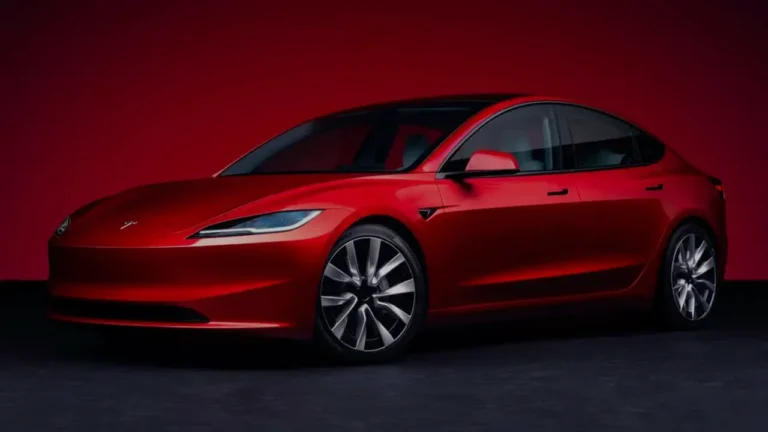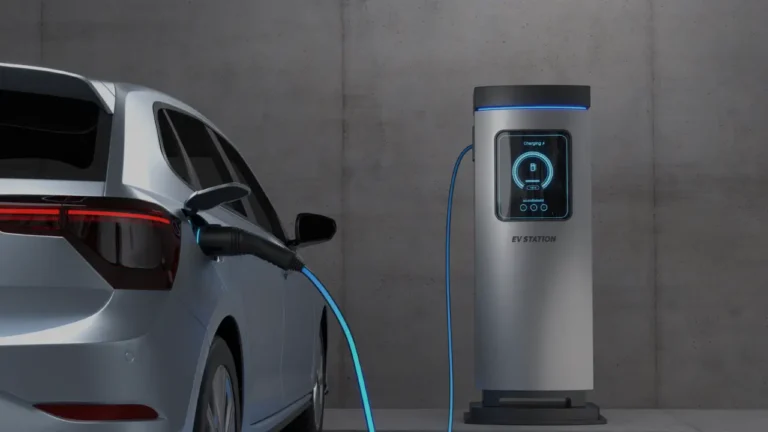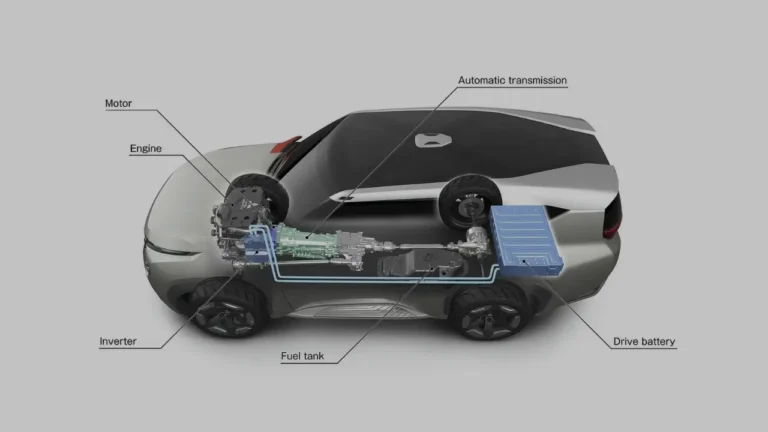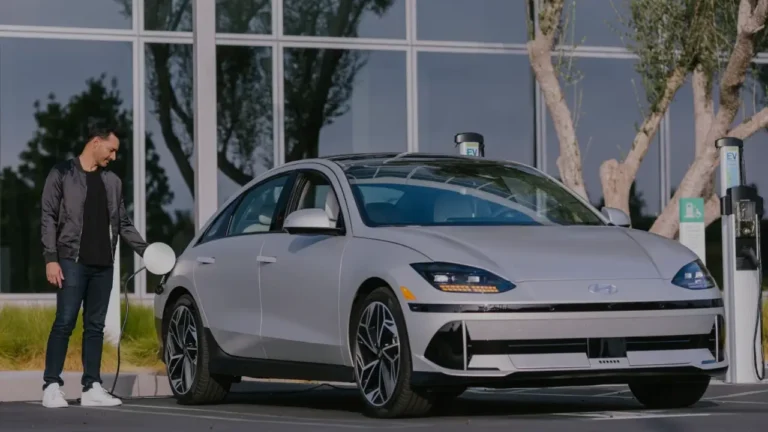
The main difference between an EV, hybrid and plug-in hybrid is how each vehicle receives and uses energy.
A fully electric vehicle, also called a battery-electric vehicle or BEV, runs only on electricity and must be plugged in to recharge.
A conventional hybrid combines a petrol or diesel engine with an electric motor, but it cannot normally be plugged in. Its smaller battery is charged by the engine and regenerative braking.
A plug-in hybrid, or PHEV, sits between the two. It has an engine, electric motor and rechargeable battery. It can cover shorter journeys using electricity before switching to petrol or diesel for longer trips.
Choose an EV when reliable charging is available and most trips fit comfortably within its range. Choose a conventional hybrid when charging is unavailable but lower fuel use is still important. Choose a plug-in hybrid when most daily journeys are short enough for electric driving but regular long trips make an engine useful.
At a Glance
| Feature | Electric vehicle | Conventional hybrid | Plug-in hybrid |
| Common abbreviation | EV or BEV | HEV | PHEV |
| Main energy source | Electricity | Petrol or diesel | Electricity and petrol or diesel |
| Has a combustion engine | No | Yes | Yes |
| Has an electric motor | Yes | Yes | Yes |
| Plugs into a charger | Yes | No | Yes |
| Can drive without fuel | Yes | Only briefly in some models | Yes, within electric range |
| Typical battery size | Large | Small | Medium |
| Tailpipe emissions | None | Yes | None in electric mode; yes when engine runs |
| Long-trip refuelling | Charging | Fuel station | Charging or fuel station |
| Regenerative braking | Yes | Yes | Yes |
| Routine engine servicing | No | Yes | Yes |
| Best suited to | Drivers with charging access | Drivers without charging access | Mixed short and long-distance use |
What Is an Electric Vehicle?
An electric vehicle in this comparison means a fully electric or battery-electric car.
It uses:
- A large traction battery
- One or more electric motors
- An inverter
- Power-control electronics
- A charging port
- A battery-management system
- A thermal-management system
It does not have a petrol or diesel engine, fuel tank or exhaust system.
Electricity stored in the battery powers the motor, which turns the wheels. The battery is replenished by connecting the car to a home, workplace or public charger.
Regenerative braking can return some energy to the battery while the car slows down, but it cannot replace external charging.
Our guide to how electric cars work explains the full energy path from the battery to the wheels.
Main advantages of an EV
- No tailpipe emissions
- Quiet operation
- Fast motor response
- Lower routine drivetrain maintenance
- Home-charging convenience
- No petrol or diesel purchases
- Strong energy efficiency
- Regenerative braking
Main disadvantages of an EV
- Requires regular charging
- Longer journey times may depend on charging stops
- Public charging can be expensive or unreliable
- Range may fall in very hot or cold weather
- Purchase prices can be high in some markets
- Home charger installation may add cost
- Towing and high-speed driving can reduce range considerably
What Is a Hybrid Car?
A conventional hybrid, also called a hybrid electric vehicle or HEV, combines an internal combustion engine with one or more electric motors.
Its battery is much smaller than the battery in a fully electric car.
A standard hybrid does not normally connect to an external charger. Its battery receives energy from:
- Regenerative braking
- The combustion engine
- An onboard generator or motor-generator
The car’s control system decides when to use the engine, electric motor or both.
At low speeds, some full hybrids can drive briefly using only electricity. At higher speeds or under stronger acceleration, the engine usually starts and contributes power.
Main advantages of a hybrid
- No charging required
- Better fuel economy than many equivalent non-hybrid cars
- Familiar fuel-station refuelling
- Useful in stop-start urban driving
- Regenerative braking reduces wasted energy
- No need to plan journeys around chargers
- Often cheaper than an equivalent PHEV or EV
Main disadvantages of a hybrid
- Still burns fuel
- Still produces tailpipe emissions
- Requires engine servicing
- Electric-only range is usually very limited
- Contains both electrical and combustion components
- Fuel savings may be smaller during sustained high-speed driving
- Cannot use cheap home electricity as its main energy source
What Is a Plug-In Hybrid?
A plug-in hybrid combines the systems found in an EV and a conventional car.
It has:
- A rechargeable traction battery
- An electric motor
- A charging port
- A petrol or diesel engine
- A fuel tank
- An exhaust system
- Power electronics
- Regenerative braking
Its battery is larger than a conventional hybrid battery but smaller than the pack in most fully electric cars.
A PHEV can be connected to an external power source. When charged, it may complete short or medium-length journeys using electricity alone.
Once the battery reaches a low charge level, the vehicle may switch to hybrid operation and use its engine. Some PHEVs also blend engine and electric power before the battery is depleted.
Main advantages of a plug-in hybrid
- Electric driving for shorter trips
- Engine backup for longer journeys
- Lower fuel use when charged regularly
- No need to depend entirely on public charging
- Regenerative braking
- Familiar fuel-station access
- Potentially suitable for drivers transitioning to electric motoring
Main disadvantages of a plug-in hybrid
- Must be charged regularly to deliver its main benefits
- Still requires engine maintenance
- Usually heavier than an equivalent hybrid or EV
- Carries both a fuel system and electric drivetrain
- Can be expensive to buy
- Fuel economy may be poor when driven with a depleted battery
- Boot or cabin space may be reduced by the battery
- Some models charge slowly compared with EVs
How Their Powertrains Differ
The simplest way to understand these vehicle types is to follow how energy reaches the wheels.
Electric vehicle energy flow
Electricity supply → battery → inverter → electric motor → wheels
An EV receives its main energy from the electricity grid. It does not use liquid fuel.
Hybrid energy flow
Fuel tank → engine → transmission → wheels
with assistance from:
Battery → electric motor → wheels
The engine remains the main long-term energy source because the vehicle cannot be plugged in.
Plug-in hybrid energy flow
During electric driving:
Electricity supply → battery → electric motor → wheels
After the battery is depleted or when more power is needed:
Fuel tank → engine → transmission → wheels
The exact operating strategy differs between models. Some PHEVs prioritise electric driving, while others blend both power sources more often.
Charging Differences
Charging is one of the biggest practical differences between these vehicles.
Charging an EV
A fully electric car must be connected to an external power source.
It can usually charge from:
- A domestic socket, where permitted
- A dedicated home wallbox
- Workplace charging
- Public AC chargers
- Public DC rapid or fast chargers
Home charging is often the easiest and least expensive option.
The charging time depends on battery size, charger output, the car’s charging limit, temperature and battery charge level.
Charging a hybrid
A conventional hybrid does not plug in.
The battery charges through regenerative braking and energy supplied by the engine.
The driver uses a normal fuel station in the same way as with a petrol or diesel car.
Charging a plug-in hybrid
A PHEV plugs into home, workplace or public charging equipment.
Because its battery is smaller than an EV battery, it may take less time to fill. However, many plug-in hybrids accept lower charging power than modern fully electric cars.
Some PHEVs do not support DC fast charging at all. Others offer it, but the maximum rate may still be relatively low.
A PHEV can continue driving after its battery charge falls because the engine provides further range.
Our EV charging guide explains AC charging, DC rapid charging, connector types and home charger requirements.
Driving Range Comparison
Range should be considered differently for each powertrain.
Electric vehicle range
An EV has a single main driving range based on the energy stored in its battery.
Modern electric cars can cover anything from short urban distances to several hundred kilometres or miles per charge, depending on the model.
Range may fall because of:
- Cold or very hot weather
- High-speed motorway driving
- Cabin heating or cooling
- Heavy cargo
- Towing
- Roof boxes
- Low tyre pressure
- Steep roads
- Aggressive acceleration
Hybrid range
A hybrid’s range is similar to that of a normal petrol or diesel vehicle because fuel remains its main energy source.
The electric system reduces fuel consumption but does not provide a large independent driving range.
Once the fuel tank is low, the driver refuels at a normal station.
Plug-in hybrid range
A PHEV has two relevant range figures:
- Electric-only range
- Total range using electricity and fuel
The electric range may be enough for commuting, school runs and local errands. When that range is used, the engine allows the journey to continue.
This makes PHEVs attractive on paper, but real-world fuel savings depend heavily on frequent charging.
A plug-in hybrid driven mainly with an empty battery behaves more like a heavy conventional hybrid and may use more fuel than buyers expect.
Which Uses the Least Fuel?
A fully electric vehicle uses no petrol or diesel.
A conventional hybrid normally uses less fuel than an equivalent non-hybrid car, particularly in urban and stop-start driving.
A plug-in hybrid can use very little fuel when:
- It is charged regularly
- Daily journeys fit within its electric range
- The driver uses electric mode effectively
- Longer engine-powered journeys are occasional
However, a PHEV may consume substantial fuel when:
- It is rarely charged
- It is used mainly for motorway driving
- The battery is depleted
- The vehicle is large and heavy
- Cabin heating frequently starts the engine
- The driver accelerates aggressively
Official PHEV fuel-economy figures can look unusually high because the test combines electric and engine operation. Buyers should also examine the fuel-economy figure for engine-only or charge-depleted driving.
Running-Cost Comparison
Running costs depend on local electricity prices, fuel prices, annual mileage and charging habits.
| Ownership cost | EV | Hybrid | Plug-in hybrid |
| Electricity cost | Main energy expense | None from external charging | Important when regularly charged |
| Fuel cost | None | Main energy expense | Low or high depending on charging |
| Engine servicing | Not required | Required | Required |
| Brake wear | Often reduced by regeneration | Often reduced | Often reduced |
| Tyre cost | Can be high on heavy or powerful models | Usually conventional | Can be high because of weight |
| Home charger | Often recommended | Not needed | Useful but not always essential |
| Public charging | May be needed | Not applicable | Sometimes used |
| Battery warranty | Important | Relevant but smaller battery | Important |
| Road tax and incentives | Market-dependent | Market-dependent | Market-dependent |
When an EV may cost less to run
An EV is often financially attractive when the owner:
- Charges mainly at home
- Drives a high annual mileage
- Pays moderate electricity prices
- Avoids expensive rapid charging
- Keeps the vehicle long enough to benefit from lower servicing needs
When a hybrid may cost less overall
A hybrid may make sense when:
- The purchase price is lower than an EV or PHEV
- Home charging is unavailable
- Annual mileage is moderate
- Most driving is urban or mixed
- The owner wants better fuel economy without changing refuelling habits
When a PHEV may cost less to run
A PHEV can work well when:
- The driver charges overnight
- Most daily trips fall within electric range
- Long-distance trips occur regularly but not daily
- Electricity is cheaper than fuel
- The engine is used only when necessary
A PHEV that is never plugged in may offer weak value because the owner pays for a larger battery and charging hardware without receiving the full benefit.
Maintenance Differences
Electric vehicle maintenance
A fully electric car does not need:
- Engine oil changes
- Spark plugs
- Fuel filters
- Timing belts
- Exhaust repairs
- Conventional engine servicing
It still requires maintenance for:
- Tyres
- Brakes
- Suspension
- Steering
- Cabin filters
- Coolant systems
- Air conditioning
- Wiper blades
- Charging equipment
- The 12-volt battery
Hybrid maintenance
A hybrid still has a combustion engine and therefore needs routine engine servicing.
It also contains:
- A traction battery
- Electric motors
- Inverters
- Hybrid control electronics
- Cooling equipment
The engine may operate less frequently under some conditions, but maintenance intervals must still follow the manufacturer’s schedule.
Plug-in hybrid maintenance
A PHEV has the maintenance needs of both an electric and combustion vehicle.
It includes:
- An engine
- Fuel and exhaust systems
- A traction battery
- Electric motors
- Charging hardware
- Power electronics
Although the engine may run less often, time-based servicing may still be required.
A PHEV is mechanically and electronically more complex than either a simple combustion car or a pure EV because it carries two propulsion systems.
For model-specific service considerations, see the electric car maintenance guide.
Emissions Comparison
Electric vehicle emissions
A fully electric car produces no tailpipe emissions.
It can still be linked to emissions from:
- Electricity generation
- Battery production
- Vehicle manufacturing
- Raw-material processing
- Tyre wear
- End-of-life disposal and recycling
The carbon impact of charging changes according to the local electricity mix.
Hybrid emissions
A hybrid produces tailpipe emissions whenever its engine runs.
It may emit less than a similar non-hybrid vehicle because the electric system reduces fuel use, especially in urban traffic.
Plug-in hybrid emissions
A PHEV produces no tailpipe emissions while operating entirely on electricity.
It produces tailpipe emissions when the engine starts.
Its real-world emissions depend heavily on:
- How frequently it is charged
- How much distance is covered electrically
- Vehicle size
- Driving style
- Outside temperature
- Journey length
- Engine use
A regularly charged PHEV used for short trips may consume little fuel. The same vehicle used without charging may produce much higher emissions.
Performance and Driving Experience
Electric vehicles
EVs usually provide immediate torque and smooth acceleration.
Most use a single-speed transmission, so there are no conventional gear changes during acceleration.
They are quiet at low speeds, although tyre and wind noise become more noticeable as speed rises.
Hybrids
Hybrids may switch between engine power, electric assistance and combined operation.
The transition can feel smooth in well-designed systems, although engine noise may rise during strong acceleration.
Some hybrids use continuously variable or electrically controlled transmissions that allow the engine to operate at an efficient speed.
Plug-in hybrids
A PHEV may feel like an EV during shorter trips and a hybrid once the engine starts.
Its acceleration can be strong because the engine and motor may work together.
However, the extra battery and dual powertrain can add weight. This may affect handling, braking and efficiency.
City Driving
Best city option: EV
An EV is often the strongest city choice because it:
- Produces no local tailpipe emissions
- Uses energy efficiently at low speeds
- Recovers energy during frequent braking
- Operates quietly
- Avoids engine idling
Hybrid in the city
A conventional hybrid also works well in stop-start traffic.
It can recover braking energy, switch off the engine when stationary and use electric assistance during acceleration.
PHEV in the city
A charged PHEV can complete urban journeys without starting the engine.
Its advantage falls if the driver does not plug it in or if the engine starts frequently for heating, acceleration or battery management.
Motorway and Long-Distance Driving
EV on long trips
Modern EVs can handle long-distance journeys, but the experience depends on:
- Real-world motorway range
- Charging speed
- Charger availability
- Charging-network reliability
- Route conditions
- Weather
An efficient EV with strong rapid-charging performance may be easier to use on long trips than a less efficient model with a larger advertised battery.
Hybrid on long trips
A hybrid behaves much like a petrol or diesel car on long journeys.
It can be refuelled quickly and does not require charging planning.
Its fuel-economy advantage may be smaller on sustained high-speed roads than in city traffic.
PHEV on long trips
A PHEV removes most range concerns because the engine can continue once the battery is depleted.
However, after the electric range is used, the vehicle must carry the weight of its battery and electric system while running on fuel.
Buyers who drive long motorway distances every day may not receive the expected fuel savings from a PHEV.
Which Is Better Without Home Charging?
A conventional hybrid is usually the most practical choice when home and workplace charging are unavailable.
An EV can still work for drivers with dependable, reasonably priced public charging. However, public charging may cost more and require more planning than overnight home charging.
A PHEV without regular charging is difficult to justify. Its main advantage comes from using external electricity for frequent journeys.
Buying a plug-in hybrid without a realistic plan to charge it can mean:
- Carrying unnecessary battery weight
- Paying more for the vehicle
- Using more petrol than expected
- Missing most of the environmental benefit
- Receiving limited value from the charging system
Which Is Better for Apartment Residents?
The answer depends on local charging access.
An apartment resident may still use an EV when:
- The building provides charging
- Workplace charging is available
- Nearby public chargers are reliable
- Weekly mileage is low enough for occasional charging
- Charging prices remain reasonable
A hybrid may be easier where no dependable charging option exists.
A PHEV may make sense only when it can be charged regularly. Occasional public charging is possible, but using a public charger for a small PHEV battery may be inconvenient or expensive.
Which Is Better for High Annual Mileage?
An EV may provide the lowest energy and maintenance costs for high-mileage drivers who can charge cheaply and conveniently.
A hybrid may suit high-mileage drivers who spend time in mixed traffic but cannot plug in.
A PHEV works best when a large percentage of annual distance falls within its electric range. It becomes less compelling when most mileage consists of long journeys completed after the battery is depleted.
Which Is Better for Towing?
Towing suitability depends on the individual model rather than powertrain type alone.
An EV may offer strong torque, but towing can reduce driving range sharply.
A hybrid may provide good range and quick refuelling, although not every hybrid is approved for heavy towing.
A PHEV may combine strong motor and engine output, but the vehicle is already carrying a heavy battery. Payload and towing limits must be checked carefully.
Always confirm:
- Braked towing capacity
- Unbraked towing capacity
- Gross vehicle weight
- Gross train weight
- Maximum nose weight
- Payload after passengers and luggage
Do not assume that a large electric or hybrid SUV automatically has a high towing rating.
Battery Differences
| Battery factor | EV | Hybrid | Plug-in hybrid |
| Relative battery size | Largest | Smallest | Medium |
| External charging | Required | Not available | Available |
| Main role | Powers all driving | Assists engine and stores recovered energy | Powers electric driving and assists engine |
| Effect of degradation | May reduce driving range | Usually less noticeable to driver | May reduce electric-only range |
| Battery warranty | Major buying factor | Still important | Major buying factor |
EV and PHEV buyers should distinguish between total and usable battery capacity.
Manufacturers often reserve part of the battery to help control degradation and protect the cells from extreme charge levels.
Used-car buyers should review:
- Battery health
- Remaining warranty
- Charging history where available
- Real-world electric range
- Fault records
- Thermal-management design
- Manufacturer capacity guarantees
EV vs Hybrid vs PHEV
Buy an EV when:
- You can charge at home or work
- Most trips fit comfortably within the vehicle’s range
- You want to stop buying petrol or diesel
- Lower routine drivetrain maintenance matters
- Public charging supports occasional long trips
- You are comfortable planning charging stops
Buy a hybrid when:
- You cannot charge regularly
- You want familiar fuel-station convenience
- Most driving is urban or mixed
- You want better fuel economy than a normal petrol car
- You are not ready to depend on charging infrastructure
- A lower purchase price matters
Buy a plug-in hybrid when:
- You can charge every day
- Most daily trips fit within its electric range
- You also take regular long journeys
- You want electric commuting with engine backup
- You understand that fuel savings depend on charging behaviour
- You are willing to maintain both systems
The Most Common Buying Mistake
The biggest mistake is choosing a powertrain based only on its official fuel-economy or range figure.
A better decision starts with real use.
Before buying, calculate:
- Average daily distance
- Longest regular journey
- Percentage of motorway driving
- Home electricity cost
- Public charging availability
- Petrol or diesel cost
- Annual mileage
- Frequency of long trips
- Parking and charging access
- Time the car is normally parked overnight
A PHEV may be excellent for a 30-kilometre daily commute followed by occasional long trips.
The same PHEV may be poor value for a driver covering 200 motorway kilometres every working day without charging.
An EV may be easy to own for a household with a driveway and home charger.
The same EV may require more planning for a driver who depends entirely on expensive public charging.
Frequently Asked Questions
Is an EV the same as a hybrid?
No. A fully electric vehicle uses only electricity and has no combustion engine. A hybrid combines an engine with an electric motor.
What is the difference between a hybrid and a plug-in hybrid?
A conventional hybrid cannot normally be plugged in and has a small battery. A plug-in hybrid has a larger battery that can be charged externally and provides a longer electric-only range.
Does a plug-in hybrid charge while driving?
A PHEV can recover some energy through regenerative braking and may receive energy from its engine. External charging is still needed to make full use of its electric range.
Can a hybrid run without petrol?
A conventional full hybrid may move briefly using electricity, but petrol or diesel remains its main external energy source. It cannot normally complete long journeys without fuel.
Can a plug-in hybrid run without petrol?
A PHEV can complete journeys within its electric range without using petrol, provided the engine does not start. Fuel is needed once the battery is depleted or when the vehicle requests engine assistance.
Can an electric car run on petrol?
No. A battery-electric vehicle has no fuel tank or combustion engine.
Is a plug-in hybrid worth buying without home charging?
Usually not. A PHEV provides its strongest fuel-saving and emissions benefits when it is charged regularly.
Which has the lowest maintenance cost?
A fully electric car generally has fewer routine drivetrain maintenance requirements because it has no engine, exhaust system or fuel system.
Which is better for long-distance driving?
A hybrid or PHEV offers quick fuel-station refuelling. A modern EV can also handle long trips, but the experience depends on motorway range and charging performance.
Which is better for city driving?
An EV is usually the strongest option when charging is available. Hybrids are also effective in urban traffic because regenerative braking and engine stop-start systems reduce fuel use.
Which vehicle produces the fewest tailpipe emissions?
A fully electric car produces no tailpipe emissions. A PHEV also produces none while operating in electric mode. A hybrid produces emissions whenever its engine runs.
Is a hybrid battery the same as an EV battery?
No. A hybrid battery is usually much smaller because it assists the engine rather than powering all driving.
Do plug-in hybrids need servicing?
Yes. A PHEV has a combustion engine, fuel system, electric drivetrain and charging equipment. It must follow the manufacturer’s engine and vehicle service schedule.
What happens when a PHEV battery runs out?
The vehicle normally starts or relies more heavily on its combustion engine and continues operating like a hybrid.
Are all cars described as EVs fully electric?
No. The term EV is sometimes used broadly for several electrified powertrains. Buyers should look for BEV when they specifically want a fully electric vehicle.
Summary
There is no single winner for every driver.
A fully electric vehicle is usually the best choice for drivers who can charge reliably, want the lowest dependence on liquid fuel and can complete most journeys within the car’s practical range.
A conventional hybrid is the easiest option for drivers who want lower fuel consumption but cannot plug in at home or work.
A plug-in hybrid can combine electric commuting with long-distance flexibility, but only when it is charged regularly. Without frequent charging, its higher weight, purchase price and mechanical complexity can weaken the case for buying one.