Electric cars are worth considering in 2026 when a buyer can charge reliably, chooses a model with enough real-world range and keeps the vehicle long enough to benefit from lower energy and maintenance costs.
They are not automatically the cheapest or easiest choice for everyone.
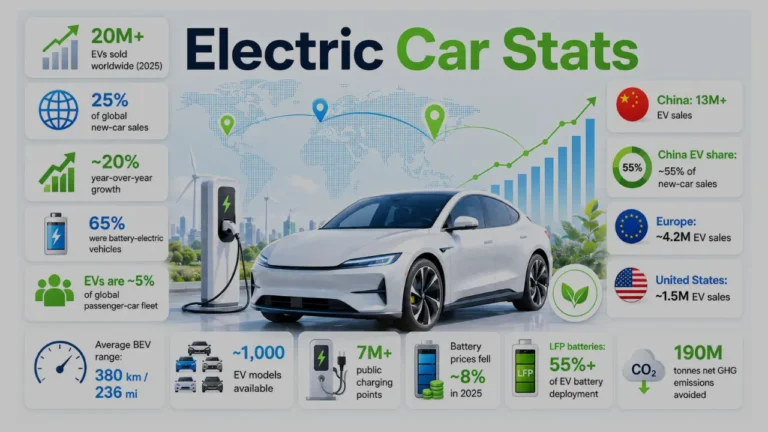
The market itself has moved firmly toward electric vehicles. More than 20 million electric cars were sold globally in 2025, accounting for one in four new-car sales. Around 23 million are expected to be sold in 2026, taking their global market share close to 30%.
However, popularity alone does not make an electric car the right purchase. Buyers still need to compare the full ownership cost, charging routine, insurance, depreciation, battery warranty and expected use.
Electric cars are generally worth it in 2026 for drivers who can charge at home or work, cover regular mileage and choose a suitably priced model. They may not be worth it when the purchase-price premium is high, public rapid charging is the only realistic option or the vehicle’s range and towing limits do not match the owner’s needs.
At a Glance
| Buyer situation | Is an EV likely to be worth it? |
| Home charging and regular daily driving | Usually yes |
| Workplace charging but no home charger | Often yes |
| Dependence on costly public rapid charging | Less certain |
| Frequent urban and suburban driving | Usually yes |
| Regular long motorway journeys | Model and charging network dependent |
| High annual mileage with cheap home electricity | Often financially strong |
| Very low annual mileage | Savings may take longer |
| Frequent heavy towing | May not be the easiest option |
| Apartment living without dependable charging | Often difficult |
| Buying a well-priced used EV | Potentially very good value |
| Replacing the car every two or three years | Depreciation needs close attention |
| Keeping the car for many years | Lower running costs become more valuable |
Electric Cars in 2026
Electric cars have become a mainstream part of the global vehicle market.
Sales passed 20 million in 2025, growing by approximately 20% in one year. EVs represented about 25% of new cars sold worldwide. China recorded more than 13 million sales, Europe reached approximately 4.2 million and the United States sold around 1.5 million.
The number of available models has also increased. Buyers can now find electric hatchbacks, saloons, crossovers, SUVs, luxury cars, vans and performance models across a wide price range.
Several factors have improved the case for buying an EV:
- More models are available
- Battery prices have declined
- Average vehicle range has increased
- Public charging networks have expanded
- Home charging remains cheaper than fuel in many markets
- Electric drivetrains need less scheduled maintenance
- Used EV prices have become more accessible in some markets
- Battery warranties reduce some long-term ownership risk
- Workplace and residential charging access is improving
These improvements do not remove every drawback. Purchase prices, public charger costs, depreciation and regional charging gaps still affect the value proposition.
Can You Charge at Home?
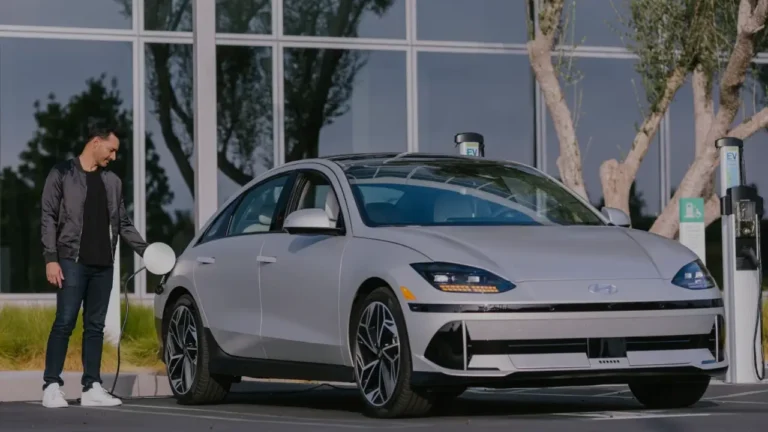
Home charging is often the factor that decides whether an electric car is worth buying.
An owner who can plug in overnight can begin most days with enough energy for normal travel. This removes much of the inconvenience associated with visiting fuel stations or waiting at public chargers.
Home electricity is also usually cheaper than DC rapid charging.
An EV is easier to justify when:
- The car is parked near an electricity supply
- A wallbox can be installed safely
- Overnight electricity tariffs are available
- Daily mileage is predictable
- The battery can be replenished while the car is not being used
An EV is harder to justify when:
- Parking is on the street
- The building does not allow charger installation
- Nearby public chargers are unreliable
- Rapid charging costs close to or more than petrol
- The driver must make a separate trip to charge
- Charging bays are frequently occupied
Drivers without home charging should not reject an EV automatically. Workplace charging, reliable neighbourhood chargers or low weekly mileage may still make ownership practical.
However, buyers should test the charging routine before purchasing. Check the location, price, speed, payment method and reliability of chargers that would realistically be used each week.
Are Electric Cars Cheaper to Run?
Electric cars can be cheaper to power than petrol or diesel cars, especially when charged at home.
Electric motors use energy more efficiently than combustion engines. A petrol engine loses a large proportion of its fuel energy through heat, exhaust and mechanical friction. An electric drivetrain converts a greater share of stored energy into movement.
The US Environmental Protection Agency estimated in March 2026 that replacing one household car with an EV could reduce annual fuel spending by approximately $500 to $1,000, although actual savings vary by vehicle, mileage and local energy prices.
Simple charging-cost formula
To estimate the cost of a full charge:
Usable battery capacity × electricity price = charging cost
For example:
- Usable battery: 60 kWh
- Electricity rate: $0.15 per kWh
- Approximate full charge cost: $9
If the vehicle covers 240 miles on that energy, the electricity cost is approximately 3.75 cents per mile.
A petrol car achieving 30 mpg with fuel at $3.60 per gallon would cost approximately 12 cents per mile.
These figures are only examples. Buyers should use their local electricity rate, fuel price and the actual efficiency of the vehicles being compared.
Public rapid charging changes the calculation
Rapid charging is convenient but can be substantially more expensive than home charging.
A driver who uses public DC charging for most of their energy may save much less than a home-charging owner. In some locations, rapid charging an inefficient electric SUV can cost as much per mile as driving an economical hybrid or petrol car.
The correct comparison is not simply electricity versus petrol. It is:
- Home electricity versus fuel
- Workplace charging versus fuel
- Public AC charging versus fuel
- Public rapid charging versus fuel
Our electric car charging guide explains the difference between home, public AC and DC rapid charging.
Electric Car Maintenance Costs
Electric cars generally need less scheduled drivetrain maintenance than combustion vehicles.
They do not require:
- Engine-oil changes
- Spark-plug replacement
- Timing-belt replacement
- Fuel-filter servicing
- Exhaust-system repairs
- Traditional engine tune-ups
- Clutch replacement in the usual sense
The US Department of Energy has published an estimated scheduled maintenance cost of 6.1 cents per mile for battery-electric vehicles, compared with 10.1 cents per mile for conventional combustion cars.
This estimate is not a guarantee for every model, but it illustrates why EV servicing can cost less over time.
Electric cars still need maintenance
An EV still requires attention to:
- Tyres
- Brake fluid
- Brake components
- Suspension
- Steering
- Wheel alignment
- Air conditioning
- Cabin filters
- Cooling systems
- Wiper blades
- Lights
- Charging equipment
- Software and fault warnings
- The 12-volt battery
Regenerative braking may reduce wear on brake pads and discs. However, lightly used friction brakes can still corrode and should be inspected.
Tyres can also become a significant cost. Electric cars are often heavy and can deliver strong torque, both of which may increase tyre wear when the vehicle is driven aggressively.
Read our electric car maintenance checklist before comparing service budgets.
Are EVs Still More Expensive?
The initial price remains one of the strongest arguments against some electric cars.
In several markets, an EV can still cost more than a similar petrol or hybrid model. The difference depends on:
- Vehicle size
- Battery capacity
- Brand
- Local production
- Import duties
- Taxes
- Government incentives
- Dealer discounts
- Standard equipment
- Financing rates
Price gaps have narrowed in some parts of the world. The average battery-electric vehicle price fell by more than 10% in China and by around 6% in Germany during 2025.
Affordability remains uneven. China has a large selection of lower-priced EVs, while buyers in some European, North American and emerging markets still face fewer affordable choices.
Compare equivalent specifications
A fair comparison should account for standard equipment.
Some EVs include features that may cost extra on a basic petrol model, such as:
- Automatic transmission
- Advanced driver assistance
- Large infotainment displays
- Remote climate control
- Connected-car functions
- Strong acceleration
- Heat-pump systems
- Premium lighting
That does not make every EV good value. It simply means buyers should compare vehicles with similar size, performance and equipment rather than comparing an entry-level petrol car with a highly specified electric model.
Total Cost of Ownership
The total cost of ownership includes more than the amount paid at the dealership.
A useful EV comparison should include:
- Purchase price
- Financing cost
- Taxes and registration
- Charger installation
- Electricity or fuel
- Scheduled servicing
- Repairs
- Insurance
- Tyres
- Depreciation
- Resale value
- Incentives
- Road-use or congestion charges
An EV costing more initially may still be cheaper over several years if it covers high mileage using low-cost home electricity.
The opposite can also happen. A low-mileage driver may never recover a large purchase-price premium through energy and servicing savings.
Example ownership comparison
Consider two similarly sized vehicles:
| Cost category | Electric car | Petrol car |
| Purchase price | Higher | Lower |
| Home charger | Additional cost | Not required |
| Annual energy cost | Lower with home charging | Higher in many markets |
| Routine servicing | Usually lower | Usually higher |
| Insurance | Model dependent | Model dependent |
| Tyres | May cost more | Usually conventional |
| Depreciation | Can be unpredictable | Often more established |
| Long-trip energy | May rise with rapid charging | Consistent fuel-station pricing |
The winner depends on the actual numbers, not the powertrain label.
EV Depreciation and Resale Value
Depreciation is one of the biggest uncertainties for electric car buyers in 2026.
Some EVs have lost value quickly because of:
- Manufacturer price cuts
- New models with better range or charging
- Changes to government incentives
- Concerns about battery condition
- Weak used-car demand
- Rapid changes in technology
- High new-car discounts
- Limited repair support
- Expensive insurance categories
Other models retain value more effectively because they offer strong range, dependable charging, recognised brands, good warranties and broad service support.
Depreciation can benefit used-EV buyers
Rapid depreciation is painful for the first owner but may create good opportunities in the used market.
A two- or three-year-old EV may cost far less than it did when new while still retaining:
- Most of its original driving range
- Several years of battery warranty
- Modern safety equipment
- Strong charging performance
- Low routine servicing needs
Used buyers should not focus only on the discount. They should check battery condition, warranty coverage, accident history, charging performance and local repair support.
How Long Do Electric Car Batteries Last?
Modern electric car batteries are designed to operate for many years, but their capacity gradually declines.
Battery degradation means the pack stores less energy than it did when new. The vehicle may remain fully usable, but its maximum driving range can fall.
The rate of degradation depends on:
- Battery chemistry
- Temperature
- Charging habits
- Time spent at very high charge
- Frequent deep discharge
- DC rapid-charging frequency
- Mileage
- Thermal-management quality
- Software controls
Most EV manufacturers provide a separate traction-battery warranty. Coverage commonly lasts for a set number of years or miles and may include a minimum retained-capacity threshold.
Terms vary considerably, so buyers should read the exact warranty rather than assuming all battery guarantees are the same.
Check the EV battery lifespan for a detailed explanation of degradation and warranty terms.
Is Electric Car Range Good Enough in 2026?
For many buyers, yes.
The average battery-electric car offered close to 380 kilometres, or approximately 236 miles, of rated range in 2025.
Many models provide more, while smaller city EVs may offer less. Range should be judged against actual travel rather than the longest journey a buyer might make once a year.
A driver covering 30 miles per day may not need a 350-mile battery. Choosing a larger battery than necessary can raise the vehicle’s price and weight.
Range matters differently with home charging
A petrol car may need a long range because the owner waits until the tank is nearly empty before refuelling.
An EV owner with home charging can add energy every night. This means the vehicle may begin each day with a high state of charge rather than waiting for the battery to become nearly empty.
Daily usable range can therefore matter more than maximum theoretical range.
Is Public Charging Good Enough?
Public charging has expanded rapidly, but its quality varies by country, city and route.
More than seven million public charging points were operating worldwide by the end of 2025. Nearly 1.8 million were added during that year.
The number alone does not show whether a local network is good.
A useful charging network needs:
- Suitable locations
- Working equipment
- Clear pricing
- Easy payment
- Adequate power
- Enough connectors
- Safe access
- Reliable navigation data
- Support when faults occur
A region may have many slow chargers but few rapid sites suitable for motorway travel. Another may have fewer locations but stronger high-power coverage.
Before buying, examine the routes that matter to you rather than relying on a national charger total.
How Long Does Charging Take?
Charging time depends on the battery, charger and vehicle.
Domestic socket
A normal household outlet can be slow. It may be suitable for low daily mileage but could take more than a day to refill a large battery.
Charging from a domestic socket should only be done with approved equipment and a suitable electrical installation.
Home wallbox
A dedicated wallbox is the normal home-charging option in many markets.
Depending on local electrical standards and vehicle limits, it can add a meaningful amount of range overnight.
Public AC charging
Public AC chargers are useful at workplaces, shopping centres, hotels and longer parking stops.
The car’s onboard charger determines the maximum rate it can accept.
DC rapid charging
A rapid charger can add substantial range during a shorter stop.
The maximum advertised rate is not maintained for the entire session. Charging usually slows as the battery fills, particularly above approximately 80%.
Battery temperature, charger output and the vehicle’s charging curve all affect the result.
For frequent long-distance travel, compare how long the car takes to charge from 10% to 80%, not only its peak kW figure.
Are Electric Cars Good for Long Journeys?
An electric car can handle long journeys, but the experience depends heavily on the model and charging route.
A good long-distance EV should offer:
- Efficient motorway energy use
- Enough real-world range
- Strong DC charging performance
- Battery preconditioning
- Accurate route planning
- Dependable charger compatibility
- Comfortable seating
- Reasonable charging stops
A vehicle with a large battery is not automatically the best long-distance EV.
An efficient car that charges rapidly may complete a journey faster than a heavier model with a larger battery but slower charging.
Drivers should also consider whether they are comfortable combining charging with meal, rest or bathroom stops.
Are Electric Cars Worth It for City Driving?
Electric cars are particularly well suited to urban and suburban driving.
They can provide:
- Quiet low-speed operation
- No tailpipe emissions
- Smooth acceleration
- Regenerative braking
- Efficient stop-start performance
- No engine idling
- Easy home replenishment
Short journeys can be inefficient for combustion engines because the engine may not reach its ideal operating temperature. EVs do not face the same warm-up requirement.
City ownership becomes less convenient when the driver has no dependable charging location.
Are Electric Cars Worth It for High-Mileage Drivers?
High-mileage drivers may receive some of the strongest financial benefits, provided charging is affordable.
More miles can mean:
- Greater fuel savings
- More value from lower maintenance
- Faster recovery of the purchase-price premium
- Better use of home or workplace charging
However, high mileage also increases:
- Tyre wear
- Public charging dependence on long routes
- Depreciation related to mileage
- Exposure to charging downtime
An EV is particularly attractive for high mileage when the driver returns to a regular base and can charge during long parking periods.
Are Electric Cars Worth It for Low-Mileage Drivers?
The financial argument may be weaker for very low-mileage drivers.
A person driving only a few thousand miles per year spends less on fuel, so there is less potential saving.
For these buyers, an EV may still be worth choosing for:
- Quiet operation
- Home-charging convenience
- Low local emissions
- Performance
- Technology
- Personal environmental priorities
However, paying a large premium solely to save on fuel may not make financial sense.
A well-priced used EV may be more suitable than a costly new model.
Are Electric Cars Good for Towing?
Electric motors provide strong low-speed torque, but towing can reduce range substantially.
A trailer or caravan adds:
- Weight
- Aerodynamic drag
- Rolling resistance
This increases energy consumption and shortens the distance between charging stops.
Charging with a trailer can also be awkward when bays are not designed for long vehicle combinations.
Before buying an EV for towing, check:
- Approved towing capacity
- Real-world towing range
- Payload
- Gross train weight
- Charger layout on regular routes
- Energy use with the intended trailer
- Availability of pull-through charging bays
Drivers who tow heavy loads frequently over long distances may find a hybrid or combustion vehicle easier to use in 2026.
Are EVs Practical in Cold Weather?
Electric cars work in cold weather, but range and charging speed may decline.
Cold conditions can:
- Slow battery chemistry
- Increase cabin-heating demand
- Limit regenerative braking temporarily
- Reduce charging speed
- Increase energy use
- Lower tyre pressure
A heat pump can improve cabin-heating efficiency in some conditions. Battery preconditioning can also prepare the pack for driving or rapid charging.
Drivers in cold climates should compare winter tests rather than relying only on official range figures.
Are EVs Practical in Hot Weather?
High temperatures can also affect battery performance and charging.
The thermal-management system may use energy to cool:
- The battery
- Motor
- Inverter
- Cabin
Fast charging may slow when the battery becomes too hot.
A well-designed liquid-cooled battery system can manage heat more effectively than a basic passive system.
Buyers in very hot regions should review thermal-management design, battery warranty terms and owner reports from similar climates.
Electric Car Insurance and Repair Costs
Insurance is not automatically cheaper for an EV.
Premiums depend on:
- Vehicle value
- Performance
- Driver profile
- Repair complexity
- Parts availability
- Battery location
- Manufacturer repair procedures
- Local accident data
- Specialist labour availability
Some EV repairs can be expensive because of sensors, body structures, high-voltage safety procedures and limited parts supply.
Before buying, obtain an insurance quote for the exact model and trim.
Do not assume that lower servicing costs will offset an unexpectedly high annual insurance premium.
Summary
Yes, electric cars are worth it for a growing number of buyers in 2026.
The strongest case exists for drivers who can charge at home, cover moderate or high annual mileage and choose a model with the right combination of price, efficiency, range and charging speed.
The case is weaker for drivers who rely entirely on expensive rapid charging, regularly tow heavy loads, travel through areas with poor charger coverage or pay a large premium over an equivalent hybrid.
Frequently Asked Questions
Are electric cars cheaper to own in 2026?
They can be cheaper when charged mainly at home and driven enough to benefit from lower energy and maintenance costs. Purchase price, insurance and depreciation may reduce those savings.
Is it worth buying an electric car without home charging?
It may be worthwhile when workplace or nearby public charging is reliable and reasonably priced. Ownership is generally easier and cheaper with home charging.
Do electric cars really save money?
They often save money on energy and scheduled maintenance. The total saving depends on the purchase-price difference, mileage, electricity price, charging method, insurance and resale value.
How long does it take for an EV to pay for itself?
There is no universal break-even period. A high-mileage home-charging driver may recover the price difference relatively quickly, while a low-mileage driver may never recover a large premium through fuel savings alone.
Are electric cars reliable?
Electric drivetrains have fewer mechanical service components than combustion engines. Reliability still differs by model, software, charging system, suspension, electronics and build quality.
Will an electric car battery need replacing?
Most owners will not automatically need to replace the battery during normal early ownership. Capacity gradually declines, and failures or repairs remain possible. Warranty terms should be checked before purchase.
How many years does an EV battery last?
Battery life varies by chemistry, climate, use and thermal management. Manufacturer warranties commonly cover the battery for a specific period and mileage, sometimes with a retained-capacity guarantee.
Are used electric cars worth buying?
A used EV can offer strong value after depreciation. Buyers should check battery health, remaining warranty, charging speed, accident damage and local repair support.
Are EVs cheaper than hybrids?
An EV may be cheaper to run when home charging is available. A hybrid may cost less to buy and can be easier to use without charging access.
Are electric cars good for long journeys?
Yes, when the vehicle has suitable motorway range, rapid-charging performance and dependable chargers along the route.
Are electric cars suitable for apartments?
They can be when the building, workplace or nearby area offers reliable charging. Apartment ownership becomes difficult when the driver has no dependable charging option.
Is rapid charging bad for the battery?
Modern battery-management systems control charging to protect the pack. Frequent high-power charging under difficult temperature conditions may contribute to wear, but the effect depends on the vehicle and battery design.
Do electric cars lose range in winter?
Yes. Cold temperatures, cabin heating and battery conditioning can reduce range and charging speed. The size of the reduction differs by model and conditions.
Are EVs expensive to insure?
Some are, while others are competitive with equivalent vehicles. Obtain a quote for the exact model before buying.
Should I buy an EV or wait?
Buying now can make sense when a current model meets your needs at an acceptable total cost. Waiting may be sensible when charging access is unresolved, available models are over budget or local infrastructure is not ready.