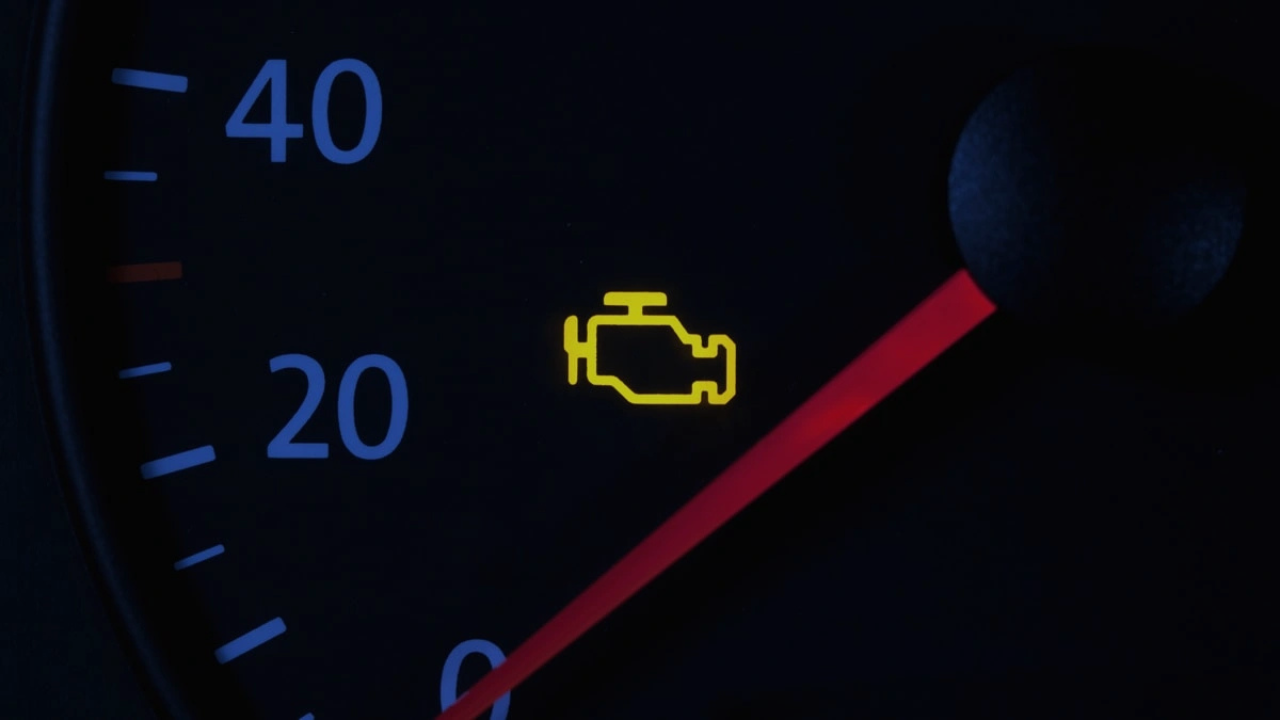
Your check engine light comes on when the car’s computer detects a problem it cannot correct automatically. The cause may be simple, such as a loose fuel cap, or serious, such as an engine misfire, catalytic-converter problem, sensor failure or emissions-system fault.
The light does not tell you the exact repair by itself. It tells you the vehicle has stored a diagnostic trouble code that needs to be read with a scan tool. Consumer Reports explains that when the check engine light comes on, the computer stores a trouble code that helps identify the source of the problem, such as a sensor malfunction or engine misfire.
A check engine light usually means the engine, emissions, fuel, ignition or sensor system has detected a fault. A steady light means you should diagnose it soon. A flashing light usually means a serious misfire that can damage the catalytic converter, so you should reduce speed and stop driving as soon as it is safe.
Check Engine Light at a Glance
| Light behavior | What it usually means | What to do |
| Steady light | Fault detected, but car may still drive normally | Check fuel cap, scan codes, schedule diagnosis soon |
| Flashing light | Serious misfire or urgent fault | Stop driving when safe and get help |
| Light after refueling | Loose fuel cap or EVAP-system issue may be possible | Tighten cap, but scan if light stays on |
| Light with rough running | Misfire, ignition, fuel or sensor issue | Avoid hard driving and diagnose quickly |
| Light with overheating | Serious cooling-system risk | Stop safely and do not keep driving |
| Light with oil warning | Possible engine damage risk | Stop safely and check immediately |
| Light with poor power | Engine protection mode or serious fault | Drive cautiously or tow if unsafe |
What the Check Engine Light Means
The check engine light is part of the vehicle’s onboard diagnostic system.
Modern cars use sensors and control modules to monitor:
- Engine operation
- Fuel mixture
- Ignition timing
- Emissions system
- Oxygen sensors
- Catalytic converter performance
- EVAP system
- Intake air measurement
- Exhaust readings
- Transmission-related faults on some vehicles
When the system detects a problem, it stores a trouble code and turns on the light.
That code is the starting point for diagnosis. It is not always the final answer.
For example, an oxygen-sensor code does not always mean the oxygen sensor is bad. The real issue could be an exhaust leak, wiring fault, rich fuel mixture, vacuum leak or catalytic-converter problem.
Steady Check Engine Light vs Flashing Check Engine Light
A steady and flashing check engine light should not be treated the same.
Steady check engine light
A steady light usually means a fault has been detected, but the car may still be driveable.
You should:
- Check whether the fuel cap is loose
- Reduce hard driving
- Watch for strange noises or smells
- Scan the diagnostic codes
- Schedule repair soon
- Avoid ignoring it for weeks
A steady light can still represent a problem that damages the catalytic converter or reduces fuel economy if ignored.
Flashing check engine light
A flashing light is more urgent.
Consumer Reports states that in late-model cars, a blinking check engine light usually indicates a severe engine misfire that can send unburned fuel into the exhaust system and quickly damage the catalytic converter.
If the light is flashing:
- Slow down
- Avoid hard acceleration
- Pull over safely
- Turn the engine off if it is running badly
- Do not keep driving long distances
- Call roadside assistance or a mechanic
- Tow the car if needed
A flashing check engine light should be treated as urgent.
Common Reasons Your Check Engine Light Comes On
1. Loose or Faulty Fuel Cap
A loose, missing or damaged fuel cap is one of the simplest possible causes.
The fuel cap helps seal the fuel system. If it is loose or damaged, fuel vapor can escape and the emissions system may detect a leak.
AAA notes that a loose or faulty fuel cap can trigger the check engine light because it can allow unintended emissions and fuel vapor loss.
What to do:
- Stop safely.
- Check the fuel cap.
- Tighten it until it clicks if your cap is designed that way.
- Inspect the seal for cracks.
- Replace the cap if damaged.
- Drive normally for a few trips.
- Scan the code if the light stays on.
Do not assume the cap is always the cause. It is only one possibility.
2. Oxygen Sensor Problem
Oxygen sensors measure oxygen levels in the exhaust so the engine computer can adjust the air-fuel mixture.
A bad oxygen sensor may cause:
- Poor fuel economy
- Rough running
- Higher emissions
- Failed emissions test
- Check engine light
- Catalytic-converter stress
AAA explains that oxygen sensors are part of the emissions-control system and help regulate the air-fuel ratio.
An oxygen-sensor code should be diagnosed properly. Replacing the sensor without checking wiring, exhaust leaks or fuel-trim problems may not fix the issue.
3. Engine Misfire
A misfire means one or more cylinders are not burning fuel correctly.
Misfires can be caused by:
- Bad spark plugs
- Bad ignition coils
- Faulty spark plug wires
- Fuel injector problems
- Vacuum leaks
- Low compression
- Timing issues
- Bad fuel
- Sensor faults
Symptoms may include:
- Shaking
- Rough idle
- Loss of power
- Flashing check engine light
- Fuel smell
- Poor acceleration
- Engine vibration
A severe misfire can damage the catalytic converter, especially if unburned fuel enters the exhaust.
4. Catalytic Converter Problem
The catalytic converter helps reduce harmful exhaust emissions.
A catalytic-converter fault may cause:
- Check engine light
- Poor acceleration
- Reduced fuel economy
- Rotten-egg smell
- Failed emissions test
- Rattling noise
- Excessive exhaust heat
AAA notes that catalytic-converter problems can trigger the check engine light, and unresolved issues can reduce performance and fuel efficiency.
Catalytic converters can fail because of age, contamination, oil burning, coolant burning or misfires. If the root cause is not fixed, a replacement converter may fail again.
5. Mass Air Flow Sensor Problem
The mass air flow sensor measures how much air enters the engine.
The engine computer uses this information to calculate fuel delivery.
A failing or dirty mass air flow sensor may cause:
- Hesitation
- Stalling
- Poor fuel economy
- Rough idle
- Hard starting
- Check engine light
- Reduced power
A dirty air filter or air leak after the sensor can also cause related codes.
Do not replace the sensor without checking intake leaks, wiring and air-filter condition.
6. Spark Plug or Ignition Coil Fault
Spark plugs and ignition coils help ignite the air-fuel mixture inside the engine.
A fault can cause:
- Misfire
- Rough idle
- Jerking under acceleration
- Poor fuel economy
- Hard starting
- Flashing check engine light
- Catalytic-converter damage risk
This is one of the more common causes of misfire-related codes.
If the engine runs rough and the check engine light flashes, stop driving as soon as it is safe.
7. EVAP System Leak
The EVAP system controls fuel vapors from the fuel tank.
EVAP problems may come from:
- Loose fuel cap
- Cracked fuel cap seal
- Damaged vapor hose
- Purge valve fault
- Vent valve fault
- Charcoal canister issue
- Leak in the fuel-vapor system
A car with an EVAP code may drive normally, but it can fail emissions inspection and waste fuel vapor.
Consumer Reports warns that topping off the tank after the pump clicks off can saturate the charcoal canister and cause the check engine light to come on.
8. Faulty Fuel Injector
Fuel injectors deliver fuel into the engine.
A faulty injector may cause:
- Misfire
- Rough idle
- Hard starting
- Poor fuel economy
- Fuel smell
- Check engine light
- Loss of power
Injector issues may be electrical, mechanical or caused by clogging.
A misfire code on one cylinder can sometimes point to a specific injector, coil, spark plug or compression issue.
9. Vacuum Leak
A vacuum leak lets unmeasured air enter the engine.
This can create a lean air-fuel mixture and trigger the check engine light.
Symptoms may include:
- Rough idle
- Hissing sound
- High idle
- Stalling
- Poor acceleration
- Lean codes
- Misfire codes
Vacuum leaks can come from cracked hoses, intake gaskets, PCV system faults or damaged intake tubing.
10. Exhaust Leak
An exhaust leak near an oxygen sensor can confuse readings.
This may cause:
- Oxygen-sensor codes
- Fuel-trim codes
- Catalytic-converter efficiency codes
- Ticking exhaust noise
- Exhaust smell
- Failed emissions test
A catalytic-converter code should not be diagnosed from the code alone. Exhaust leaks and oxygen-sensor faults can create similar symptoms.
11. Transmission-Related Fault
On some cars, the check engine light can come on for transmission-related problems.
Possible symptoms:
- Hard shifting
- Slipping
- Delayed engagement
- Limp mode
- Transmission warning
- Reduced power
- Poor fuel economy
Some vehicles use a separate transmission warning light, while others use the check engine light for powertrain faults.
12. Software, Wiring or Sensor Fault
Modern cars rely heavily on electronics.
A check engine light may be caused by:
- Sensor failure
- Wiring damage
- Corroded connector
- Rodent damage
- Low battery voltage
- Software issue
- Control-module fault
- Poor ground connection
Electrical diagnosis can take time because one bad signal can affect several systems.
What to Do When the Check Engine Light Comes On
Step 1: Look at how the car feels
Ask:
- Is the light steady or flashing?
- Is the engine shaking?
- Is power reduced?
- Is the car overheating?
- Is there a burning smell?
- Is there smoke?
- Are oil or temperature warning lights also on?
- Is the transmission shifting normally?
If the car feels unsafe, stop driving.
Step 2: Check the fuel cap
If the light came on after refueling, check the fuel cap.
Tighten it and inspect the seal.
If the light remains on after a few drives, scan the code.
Step 3: Scan the diagnostic code
Use an OBD-II scanner or visit a repair shop.
Many auto parts stores can read codes, but a code reading is not the same as a full diagnosis.
A code may tell you which system has a problem. A mechanic still needs to confirm the actual failed part.
Step 4: Do not clear the code without fixing the problem
Clearing the code may turn the light off temporarily, but it does not repair the fault.
It can also erase useful diagnostic information.
If you need an emissions inspection, clearing the code may reset readiness monitors and delay testing.
Step 5: Repair based on diagnosis
A proper diagnosis may include:
- Code scan
- Freeze-frame data
- Live data
- Visual inspection
- Smoke test for leaks
- Ignition testing
- Fuel pressure test
- Sensor testing
- Wiring checks
- Exhaust inspection
- Road test
Good diagnosis prevents replacing parts that are not actually faulty.
Can You Drive With the Check Engine Light On?
It depends.
You may be able to drive carefully for a short time if:
- Light is steady
- Car runs normally
- No overheating
- No oil warning
- No flashing light
- No strong fuel or burning smell
- No severe shaking
- No major power loss
Do not keep driving if:
- Light is flashing
- Engine is shaking badly
- Car is overheating
- Oil pressure light is on
- Smoke appears
- Strong fuel smell appears
- Brakes or steering feel unsafe
- Power drops suddenly
- Temperature gauge rises
Consumer Reports advises that if the check engine light is on but the car seems normal, the car should be driven to a shop soon because a hidden problem may still be damaging the catalytic converter.
Check Engine Light and Emissions Tests
A check engine light can cause an emissions or inspection failure in many places.
Even if the car drives normally, an active emissions-related code may prevent passing inspection.
Common emissions-related causes include:
- Oxygen sensor fault
- EVAP leak
- Catalytic-converter fault
- Misfire
- Fuel-trim issue
- Mass air flow sensor problem
- EGR system fault where fitted
Fix the underlying problem before inspection.
Do not simply clear the code. The system may need drive cycles before readiness monitors reset.
Why the Light May Turn Off by Itself
Sometimes the check engine light turns off after the problem stops happening.
This can occur after:
- Fuel cap is tightened
- Temporary sensor reading returns to normal
- Moisture dries out
- Fuel quality issue improves
- Intermittent wiring fault disappears temporarily
- A pending code does not repeat
But the code may still be stored in memory.
If the light returns, scan it and diagnose the issue.
Why the Light Comes Back After Repair
A check engine light may come back because:
- The wrong part was replaced
- The root cause was not fixed
- More than one problem exists
- Wiring or connector fault remains
- Aftermarket part is poor quality
- The code was cleared without diagnosis
- The new part needs calibration or relearn
- The catalytic converter was damaged by an earlier misfire
- The EVAP leak is still present
Do not assume the new light is the same problem without scanning again.
Check Engine Light on an Electric Car
Pure electric cars do not have a traditional gasoline engine, but many still have powertrain or system warning lights.
Depending on the vehicle, an EV warning may relate to:
- High-voltage battery
- Electric motor
- Inverter
- Charging system
- Thermal management
- 12V battery
- Software
- Drive unit
- Cooling system
- Charging port
- Battery-management system
Follow the vehicle’s warning message and owner’s manual. If propulsion power is reduced, charging fails or high-voltage warnings appear, contact service support.
Check Engine Light Checklist
When the light comes on:
- Check whether it is steady or flashing
- Notice how the car feels
- Stop if it is flashing or running badly
- Check fuel cap if safe
- Look for smoke, smells or overheating
- Avoid hard acceleration
- Scan OBD-II codes
- Record the codes
- Do not clear codes before diagnosis
- Schedule repair
- Keep repair records
- Recheck if the light returns
Frequently Asked Questions
Why does the check engine light come on?
It comes on when the vehicle computer detects a fault in the engine, emissions, fuel, ignition, sensor or powertrain system.
Can a loose gas cap cause the check engine light?
Yes. A loose or damaged fuel cap can trigger an EVAP-system fault.
Is a steady check engine light serious?
It can be. A steady light may allow careful driving, but the problem should be diagnosed soon.
Is a flashing check engine light serious?
Yes. A flashing light usually means an urgent fault such as a severe misfire that can damage the catalytic converter.
Can I drive with the check engine light on?
You may drive carefully for a short time if the light is steady and the car runs normally. Stop driving if the light flashes, the engine shakes, the car overheats or other warning lights appear.
What does an OBD-II code tell you?
It identifies the system or condition that triggered the warning. It does not always identify the exact part to replace.
Should I clear the check engine light?
Do not clear it before diagnosis. Clearing the code does not fix the problem and may erase useful data.
Why did my check engine light turn off by itself?
The fault may have stopped temporarily, but the code may still be stored. Scan it if the problem returns.
Why did my check engine light come on after getting gas?
A loose fuel cap, damaged cap seal, EVAP leak or fuel-vapor system issue may be the cause.
Can bad spark plugs cause a check engine light?
Yes. Bad spark plugs or ignition coils can cause misfires and trigger the light.
Can an oxygen sensor cause a check engine light?
Yes. Oxygen-sensor faults are common, but the root cause may also be wiring, exhaust leaks or fuel-mixture problems.
Can I pass emissions with the check engine light on?
Often no. Many inspection systems fail vehicles with active emissions-related check engine light codes.
How much does it cost to fix a check engine light?
It depends on the cause. A fuel cap may be cheap, while catalytic-converter, sensor, wiring or engine repairs can cost much more.
Does a check engine light mean the engine is failing?
Not always. It can be a minor emissions issue or a serious engine problem. The code and symptoms determine urgency.
What should I do first when the light comes on?
Check whether it is steady or flashing, listen for symptoms, check the fuel cap if safe, scan the codes and arrange proper diagnosis.
Summary
Your check engine light comes on because the car’s computer has detected a fault in the engine, emissions, fuel, ignition or powertrain system.
A steady light means you should diagnose the problem soon. A flashing light is urgent and may indicate a severe misfire that can damage the catalytic converter.
Do not panic, but do not ignore it. Start with simple checks like the fuel cap, then scan the diagnostic codes and confirm the real cause before replacing parts.
The cheapest check engine light repair is often the one diagnosed correctly the first time.