
Kia K5: Price, Specs, Features and Pros and Cons
The Kia K5 is a midsize sedan for buyers who want a stylish alternative to a typical family car. It offers a roomy front cabin, a large trunk, strong standard technology, available all-wheel drive, and a 290-horsepower GT model for drivers who want real performance.
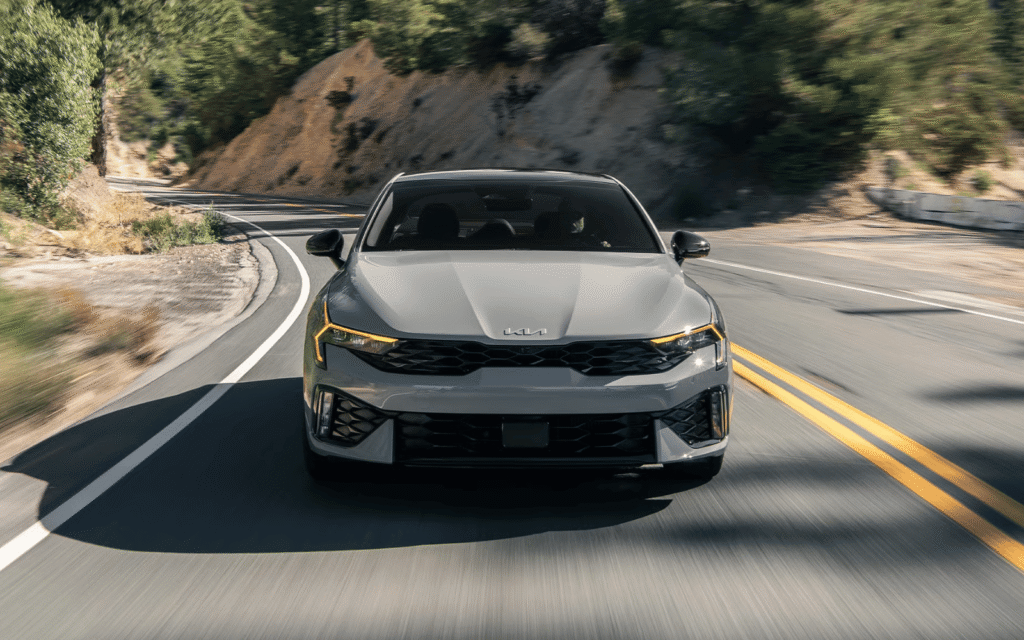
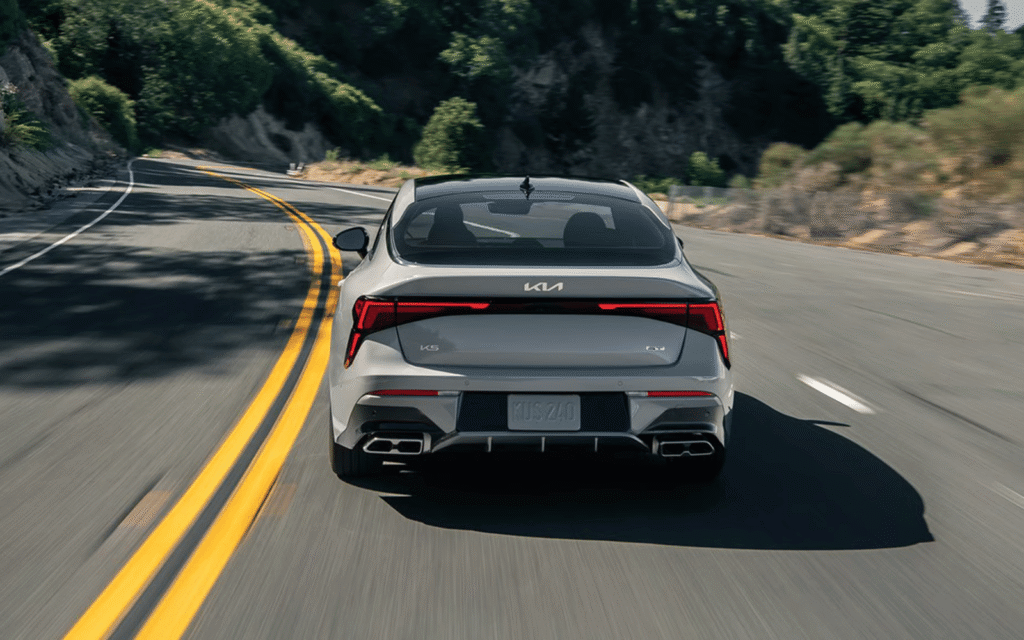
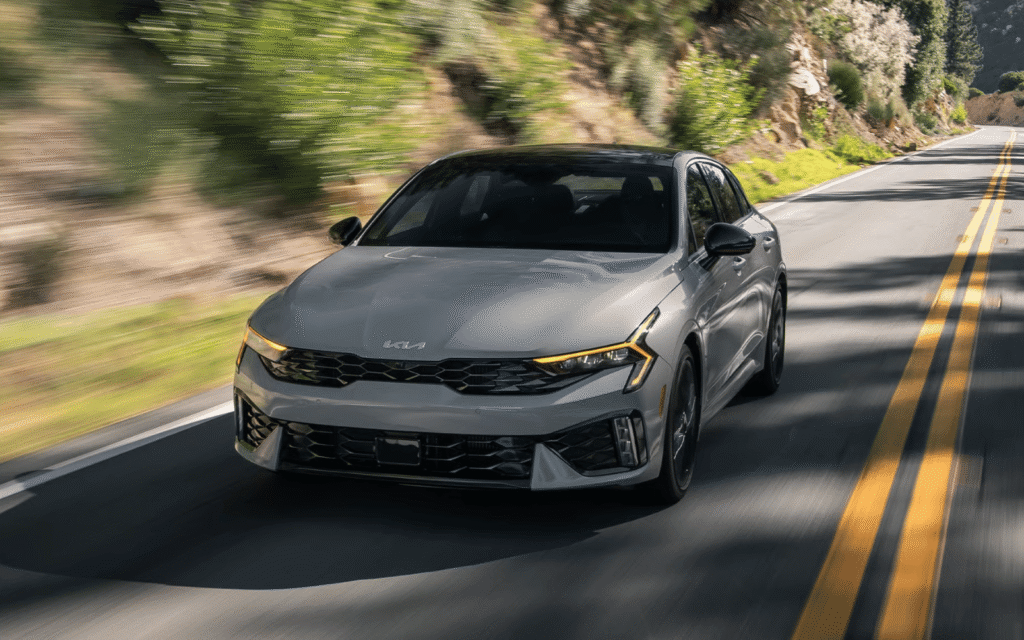
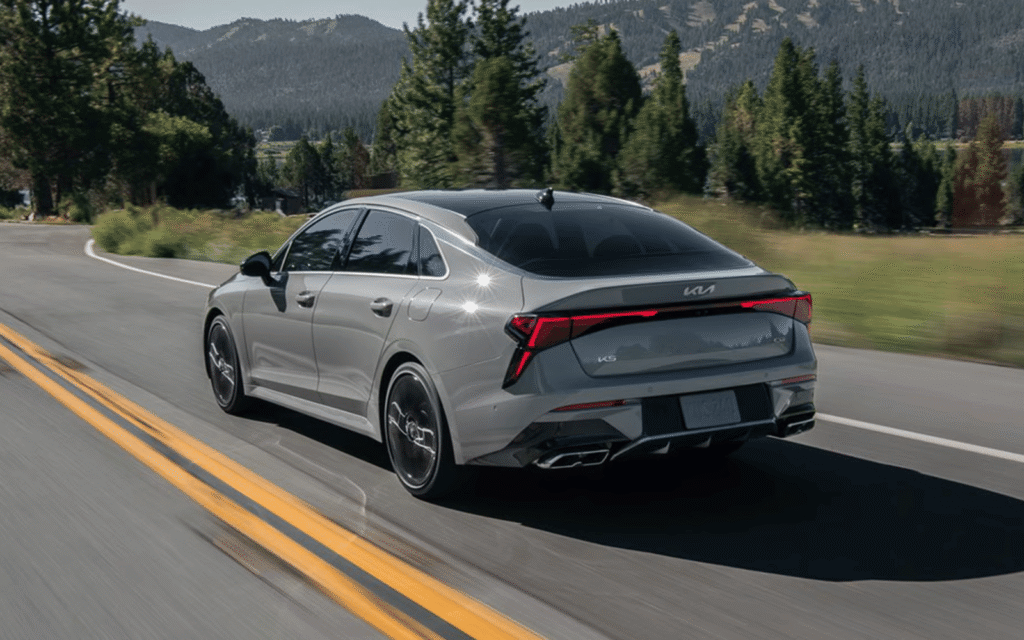
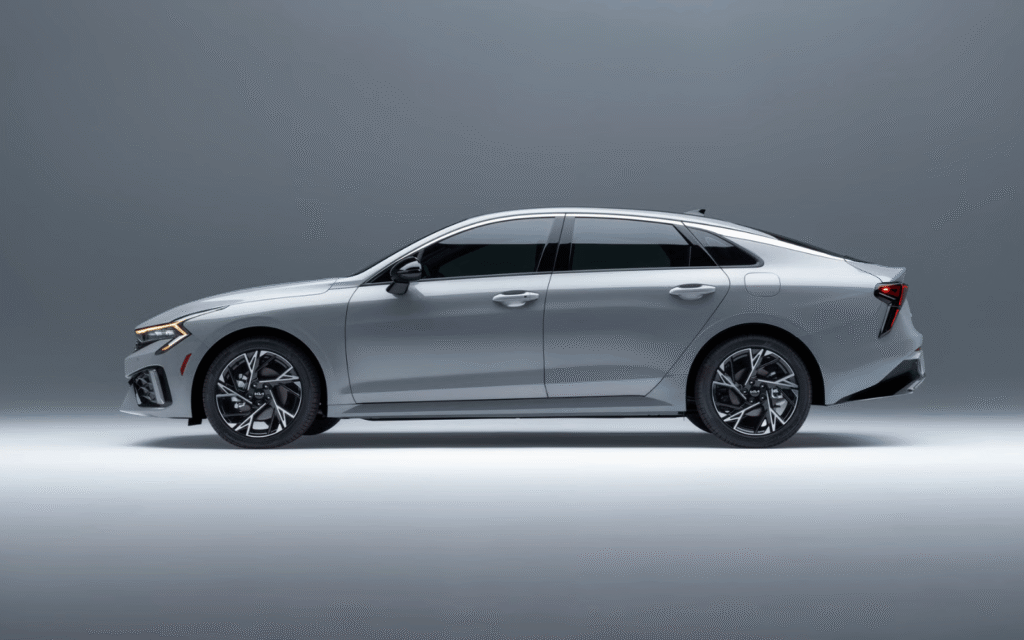
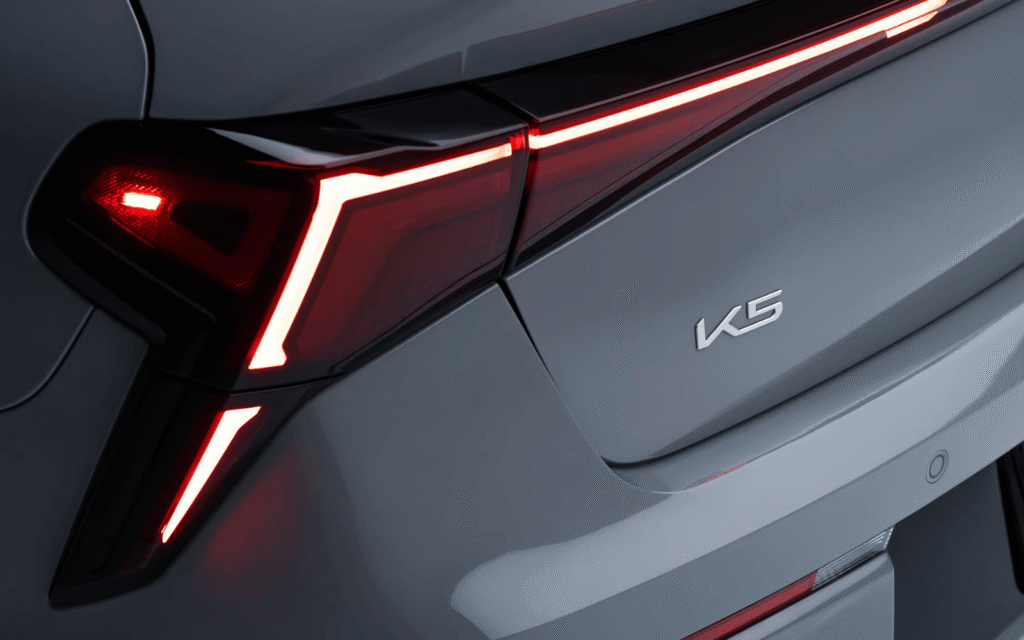
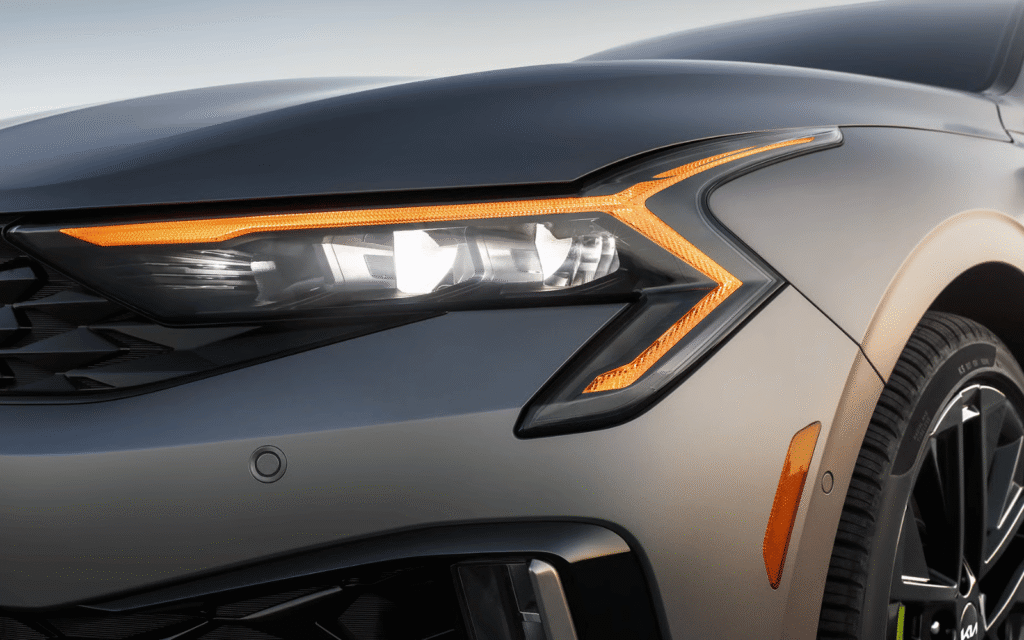
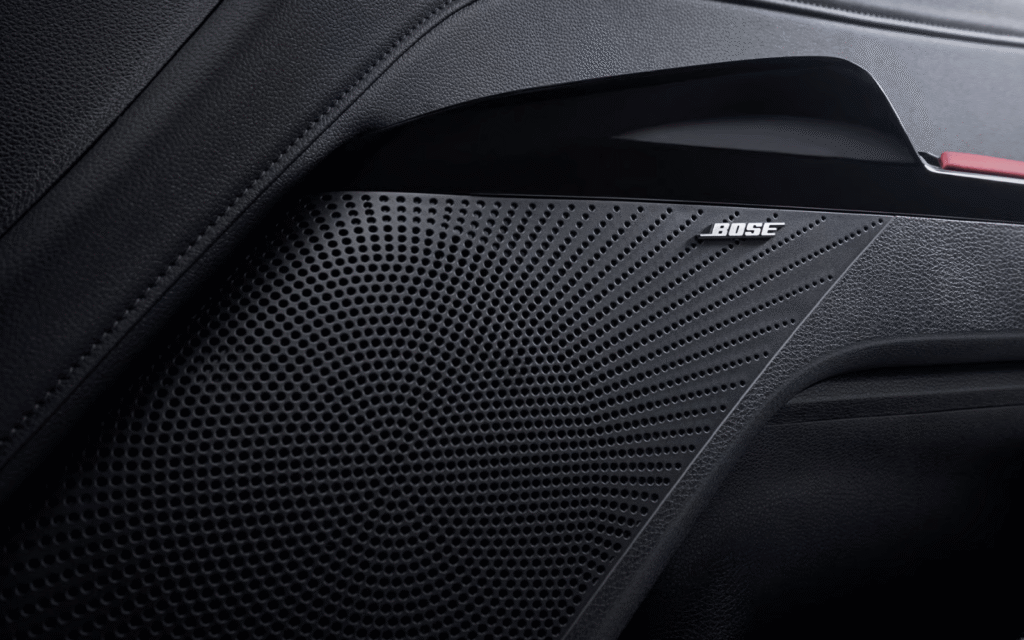
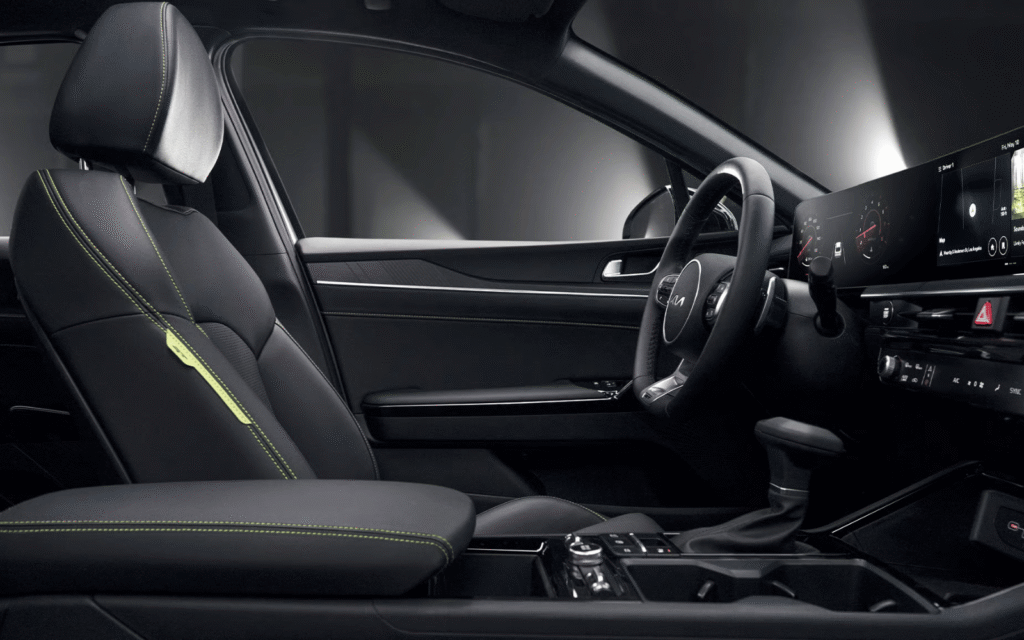
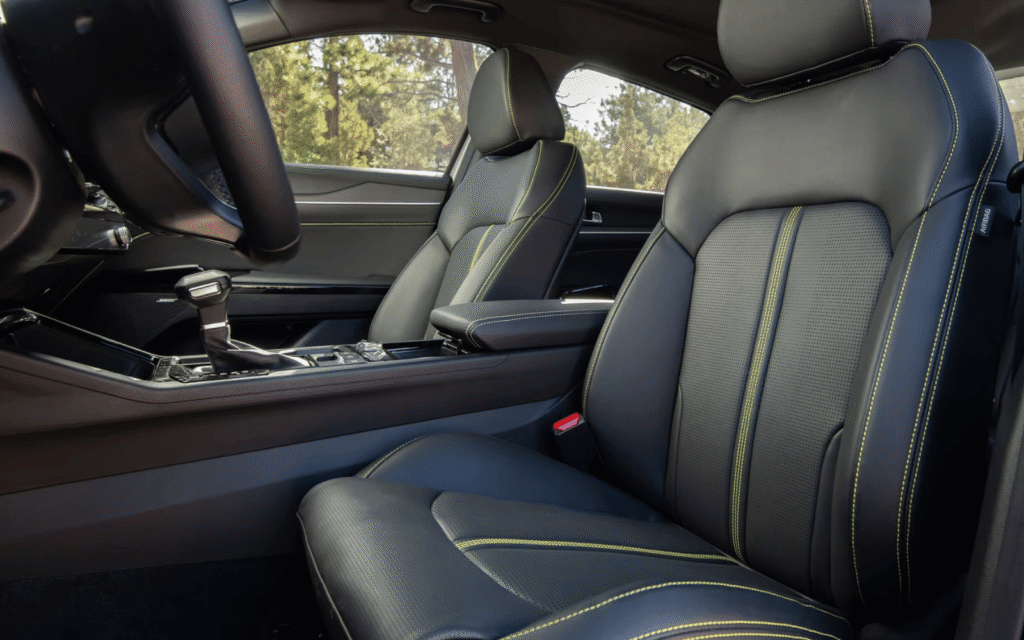
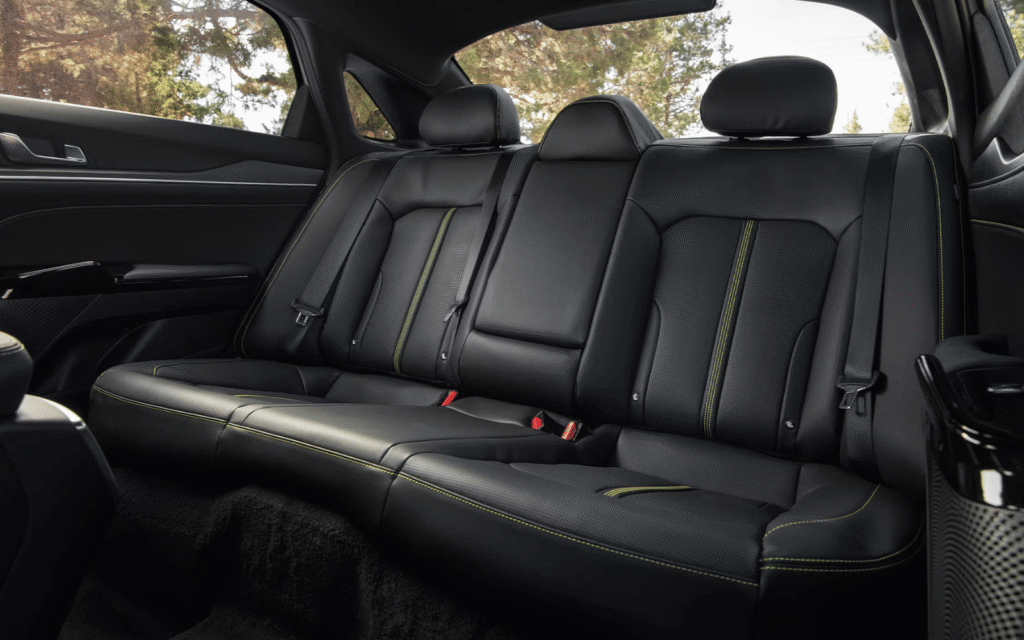
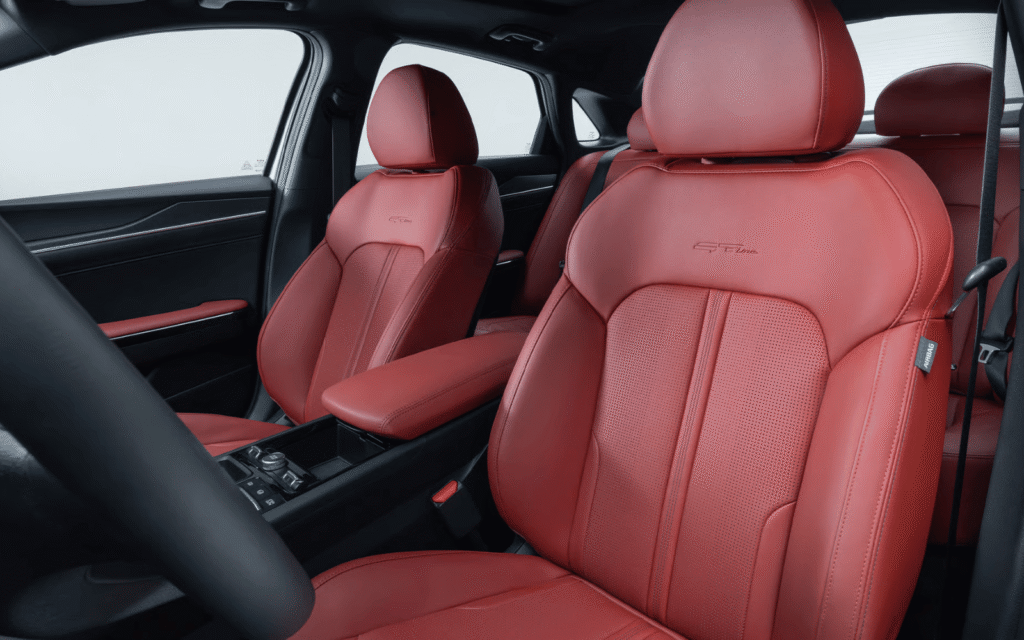
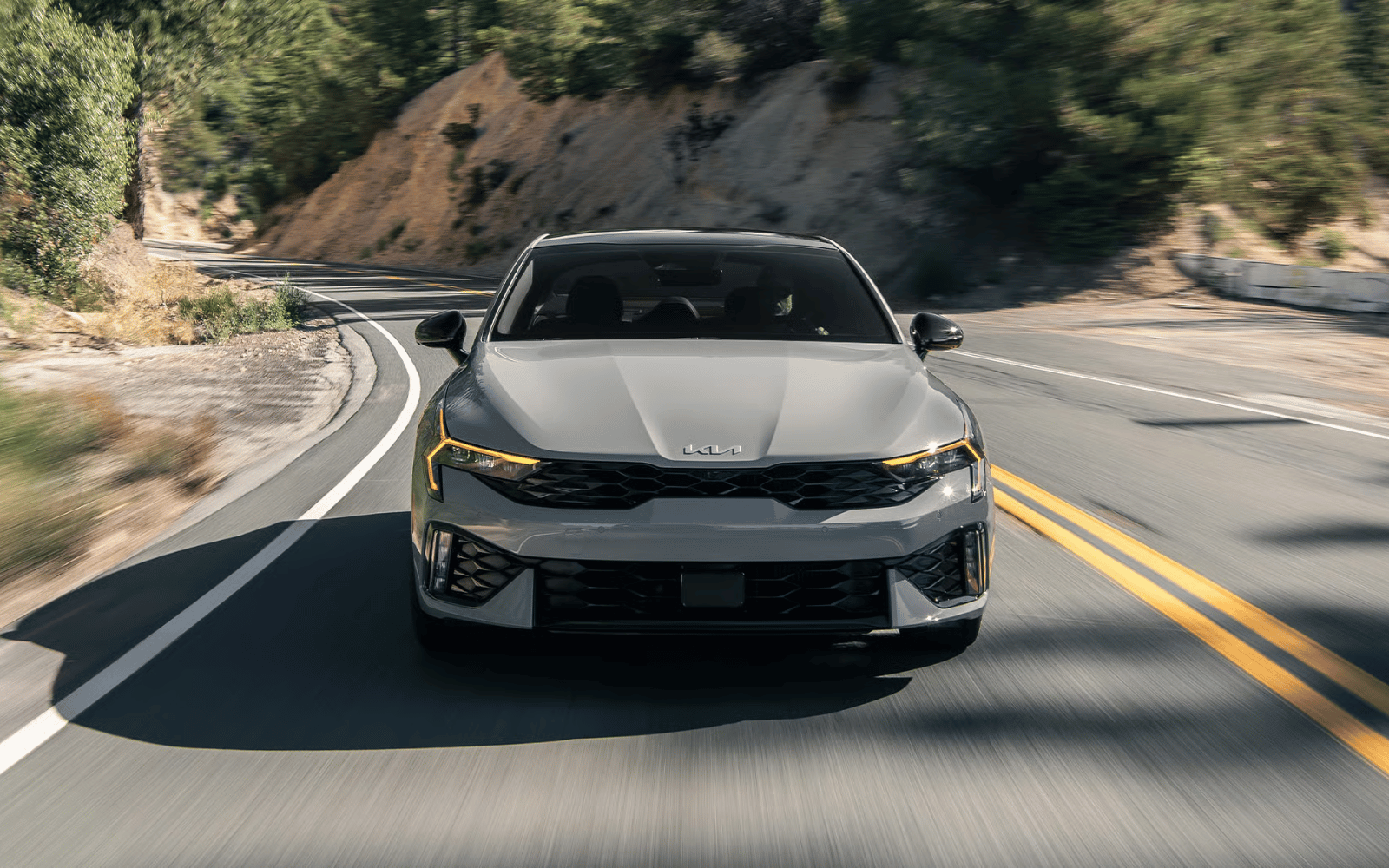
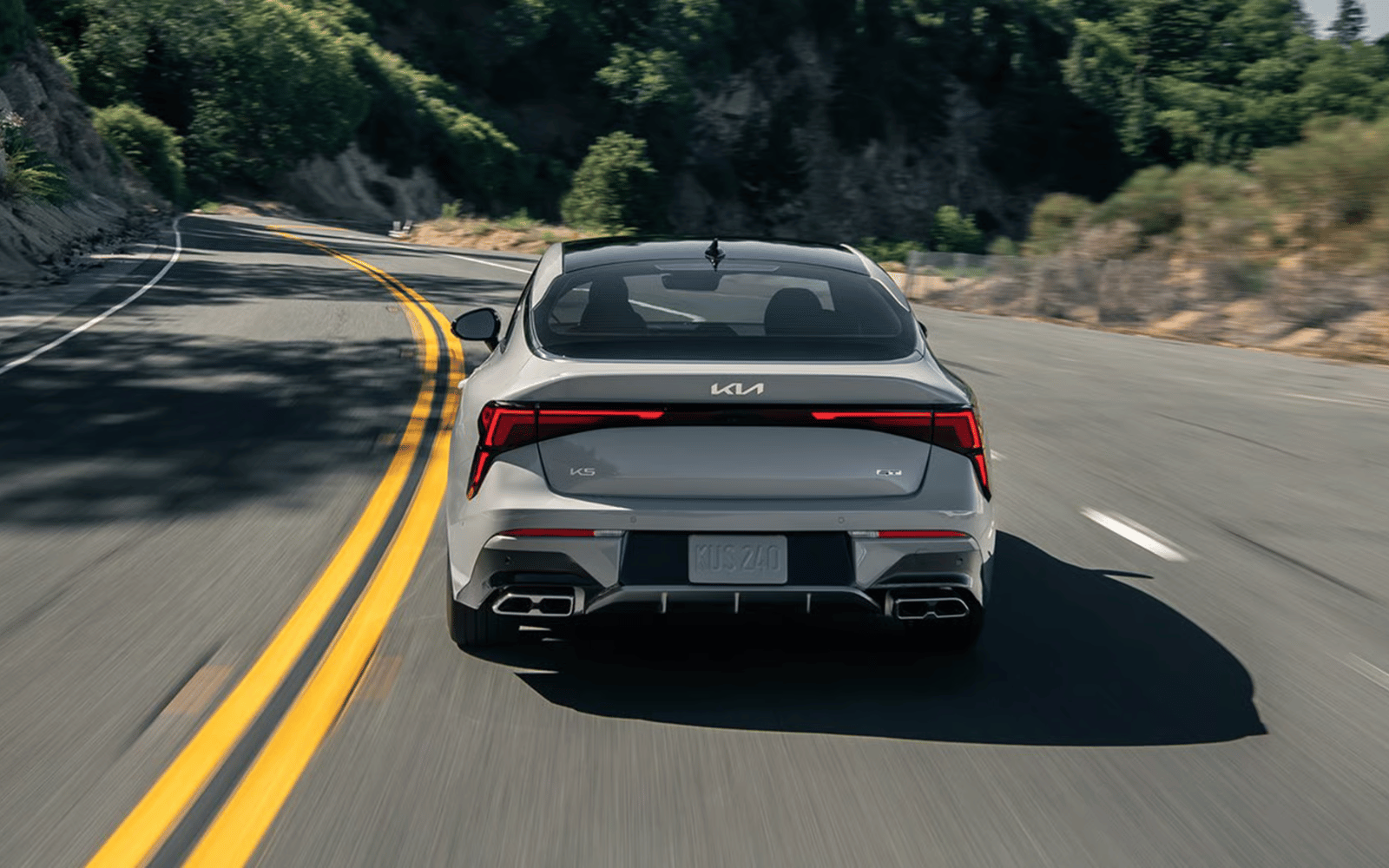
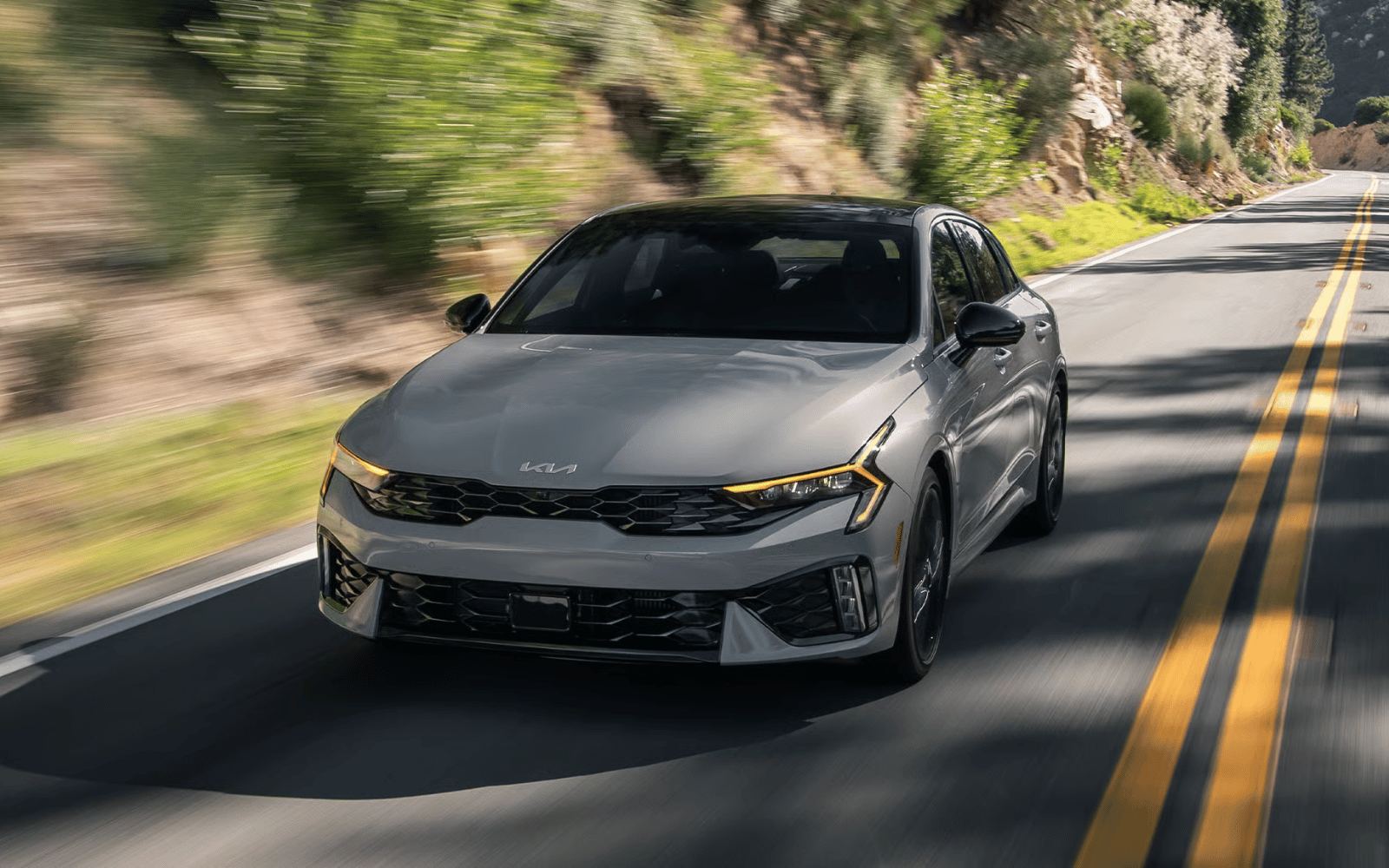
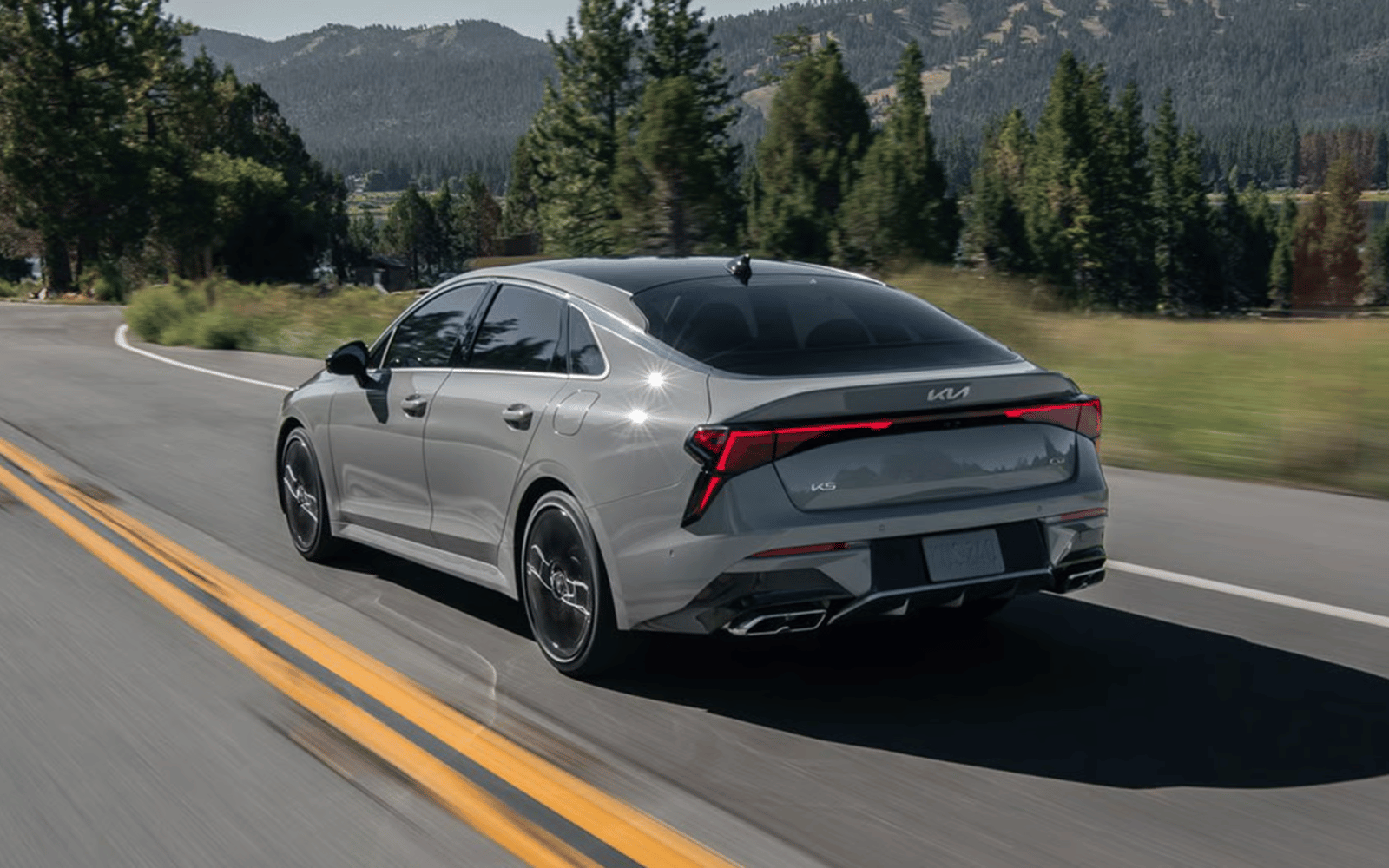
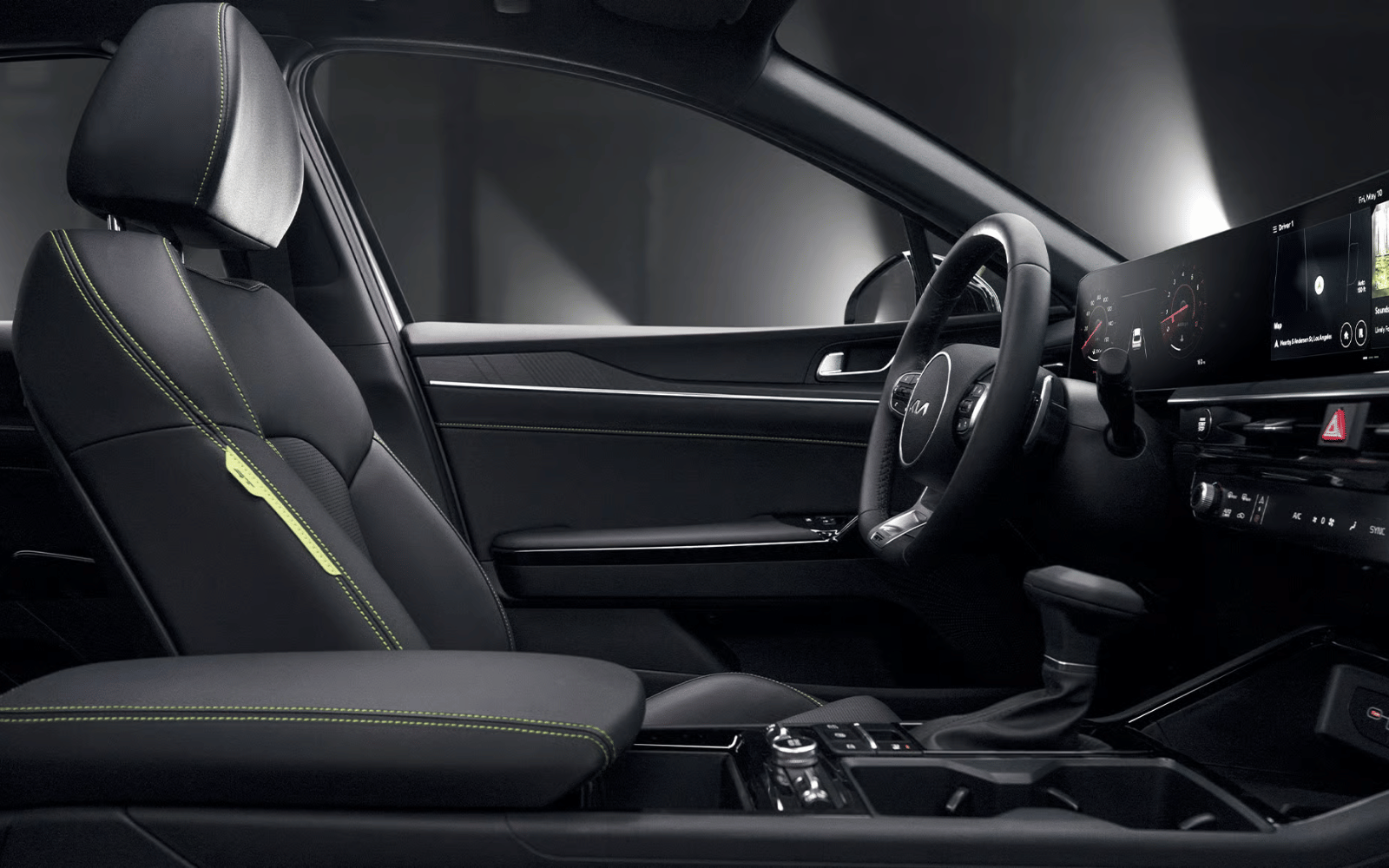
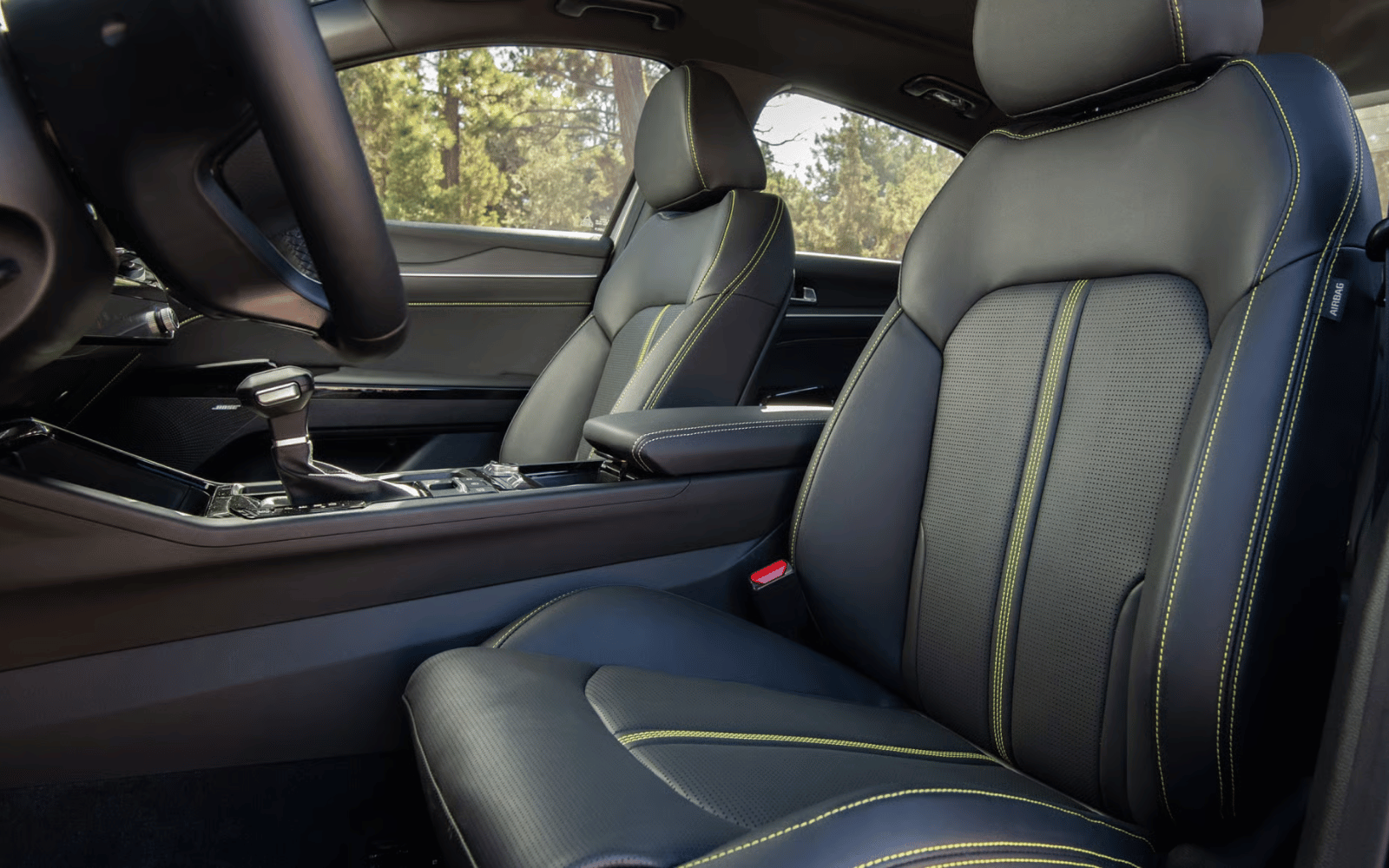
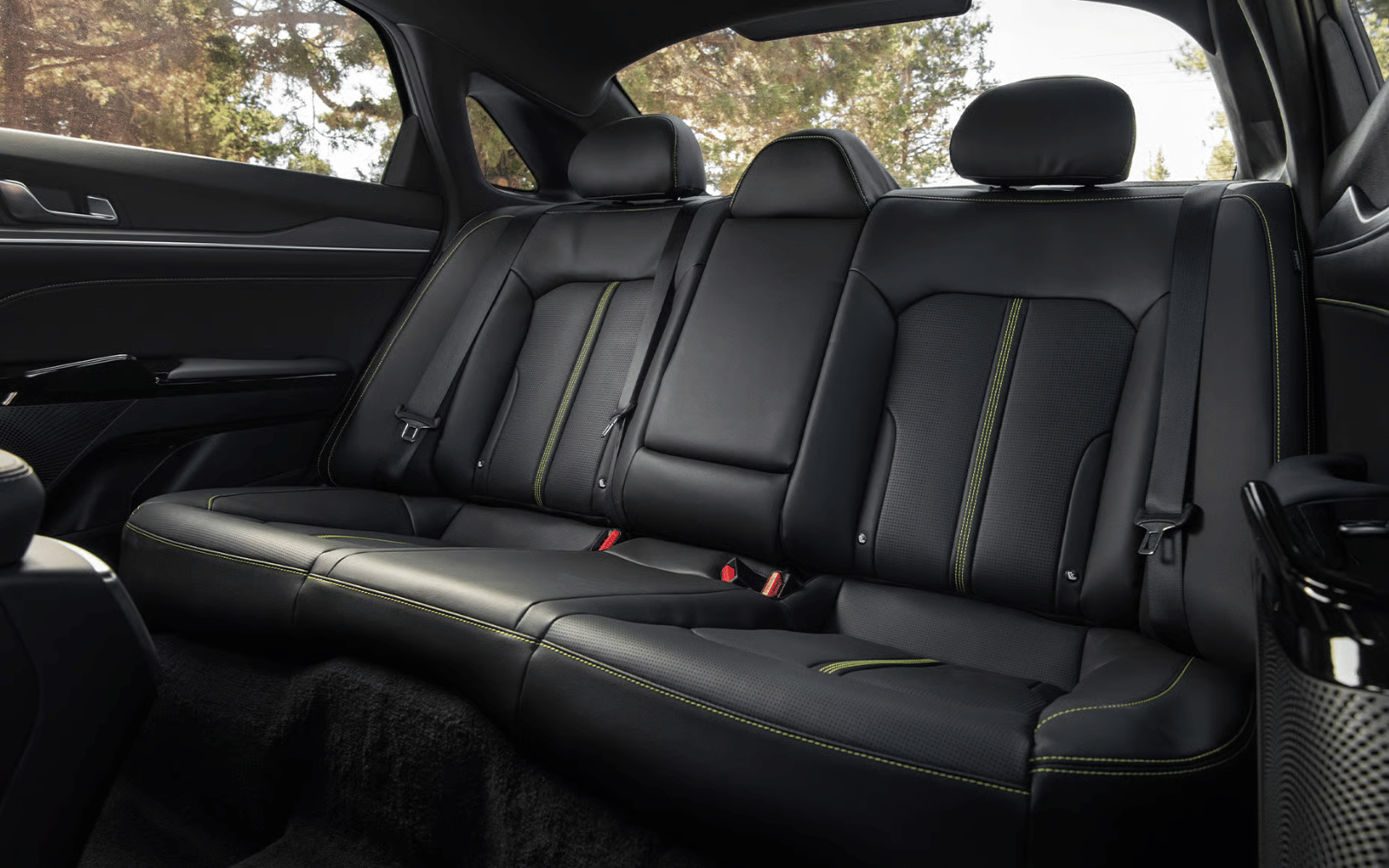
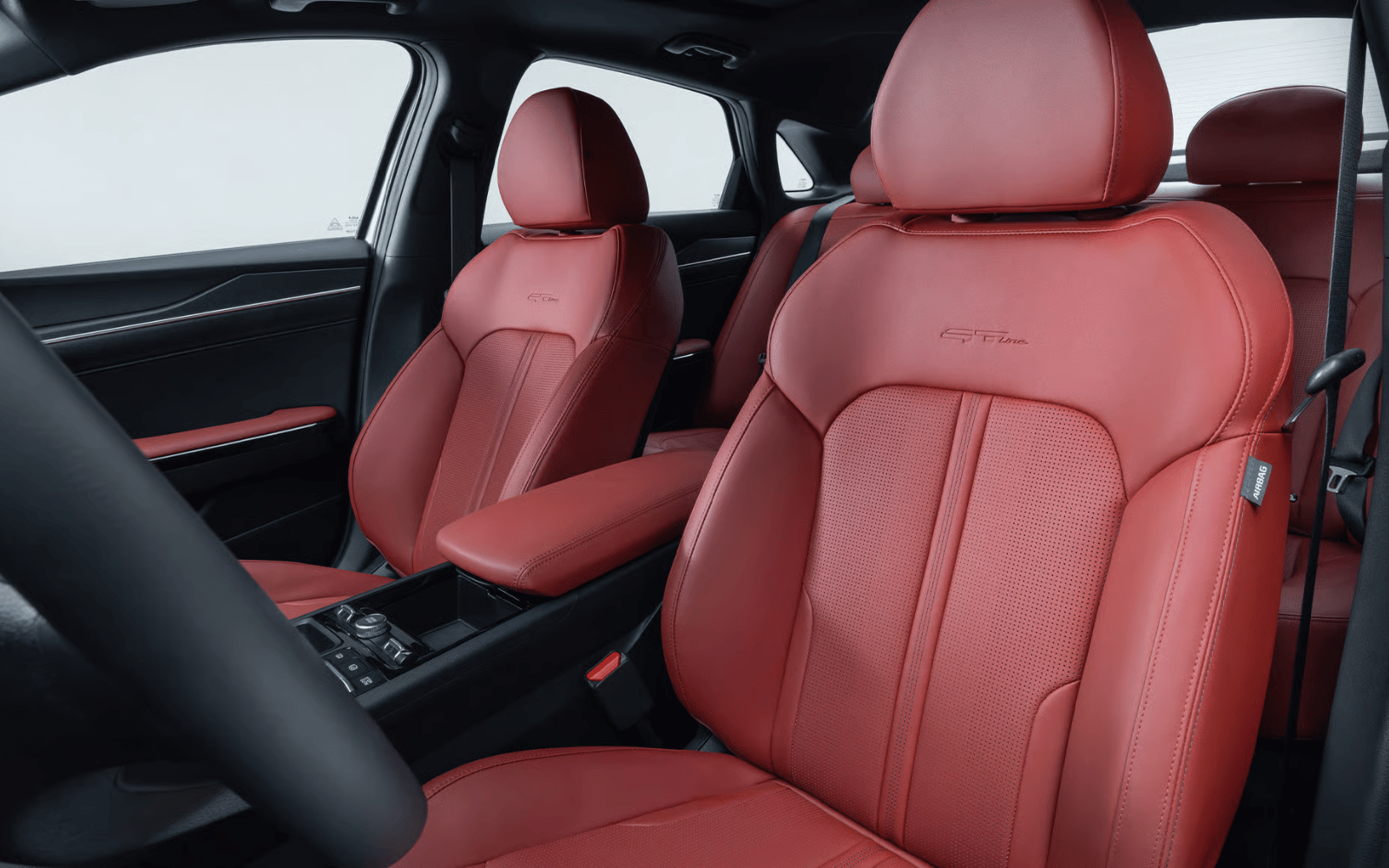
The current US lineup includes LXS, GT-Line, and GT trims. Most models use a naturally aspirated 2.5-liter engine, while the K5 GT uses a much stronger turbocharged 2.5-liter engine and an eight-speed dual-clutch transmission.
The K5’s biggest strengths are value, design, available AWD, and the GT’s performance. Its biggest concern is safety: while it has a five-star overall NHTSA rating, available IIHS results for this generation include weak updated moderate-overlap and side-impact results.
WheelPedia Rating: 7.9/10
The Kia K5 earns a 7.9/10 WheelPedia Rating. It offers strong value, attractive styling, useful technology, a large trunk, and a genuinely quick GT trim. Its score is held back by its latest IIHS crash-test weaknesses, no hybrid option, limited rear-seat legroom for a midsize sedan, and fuel economy that trails hybrid rivals.
| Rating Category | Score | Weight |
| Safety | 6.8/10 | 20% |
| Reliability and Ownership | 8.0/10 | 15% |
| Performance and Driving | 8.6/10 | 15% |
| Comfort and Practicality | 8.4/10 | 15% |
| Efficiency | 7.5/10 | 15% |
| Features and Technology | 8.4/10 | 10% |
| Price and Value | 8.0/10 | 10% |
| Overall WheelPedia Rating | 7.9/10 | — |
See how WheelPedia rates cars for the full scoring method.
Key Highlights
- Starts from $27,690 MSRP, before destination, taxes, registration, options, and dealer fees.
- Standard 2.5-liter engine produces 186 horsepower and 178 lb-ft of torque.
- K5 GT uses a turbocharged 2.5-liter engine with 290 horsepower and 311 lb-ft of torque.
- GT can reach 60 mph in Kia-estimated 5.4 seconds.
- GT-Line is available with front-wheel drive or all-wheel drive.
- LXS returns up to an EPA-estimated 30 mpg combined.
- GT-Line FWD returns up to 29 mpg combined.
- K5 GT returns up to 27 mpg combined.
- Offers 15.6 cubic feet of trunk space.
- Standard wireless Apple CarPlay and Android Auto are included.
- Best for buyers who want a stylish midsize sedan with available AWD or a strong performance option.
Quick Specifications
| Specification | Kia K5 |
| Vehicle type | Midsize sedan |
| Seating capacity | 5 |
| Standard engine | 2.5L four-cylinder |
| Standard output | 186 hp / 178 lb-ft |
| GT engine | 2.5L turbocharged four-cylinder |
| GT output | 290 hp / 311 lb-ft |
| Transmission | 8-speed automatic; 8-speed dual-clutch automatic on GT |
| Drivetrain | FWD standard; AWD available on GT-Line |
| Best fuel economy | Up to 26 city / 37 highway / 30 combined mpg |
| Trunk capacity | 15.6 cu. ft. |
| Length | 193.1 in. |
| Wheelbase | 112.2 in. |
| Rear legroom | 35.2 in. |
Expert tip:
The GT-Line AWD is the best all-weather K5, but the GT-Line FWD is the better value for most buyers. Choose the GT only if strong acceleration is a real priority, because it brings higher fuel use and does not offer AWD.
About the Kia K5
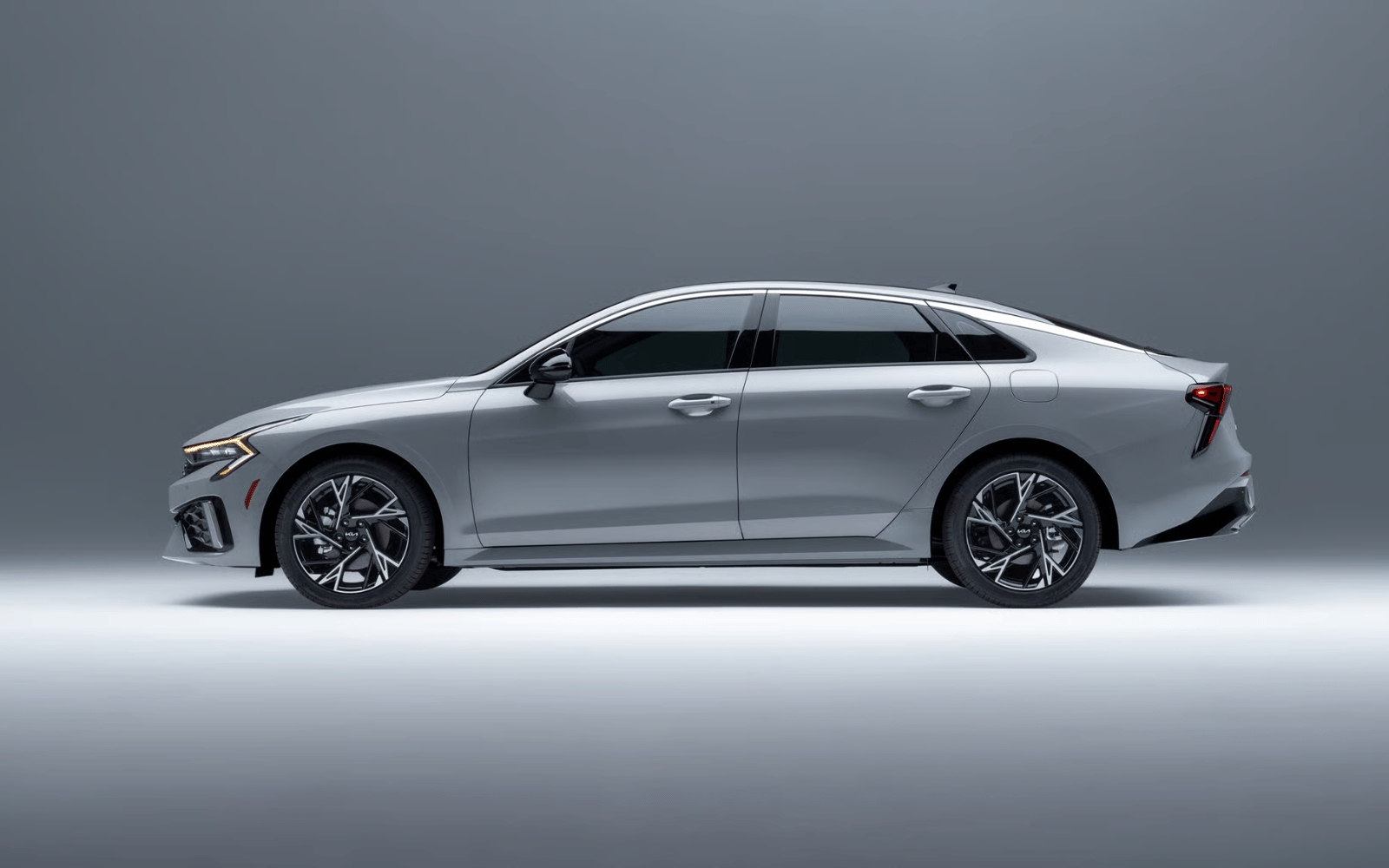
The K5 is Kia’s midsize sedan, positioned above the Kia K4. It has a lower, sleeker profile than most family sedans, with a fastback-style roofline and a wide stance.
It suits buyers who still prefer a sedan’s driving position, fuel use, and lower purchase price over an SUV. The trunk is large, and the front seats are comfortable, but rear-seat legroom is less generous than in some key midsize rivals.
The K5 is offered only with gasoline engines in the US. Buyers who want a hybrid midsize sedan should compare alternatives before choosing.
Price and Trims
The following are current US base MSRPs before destination, taxes, registration, dealer-installed options, and local fees.
| Trim | Starting MSRP | Engine and Drivetrain | Key Reason to Choose |
| LXS FWD | $27,690 | 2.5L, 186 hp, FWD | Lowest-cost K5 with strong standard features |
| GT-Line FWD | $28,690 | 2.5L, 186 hp, FWD | Sportier styling and balanced value |
| GT-Line AWD | $30,290 | 2.5L, 186 hp, AWD | Best K5 for snow and wet climates |
| GT FWD | $33,790 | 2.5L turbo, 290 hp, FWD | Quickest and most performance-focused K5 |
The GT-Line FWD is the strongest choice for most buyers. It adds the K5’s sportier visual treatment and useful technology without the higher running costs of the GT.
The GT-Line AWD makes sense for drivers in snowy or wet climates. The K5 GT is the clear performance choice, but buyers should understand that it is front-wheel drive only.
Engine, Performance, and Driving Experience
The LXS and GT-Line use a naturally aspirated 2.5-liter four-cylinder producing 186 horsepower and 178 lb-ft of torque. It is paired with an eight-speed automatic transmission.
This engine is smooth and adequate for daily commuting, but it is not especially quick. It works best for buyers who want predictable daily transport, reasonable fuel costs, and the option of all-wheel drive.
The K5 GT uses a turbocharged 2.5-liter four-cylinder producing 290 horsepower and 311 lb-ft of torque. It is paired with an eight-speed wet dual-clutch automatic transmission.
The GT transforms the K5. It is much quicker off the line, more confident when passing, and more enjoyable on open roads. The trade-off is a firmer driving feel, more fuel use, and front-wheel-drive traction limits under hard acceleration.
Kia K5 0–60 MPH Performance
Kia does not publish a 0–60 mph estimate for the standard 2.5-liter K5.
The LXS and GT-Line are adequate for daily driving but not quick. The K5 GT is the performance model, with Kia estimating a 0–60 mph time of 5.4 seconds.
That makes the GT much faster than most mainstream midsize sedans. It is a good choice for drivers who want strong acceleration without moving to a luxury performance sedan.
Driving Experience
The K5 is comfortable, quiet enough for daily commuting, and stable at highway speeds. Its low seating position gives it a more car-like feel than an SUV, while the wide body and long wheelbase help it feel settled on longer trips.
The LXS and GT-Line focus on comfort and style. Steering is easy in town, and the eight-speed automatic behaves more naturally than a CVT.
The GT-Line AWD adds traction in poor weather, but it does not improve acceleration. The GT has the strongest performance and sportier tuning, though it can exhibit torque steer when accelerating hard because all power goes through the front wheels.
Fuel Economy
| Model | EPA-Estimated City / Highway / Combined Fuel Economy |
| K5 LXS FWD | 26 / 37 / 30 mpg |
| K5 GT-Line FWD | 25 / 36 / 29 mpg |
| K5 GT-Line AWD | 24 / 33 / 27 mpg |
| K5 GT FWD | 23 / 33 / 27 mpg |
The LXS is the most efficient K5, while the GT is the performance choice. Buyers should compare the K5’s fuel use with hybrid rivals, especially if they drive a high number of miles each year.
Real-world fuel economy will vary with weather, traffic, road speed, driving style, passenger load, tire condition, and climate-control use.
Interior, Comfort, and Technology
The K5’s cabin has a clean, modern look, particularly on higher trims with its larger panoramic display setup. The front seats are comfortable for commuting and long highway drives.
Standard and available features include:
- 12.3-inch touchscreen display
- Wireless Apple CarPlay and Android Auto
- Kia Connect services
- Push-button start
- Dual-zone automatic climate control
- Available 24-inch combined panoramic display
- Available navigation
- Available wireless phone charging
- Available Kia Digital Key
- Available heated front seats
- Available ventilated front seats
- Available heated steering wheel
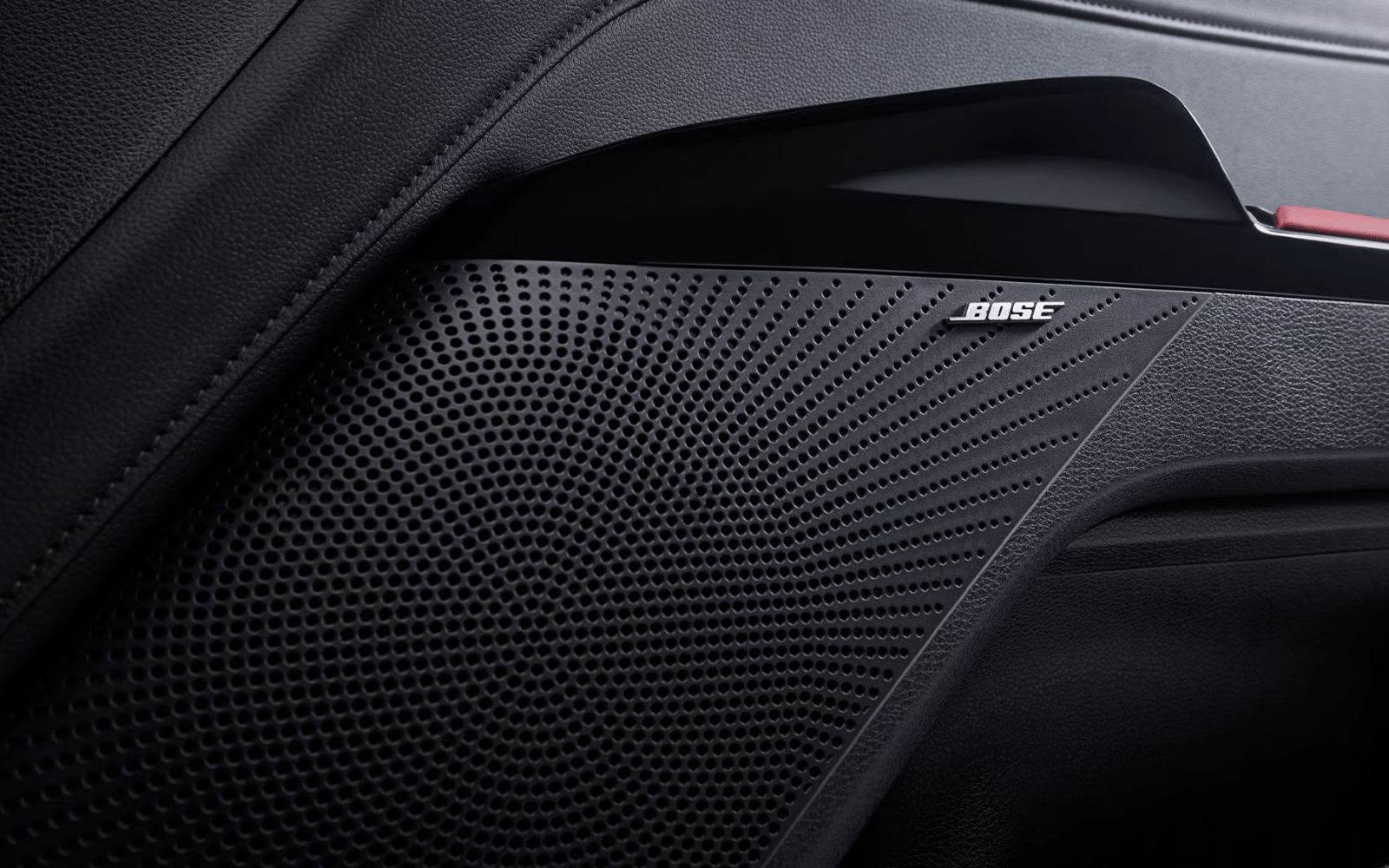
- Available Bose premium audio
- Available panoramic sunroof
- Available ambient lighting
- Available 360-degree Surround View Monitor
The rear seat is usable for adults, but its 35.2 inches of legroom is not class-leading. Buyers who frequently carry tall rear passengers should sit in the back before buying.
Dimensions, Cargo, and Practicality
| Dimension | Measurement |
| Length | 193.1 in. |
| Width | 73.2 in. |
| Height | 56.9 in. |
| Wheelbase | 112.2 in. |
| Front legroom | 46.1 in. |
| Rear legroom | 35.2 in. |
| Trunk capacity | 15.6 cu. ft. |
| Seating | 5 passengers |
The K5 has a useful 15.6-cubic-foot trunk with a wide opening. It can manage groceries, luggage, work bags, and most family errands without needing an SUV.
The 60/40-split folding rear seats add flexibility for longer items. Still, buyers who regularly need to carry large equipment, pets, or bulky strollers may be better served by a hatchback or crossover.
Exterior Design
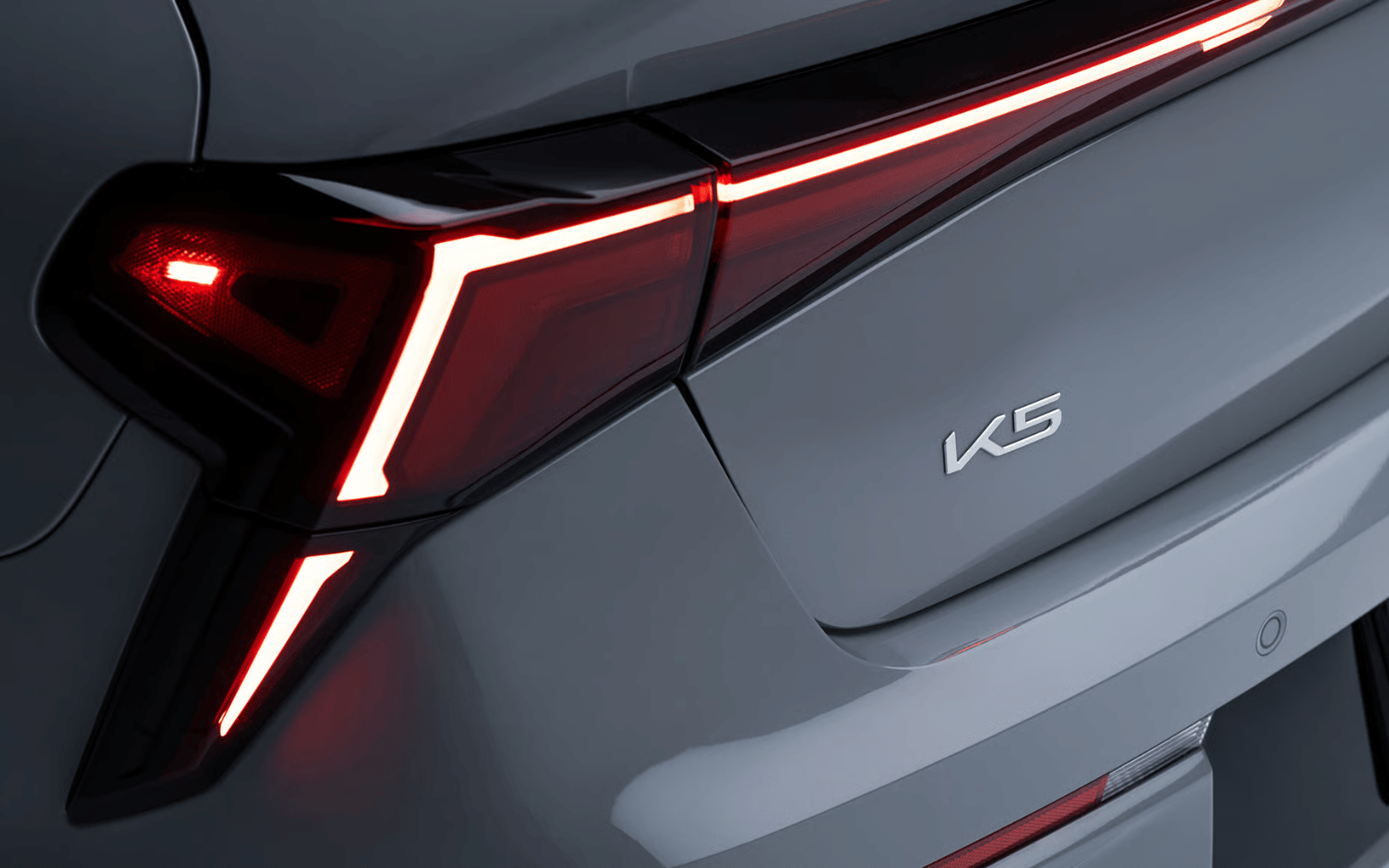
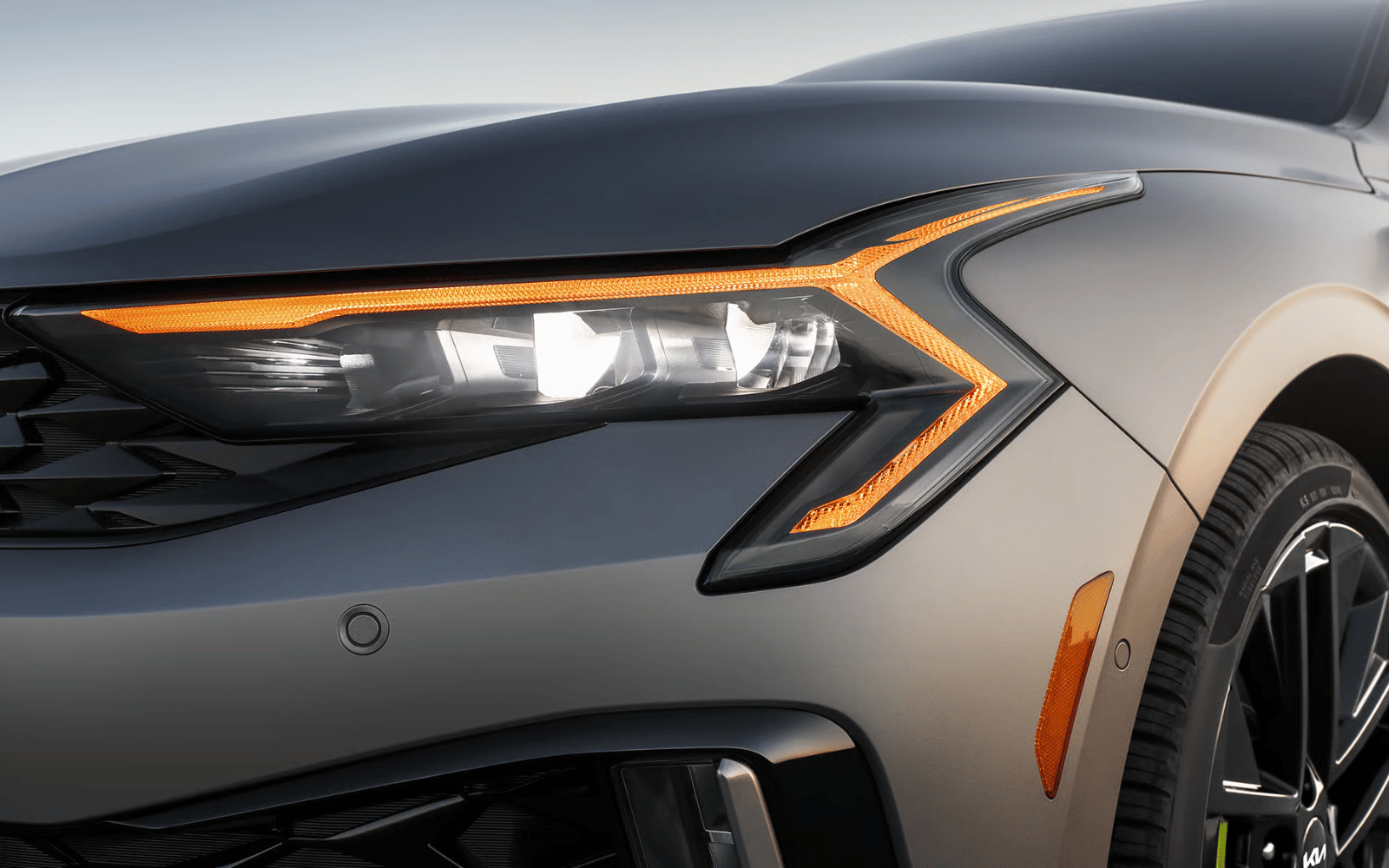
The K5 is one of the more distinctive midsize sedans. Its low front end, fastback-like roofline, lighting design, and wide rear stance help it stand apart from more conservative rivals.
- LXS has a cleaner, more understated appearance.
- GT-Line adds sportier bumpers, wheels, and exterior details.
- GT adds performance-focused styling that matches its turbocharged engine.
The GT-Line is the right choice for buyers who want the sportier look without GT-level performance costs. The GT is for buyers who want both the appearance and the engine to match.
Safety Features and Ratings
The K5 includes a broad range of driver-assistance features. Standard and available equipment includes:
- Forward Collision-Avoidance Assist
- Pedestrian detection
- Blind-Spot Collision-Avoidance Assist
- Rear Cross-Traffic Collision-Avoidance Assist
- Lane Keeping Assist
- Lane Following Assist
- Driver Attention Warning
- Smart Cruise Control with Stop and Go
- Rearview camera
- Rear parking sensors
- Available Highway Driving Assist
- Available Highway Driving Assist 2
- Available evasive steering assistance
- Available 360-degree Surround View Monitor
The K5 has a five-star overall NHTSA safety rating. However, buyers should not rely on that result alone.
Available IIHS ratings for this generation show a Poor result in the updated moderate-overlap front crash test and a Marginal result in the updated side-impact test. These are meaningful weaknesses, particularly for rear-passenger protection. The K5 does not qualify for an IIHS Top Safety Pick award.
These evaluations apply to current-generation K5 models tested through the 2025 model year. Buyers considering a 2027 K5 should check the latest IIHS K5 results before purchase in case new testing or vehicle changes affect the rating.
Reliability, Warranty, and Ownership
The K5 uses established gasoline powertrains and front-wheel-drive-based architecture. The standard 2.5-liter engine and eight-speed automatic are the simpler choice for buyers focused on long-term ownership.
The GT’s turbocharged engine and dual-clutch transmission provide much stronger performance, but also add complexity. GT buyers should follow the maintenance schedule closely and avoid ignoring rough shifting, warning lights, or unusual drivetrain behavior.
| Coverage | Length |
| Basic limited warranty | 5 years / 60,000 miles |
| Powertrain warranty | 10 years / 100,000 miles for original owners |
| Powertrain coverage for later owners | Usually 5 years / 60,000 miles |
| Anti-perforation warranty | 5 years / 100,000 miles |
| Roadside assistance | 5 years / 60,000 miles |
Kia does not include complimentary scheduled maintenance. Budget for oil changes, tire rotations, brake service, filters, and other routine work.
Used K5 buyers should also check the VIN for open recalls. Some earlier K5 models were recalled for a fuel-tank issue, so recall status should always be verified before purchase.
Pros and Cons
What We Like
- Distinctive styling
- Strong K5 GT performance
- Available AWD on GT-Line
- Large trunk
- Comfortable front seats
- Good standard technology
- Wireless Apple CarPlay and Android Auto
- Long original-owner powertrain warranty
- Competitive entry pricing for a midsize sedan
What We Don’t Like
- Poor IIHS updated moderate-overlap front result
- Marginal IIHS updated side-impact result
- No hybrid powertrain
- Rear legroom is only average
- Standard engine is adequate rather than quick
- GT is front-wheel drive only
- GT-Line appearance upgrade does not add more power
- Fuel economy trails hybrid midsize sedans
Competitors
The Kia K5 should be compared with other midsize sedans based on your priorities.
- The Toyota Camry is a stronger choice for hybrid fuel economy, standard hybrid power, and available AWD.
- The Honda Accord is worth considering for a spacious cabin, refined driving experience, and hybrid availability.
- The Hyundai Sonata is closely related to the K5 but offers different styling, trim choices, and hybrid availability.
- The Nissan Altima is a practical alternative for buyers who want all-wheel drive.
- The Mazda6, where available used, is worth considering for buyers who want a more engaging driving experience.
- The Kia K4 is better for buyers who want lower pricing and better rear-seat space in a smaller sedan.
Related Content
The Kia K4 is a better choice for buyers who want lower ownership costs and strong rear-seat room in a compact sedan.
If you are deciding whether a new K5 makes more sense than a used midsize sedan, read new vs. used cars before choosing.
Before financing, review how car financing works and consider getting car loan preapproval before you visit a dealership.
Should You Buy the Kia K5?
Buy the Kia K5 if you want a stylish midsize sedan with a large trunk, strong standard technology, an available AWD system, and the option of a genuinely quick GT trim.
Choose the GT-Line FWD if you want the best overall balance. Choose the GT-Line AWD if you regularly drive in snow or heavy rain. Choose the GT if quick acceleration is a real priority and you accept its higher fuel use and front-wheel-drive-only layout.
Skip the K5 if you want hybrid fuel economy, the strongest current IIHS crash-test performance, or more rear-seat legroom than the K5 provides.
FAQs
How much does the Kia K5 cost?
The Kia K5 starts from $27,690 MSRP before destination, taxes, registration, options, and dealer fees. The K5 GT starts from $33,790 MSRP.
Is the Kia K5 available with all-wheel drive?
Yes. All-wheel drive is available on the K5 GT-Line. LXS and GT models are front-wheel drive only.
Does the Kia K5 have a turbocharged engine?
Yes. The K5 GT has a 2.5-liter turbocharged four-cylinder producing 290 horsepower and 311 lb-ft of torque.
Is the Kia K5 GT fast?
Yes. Kia estimates that the K5 GT can reach 60 mph in 5.4 seconds. It is much quicker than the standard-engine K5.
Is the Kia K5 fuel efficient?
The LXS returns up to an EPA-estimated 30 mpg combined. GT-Line FWD models return up to 29 mpg combined, while GT-Line AWD and GT models return up to 27 mpg combined.
Is the Kia K5 a hybrid?
No. The current US Kia K5 is not offered as a hybrid.
How much trunk space does the Kia K5 have?
The K5 has 15.6 cubic feet of trunk space, plus 60/40-split folding rear seats for longer items.
Is the Kia K5 safe?
The K5 has a five-star overall NHTSA rating and standard driver-assistance features. However, available IIHS results for this generation include a Poor updated moderate-overlap front rating and a Marginal updated side-impact rating.
Does the Kia K5 have Apple CarPlay and Android Auto?
Yes. Every current K5 includes wireless Apple CarPlay and Android Auto compatibility.
How long is the Kia K5 warranty?
Kia provides a 5-year/60,000-mile basic warranty and a 10-year/100,000-mile powertrain warranty for original owners.
Is the Kia K5 GT-Line faster than the LXS?
No. LXS and GT-Line models use the same 186-hp 2.5-liter engine. The GT-Line adds styling and available AWD, while the K5 GT is the performance model.
Final Verdict
The Kia K5 is a compelling midsize sedan for buyers who value style, technology, trunk space, and available all-wheel drive. The GT-Line is the strongest everyday choice, while the K5 GT delivers performance that few mainstream sedans can match at its price.
The safety record is the major caution. Its five-star NHTSA rating is positive, but the weaker IIHS updated crash-test results should be part of the decision, especially for families who regularly carry rear passengers.
For most buyers, the GT-Line FWD makes the most sense. Choose AWD only when you need it, and choose the GT only when you will genuinely use its performance.
Prices, specifications, safety ratings, fuel-economy estimates, warranty coverage, and feature availability can change by model year, trim, and market.