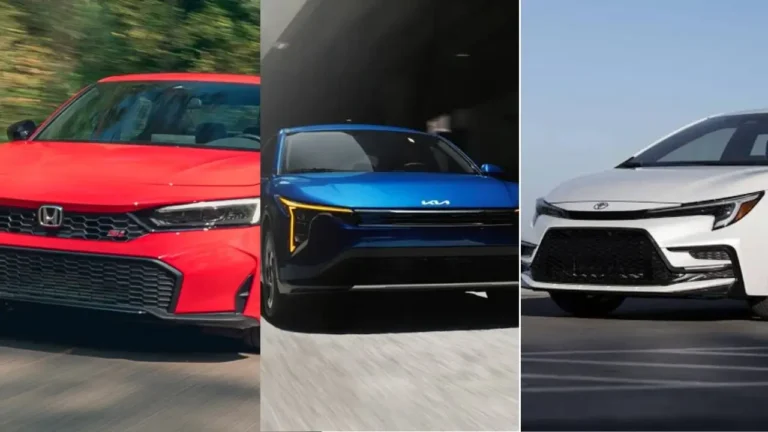
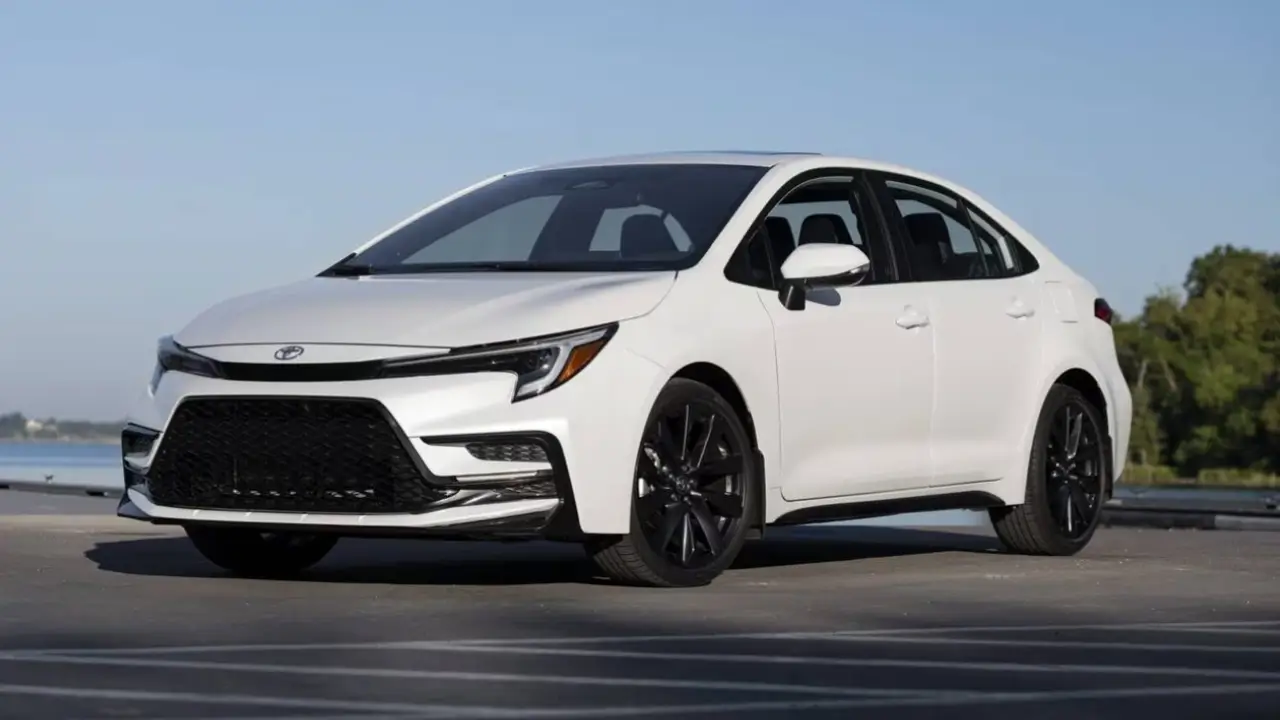
Buying a first car is exciting, but it is also one of the largest financial decisions many new drivers make. The purchase price matters, but so do insurance premiums, fuel use, maintenance, safety, depreciation, and monthly payments.
The best cars for first-time buyers in 2026 are not necessarily the cheapest vehicles on the market. A low advertised price can become expensive when a car has high insurance costs, poor fuel efficiency, rapid depreciation, or frequent repair needs.
For most new drivers, the right first car should be easy to operate, affordable to maintain, economical in daily traffic, and equipped with modern driver-assistance systems. It should also have enough interior space for everyday needs without being difficult to park.
Quick Picks
| Model | Starting MSRP | Fuel Economy | Horsepower | Cargo Space | Reliability Expectation |
| Toyota Corolla | $23,125 | Up to 35 mpg combined; 50 mpg hybrid | 169 hp gas | Approx. 13.1 cu. ft. | Strong |
| Honda Civic | $24,695 | Up to 36 mpg gas; 49 mpg hybrid | 150 hp gas | Approx. 14.8 cu. ft. | Strong |
| Kia K4 | $22,290 | Up to 33 mpg combined | 147 hp | Approx. 14.6 cu. ft. | Promising |
| Hyundai Elantra | $22,625 | Up to 35 mpg gas; 54 mpg hybrid | 147 hp gas | 14.2 cu. ft. | Good |
| Nissan Sentra | $22,600 | Up to 33 mpg combined | Approx. 149 hp | Approx. 14.3 cu. ft. | Average to Good |
| Mazda3 Sedan | $24,650 | Up to 30 mpg combined | 186 hp | 13.2 cu. ft. | Good |
| Subaru Impreza | $26,595 | Up to 27/33 mpg city/highway | Approx. 152 hp | 20.4 cu. ft. | Good |
| Chevrolet Trax | $21,700 | Approx. 30 mpg combined | 137 hp | Up to 54.1 cu. ft. | Average to Good |
| Toyota Prius | $28,550 | Up to 57 mpg combined | Hybrid system | Up to 23.8 cu. ft. | Strong |
Prices and specifications can change. Reliability expectations are editorial assessments based on powertrain complexity, model history, market support, and expected ownership characteristics. They are not guarantees.
- Best Overall: 2026 Toyota Corolla
- Best for Driving and Interior Space: 2026 Honda Civic
- Best Budget Choice: 2026 Kia K4
- Best for Standard Features: 2026 Hyundai Elantra
- Best Low-Cost Alternative: 2026 Nissan Sentra
- Best Premium Compact Car: 2026 Mazda3
- Best for Snowy Areas: 2026 Subaru Impreza
- Best Small SUV: 2026 Chevrolet Trax
- Best for Fuel Economy: 2026 Toyota Prius
Best Cars for First-Time Buyers
1. 2026 Toyota Corolla — Best Overall
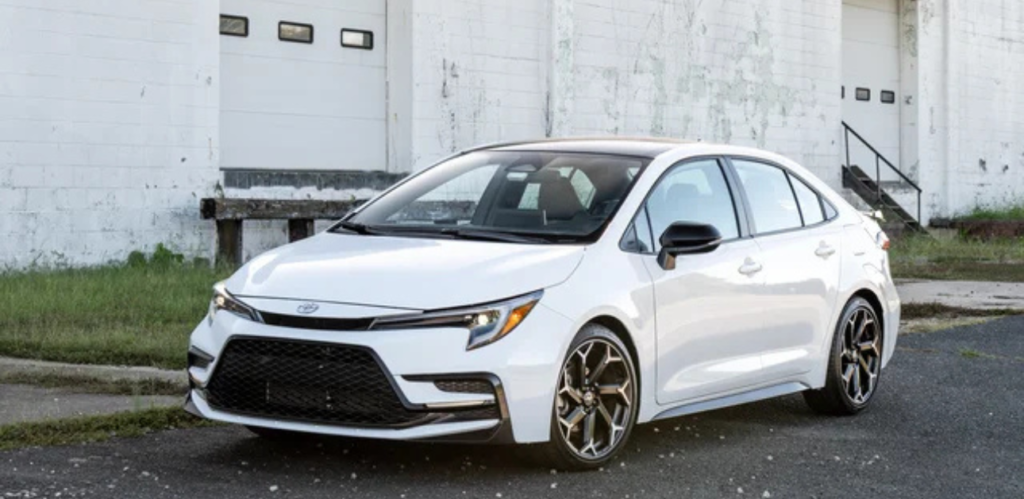
The 2026 Toyota Corolla is the strongest all-round recommendation for buyers who want predictable transportation without paying for unnecessary power or luxury equipment. Its starting MSRP is about $23,125, placing it near the center of the affordable compact-sedan market.
The standard gasoline Corolla uses a 2.0-liter four-cylinder engine producing 169 horsepower. The LE can return an estimated 32 mpg in the city, 41 mpg on the highway, and 35 mpg combined. A Corolla Hybrid is also available for buyers who spend more time in city traffic.
Toyota Safety Sense 3.0 is standard and includes several driver-assistance systems that can support a new driver. The controls are familiar, the exterior dimensions are manageable, and the suspension is tuned more for everyday comfort than aggressive driving.
Its rear seating and trunk are adequate rather than class-leading. Drivers who regularly carry adults may prefer the roomier Honda Civic, Hyundai Elantra, or Kia K4.
The Corolla makes the most sense for students, commuters, and budget-conscious buyers who value fuel efficiency, resale demand, and straightforward ownership. It may not be the most exciting option, but that restraint is one of its strengths as a first car.
2. 2026 Honda Civic — Best for Driving and Interior Space
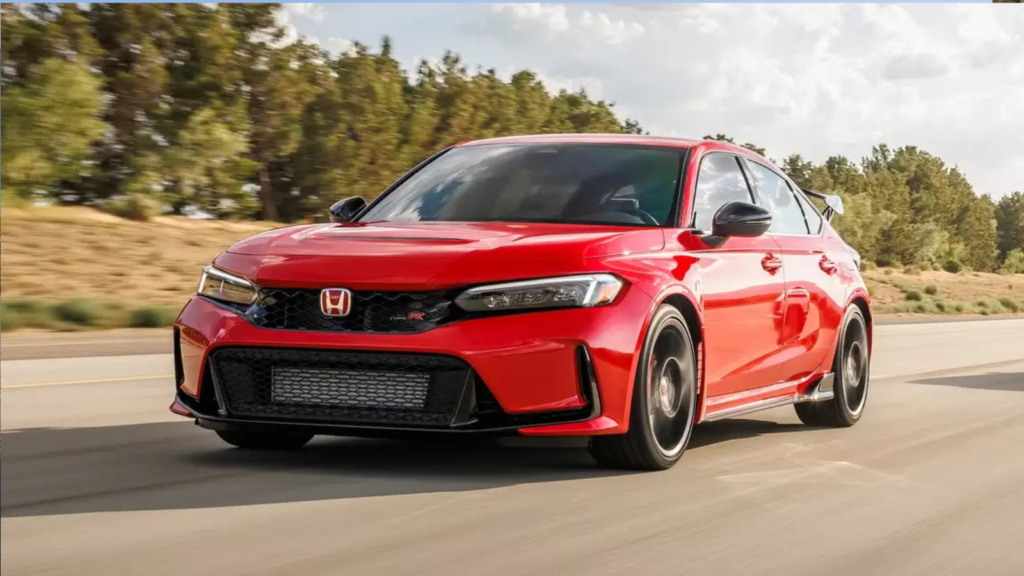
The 2026 Honda Civic costs more than several direct competitors, with the LX sedan starting around $24,695. However, it gives buyers a refined driving experience, a useful cabin, strong fuel economy, and a model range that can suit different budgets.
The LX and Sport use a 150-horsepower gasoline engine. The LX is rated at approximately 32 mpg city, 41 mpg highway, and 36 mpg combined. Hybrid trims produce considerably more power while achieving an estimated 49 mpg combined.
The Civic feels stable and easy to control, but it is also more responsive than many entry-level sedans. The interior layout is simple, passenger space is generous for the class, and the trunk can handle normal grocery, luggage, and work needs.
Honda includes a suite of driver-assistance systems, although buyers should compare trim-specific equipment and test how the systems behave in real traffic.
The Civic is a good first car for drivers who expect to keep their vehicle for several years and want something that will not feel too basic after their first year of ownership. Its main disadvantages are the higher starting price and potentially higher insurance cost compared with less powerful, lower-priced competitors.
3. 2026 Kia K4 — Best Budget Choice
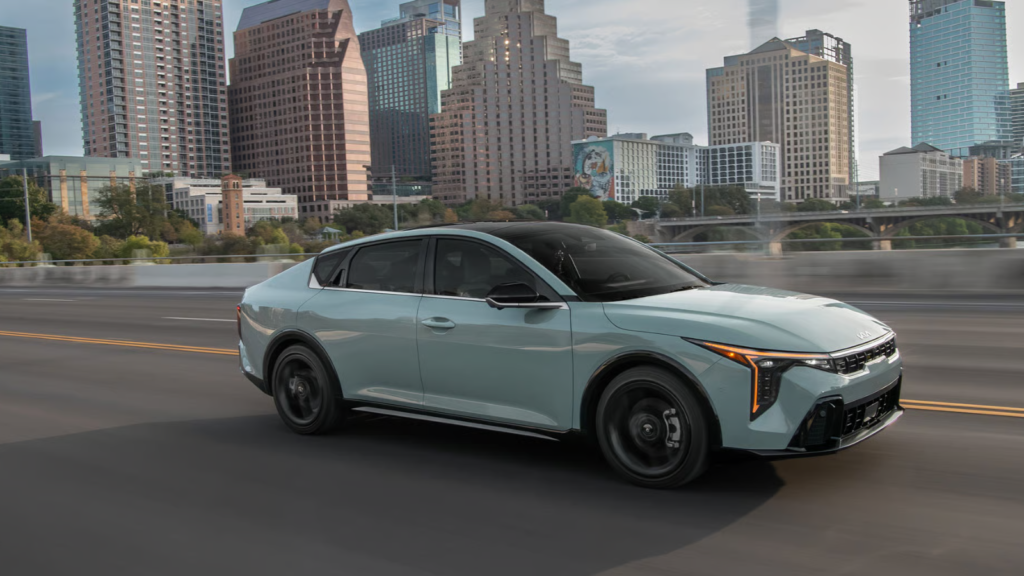
The 2026 Kia K4 is one of the most competitive first-car options for buyers who want a modern cabin and generous passenger space at a relatively low starting price. The base LX begins at approximately $22,290 before destination and dealer charges.
Its standard 2.0-liter four-cylinder engine produces 147 horsepower and returns an estimated 29 mpg city, 39 mpg highway, and 33 mpg combined. That output is sufficient for routine commuting, although drivers should not expect strong acceleration with several passengers on board.
The K4 stands out for its cabin presentation. It looks and feels more modern than many entry-level cars, while rear-seat space makes it practical for buyers who frequently travel with friends or family.
Kia offers several driver-assistance features, but equipment can change by trim. Buyers should confirm whether blind-spot monitoring, rear cross-traffic alert, adaptive cruise control, and upgraded collision-avoidance functions are included on the version being considered.
The K4 is best for first-time buyers who want maximum space and technology for the purchase price. Since the model is newer than established rivals such as the Corolla and Civic, its long-term resale pattern is less established. That does not make it a poor choice, but buyers planning to sell within a few years should compare projected trade-in values.
4. 2026 Hyundai Elantra — Best for Standard Features
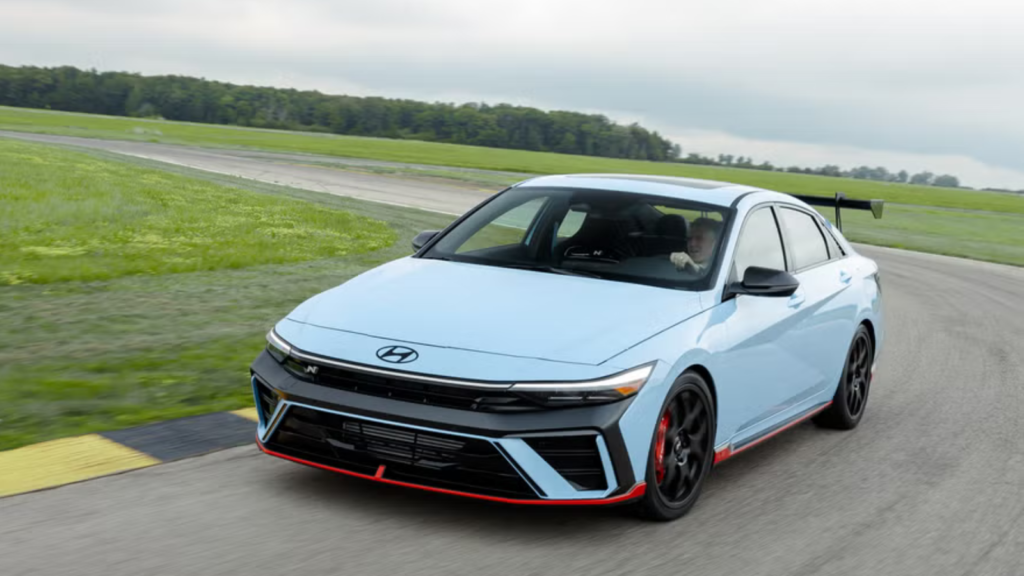
Starting at approximately $22,625, the 2026 Hyundai Elantra combines a low entry price with good fuel economy, a spacious cabin, and a broad selection of trims.
The regular 2.0-liter engine produces 147 horsepower. The base SE is rated at roughly 31 mpg city, 40 mpg highway, and 35 mpg combined. The Elantra Hybrid Blue raises estimated combined economy to approximately 54 mpg, making it one of the most efficient choices for city commuters.
Passenger volume is generous, and the 14.2-cubic-foot trunk is useful for daily errands and short trips. The dashboard has a more angular, technology-focused design than the Corolla’s simpler layout.
The standard gasoline engine is adequate but not particularly quick. That can be acceptable for a first-time buyer who prioritizes running costs. The N Line and high-performance Elantra N are much faster, but their price, fuel use, tires, and insurance requirements make them less suitable for most inexperienced drivers.
The regular Elantra is a strong option for buyers who want a roomy sedan with good equipment. Compare insurance quotes and local dealer support with the Toyota, Honda, and Kia alternatives before deciding.
5. 2026 Nissan Sentra — Best Low-Cost Alternative
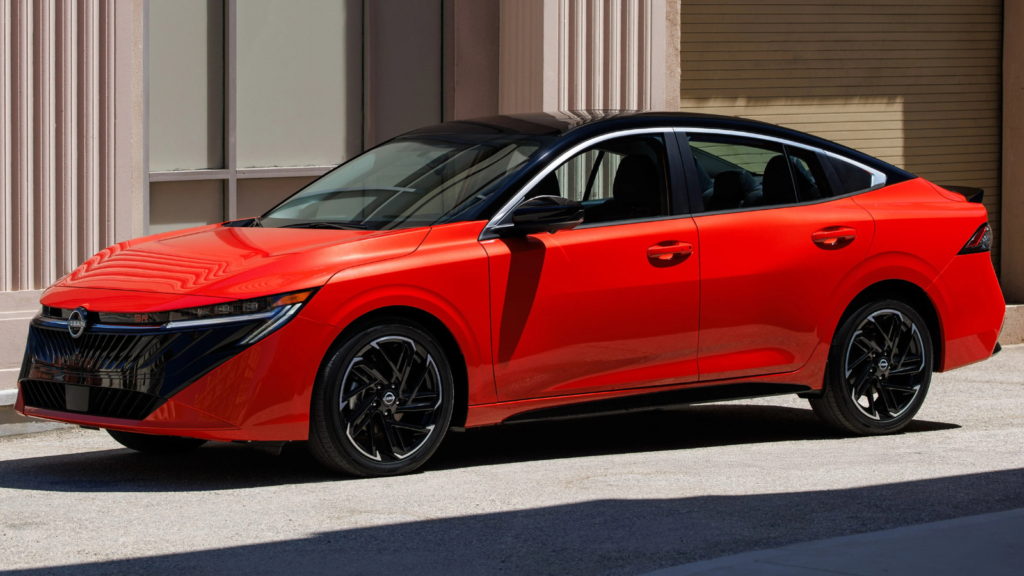
The redesigned 2026 Nissan Sentra starts at approximately $22,600 and offers a comfortable route into new-car ownership. It is aimed at drivers who need an efficient commuter rather than a performance-oriented compact car.
The Sentra returns up to an estimated 30 mpg city, 38 mpg highway, and 33 mpg combined in its lower trims. Its power delivery is suitable for urban driving and normal highway use, but acceleration is not its main selling point.
Its cabin, exterior styling, and available displays give the car a more upmarket appearance than its entry price suggests. Nissan also includes several safety and driver-assistance functions, though buyers should confirm equipment by trim.
The Sentra is worth considering when dealer pricing is lower than equivalent Corolla, Civic, K4, or Elantra offers. Incentives can change the value calculation considerably.
First-time buyers should pay close attention to the total out-the-door price rather than the discount alone. Dealer-installed accessories, protection packages, and financing terms can reduce the value of an otherwise attractive offer.
The Sentra is best for commuters seeking comfort, reasonable fuel economy, and a low purchase price. Buyers focused heavily on resale value should compare it carefully with the Corolla and Civic.
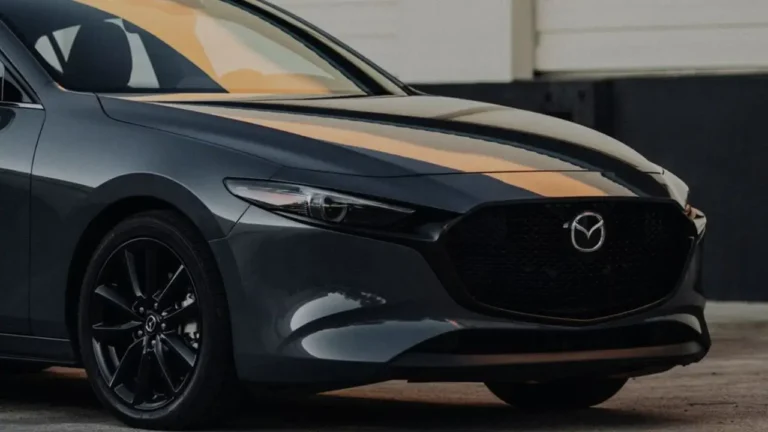
6. 2026 Mazda3 Sedan — Best Premium Compact Car
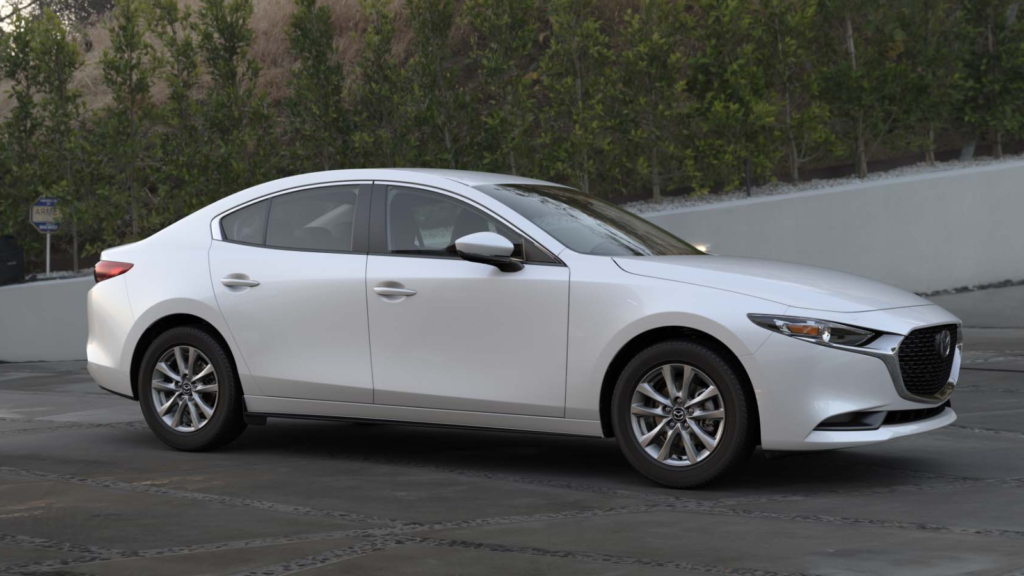
The 2026 Mazda3 Sedan starts at approximately $24,650 and feels more polished than many entry-level compact cars. It is the best option in this group for a new driver who values interior quality, steering response, and stronger standard performance.
The base 2.5-liter four-cylinder engine produces 186 horsepower with regular gasoline. Front-wheel-drive models can return an estimated 27 mpg city, 36 mpg highway, and 30 mpg combined.
The Mazda3 uses a six-speed automatic transmission rather than the continuously variable transmissions fitted to many competitors. Its steering and body control give it a more connected driving character without making routine commuting uncomfortable.
Interior materials and design are major strengths. However, the rear seat is tighter than those in the Civic, Elantra, and K4, and the sedan provides 13.2 cubic feet of cargo space. Rear visibility can also feel restricted to some drivers, making a careful test drive important.
The Mazda3 suits a first-time buyer with a slightly larger budget who wants to keep the car for several years. The available turbocharged and all-wheel-drive versions are appealing, but the basic front-wheel-drive model is the more sensible first-car configuration because it costs less to buy, fuel, insure, and maintain.
7. 2026 Subaru Impreza — Best for Snowy Areas
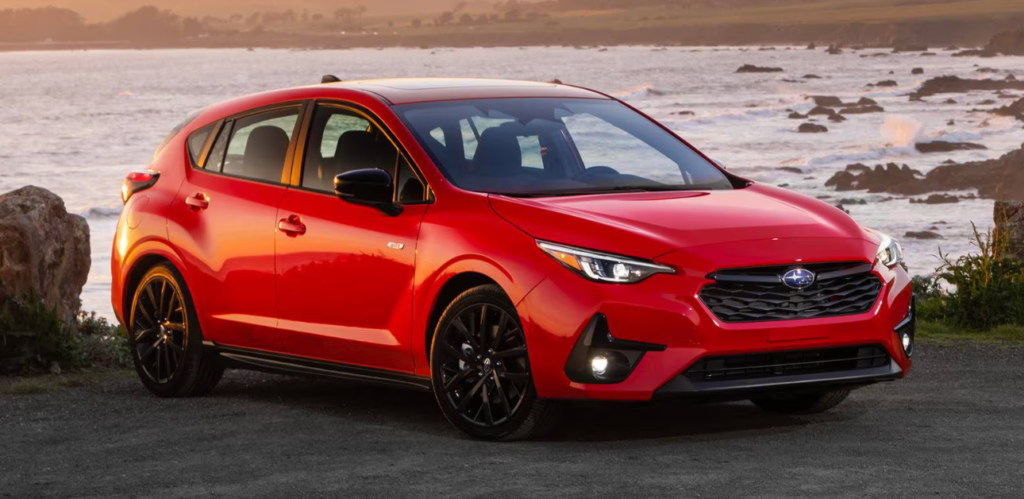
The 2026 Subaru Impreza is a practical hatchback for buyers who regularly encounter snow, heavy rain, gravel roads, or changing weather. It starts at approximately $26,595 and includes all-wheel drive as standard.
The Impreza Sport uses a 2.0-liter four-cylinder engine and can return up to an estimated 27 mpg city and 33 mpg highway. The RS has a larger 2.5-liter engine, but most first-time buyers will find the less expensive Sport adequate.
Its hatchback body provides 20.4 cubic feet of cargo room behind the second row, making it more useful than a small sedan for sports equipment, luggage, pets, and bulky purchases.
Subaru’s EyeSight driver-assistance system is standard, and rear-seat side airbags are included for 2026. The Impreza also offers good outward visibility and predictable road behavior.
The main compromise is cost. Its base price is higher than several front-wheel-drive sedans, and all-wheel drive can add tire and maintenance considerations. Buyers who live in mild climates may not receive enough benefit to justify that difference.
For drivers in areas with frequent winter weather, the Impreza offers a strong mix of traction, cargo flexibility, and everyday usability. Winter tires remain important, even with all-wheel drive.
8. 2026 Chevrolet Trax — Best Small SUV
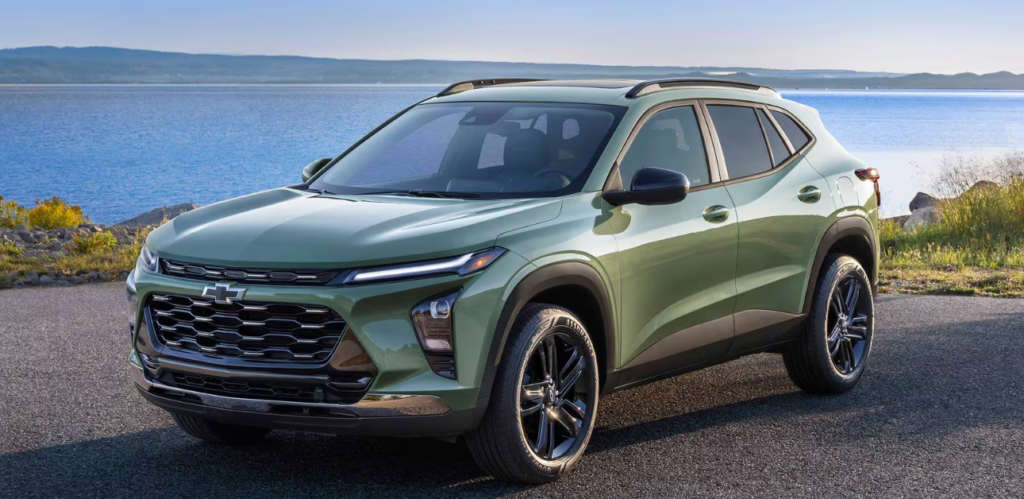
The 2026 Chevrolet Trax is a strong first-car choice for buyers who prefer an SUV seating position and more cargo flexibility. It starts at approximately $21,700, making it less expensive than many compact sedans and most new SUVs.
Its 1.2-liter turbocharged three-cylinder engine produces 137 horsepower and 162 lb-ft of torque. Estimated fuel economy is approximately 30 mpg combined.
The Trax can provide up to 54.1 cubic feet of cargo space with its rear seats folded. That makes it useful for apartment moves, outdoor equipment, large shopping trips, or work-related items.
Despite its SUV appearance, the Trax is front-wheel drive only. Drivers who need all-wheel drive should consider the Subaru Impreza or a more expensive crossover. Its modest engine is suitable for regular commuting but can feel less energetic during highway passing or when heavily loaded.
The Trax is best for first-time buyers who need space but do not want the purchase price and fuel use of a larger SUV. Check visibility, parking comfort, and insurance pricing during the buying process.
9. 2026 Toyota Prius — Best for Fuel Economy
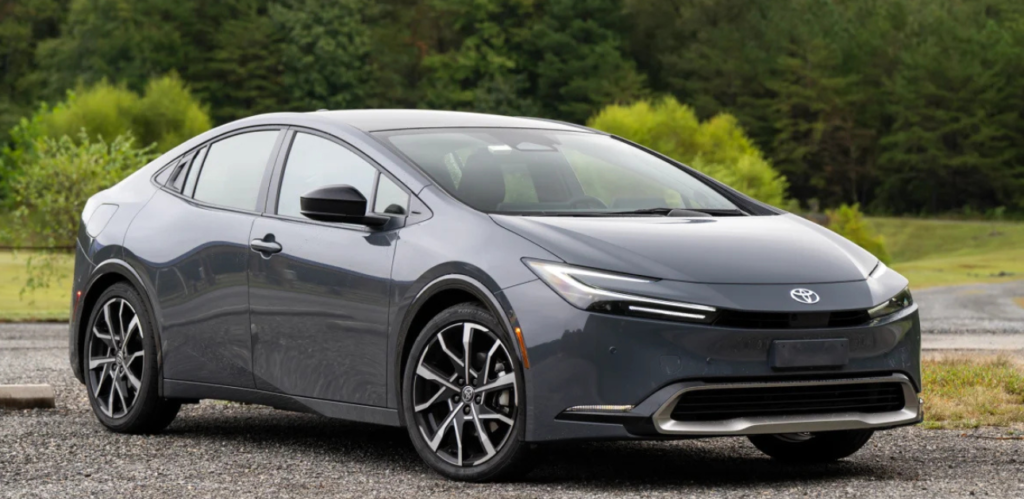
The 2026 Toyota Prius is the fuel-economy leader in this guide. It starts at approximately $28,550 and returns up to an estimated 57 mpg combined in front-wheel-drive form.
Its hybrid system also provides stronger acceleration than many buyers expect, while the hatchback body offers up to 23.8 cubic feet of cargo space. Available all-wheel drive makes it more adaptable than many compact hybrids.
The Prius is most attractive for drivers who cover high annual mileage, spend significant time in city traffic, or expect to keep the vehicle long enough to recover its higher purchase price through fuel savings.
It is not automatically the cheapest first car to own. Its MSRP is several thousand dollars higher than those of the Corolla, K4, Elantra, Sentra, and Trax. Insurance and financing costs may also be higher.
Calculate the likely fuel savings before buying. A driver covering 5,000 miles per year may not save enough to justify the extra purchase cost. A commuter covering 15,000 to 20,000 miles annually could reach a different conclusion.
The Prius is the best first car here for high-mileage drivers who can afford the initial price and want maximum gasoline efficiency without charging an electric vehicle.
How to Choose the Right First Car
A first-time buyer should compare the complete cost of owning a vehicle rather than choosing one based only on monthly payments.
Set a Total Purchase Budget
Calculate how much you can pay after accounting for:
- Down payment
- Sales tax
- Registration
- Dealer documentation fees
- Destination charges
- Insurance
- Initial maintenance
- Fuel or charging costs
- Emergency repair savings
A $23,000 vehicle may cost several thousand dollars more once taxes, delivery charges, financing costs, and registration are included.
Avoid choosing a long loan term simply to reduce the monthly payment. A 72- or 84-month loan can leave you owing more than the car is worth for several years.
Get Insurance Quotes Before Buying
Insurance prices can vary widely between models, trims, engines, locations, and drivers. More powerful engines, large wheels, expensive lighting systems, and costly body panels can increase repair costs and premiums.
Request quotes for the exact model and trim before signing a purchase agreement. A modest sedan may cost considerably less to insure than a turbocharged car or heavily equipped SUV.
Prioritize Active Safety Features
Useful features for inexperienced drivers include:
- Automatic emergency braking
- Forward-collision warning
- Lane-departure warning
- Lane-keeping assistance
- Blind-spot monitoring
- Rear cross-traffic alert
- Adaptive cruise control
- Automatic high beams
- A clear reversing camera
Some features are standard only on higher trims. Compare the equipment list rather than assuming every version includes the same safety technology.
Consider Visibility and Maneuverability
A first car should feel manageable in traffic and parking areas. Check the view through the windshield, rear window, side mirrors, and rear pillars during a test drive.
A tall SUV seating position may feel reassuring, but a compact sedan can be easier to place within narrow lanes. The right choice depends on the driver’s confidence and local road conditions.
Compare Fuel Economy With Real Usage
Highway fuel-economy figures matter less when most journeys involve short trips and congested streets. Hybrid cars can provide greater savings in stop-and-go traffic, while an efficient gasoline sedan may make more financial sense for drivers with low annual mileage.
Estimate annual fuel costs using:
- Expected annual mileage
- Combined fuel-economy rating
- Local gasoline price
The savings from a hybrid should be compared with its higher purchase price and insurance quote.
Think About Maintenance and Tires
Larger wheels usually require more expensive tires. Turbocharged engines may have different maintenance needs than basic naturally aspirated engines. All-wheel-drive cars also have additional mechanical components and may require closer attention to matching tire wear.
For a first vehicle, a common tire size, regular gasoline requirement, and simple powertrain can help control long-term ownership costs.
Protect Future Resale Value
Resale value depends on vehicle condition, mileage, demand, accident history, color, trim, and local market conditions. Popular compact models with strong dealer networks are generally easier to sell than unusual configurations.
Regular maintenance records, careful interior use, and prompt body repairs can protect the value of any first car.
Ownership Cost Considerations
Fuel
The Prius and Elantra Hybrid offer the lowest gasoline use, but a hybrid does not always produce the lowest total cost.
Compare the hybrid price premium with:
- Annual mileage
- Local gasoline prices
- Length of ownership
- Financing cost
- Insurance premium
- Expected resale value
Efficient gasoline models such as the Corolla, Civic, and Elantra can be more economical for low-mileage drivers.
Insurance
Young and newly licensed drivers can face high premiums regardless of vehicle choice. Engine output, trim level, local theft data, repair prices, and safety equipment can all affect the quote.
Avoid assuming that a small car is always cheap to insure. Get quotes for at least three models before choosing.
Maintenance
Basic compact cars generally have manageable routine service needs. Owners should still budget for:
- Oil and filter changes
- Tires
- Brake pads and rotors
- Wheel alignment
- Battery replacement
- Wiper blades
- Cabin and engine air filters
- Unexpected repairs after warranty coverage ends
A maintenance fund is necessary even when the vehicle is new.
Depreciation
Depreciation is often one of the largest ownership expenses. Popular models with broad buyer demand may retain value more consistently, but mileage, condition, accidents, and market changes can affect any car.
Buy the vehicle that fits the budget without relying on a specific future resale price.
Should You Choose a New or Used Car?
A new car provides full warranty coverage, current safety technology, predictable history, and access to manufacturer financing. Its disadvantages include higher purchase cost, faster early depreciation, and potentially higher insurance.
A used car can be the smarter choice when it allows the buyer to avoid a large loan. The ideal used age range is often around three to five years because much of the initial depreciation has already occurred while the vehicle may still have many years of useful service remaining.
However, condition matters more than age alone. A neglected three-year-old vehicle can be a worse purchase than a carefully maintained seven-year-old car.
Before buying used:
- Check the vehicle identification number for recalls
- Review the title and history report
- Request maintenance records
- Inspect tire and brake condition
- Test every electrical feature
- Arrange an independent pre-purchase inspection
- Confirm insurance and financing costs
- Avoid rebuilt or salvage titles unless the risks are fully understood
Certified pre-owned cars can provide additional warranty coverage, but the price may approach that of a discounted new vehicle. Compare both options using the complete out-the-door cost.
Final Buying Advice
The 2026 Toyota Corolla is the best overall car for most first-time buyers. It combines reasonable pricing, good fuel efficiency, manageable dimensions, standard driver-assistance technology, and a straightforward ownership experience.
The 2026 Honda Civic is the stronger choice for buyers who can spend more and want better driving manners, passenger space, and long-term versatility.
The Kia K4 and Hyundai Elantra provide the most features and cabin space for buyers working with a tighter purchase budget. The Nissan Sentra can also be a good value when local discounts are competitive.
Choose the Subaru Impreza when standard all-wheel drive and hatchback practicality are genuine needs. Select the Chevrolet Trax when an SUV-style cabin and cargo flexibility matter more than performance.
For high-mileage commuting, the Toyota Prius offers the best fuel economy, but buyers should make sure the gasoline savings justify its higher initial price.
No single car is right for every new driver. Compare at least three vehicles, request insurance quotes, test-drive each one, and judge the complete ownership cost before signing a contract.