
2026 Ford Mustang Mach-E: Price, Range & Review
The 2026 Ford Mustang Mach-E is a five-seat electric SUV that combines practical cargo space with responsive handling and strong acceleration. Depending on the configuration, it offers up to 320 miles of EPA-estimated range, rear-wheel drive or electric all-wheel drive, and as much as 480 horsepower.
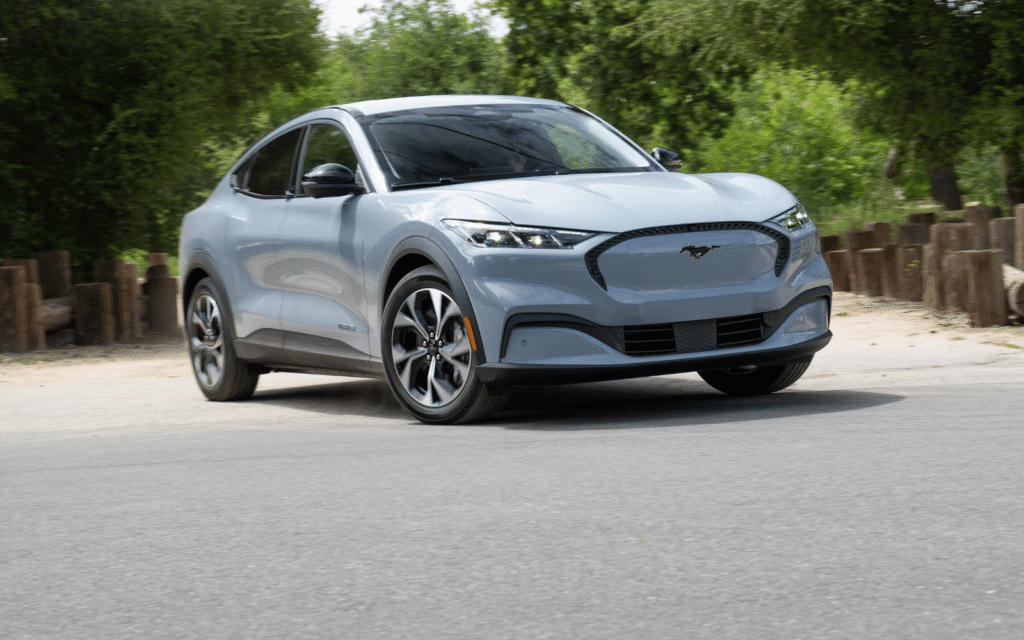
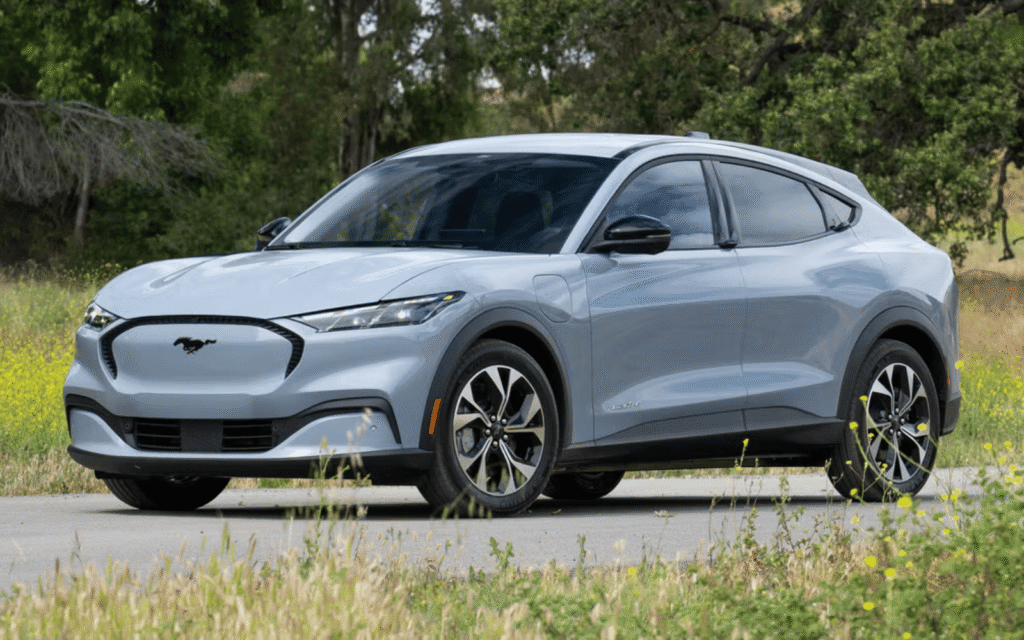
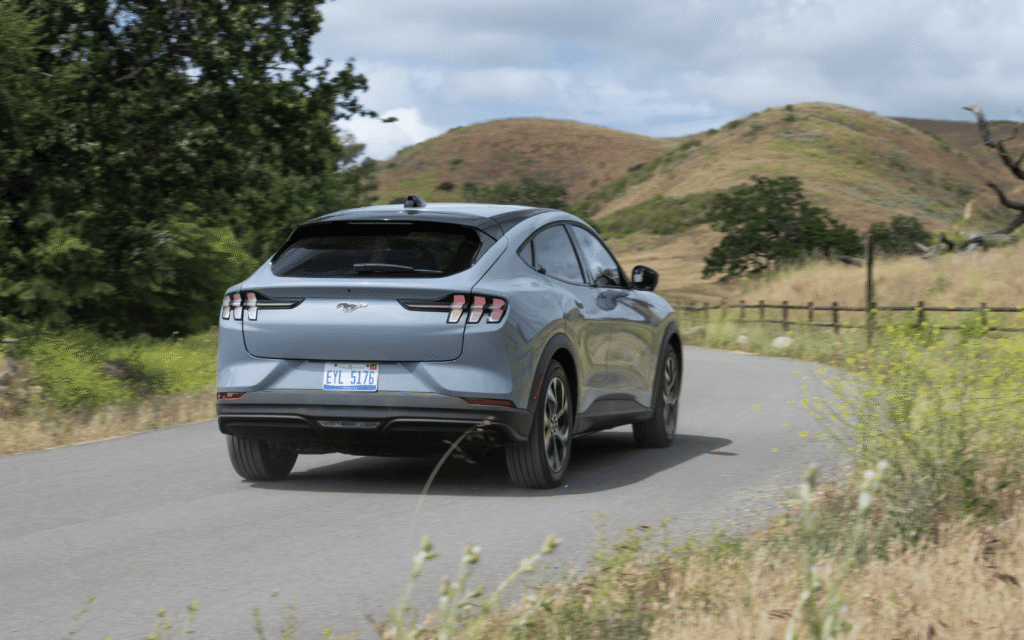
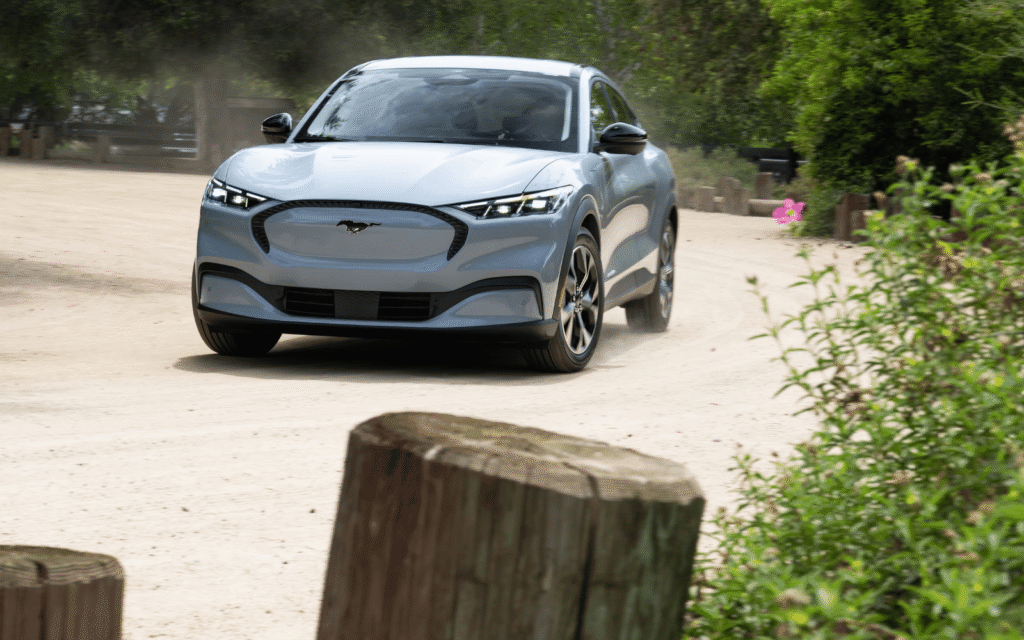
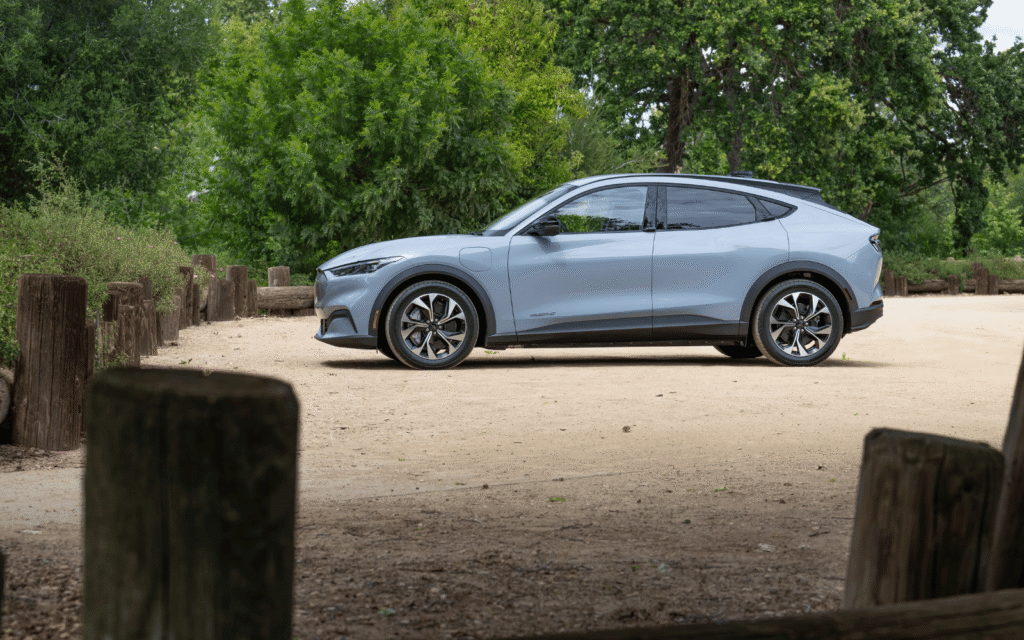
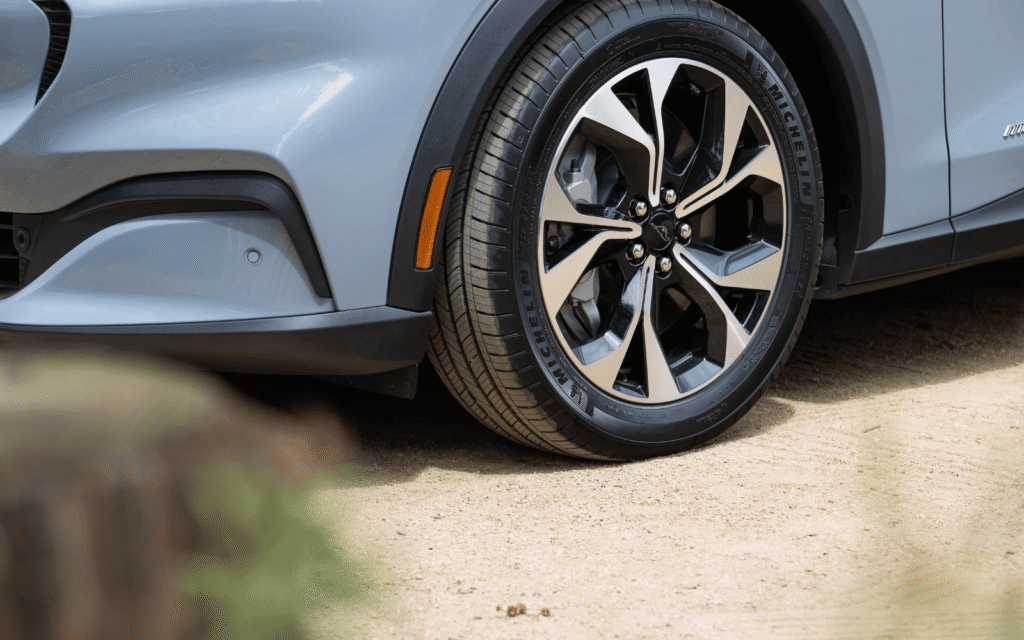
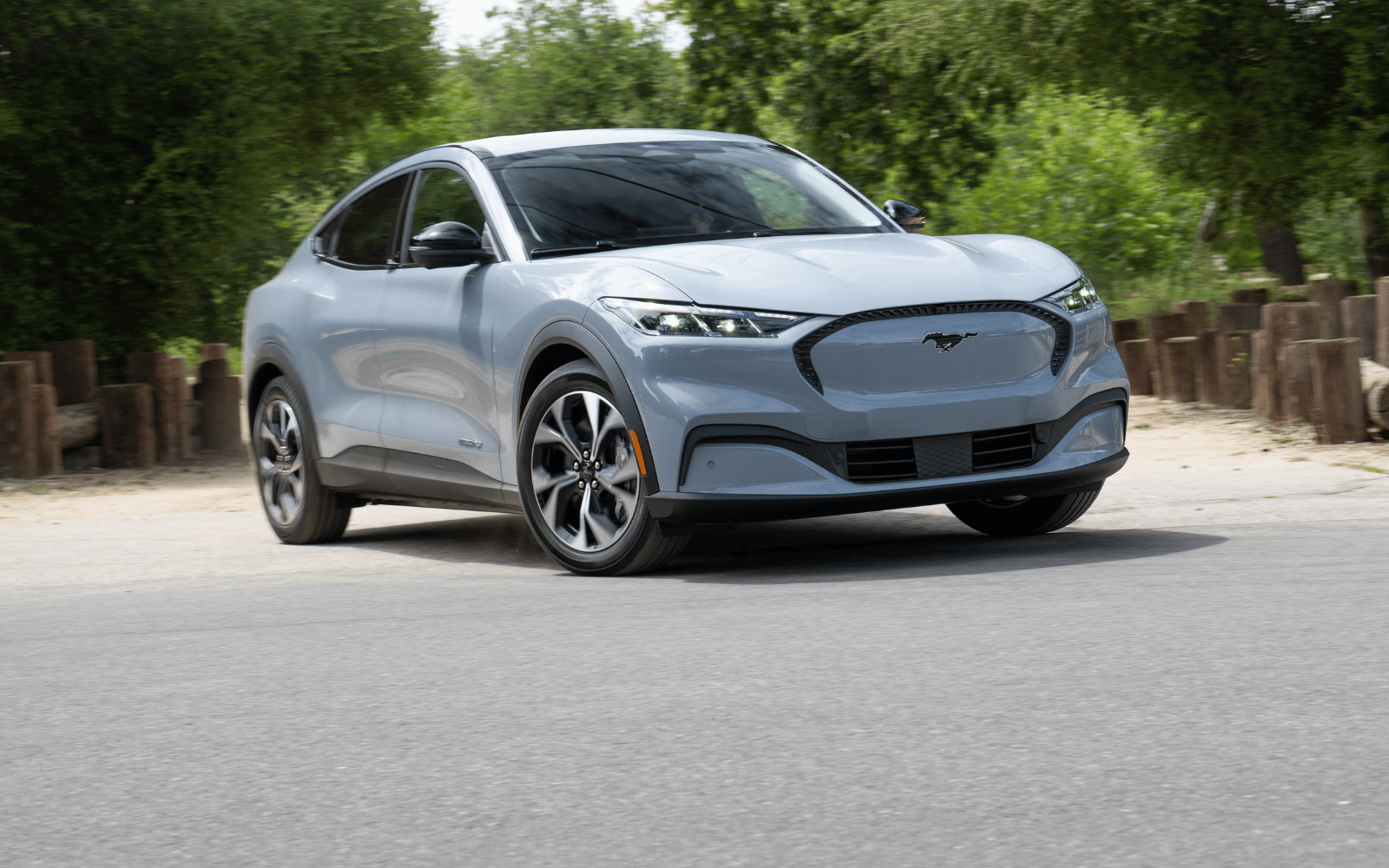
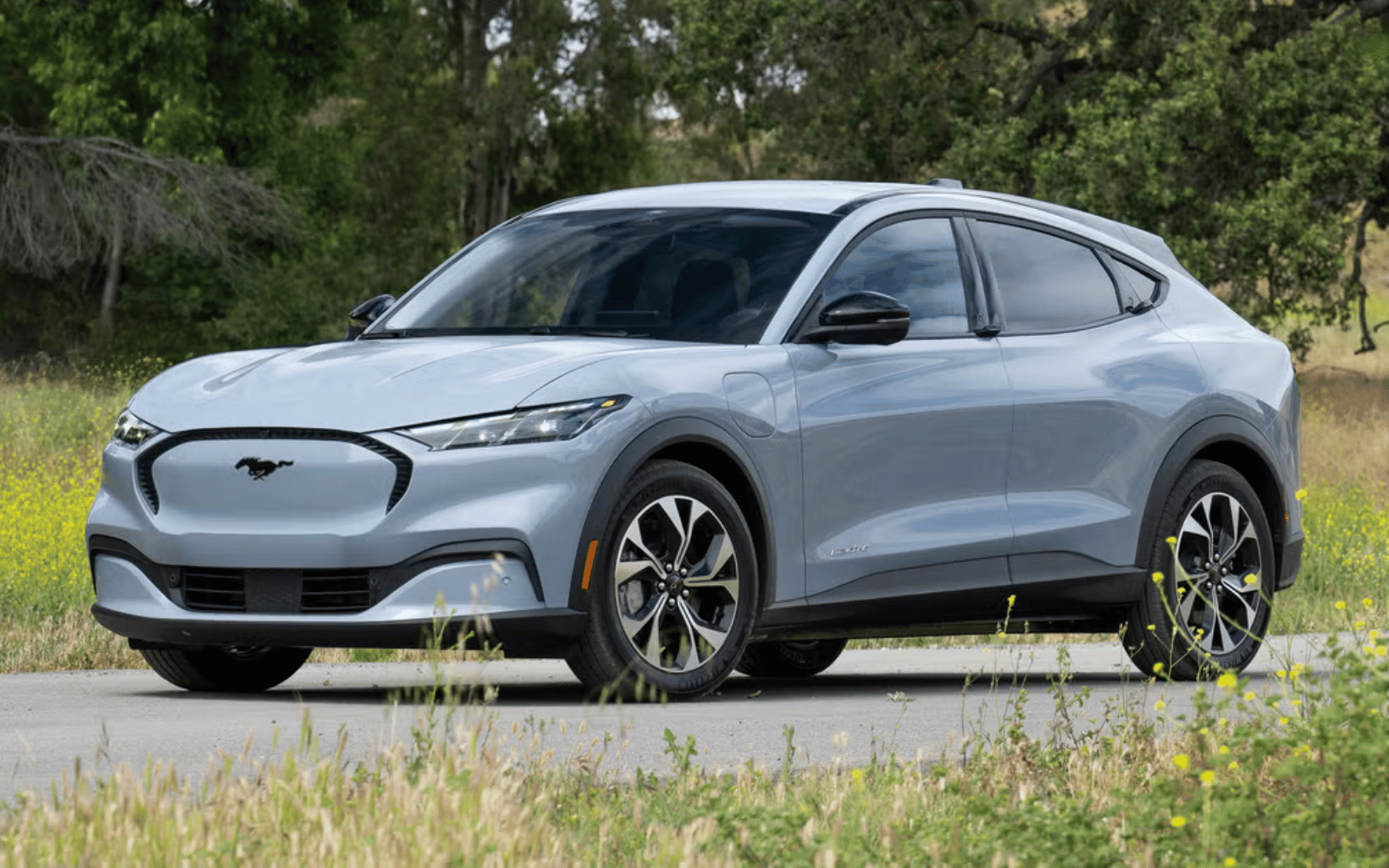
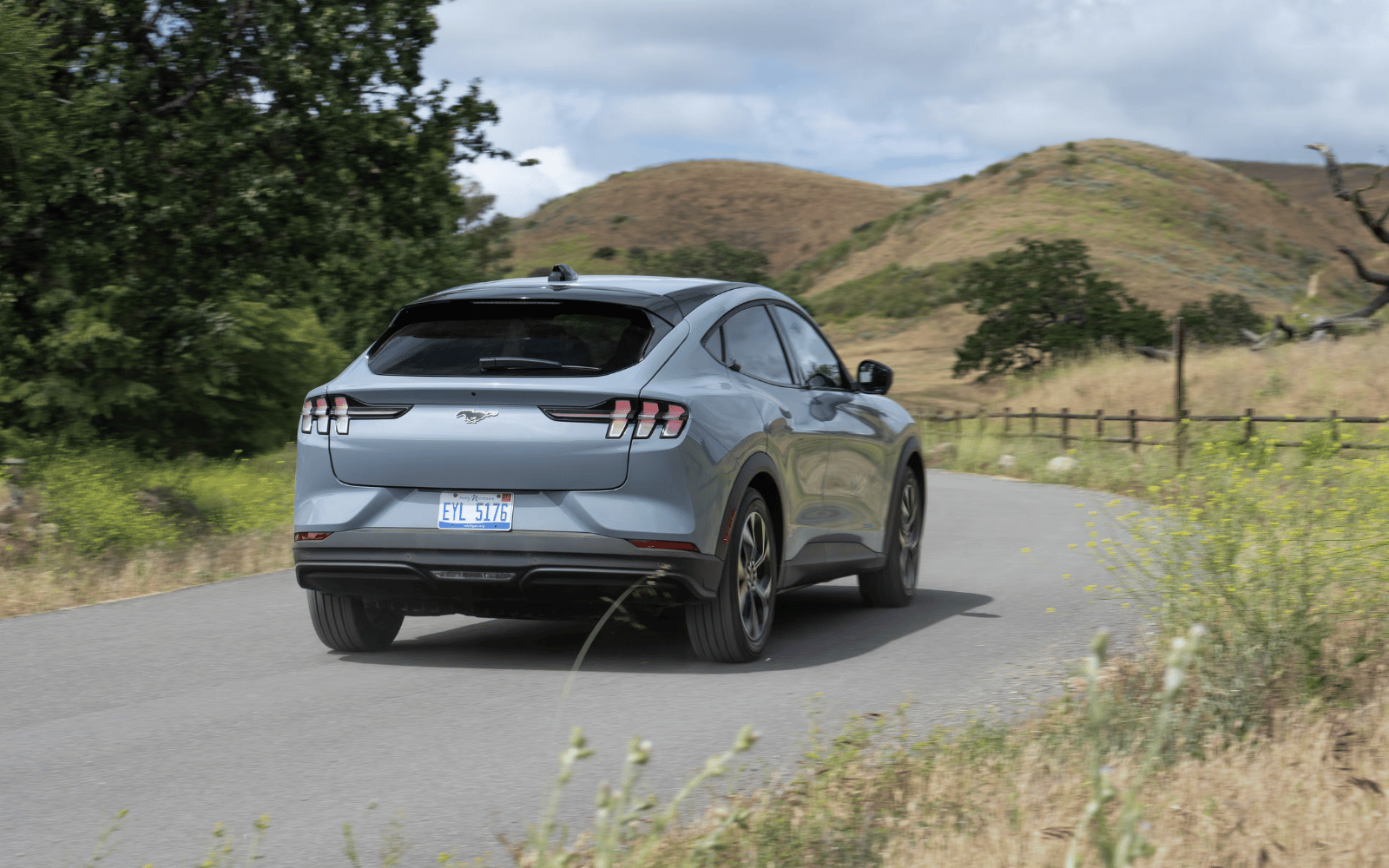
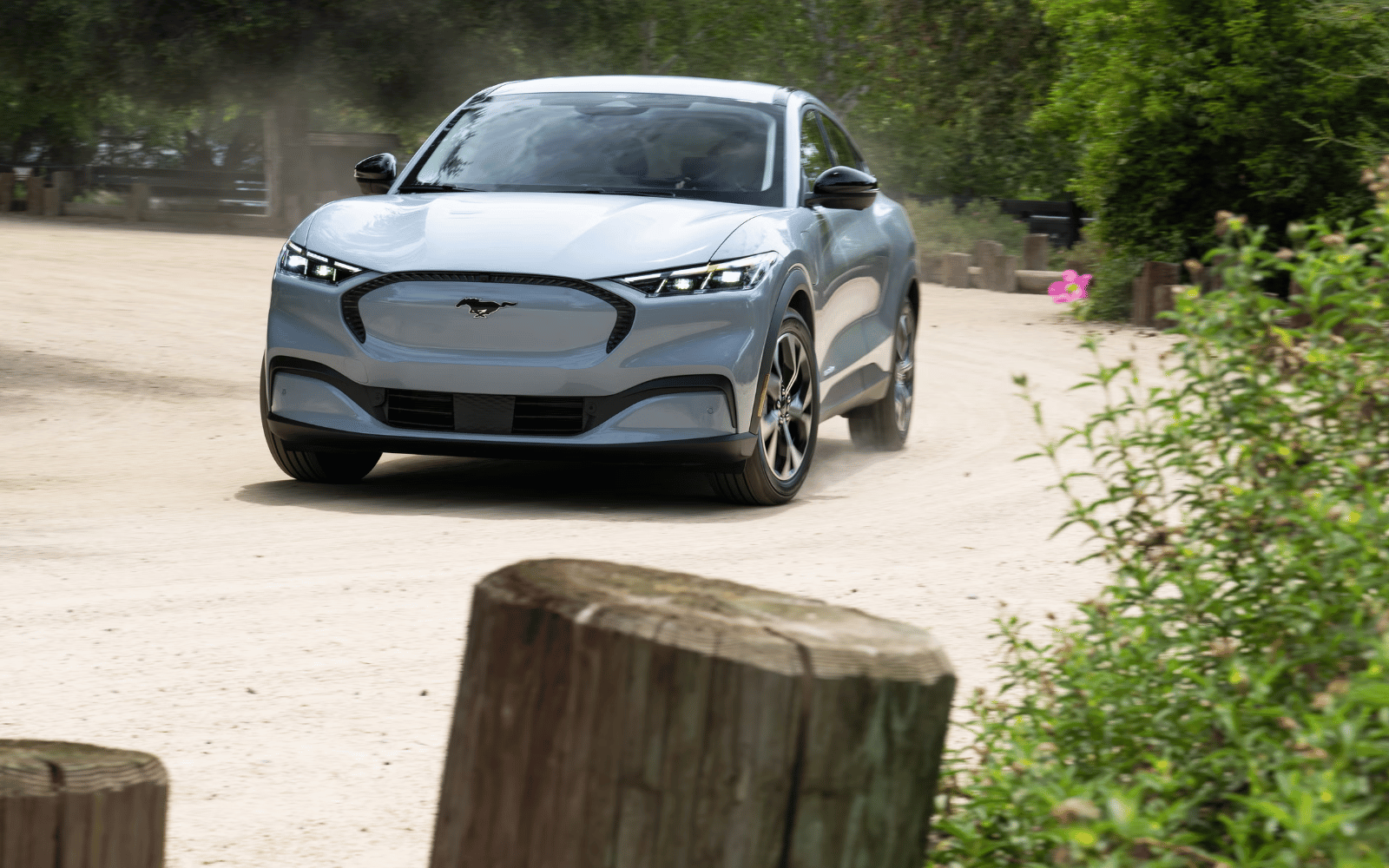
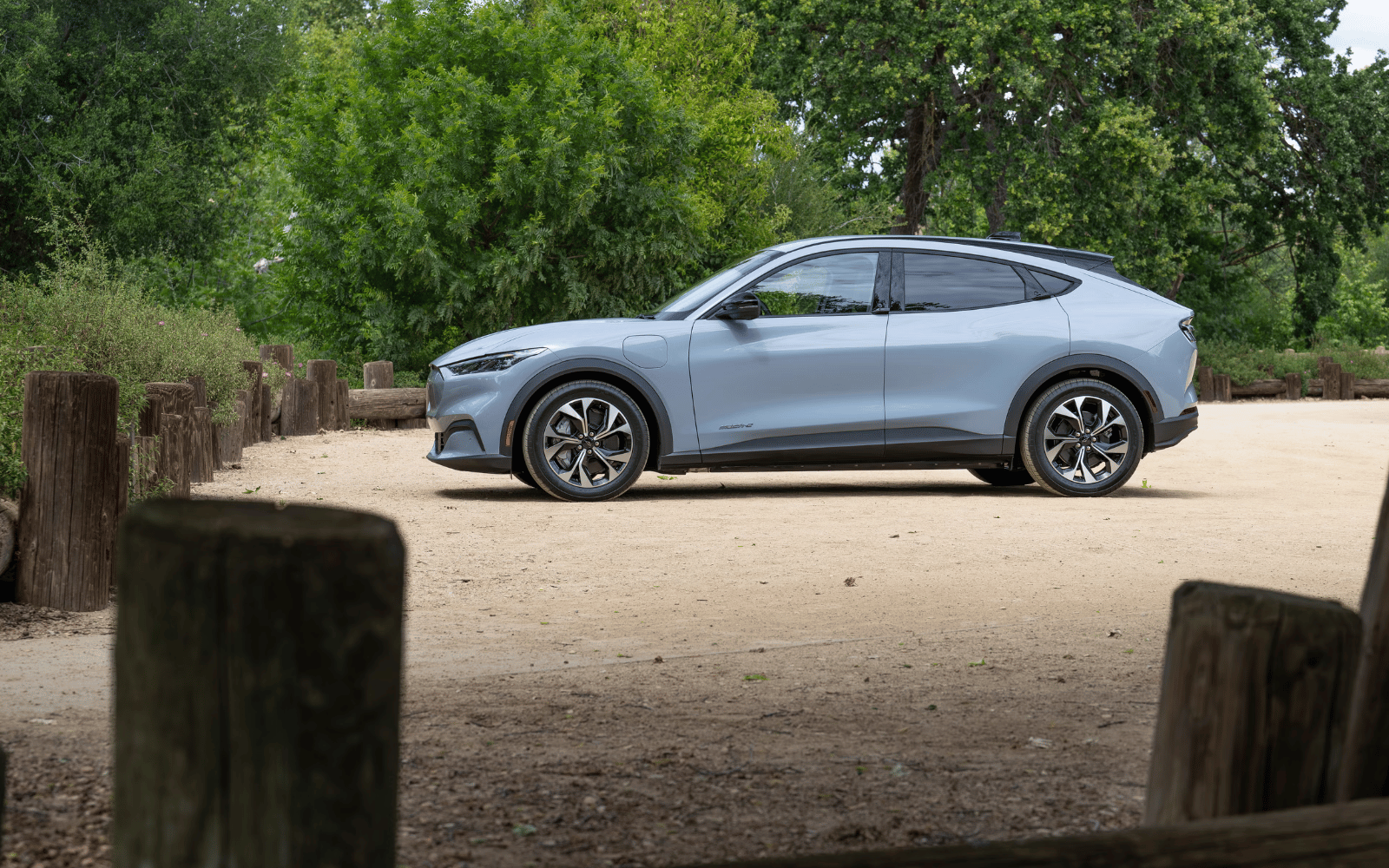
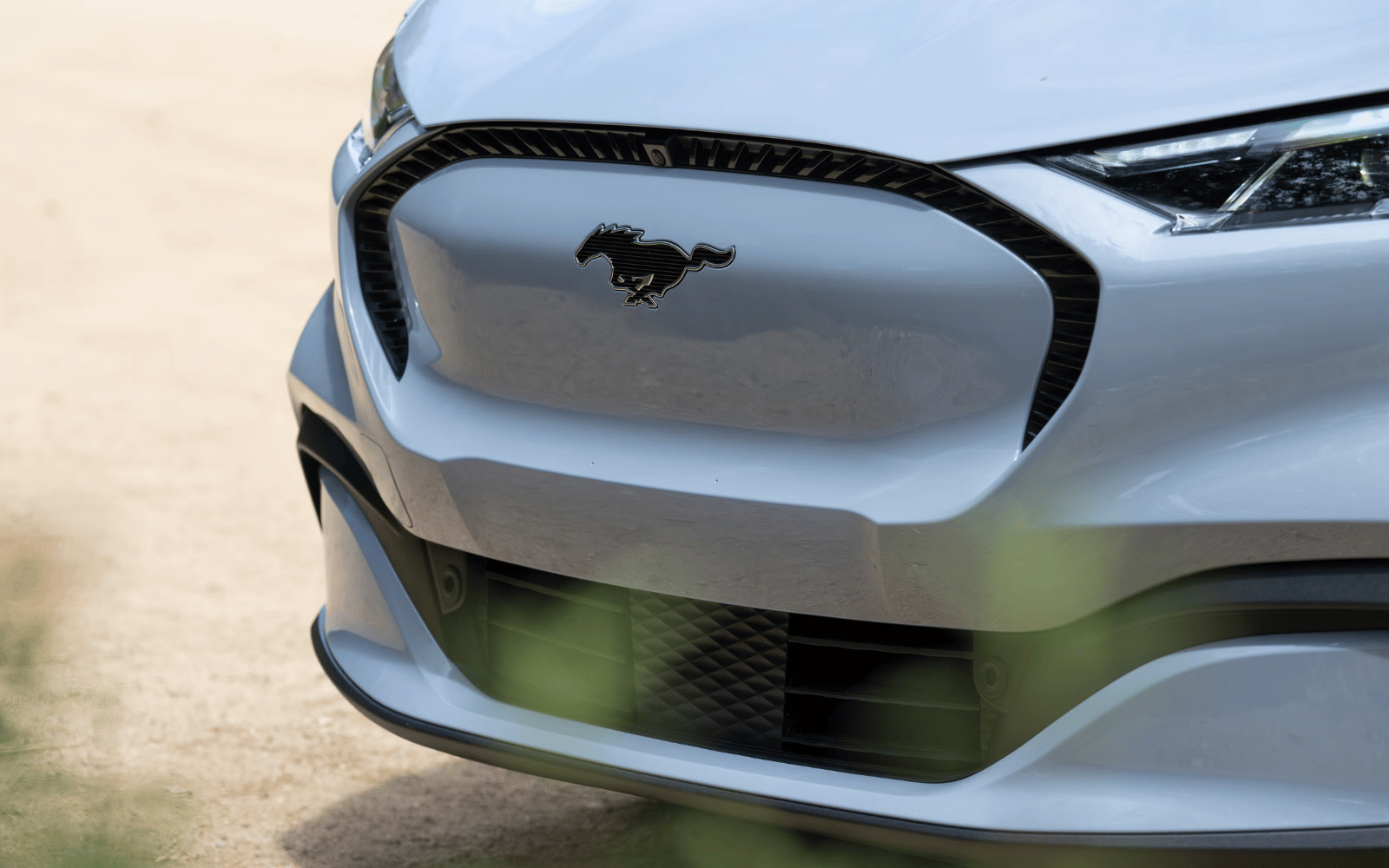
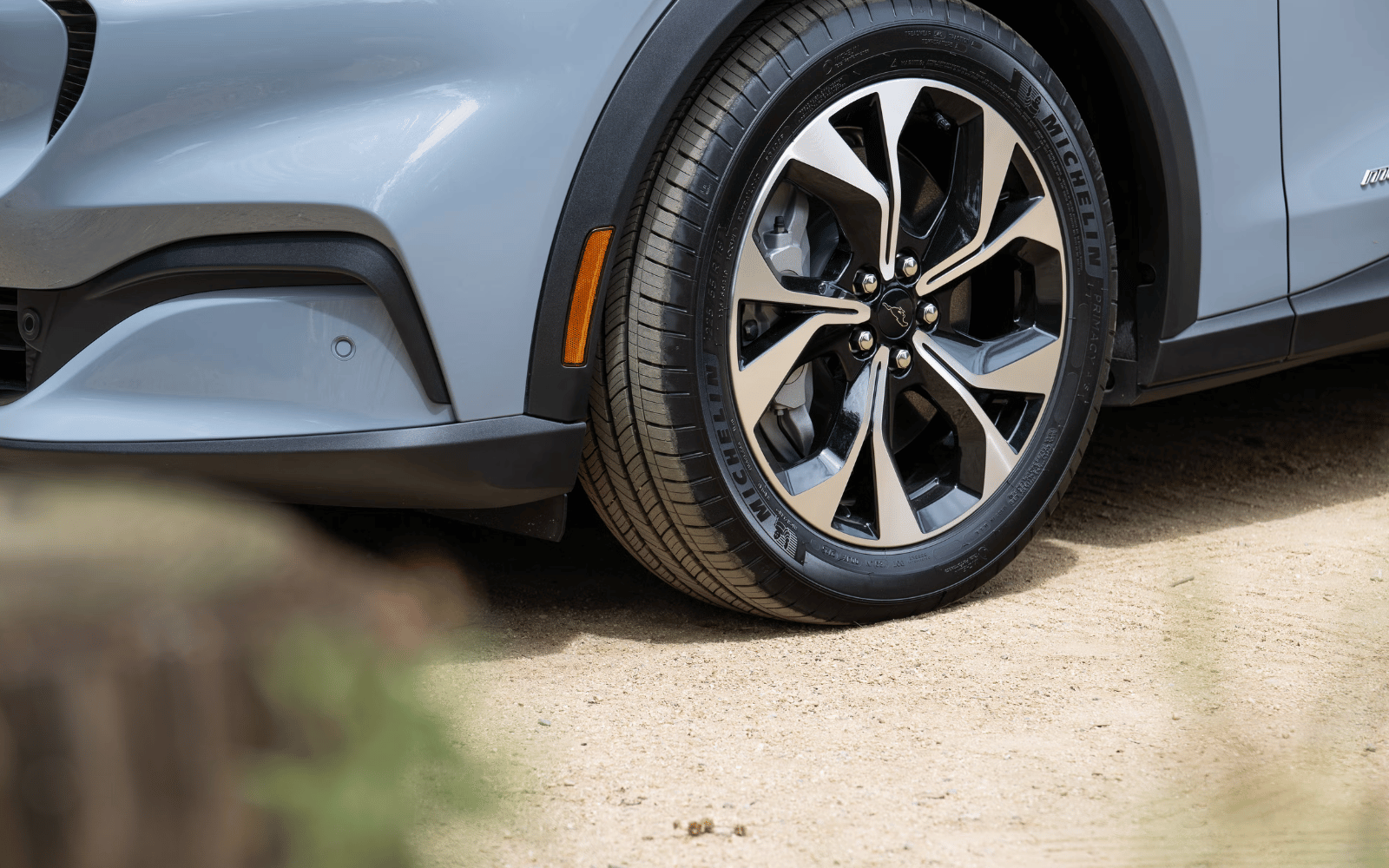
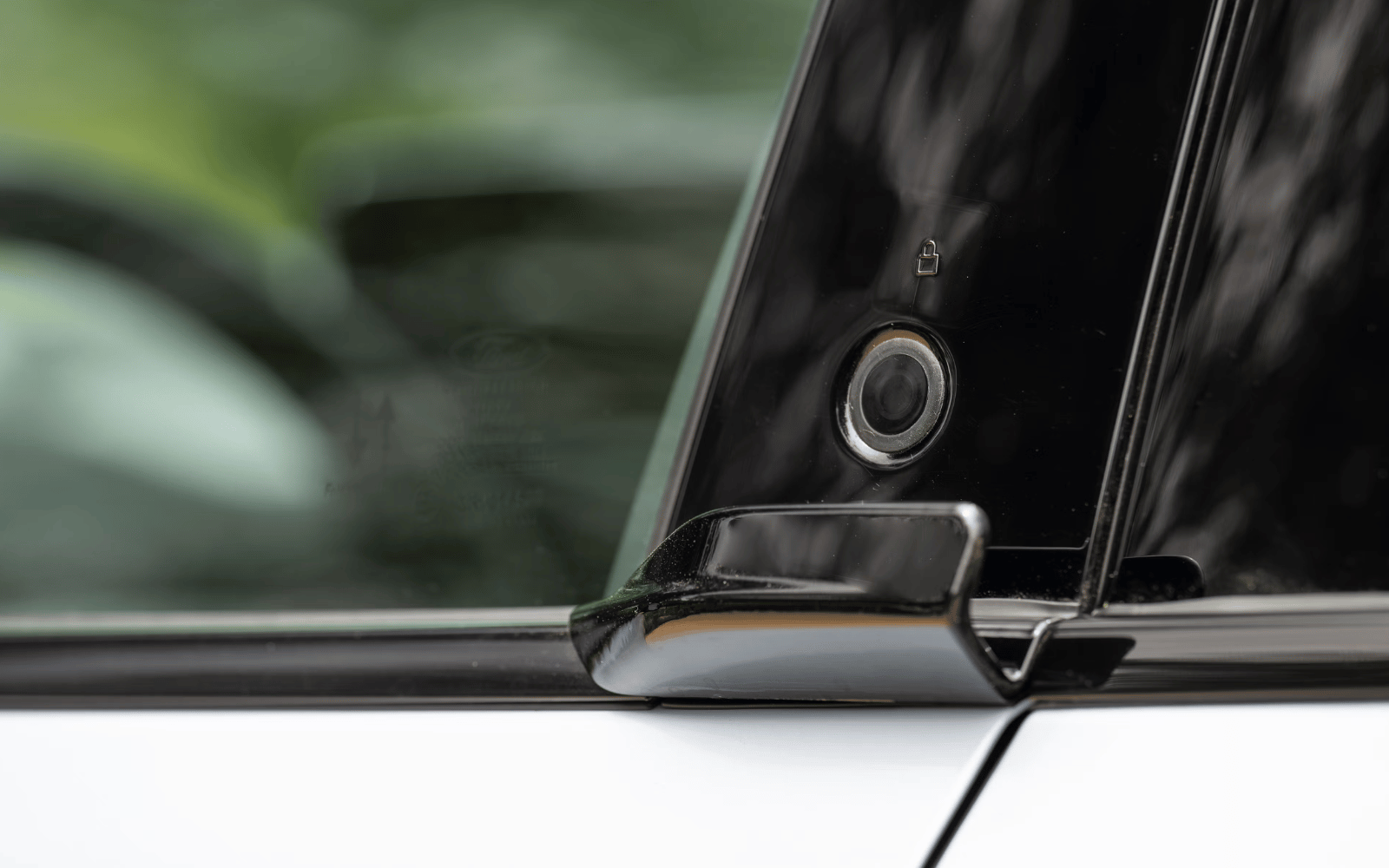
Four trims are available: Select, Premium, GT, and Rally. The Select provides the lowest starting price, the Premium delivers the longest range, the GT focuses on pavement performance, and the Rally adds suspension and tire changes for loose-surface driving.
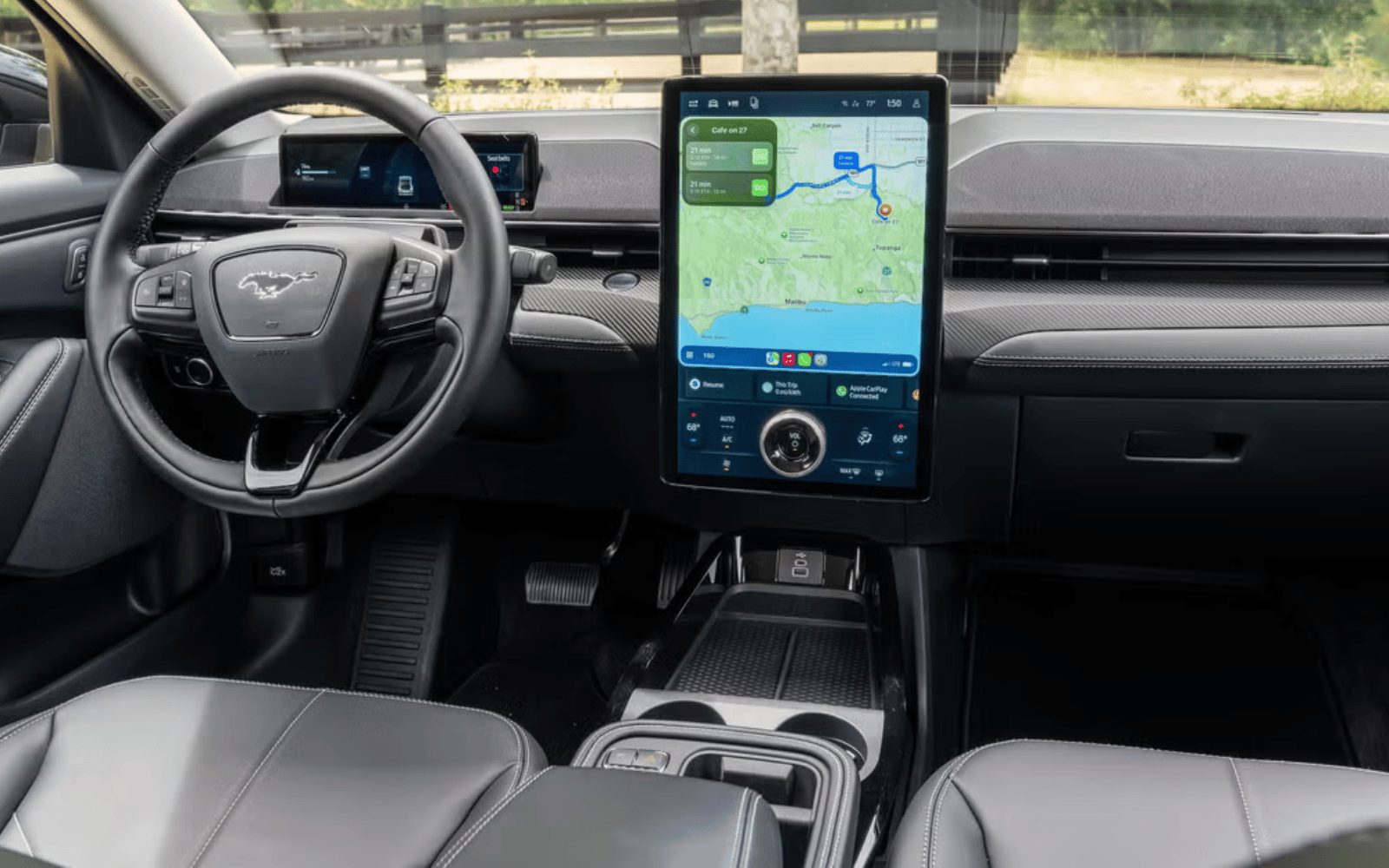
The Mach-E also offers a 15.5-inch touchscreen, available BlueCruise hands-free highway driving, a drainable front trunk, and access to Ford’s large integrated charging network. Its main weaknesses are a firm ride on some configurations, slower DC charging than newer 800-volt rivals, heavy touchscreen dependence, and range reductions during cold weather or fast highway driving.
WheelPedia Rating: 8.8/10
| Category | Score |
| Safety | 9.5/10 |
| Reliability and ownership | 8.0/10 |
| Performance and driving | 9.2/10 |
| Comfort and practicality | 8.5/10 |
| Energy efficiency and range | 8.8/10 |
| Features and technology | 9.0/10 |
| Price and value | 8.5/10 |
| Overall WheelPedia rating | 8.8/10 |
Key Highlights
- Four trim levels
- Up to 320 miles of EPA-estimated range
- Rear-wheel drive or electric all-wheel drive
- 73-kWh, 88-kWh, or 91-kWh battery, depending on configuration
- Up to 480 horsepower
- Up to 700 lb-ft of torque
- 0–60 mph in as little as 3.3 seconds
- Standard 15.5-inch touchscreen
- Standard wireless Apple CarPlay and Android Auto
- Available BlueCruise hands-free highway driving
- New available 400-watt Pro Power Onboard
- Five-passenger seating
- 29.7 cubic feet of cargo room behind the rear seats
- 4.7-cubic-foot drainable front trunk
- 2026 IIHS Top Safety Pick
Quick Specifications
| Specification | Mustang Mach-E |
| Vehicle class | Electric midsize crossover SUV |
| Seating capacity | 5 |
| Drivetrain | Rear-wheel drive or electric all-wheel drive |
| Battery capacity | 73, 88, or 91 kWh |
| EPA-estimated range | 240–320 miles |
| Horsepower | 264–480 hp |
| Torque | 387–700 lb-ft |
| 0–60 mph | 3.3–5.6 seconds |
| Level 2 charging time | Approximately 7.7–9.9 hours with a 48-amp charger |
| Rear cargo space | 29.7 cubic feet |
| Maximum rear cargo space | 59.1 cubic feet |
| Front trunk volume | Approximately 4.7 cubic feet |
| Starting MSRP | $38,290 |
Expert Tip
The Premium with the extended-range battery and rear-wheel drive is the best choice for most long-distance drivers. It offers the maximum 320-mile EPA range, heated and ventilated front seats, and upgraded cabin equipment without the GT’s higher price and energy consumption.
About the Ford Mustang Mach-E
The Mustang Mach-E is a battery-electric crossover rather than an electric version of Ford’s two-door Mustang coupe. It has four doors, five seats, a hatchback cargo area, and an additional storage compartment under the hood.
Although the Mach-E uses Mustang design elements, its body shape and interior space make it more practical for families. It competes primarily with electric SUVs such as the Tesla Model Y, Hyundai Ioniq 5, Kia EV6, Chevrolet Equinox EV, Honda Prologue, Nissan Ariya, and Volkswagen ID.4.
It is smaller and sportier than the Ford Explorer but offers more passenger and cargo flexibility than a conventional sports coupe. Buyers who are not ready for a fully electric vehicle may also want to compare the Ford Escape and Ford Bronco Sport.
What’s New for the Mustang Mach-E?
The 2026 Mach-E receives new packages, technology, comfort features, and exterior colors.
- New GT Performance and Handling Package
- New California Special Package
- New Technology Package
- New Ford Security Package
- New Panoramic Roof Package with removable sunshade
- Available 400-watt Pro Power Onboard
- Heated and ventilated front seats on Premium
- Rear grab handles
- Clear Exit Assist
- Available three-year SiriusXM with 360L plan
- Race Red and Adriatic Blue paint options
- Wider availability of comfort and technology equipment
The California Special Package gives the GT unique graphics, exterior details, blue and silver interior stitching, and model-specific visual changes. It is mainly an appearance package rather than a separate powertrain.
Ford also continues its Power Promise program for eligible buyers and lessees. The current offer includes a complimentary home charger and standard installation, but eligibility, installation limits, and program availability should be checked before purchase.
Price and Trims
The 2026 Mach-E is available in four trims. Prices below are starting MSRPs before destination charges, taxes, registration, dealer fees, and optional equipment.
| Trim | Starting MSRP | Maximum EPA Range | Drivetrain |
| Select | $38,290 | 300 miles | RWD or eAWD |
| Premium | $41,090 | 320 miles | RWD or eAWD |
| GT | $53,890 | 280 miles | Enhanced eAWD |
| Rally | $57,690 | 255 miles | Enhanced eAWD |
Mustang Mach-E Select
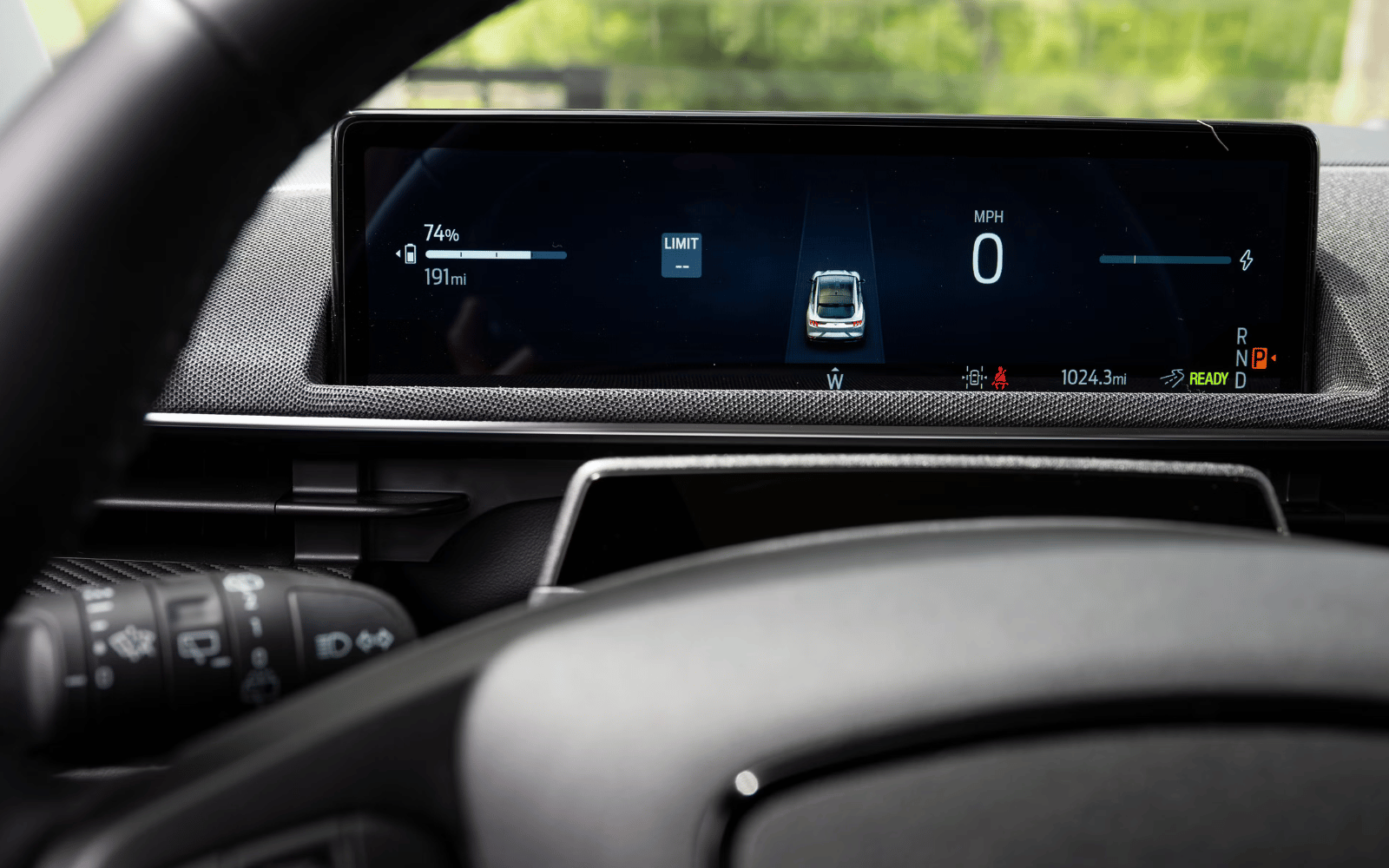
The Select is the least expensive version. It comes with a 15.5-inch touchscreen, a 10.2-inch digital instrument display, wireless smartphone integration, Phone As A Key, Ford Co-Pilot360 driver-assistance technology, and a standard-range battery.
Buyers can select rear-wheel drive or electric all-wheel drive. An extended-range battery is also available in selected configurations, raising maximum range to 300 miles.
The Select is the value choice for drivers who can charge at home and do not need the Premium’s additional comfort features.
Mustang Mach-E Premium
The Premium adds more comfort and is the only trim capable of reaching the Mach-E’s maximum 320-mile EPA range.
Key features include:
- Heated and ventilated front seats
- B&O audio system
- Black Onyx or Light Space Gray interior
- Available extended-range battery
- Rear-wheel drive or electric all-wheel drive
- Available panoramic glass roof
- Additional appearance and technology options
The extended-range rear-wheel-drive Premium is the best configuration for road trips because it pairs the largest range figure with the lower energy use of a single-motor drivetrain.
Mustang Mach-E GT
The GT is the road-performance model. It includes enhanced electric all-wheel drive, a 91-kWh battery, Brembo front brakes, Ford Performance front seats, and model-specific exterior details.
It produces 480 horsepower and 600 lb-ft of torque in standard form. The available GT Performance Upgrade increases torque to 700 lb-ft and cuts the claimed 0–60 mph time from 3.8 to 3.3 seconds.
The GT is extremely quick, but buyers give up some range and ride comfort compared with a rear-wheel-drive Premium.
Mustang Mach-E Rally
The Rally is based on the GT but receives equipment designed for gravel roads and loose surfaces.
Its upgrades include:
- Rallycross-tuned MagneRide dampers
- Increased ground clearance
- Protective underbody equipment
- RallySport drive mode
- Michelin CrossClimate2 tires
- Rear spoiler
- Model-specific wheels and body details
- Standard 700 lb-ft of torque
The Rally reaches 60 mph in a claimed 3.4 seconds and has an EPA-estimated 255-mile range. It is the most specialized Mach-E and will not be the best value for drivers who remain on paved roads.
Battery, Range and Power
Ford offers several battery and drivetrain combinations.
| Configuration | Battery | Power | Torque | EPA Range |
| Select/Premium standard-range RWD | 73 kWh | 264 hp | 387 lb-ft | 260 miles |
| Select/Premium standard-range eAWD | 73 kWh | 325 hp | 500 lb-ft | 240 miles |
| Premium extended-range RWD | 88 kWh | 272 hp | 387 lb-ft | 320 miles |
| Select/Premium extended-range eAWD | 88 kWh | 370 hp | 500 lb-ft | Up to 300 miles |
| GT eAWD | 91 kWh | 480 hp | 600 lb-ft | 280 miles |
| GT with Performance Upgrade | 91 kWh | 480 hp | 700 lb-ft | Up to 280 miles |
| Rally eAWD | 91 kWh | 480 hp | 700 lb-ft | 255 miles |
Ford’s official specification table confirms that range and output depend on the battery and drivetrain rather than the trim name alone.
Standard-Range Battery
The 73-kWh battery is sufficient for commuting and regional travel. It provides an EPA-estimated 260 miles with rear-wheel drive or 240 miles with all-wheel drive.
It also takes less time to recharge at home than the extended-range battery. Buyers who rarely drive more than 150 or 200 miles in one day may not need to pay for additional range.
Extended-Range Battery
The extended-range battery provides up to 320 miles in the Premium RWD. Adding all-wheel drive increases power but lowers estimated range to 300 miles.
The GT and Rally use a 91-kWh extended-range battery. Their greater power, wider tires, and performance tuning reduce range compared with the Premium.
Real-World Mustang Mach-E Range
EPA range provides a standardized comparison, but actual range changes with:
- Driving speed
- Outside temperature
- Cabin heating and air conditioning
- Wheel and tire choice
- Acceleration habits
- Elevation changes
- Headwinds and rain
- Passenger and cargo weight
- Battery age
- Use of roof-mounted accessories
Cold weather can reduce EV range because the battery operates less efficiently and cabin heating uses additional energy. High-speed highway driving also consumes more electricity than lower-speed urban driving.
Drivers should not plan every trip around using the battery from 100% to 0%. Leaving a practical reserve reduces stress when a charging station is busy, unavailable, or slower than expected.
Mustang Mach-E Charging
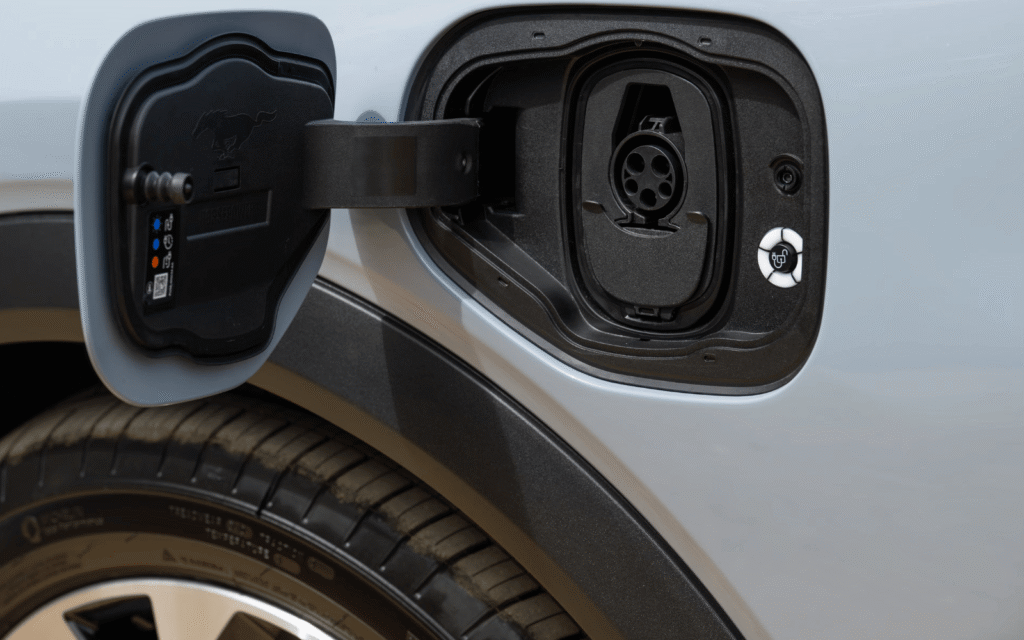
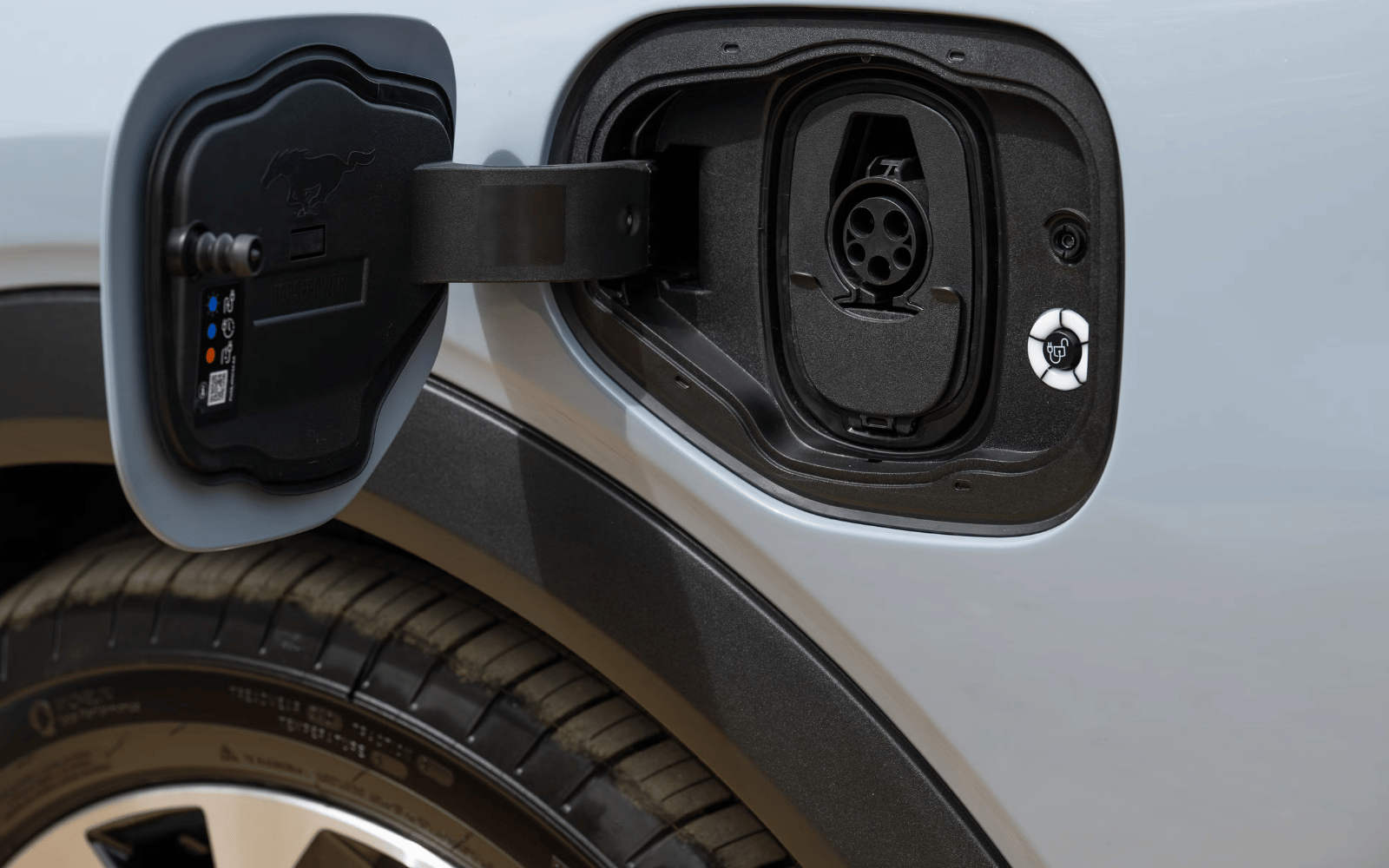
The Mach-E supports home AC charging and public DC fast charging.
Level 1 Charging
A standard 120-volt household outlet adds range slowly. It may be enough for drivers covering very few miles each day, but it is not the best primary charging method for most Mach-E owners.
Level 2 Home Charging
With a compatible 48-amp charger and 240-volt electrical supply, Ford lists the following approximate charging times:
| Battery and Drivetrain | Approximate Home-Charging Time |
| Standard-range RWD | 7.8 hours |
| Standard-range eAWD | 7.7 hours |
| GT or Rally extended-range eAWD | 9.9 hours |
These times assume compatible electrical equipment and favorable charging conditions. A lower-amperage circuit will require more time.
Many owners will not recharge from nearly empty every night. Replacing the energy used during an average commute may take only a few hours.
DC Fast Charging
DC fast charging is intended for road trips and situations where a quick energy stop is necessary. Charging speed depends on:
- Battery temperature
- Starting charge percentage
- Charger output
- Battery condition
- Weather
- Other charging sessions at the site
- The vehicle’s charging curve
The Mach-E’s peak charging performance is adequate for road travel, but it is not as fast as the best 800-volt systems used by the Hyundai Ioniq 5 and Kia EV6. Charging also slows considerably as the battery approaches full capacity, so road-trip stops are normally quicker when ending around 80%.
Public Charging Access
Ford’s integrated charging network combines several charging providers in one account. Mach-E owners can also use compatible Tesla Superchargers with the correct approved adapter and at locations opened to non-Tesla vehicles.
Drivers should confirm charger compatibility before traveling. Not every Tesla Supercharger supports non-Tesla vehicles, and cable placement can make some stalls awkward to use.
Ford Power Promise
Ford currently advertises a complimentary home charger and standard installation for eligible customers who buy or lease a new Ford EV.
The offer may have:
- Purchase or lease date requirements
- Installation-distance limits
- Electrical-panel requirements
- Regional availability rules
- Added charges for non-standard electrical work
Buyers should request written confirmation of the charger, installation scope, and any extra costs before signing the purchase agreement.
Performance and Acceleration
| Configuration | Ford-Claimed 0–60 MPH |
| Standard-range RWD | 5.6 seconds |
| Standard-range eAWD | 4.6 seconds |
| Extended-range RWD | 5.4 seconds |
| Extended-range eAWD | 4.2 seconds |
| GT | 3.8 seconds |
| GT with Performance Upgrade | 3.3 seconds |
| Rally | 3.4 seconds |
Even the least powerful Mach-E provides quick response because an electric motor produces torque without waiting for an engine or transmission to change speed.
The eAWD versions add a second motor, increasing traction and acceleration. However, buyers should not select all-wheel drive solely for speed if maximum range and lower cost matter more.
Driving Experience
The Mach-E has direct steering, a low center of gravity, and stronger body control than many family-focused electric SUVs. The battery sits beneath the passenger compartment, helping the vehicle feel stable through corners.
The ride is generally controlled but can feel firm over sharp bumps, especially with larger wheels and performance tires. The GT is more aggressive than the Premium, while the Rally’s adaptive dampers and taller ride height give it a different character on uneven surfaces.
Drivers can choose between three primary drive modes:
- Whisper: Smoother and more relaxed responses
- Engage: Balanced everyday settings
- Unbridle: Sharper accelerator response and sportier presentation
One-pedal driving can slow the vehicle when the accelerator is released, allowing many journeys to be completed with limited brake-pedal use. Drivers who prefer traditional behavior can turn the feature off.
Rear-Wheel Drive vs. eAWD
Rear-wheel drive is the better choice for buyers prioritizing range, purchase price, and efficiency. Electric all-wheel drive adds a second motor for stronger acceleration and improved traction.
Choose rear-wheel drive if:
- You live in a mild climate
- Maximum range matters
- You want the lowest price
- Most driving is on maintained roads
Choose eAWD if:
- You regularly drive in snow or heavy rain
- You want quicker acceleration
- Steep roads are common
- Additional traction is worth the range reduction
All-wheel drive cannot replace winter tires. Proper tires can affect snow and ice performance more than the number of driven wheels.
Interior and Comfort
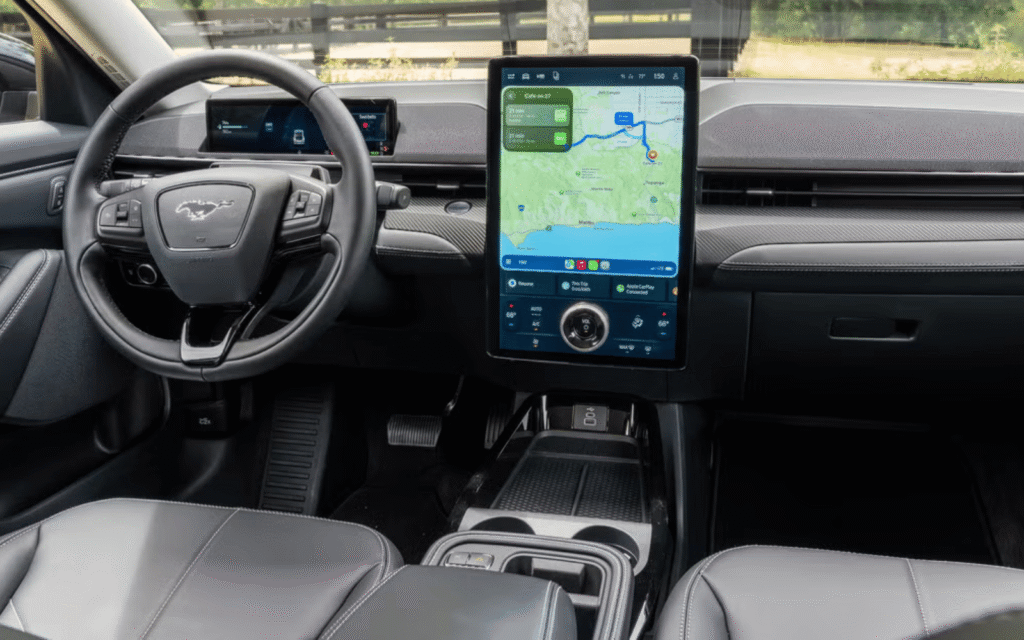
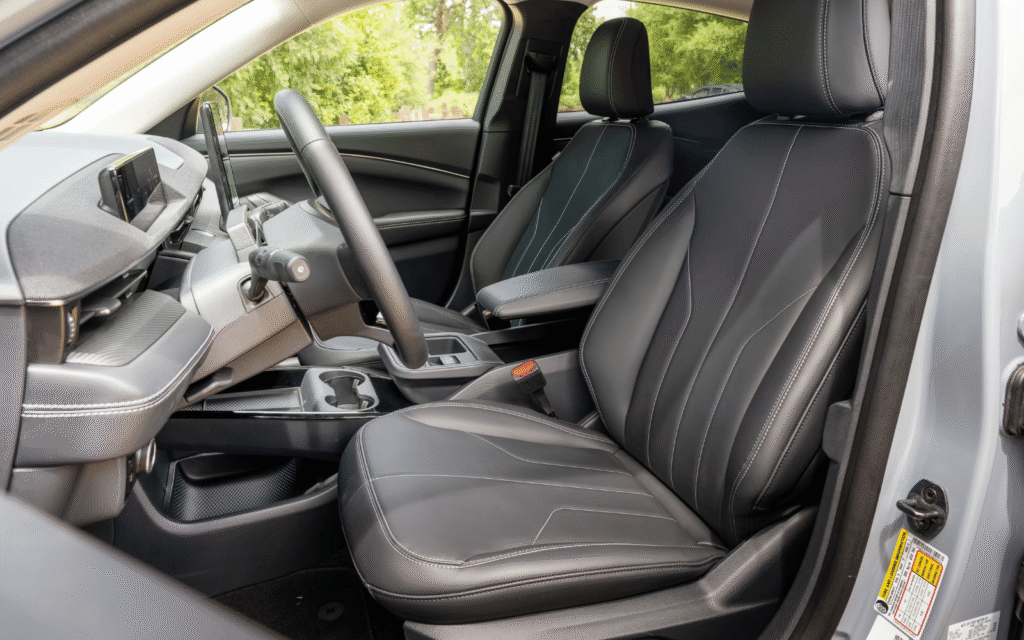
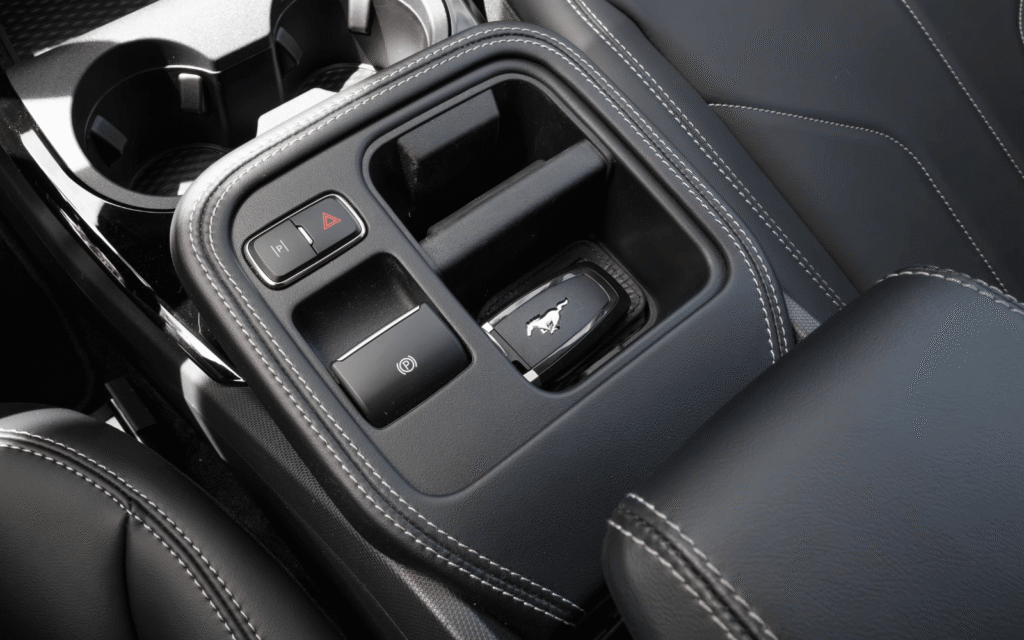
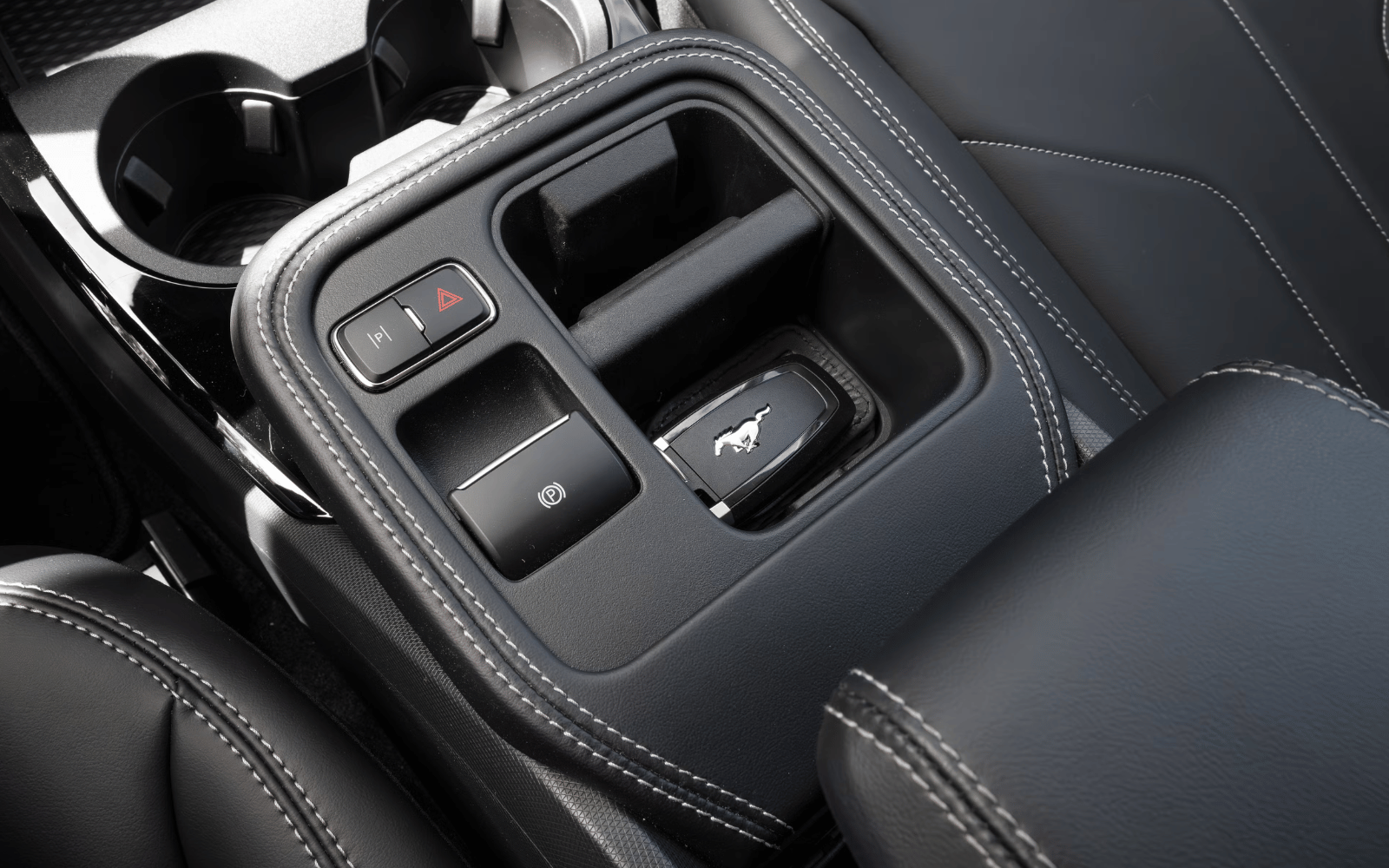
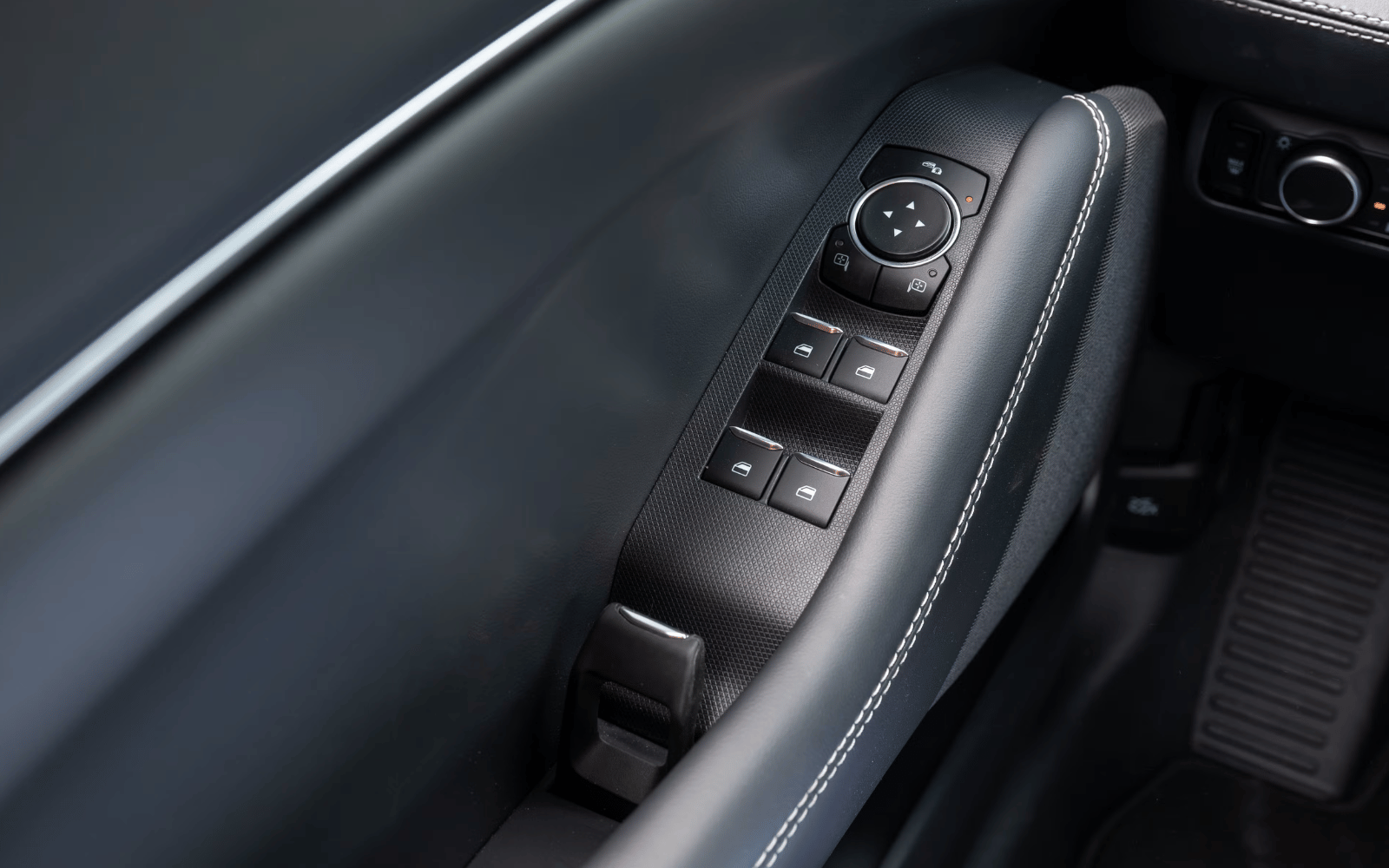
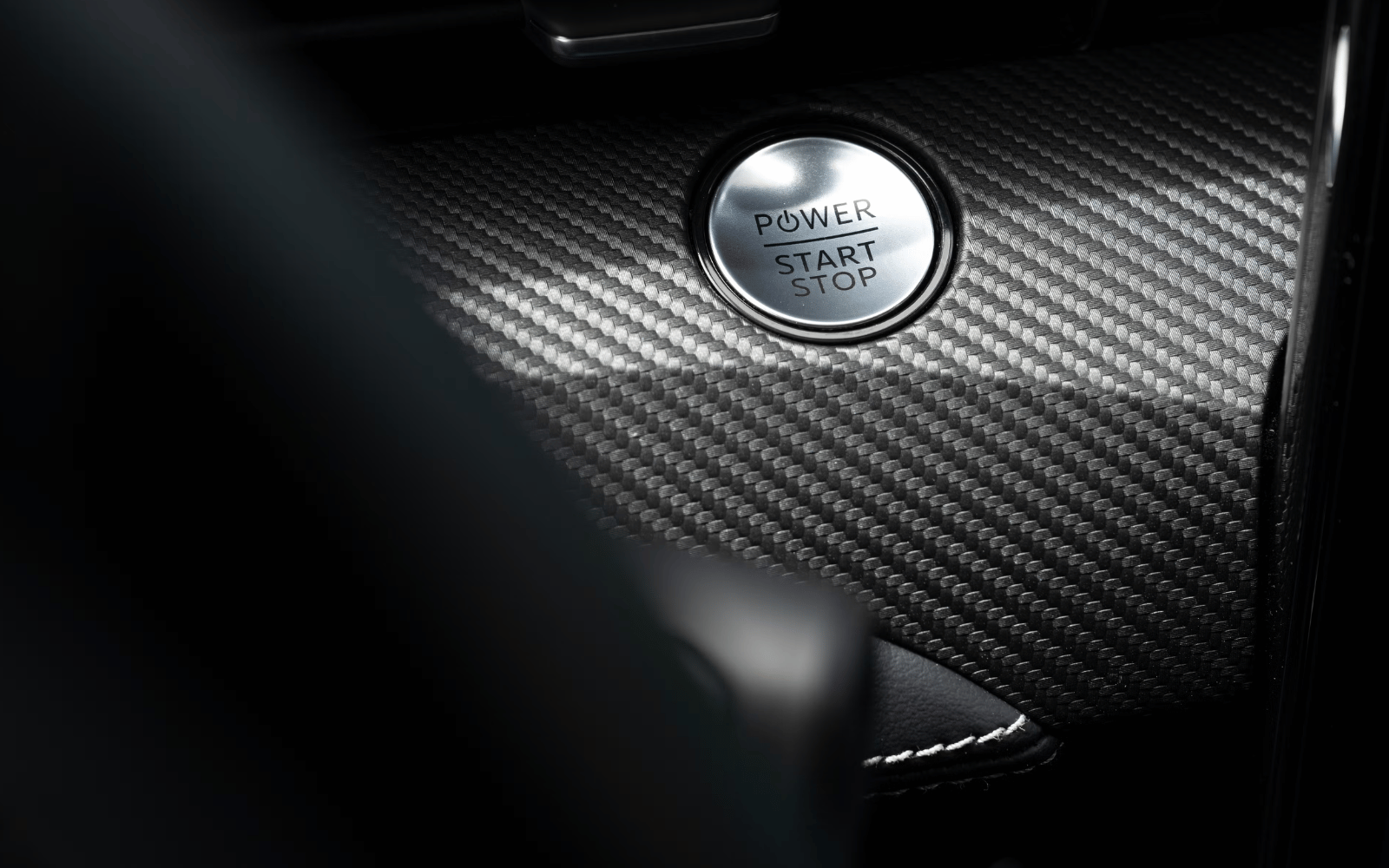
The Mach-E has a clean, modern cabin with a low dashboard and a large portrait-oriented touchscreen. The floating center console creates additional storage beneath the main controls.
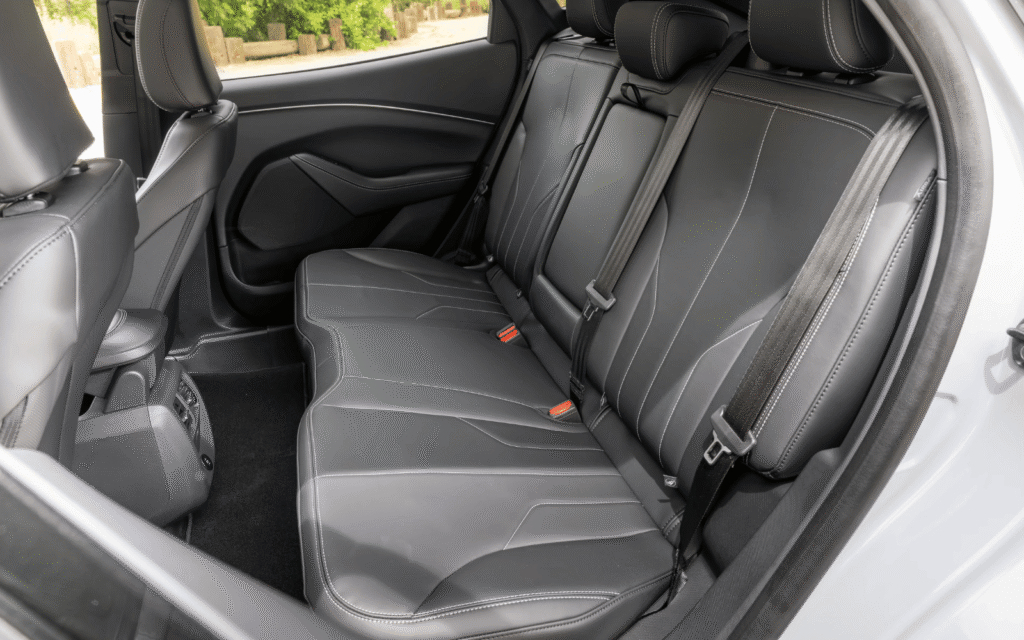
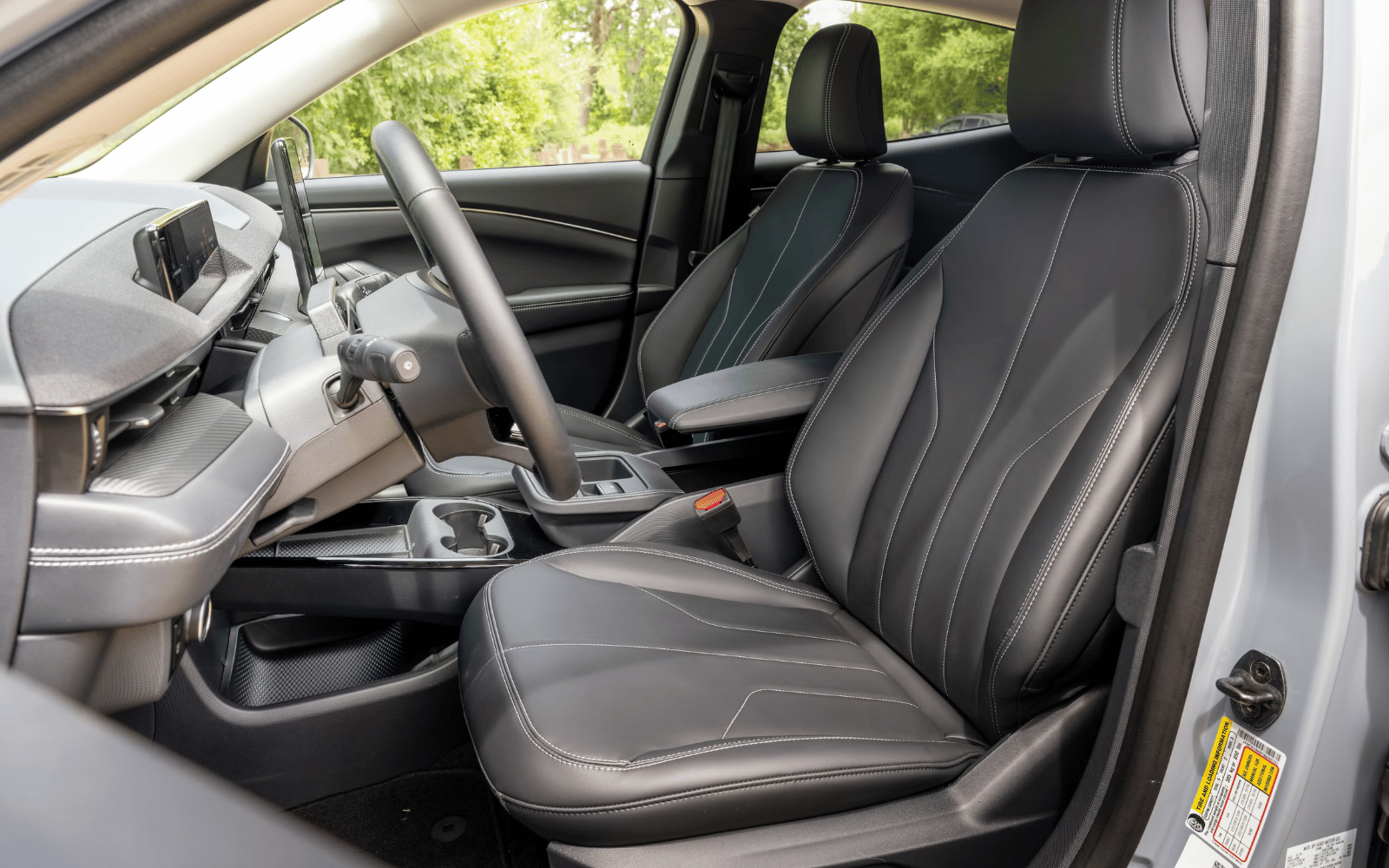
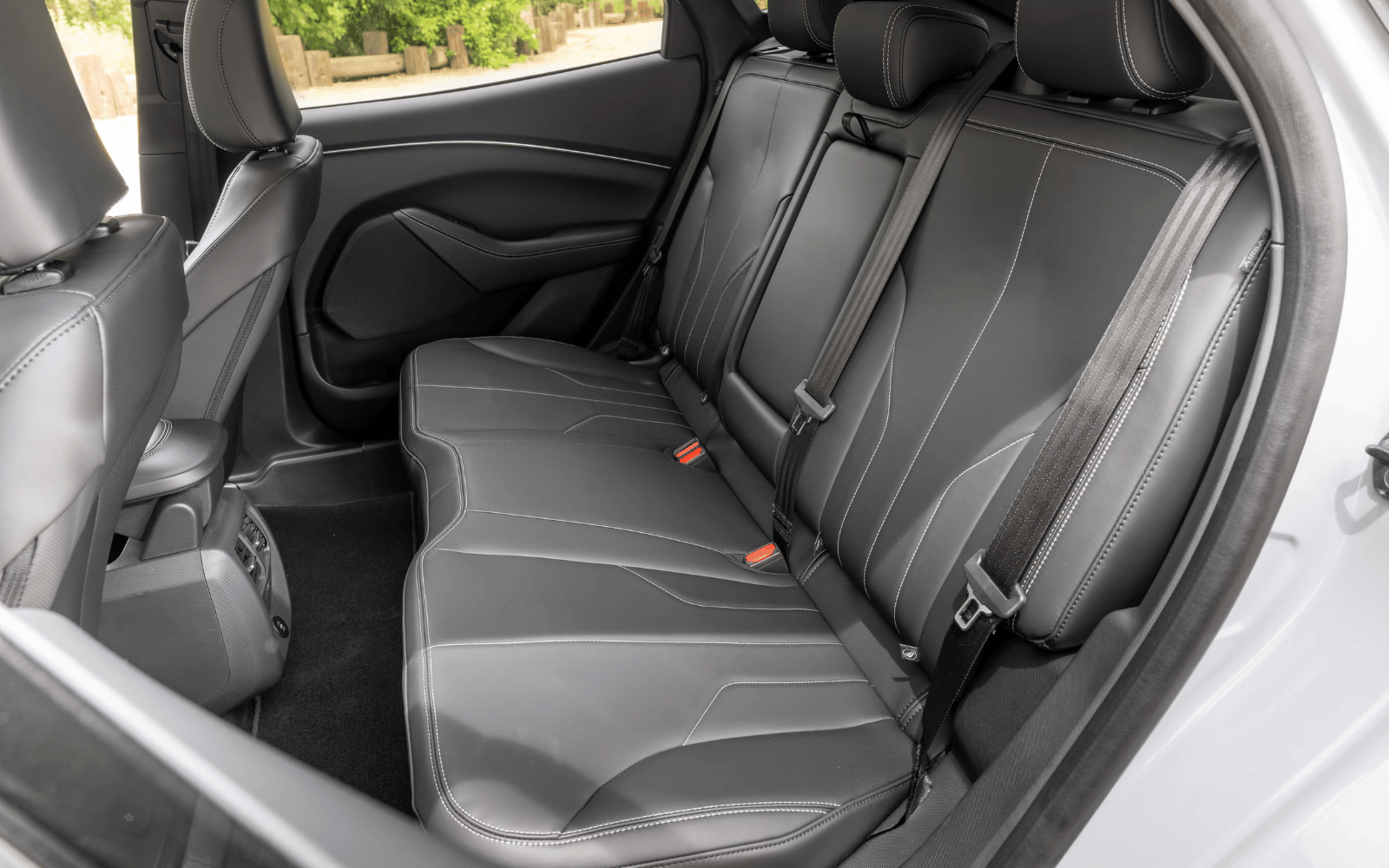
Front-seat space is generous, and the flat rear floor makes the second row more comfortable for three passengers than a conventional vehicle with a large transmission tunnel.
Interior strengths include:
- Spacious front seats
- Flat rear floor
- Useful small-item storage
- Large center console
- Available heated and ventilated seats
- Available panoramic glass roof
- Easy rear-seat access
- Quiet low-speed driving
The rear roofline slopes downward for a sportier appearance, but it can reduce headroom for especially tall passengers. The dark interior and small rear window may also make the cabin feel less open without the panoramic roof.
The GT’s Ford Performance seats provide stronger lateral support but may feel restrictive to some occupants. Buyers should sit in both the Premium and GT before deciding.
Mustang Mach-E Technology
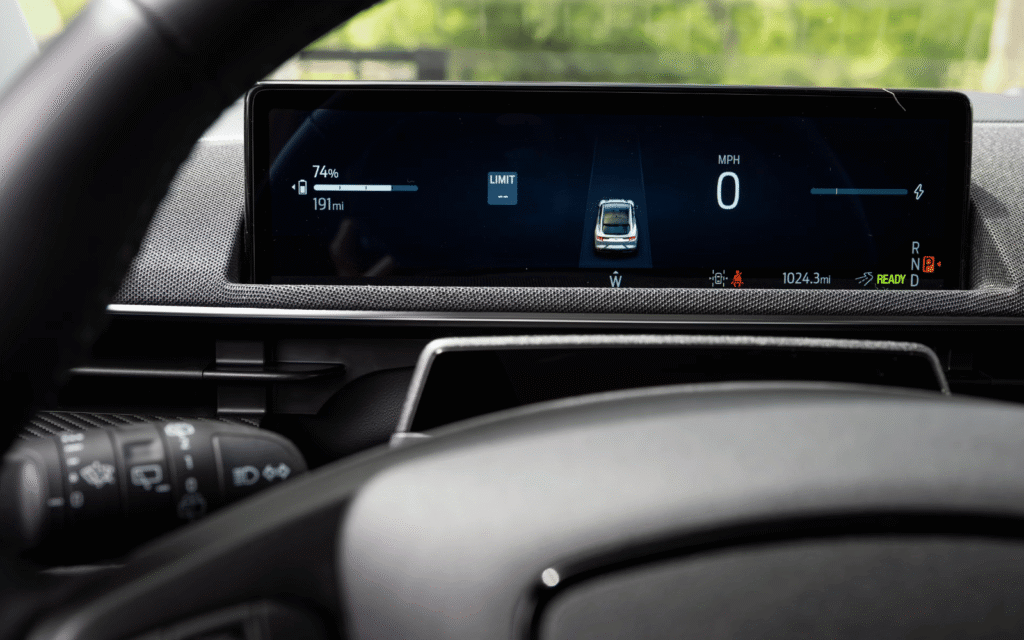
Every Mach-E has a 15.5-inch portrait touchscreen and a separate 10.2-inch driver display.
Standard or available technology includes:
- SYNC 4A
- Wireless Apple CarPlay
- Wireless Android Auto
- Connected navigation
- EV route planning
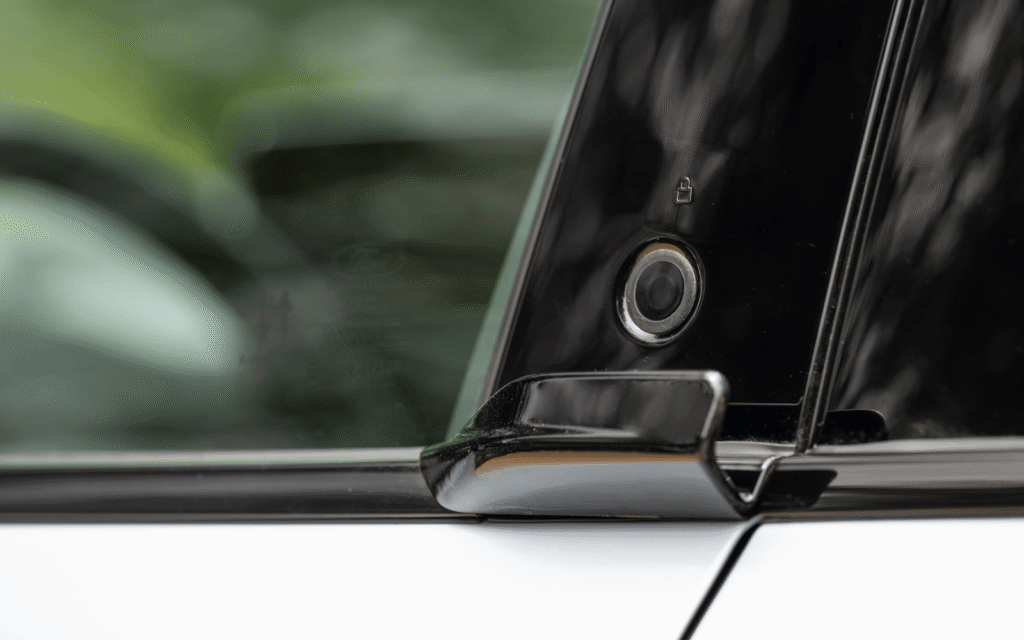
- Phone As A Key
- Wireless phone charging
- Over-the-air updates
- Ford app remote functions
- B&O premium audio
- YouTube streaming while parked
- In-vehicle karaoke
- Unlimited 5G Wi-Fi through an eligible connected plan
- 400-watt Pro Power Onboard
- BlueCruise
The screen is visually impressive and responds quickly, but it controls many climate and vehicle functions. Drivers who prefer physical buttons may find the interface distracting until they learn its layout.
Connected navigation, Wi-Fi, entertainment apps, SiriusXM, and BlueCruise may require subscriptions after an included trial or plan expires.
BlueCruise Hands-Free Driving
BlueCruise allows hands-free driving on compatible divided highways mapped by Ford. The system controls steering and speed while monitoring the driver’s attention.
Automatic Lane Change can assist with moving between lanes when conditions allow. BlueCruise remains a driver-assistance system, not autonomous driving. The driver must watch the road and be ready to take control.
For 2026, BlueCruise is available through the Technology Package. Buyers should check:
- Whether the hardware is included
- The length of the included service period
- Renewal pricing
- Which roads support hands-free operation
- Whether a subscription transfers to a second owner
Pro Power Onboard
New for 2026, available Pro Power Onboard supplies up to 400 watts for small electronics and accessories.
It can support items such as:
- Laptops
- Portable speakers
- Camera batteries
- Campsite lighting
- Small fans
- Low-power chargers
The 400-watt system is useful for light-duty devices, but it is not comparable to the high-output Pro Power Onboard systems offered on the Ford F-150. It is not intended to run high-draw construction equipment or provide full-home backup power.
Space and Practicality
| Cargo Measurement | Capacity |
| Behind second row | 29.7 cubic feet |
| Behind first row | 59.1 cubic feet |
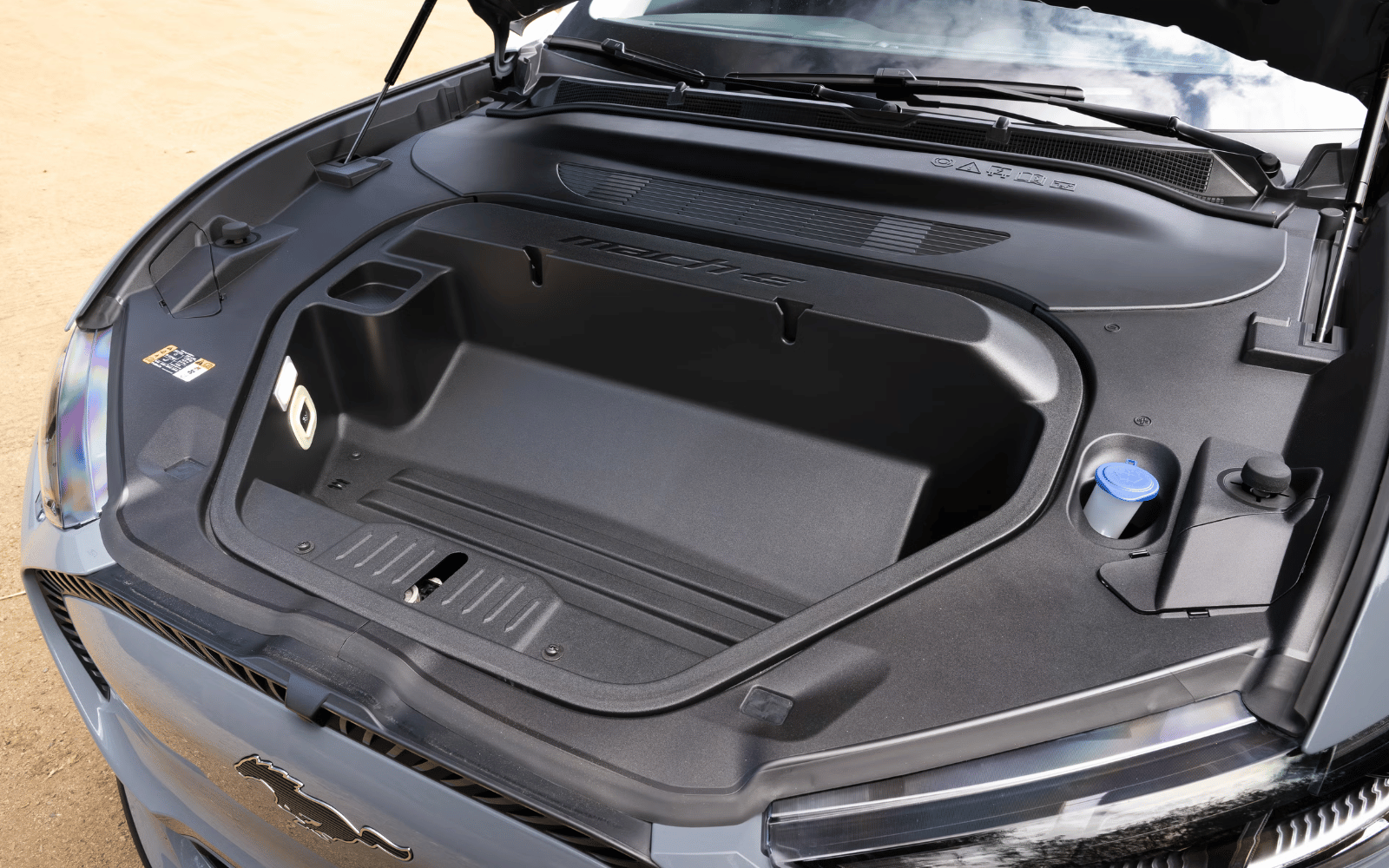
| Front trunk | Approximately 4.7 cubic feet |
| Seating capacity | 5 |
The rear hatch opens to a wide cargo area suitable for groceries, luggage, strollers, and recreational equipment. Folding the rear seats expands capacity to 59.1 cubic feet.
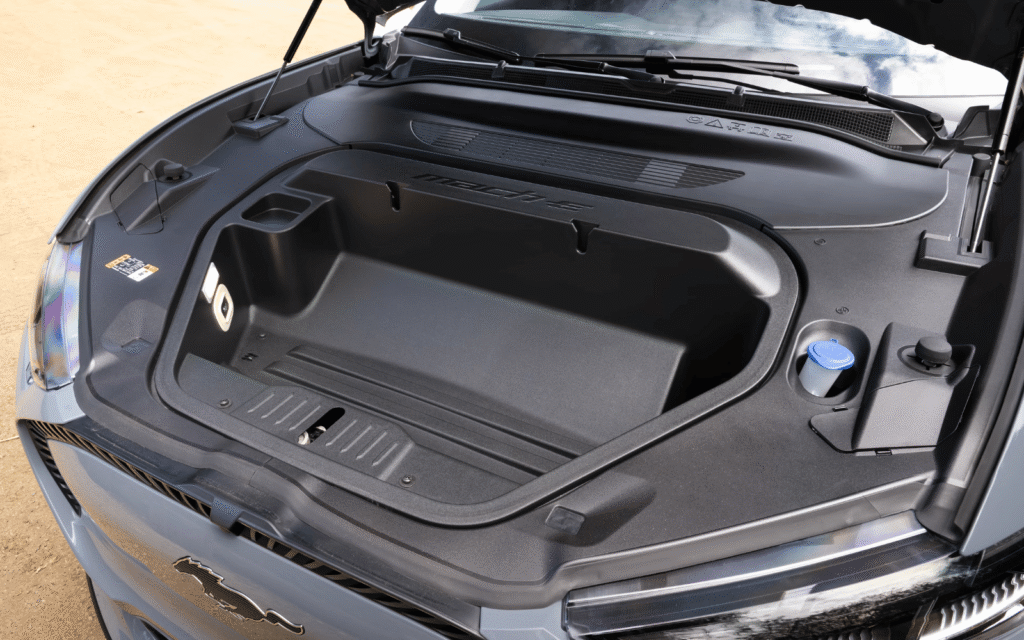
The front trunk is drainable. Owners can use it for wet or dirty equipment, charging cables, groceries, or items they want separated from the cabin. Its drain plug also makes it easier to rinse clean.
The sloping roof limits boxy cargo compared with a more upright SUV, but the Mach-E remains practical enough for most small families.
Mustang Mach-E Dimensions
| Measurement | Approximate Specification |
| Length | Approximately 186 inches |
| Width without mirrors | 74.1 inches |
| Width with mirrors | 82.6 inches |
| Height | Approximately 64 inches |
| Wheelbase | 117.5 inches |
| Ground clearance | Approximately 5.1–6.6 inches |
| Passenger capacity | 5 |
The Rally has more ground clearance than other trims. The standard Mach-E is intended for paved roads and maintained surfaces rather than deep snow, rocks, or rutted trails.
Its long wheelbase creates good passenger space but also contributes to a wide turning circle. Drivers should check garage and parking-space dimensions before purchase.
Can the Mustang Mach-E Tow?
Ford does not publish a US tow rating for the 2026 Mustang Mach-E on its consumer specification page. Buyers should not assume that ratings published for versions sold in Europe or other markets apply to a US vehicle.
A receiver may be useful for carrying compatible bicycles or accessories, but the weight of the receiver, rack, and cargo counts against the vehicle’s load limit. Follow the US owner’s manual and the label on the individual vehicle.
Mustang Mach-E Safety
Standard or available safety technology includes:
- Automatic emergency braking
- Forward-collision warning
- Pedestrian detection
- Blind-spot monitoring
- Rear cross-traffic alert
- Lane-departure warning
- Lane-keeping assistance
- Rear automatic braking
- Adaptive cruise control
- Lane-centering assistance
- Evasive steering assistance
- Clear Exit Assist
- 360-degree camera
- BlueCruise
The IIHS named the 2026 Mustang Mach-E a Top Safety Pick.
Its IIHS results include:
| IIHS Evaluation | Rating |
| Small-overlap front | Good |
| Updated moderate-overlap front | Good |
| Updated side | Good |
| Headlights | Good |
| Pedestrian front-crash prevention | Good |
| LATCH ease of use | Acceptable |
The Mach-E’s Good result in the updated moderate-overlap test includes protection for the rear passenger, an area where several competing vehicles and larger pickups have struggled.
Reliability and Ownership Costs
An electric vehicle eliminates oil changes, spark plugs, exhaust repairs, and traditional transmission service. However, the Mach-E still requires routine care.
Common ownership items include:
- Tire rotations and replacement
- Cabin air-filter replacement
- Brake-fluid inspection
- Windshield-wiper replacement
- Suspension and alignment service
- Cooling-system inspection
- 12-volt battery replacement
- Charging-equipment maintenance
EVs can wear tires quickly because of their weight and immediate torque. GT and Rally tires will generally cost more than the smaller tires fitted to Select models.
Potential ownership considerations include:
- Software or connectivity faults
- Public charging reliability
- Higher collision-repair costs
- Expensive performance tires
- Range loss in cold conditions
- Insurance costs
- Subscription fees
- Faster-than-expected depreciation
Buyers should check the VIN through the NHTSA recall lookup and review all completed software and hardware campaigns before buying a used Mach-E.
Warranty
| Coverage | Term |
| New-vehicle limited warranty | 3 years/36,000 miles |
| Powertrain coverage | 5 years/60,000 miles |
| Electric-vehicle component coverage | 8 years/100,000 miles |
| High-voltage battery coverage | 8 years/100,000 miles |
| Corrosion-perforation coverage | 5 years/unlimited miles |
| Roadside assistance | 5 years/60,000 miles |
Battery coverage is subject to Ford’s warranty terms, exclusions, and capacity-retention threshold. Natural range changes do not automatically qualify for battery replacement.
Buyers should read the warranty guide for the exact model year rather than relying only on the general coverage period.
Federal EV Tax Credit and Incentives
A 2026 Mach-E purchase does not qualify for the former federal New Clean Vehicle Credit under the rules in effect at the time. The IRS states that the Section 30D credit applies only to eligible vehicles acquired on or before September 30, 2025.
Buyers may still find:
- State EV rebates
- Local utility incentives
- Discounted charging rates
- Home-charger rebates
- HOV-lane benefits
- Manufacturer incentives
- Dealer discounts
Programs depend on location and can change quickly. Verify eligibility before treating an incentive as part of the purchase budget.
Pros and Cons
What We Like
- Up to 320 miles of EPA-estimated range
- Strong acceleration across the lineup
- Engaging handling for an electric SUV
- Excellent IIHS safety results
- Spacious five-seat interior
- Useful rear cargo area and front trunk
- Standard 15.5-inch touchscreen
- Wireless Apple CarPlay and Android Auto
- Available BlueCruise
- Rear-wheel drive and all-wheel drive choices
- GT and Rally performance models
- Competitive base price
- Complimentary charger offer for eligible buyers
What We Don’t Like
- DC fast charging is slower than leading 800-volt rivals
- Ride can feel firm with larger wheels
- Heavy reliance on the touchscreen
- Cold weather reduces range
- GT and Rally are expensive
- No published US trailer-tow rating
- Subscription fees may apply to connected features
- Performance versions consume more energy
- No third-row seat
- Tire replacement can be expensive
- No federal consumer EV tax credit for a normal 2026 purchase
The Competitors
Mustang Mach-E vs. Tesla Model Y
The Tesla Model Y offers a strong charging ecosystem, efficient powertrains, and a minimalist interior. The Mach-E has a separate driver display, wireless Apple CarPlay and Android Auto, more conventional exterior styling, and access to Ford’s dealer network.
The Model Y may suit drivers who prioritize charging simplicity and software integration. The Mach-E is attractive to buyers who prefer familiar controls, smartphone projection, and sportier steering.
Mustang Mach-E vs. Hyundai Ioniq 5
The Hyundai Ioniq 5 has a roomier-feeling cabin and much faster peak charging under favorable conditions. The Mach-E offers longer maximum EPA range, sharper steering, and more aggressive performance variants.
Choose the Ioniq 5 for frequent road-trip charging. Choose the Mach-E for maximum range, driving character, or access to BlueCruise.
Mustang Mach-E vs. Kia EV6
The Kia EV6 combines quick charging with strong performance and a low seating position. The Mach-E offers a larger portrait touchscreen, more cargo room behind the rear seats, and a broader range of trim personalities.
The EV6 GT competes with the Mach-E GT, while mainstream EV6 trims challenge the Premium.
Mustang Mach-E vs. Chevrolet Equinox EV
The Equinox EV focuses on range, interior space, and value. It has a more traditional crossover personality than the Mach-E.
The Ford feels sportier and offers much stronger GT performance. The Chevrolet may be better for buyers who prioritize cabin space and a lower-cost long-range configuration.
Mustang Mach-E vs. Honda Prologue
The Honda Prologue is larger inside and has a softer, more conventional SUV driving experience. The Mach-E is quicker, more engaging, and available with rear-wheel drive.
The Prologue suits comfort-focused families, while the Mach-E appeals more to drivers who want an electric SUV with sporty responses.
Mustang Mach-E vs. Volkswagen ID.4
The Volkswagen ID.4 offers a comfortable ride and practical cabin. The Mach-E has stronger performance, longer maximum range, and a more polished infotainment experience.
The ID.4 may cost less after local discounts, so compare actual transaction prices rather than MSRP alone.
Should You Buy the Mustang Mach-E?
The Mustang Mach-E is a strong electric SUV for buyers who can charge at home and want more personality than a basic commuter EV. It offers useful range, strong safety ratings, spacious seating, practical cargo areas, and quick acceleration.
The Premium extended-range RWD is the best configuration for most buyers. Drivers in snowy areas should consider Premium eAWD, while the GT is better reserved for shoppers who will benefit from its additional acceleration and chassis upgrades.
Before purchasing, compare insurance, electricity rates, home-charger installation costs, subscription fees, and predicted depreciation. Our guides to how car financing works, dealer vs. bank car financing, and calculating a monthly car payment can help you compare the total cost.
Frequently Asked Questions
How much does the 2026 Ford Mustang Mach-E cost?
The Mach-E starts at $38,290 for the Select. The Premium starts at $41,090, the GT at $53,890, and the Rally at $57,690. Prices exclude destination charges, options, taxes, registration, and dealer fees.
What is the 2026 Mustang Mach-E’s range?
EPA-estimated range varies from 240 to 320 miles. The Premium extended-range RWD has the highest rating at 320 miles.
Which Mustang Mach-E has the longest range?
The Premium with the extended-range battery and rear-wheel drive provides the longest EPA-estimated range at 320 miles.
How long does it take to charge a Mustang Mach-E?
Using a compatible 48-amp Level 2 charger, standard-range models take approximately 7.7 to 7.8 hours under Ford’s stated conditions. GT and Rally models with the larger battery take approximately 9.9 hours.
Can the Mustang Mach-E use Tesla Superchargers?
Yes, the Mach-E can use compatible Tesla Superchargers opened to Ford vehicles when connected with the correct approved adapter. Not every Supercharger supports non-Tesla vehicles.
Does the Mustang Mach-E come with a home charger?
Ford currently offers eligible buyers and lessees a complimentary home charger and standard installation through Ford Power Promise. Terms, installation limits, and availability can change.
Is the Mustang Mach-E available with all-wheel drive?
Yes. Electric all-wheel drive is available on the Select and Premium and standard on the GT and Rally.
How fast is the Mustang Mach-E?
The GT with the Performance Upgrade has a Ford-claimed 0–60 mph time of 3.3 seconds. The Rally takes 3.4 seconds, while other configurations range from approximately 4.2 to 5.6 seconds.
How much horsepower does the Mustang Mach-E have?
Output ranges from 264 horsepower in the standard-range RWD model to 480 horsepower in the GT and Rally.
Is the Mustang Mach-E a real Mustang?
It belongs to Ford’s Mustang-branded vehicle family, but it is an electric four-door crossover rather than a version of the traditional Mustang coupe. The two vehicles use different platforms and serve different purposes.
How many people can the Mustang Mach-E seat?
The Mach-E seats five people in two rows.
How much cargo space does the Mach-E have?
It provides 29.7 cubic feet behind the rear seats and 59.1 cubic feet with the rear seats folded. It also has an approximately 4.7-cubic-foot front trunk.
Can the Mustang Mach-E tow a trailer?
Ford does not publish a US tow rating for the 2026 Mach-E on its consumer specification page. Do not use towing ratings from other countries for a US vehicle.
Does the Mach-E qualify for a federal tax credit?
A normal 2026 consumer purchase does not qualify for the former federal New Clean Vehicle Credit. The IRS states that the credit applies only to eligible vehicles acquired on or before September 30, 2025.
Is the Mustang Mach-E safe?
Yes. The 2026 Mach-E is an IIHS Top Safety Pick and earned Good ratings in the small-overlap front, updated moderate-overlap front, updated side, headlight, and pedestrian-crash-prevention evaluations.
Is the Mustang Mach-E good in snow?
An eAWD Mach-E with suitable winter tires should perform well in ordinary winter conditions. Ground clearance remains limited, so it is not intended for deep, unplowed snow.
Final Verdict
The 2026 Ford Mustang Mach-E remains one of the most balanced electric SUVs. It combines useful range, fast acceleration, responsive handling, strong crash-test results, and a practical five-seat cabin. The new Pro Power Onboard feature and revised packages add flexibility without changing the qualities that already make the Mach-E appealing.
Its DC charging performance trails newer 800-volt competitors, and several useful connected features can add subscription costs. Buyers should also expect reduced range in cold weather and potentially high tire expenses on performance models.