
Hyundai Elantra N: Price, Specs, Features & Review
The Hyundai Elantra N is a high-performance compact sedan built for drivers who want serious power, sharp handling, a manual-transmission option, and genuine track-focused hardware without stepping into a luxury price range.
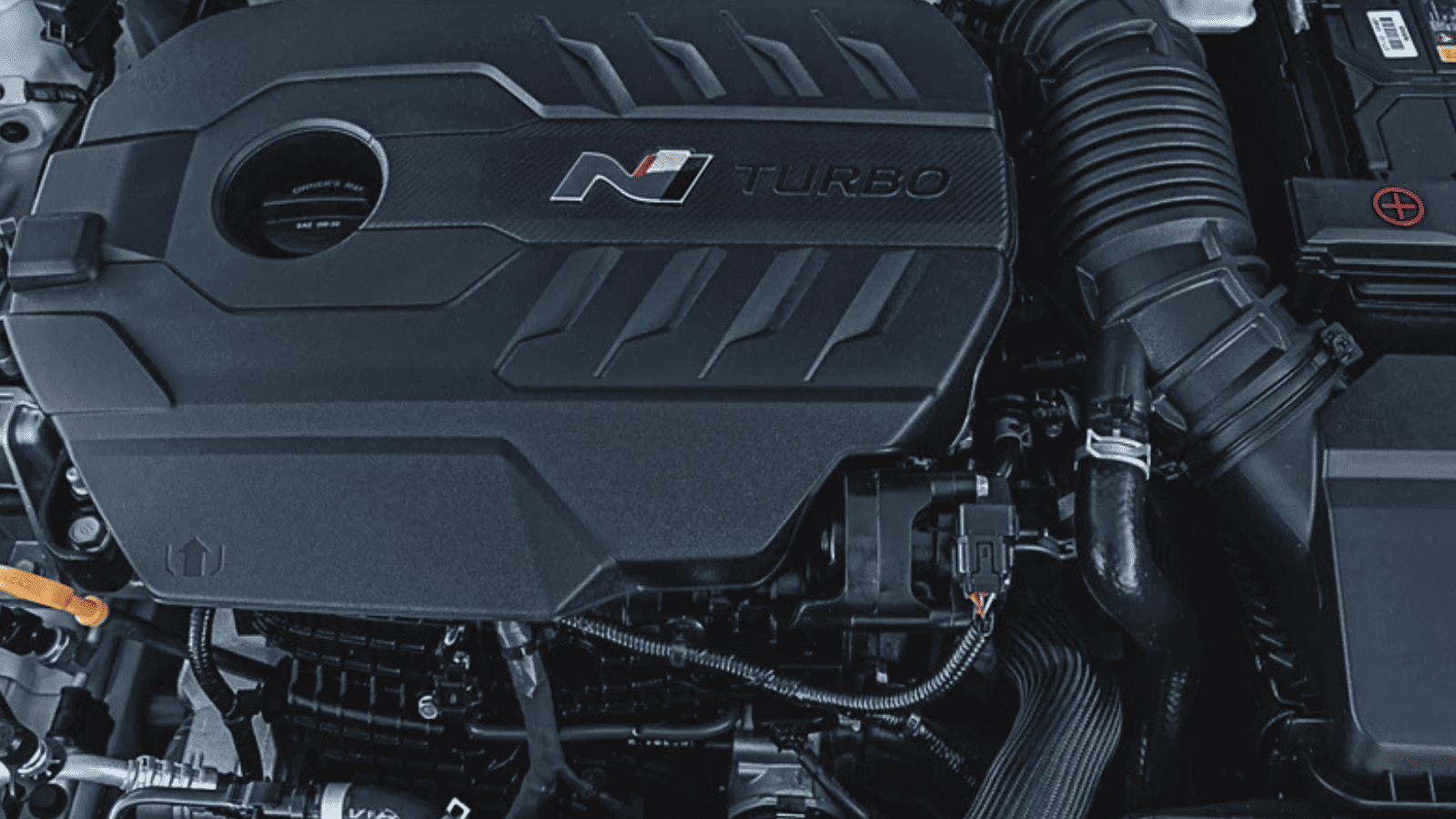
It uses a 276-hp turbocharged engine, front-wheel drive, an electronic limited-slip differential, adaptive suspension, high-performance brakes, and summer tires. It is far more focused than the regular Hyundai Elantra or Elantra N Line, but it still retains four doors, a usable back seat, and a 14.2-cubic-foot trunk.
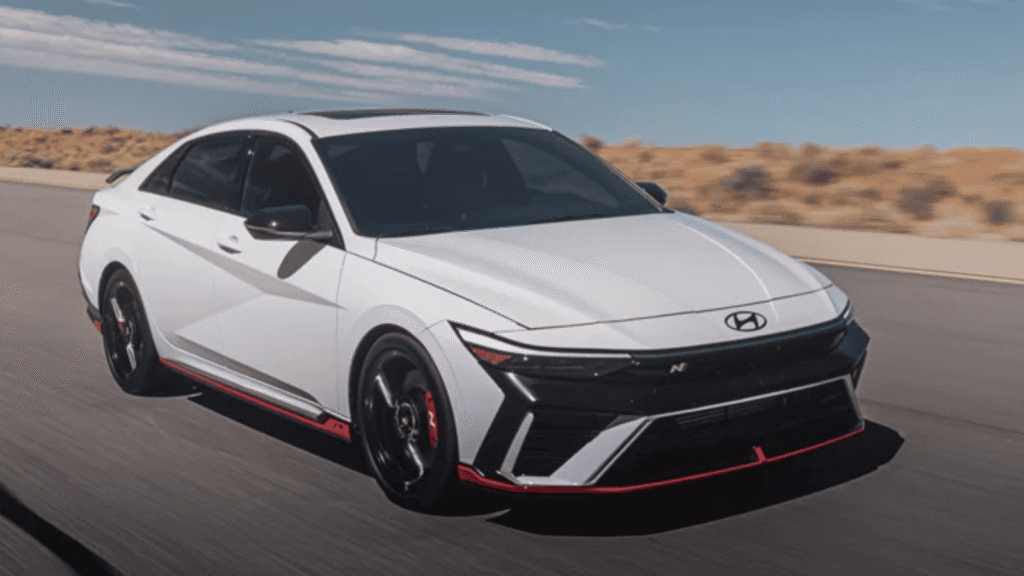


The Elantra N is best for enthusiasts who want one car that can handle commuting, weekend drives, and occasional track use. It is not the right choice for buyers prioritizing fuel economy, a soft ride, all-wheel drive, or a quiet cabin.
WheelPedia Rating: 8.4/10
The Hyundai Elantra N earns an 8.4/10 WheelPedia Rating. Its strengths are exceptional performance value, a powerful engine, sharp handling, strong braking, and a rare manual-transmission option.
Its main compromises are fuel economy, firm ride quality, front-wheel drive only, and an ownership experience that will cost more than a regular compact sedan.
| Rating Category | Score | Weight |
| Safety | 9.0/10 | 20% |
| Reliability and Ownership | 7.5/10 | 15% |
| Performance and Driving | 9.7/10 | 15% |
| Comfort and Practicality | 8.0/10 | 15% |
| Efficiency | 6.5/10 | 15% |
| Features and Technology | 9.0/10 | 10% |
| Price and Value | 9.0/10 | 10% |
| Overall WheelPedia Rating | 8.4/10 | — |
See how WheelPedia rates cars for the full methodology.
Key Highlights
- Starts from $35,100 MSRP in the US before freight, taxes, registration, options, and dealer charges.
- Turbocharged 2.0-liter four-cylinder engine produces 276 hp and 289 lb-ft of torque.
- Available with a six-speed manual or an eight-speed wet dual-clutch automatic transmission.
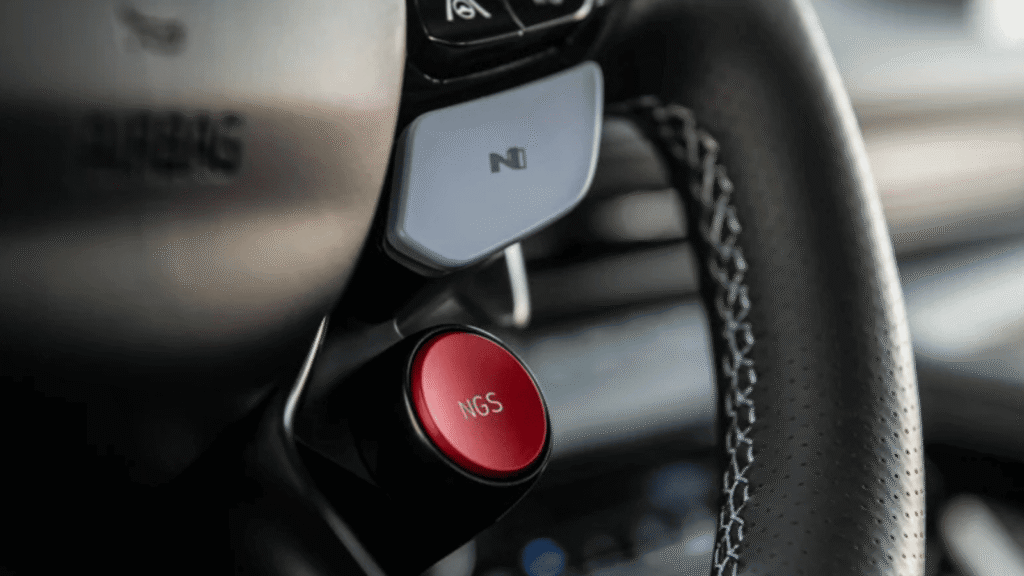
- N Grin Shift on DCT models temporarily raises output to 286 hp.
- Standard electronic limited-slip differential, adaptive suspension, launch control, and active exhaust.
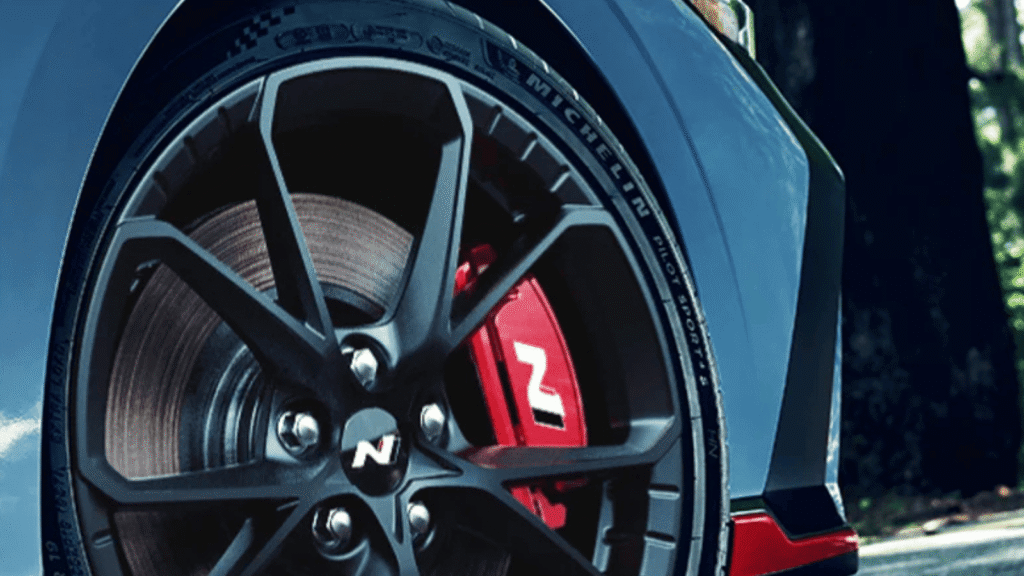
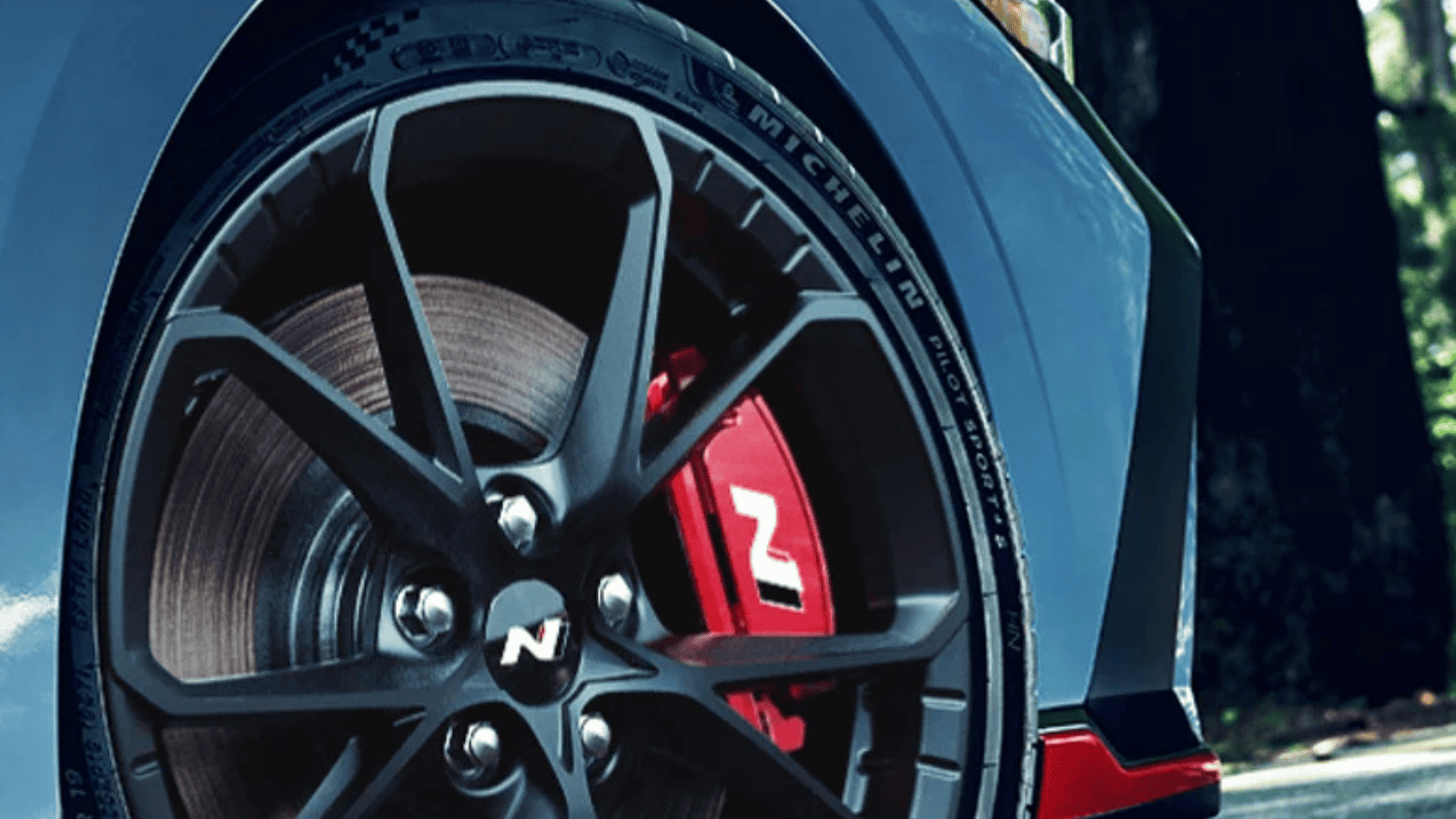
- Standard 19-inch forged wheels with Michelin Pilot Sport 4S summer tires.
- Available TCR Edition adds more track-focused brakes, wheels, aero, and interior details.
- Manual model returns up to an EPA-estimated 24 mpg combined.
- Best for driving enthusiasts who want a practical performance sedan.
Quick Specifications
| Specification | Hyundai Elantra N |
| Vehicle type | High-performance compact sedan |
| Seating capacity | 5 |
| Engine | 2.0L turbocharged four-cylinder |
| Output | 276 hp / 289 lb-ft |
| Temporary DCT boost | Up to 286 hp with N Grin Shift |
| Transmission | 6-speed manual or 8-speed wet dual-clutch automatic |
| Drivetrain | Front-wheel drive |
| Differential | N Corner Carving Differential electronic limited-slip differential |
| Best fuel economy | Up to 24 mpg combined |
| Cargo capacity | 14.2 cu. ft. |
| Length | 184.1 in. |
| Width | 71.9 in. |
| Height | 55.7 in. |
| Wheelbase | 107.1 in. |
Expert Tip
Choose the six-speed manual if driver involvement matters most. Choose the eight-speed DCT if you want faster acceleration, paddle shifters, N Grin Shift, and the available sunroof. The standard N offers the strongest value; the TCR Edition is best reserved for buyers who genuinely plan to use its track-focused upgrades.
About the Hyundai Elantra N
The Elantra N is Hyundai’s full-performance compact sedan. It is a different vehicle from the regular Elantra and the Elantra N Line, not simply a higher trim with more horsepower.
Hyundai gives it the core hardware enthusiasts expect: a turbocharged engine, electronic limited-slip differential, adaptive dampers, larger brakes, reinforced chassis components, performance tires, launch control, and a variable exhaust system.
Despite its aggressive character, it remains practical enough for daily use. It has four doors, room for five, a decent-sized trunk, standard navigation, a Bose audio system, wireless charging, and useful driver-assistance features.
Price and Trims
The 2026 Elantra N is available in standard N and TCR Edition configurations, each with a choice of manual or dual-clutch transmission.
| Configuration | Starting MSRP | Transmission | Best For |
| Elantra N | $35,100 | 6-speed manual | Enthusiasts wanting maximum driver involvement |
| Elantra N DCT | $36,600 | 8-speed wet DCT | Faster acceleration and daily convenience |
| Elantra N TCR Edition | $39,250 | 6-speed manual | Track-focused manual-transmission buyers |
| Elantra N TCR Edition DCT | $40,750 | 8-speed wet DCT | Buyers wanting the most capable factory Elantra N |
Which Hyundai Elantra N Is Best?
- Best value: Elantra N manual
- Best for fastest acceleration: Elantra N DCT
- Best for track use: Elantra N TCR Edition
- Best for daily driving: Elantra N DCT
The standard Elantra N manual is the best choice for most enthusiasts. It offers the same core engine, chassis, brakes, differential, suspension, and tire package as the DCT model while keeping the price lower.
Choose the DCT if you want the quickest straight-line performance, paddle shifters, launch control, N Grin Shift, and a smoother experience in heavy traffic.
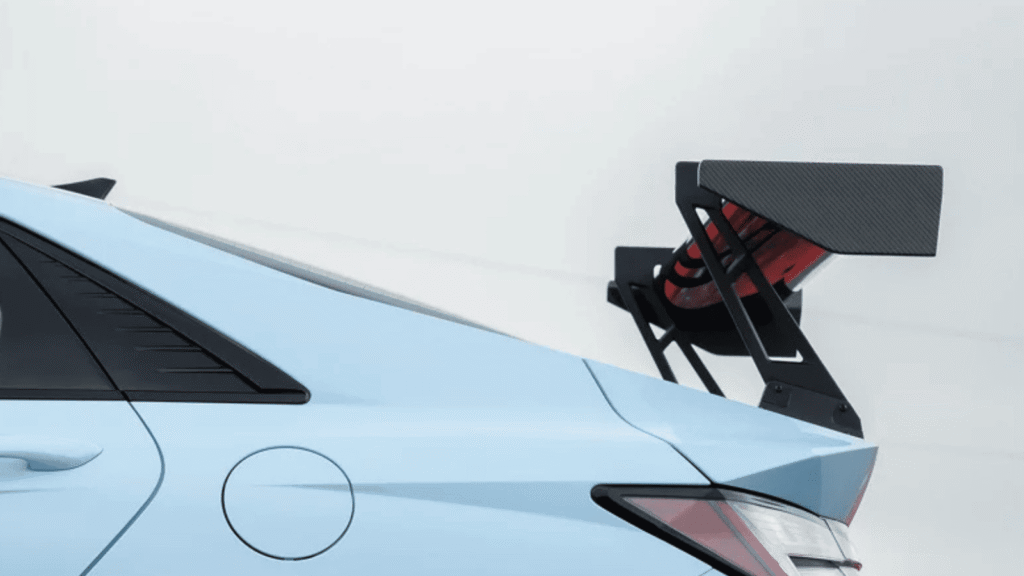
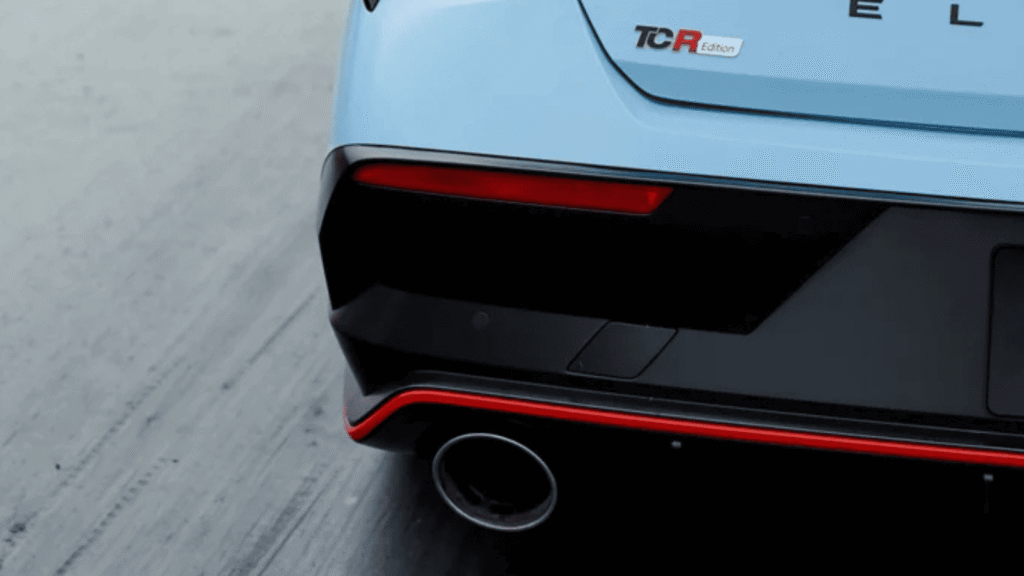
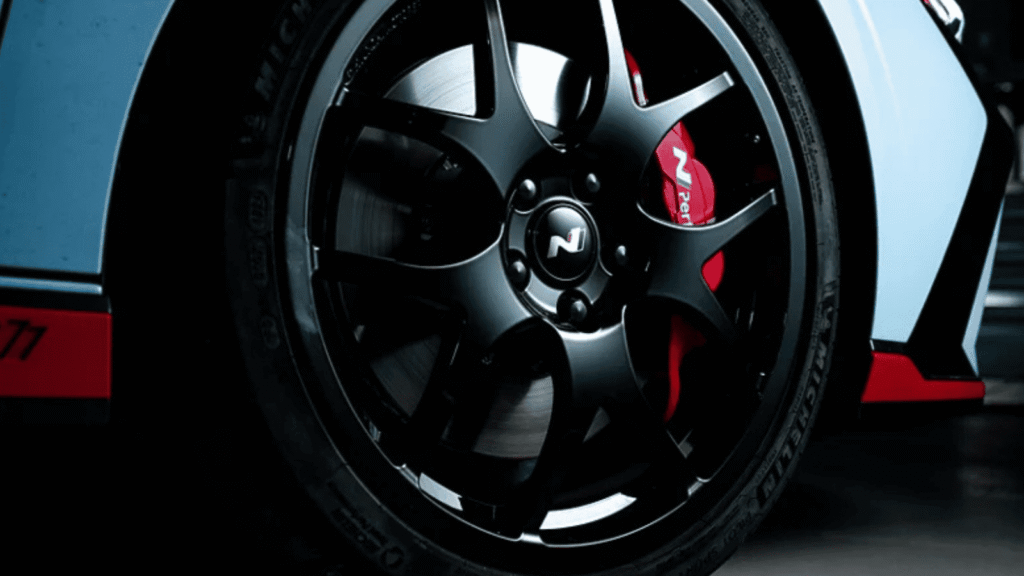
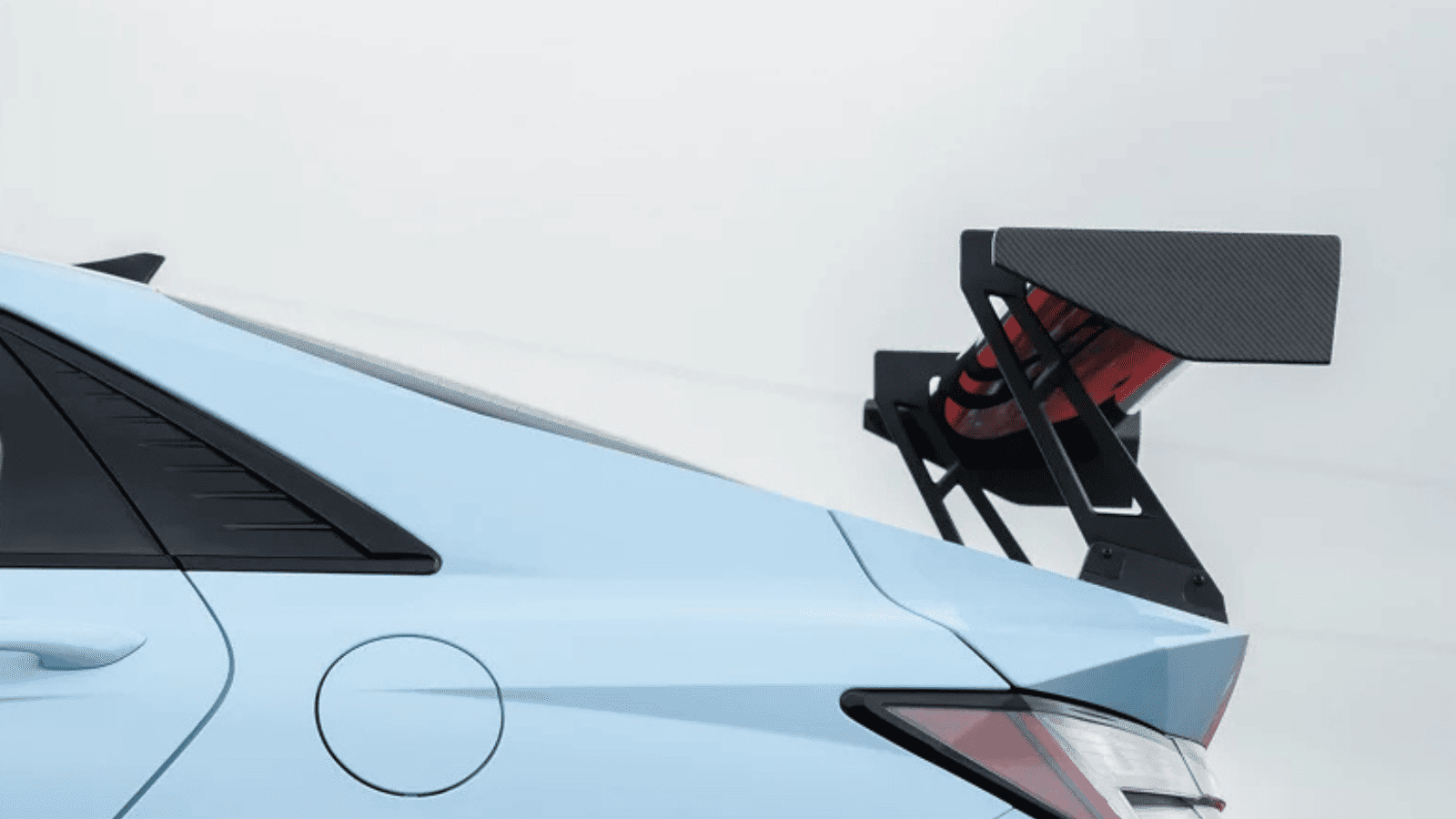
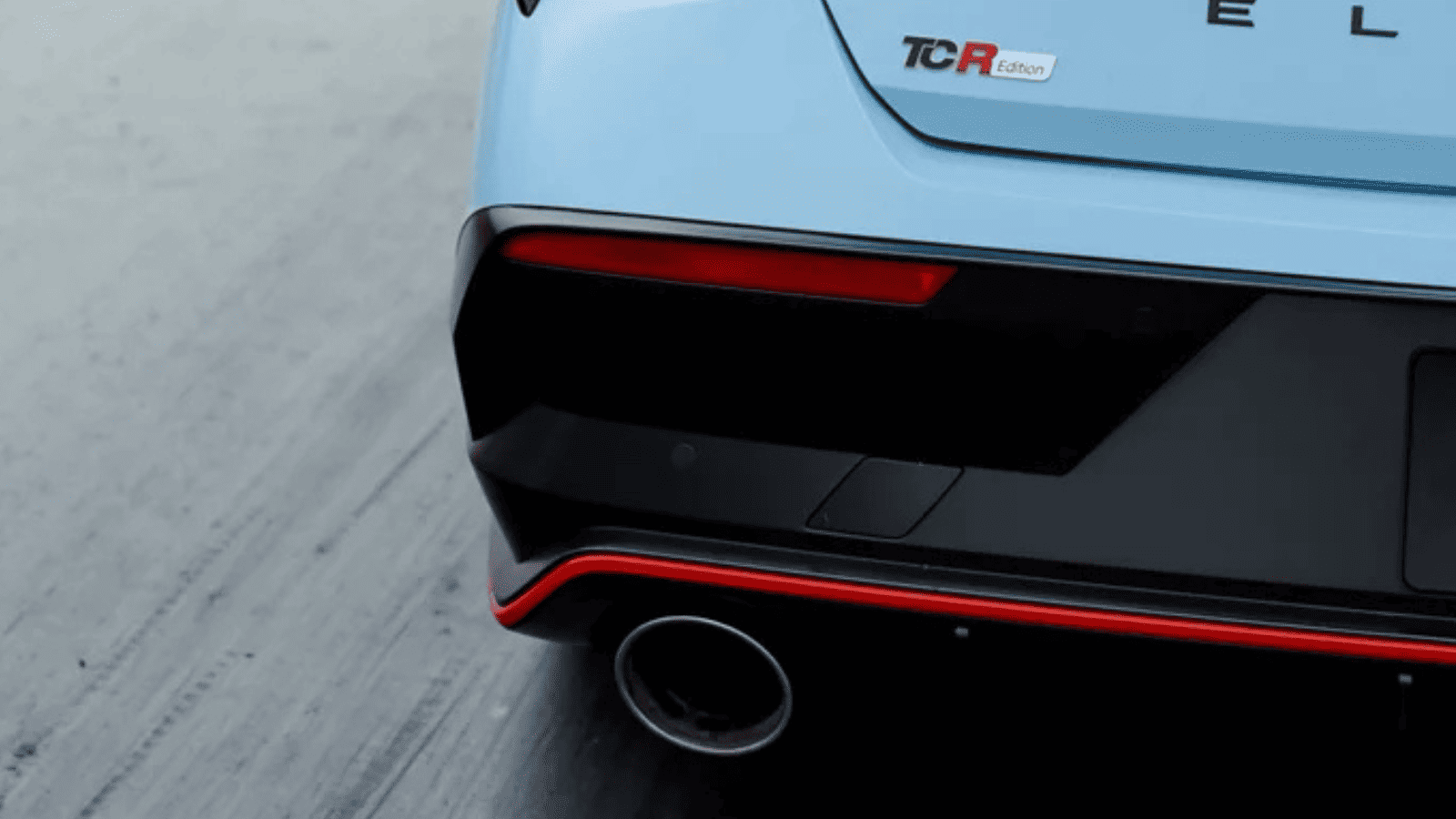
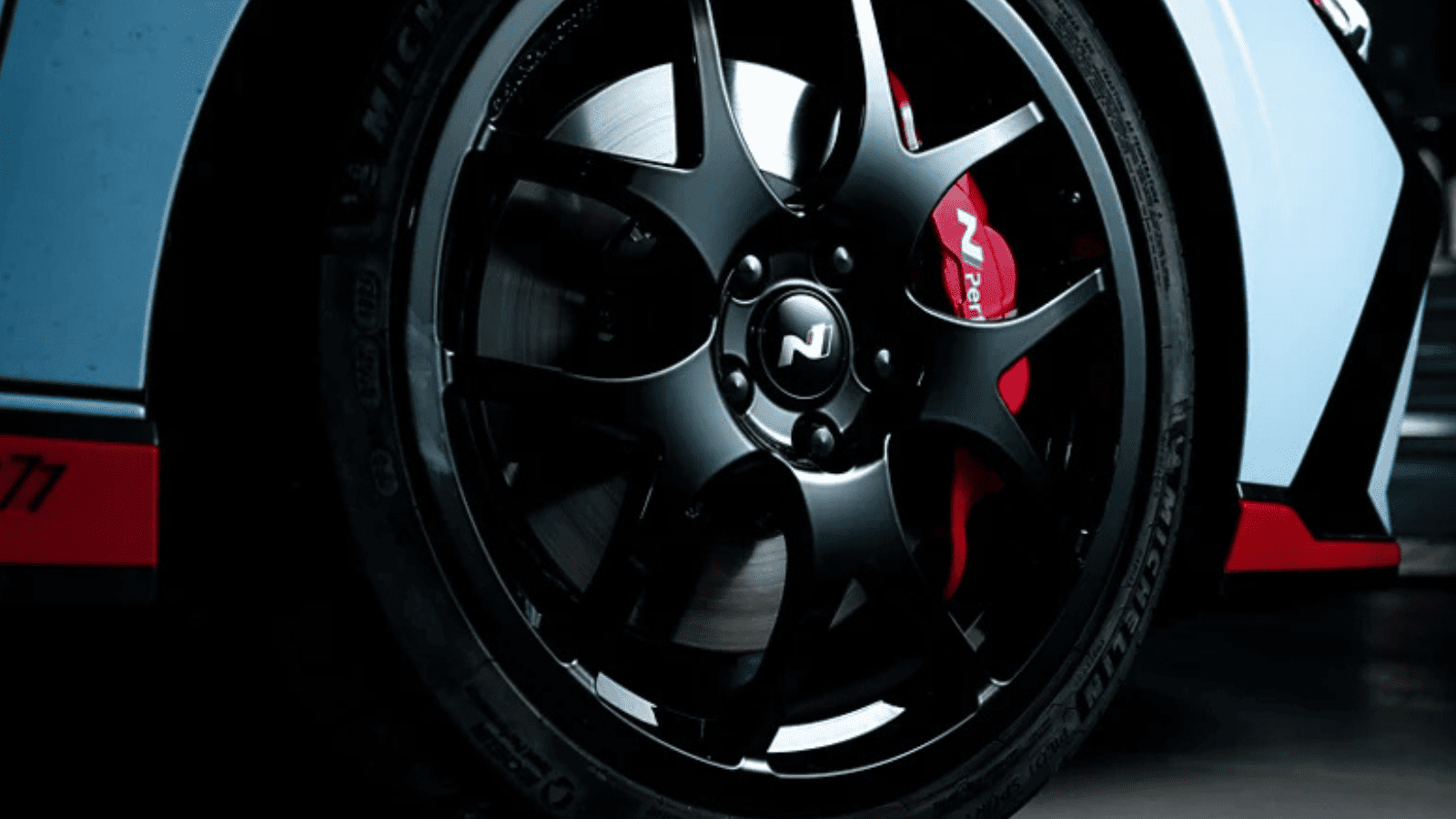
The TCR Edition adds a carbon-fiber swan-neck rear spoiler, four-piston front brake calipers, two-piece front brake rotors, TCR-design forged wheels, Alcantara trim, Performance Blue seat belts, and other limited-edition details. It is the most focused version, but it is harder to justify unless track driving is a real part of your plans.
Engine, Powertrain, and Performance
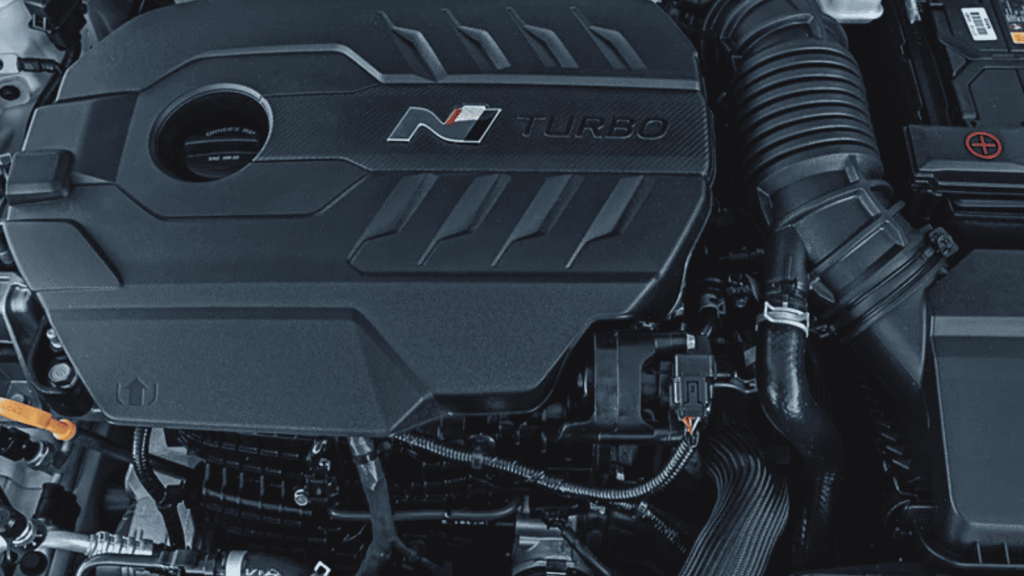
The Elantra N uses a 2.0-liter turbocharged direct-injection engine producing 276 horsepower and 289 lb-ft of torque. Power goes exclusively to the front wheels.
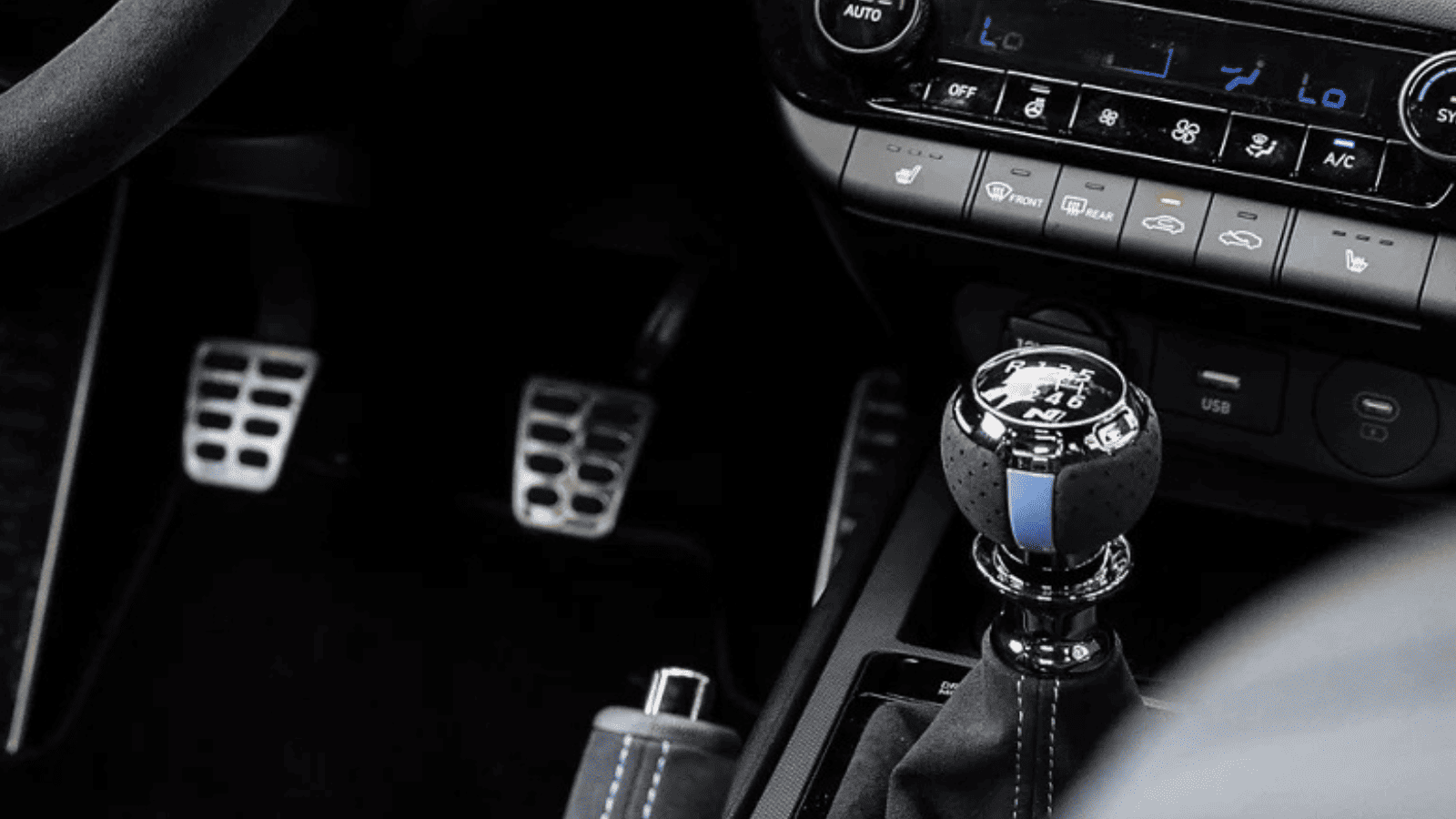
The six-speed manual includes rev matching, allowing smoother downshifts under hard braking. It is the better option for drivers who want a more involved experience and prefer full control over gear changes.
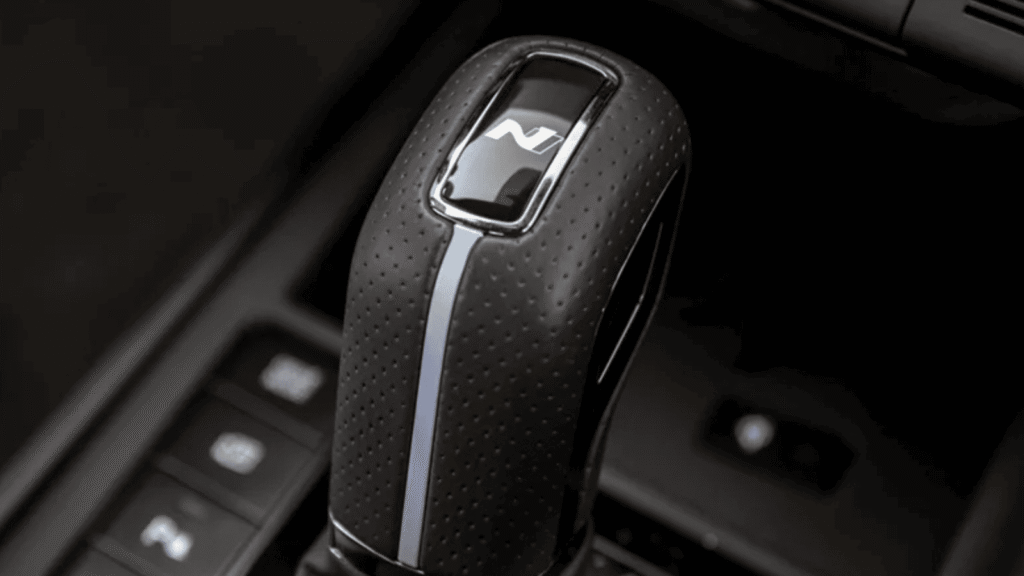
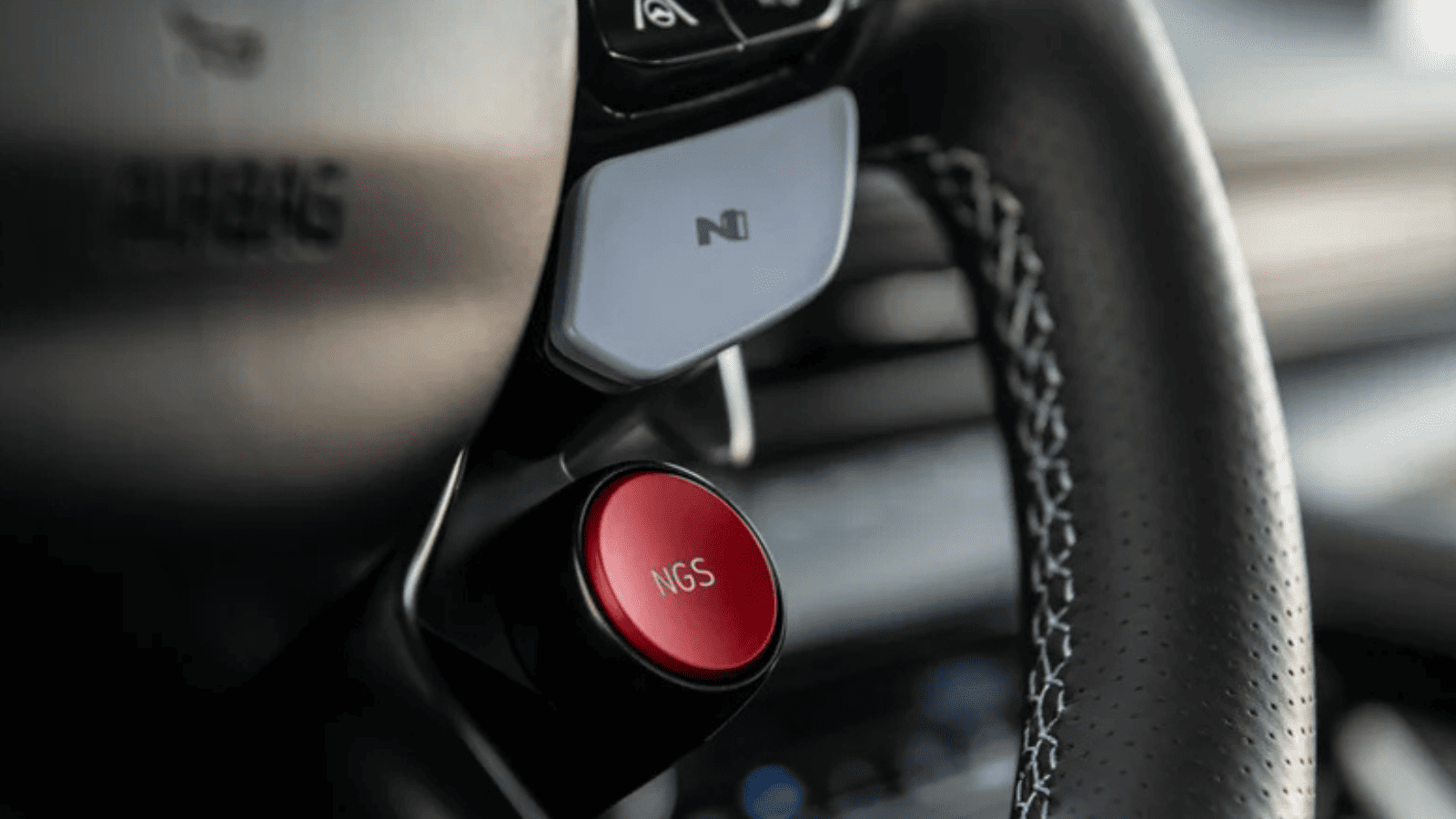
The available eight-speed wet dual-clutch transmission shifts faster and adds paddle shifters, N Power Shift, and N Grin Shift. N Grin Shift provides a short power boost to 286 hp when activated, making it useful for overtaking or track use.
Every Elantra N includes an N Corner Carving Differential, Hyundai’s electronic limited-slip differential. It helps control wheelspin and directs power more effectively through corners, which is especially important in a powerful front-wheel-drive car.
0–60 MPH Performance
Hyundai does not publish an official 0–60 mph time for the Elantra N.
Independent testing has recorded 0–60 mph times around 4.8 seconds for the DCT model and around 6.1 seconds for the manual model. Results can vary based on tires, weather, road surface, launch technique, vehicle condition, and testing method.
The DCT is the faster option in a straight line, but the manual remains appealing because it gives the driver more involvement. Neither choice is wrong; it depends on whether you value outright pace or a more traditional performance-car experience.
Driving Experience
The Elantra N is one of the most engaging front-wheel-drive performance sedans available. It turns in sharply, stays composed through corners, and has far more grip and braking confidence than the regular Elantra.
Its electronically controlled suspension gives the driver a wider range of settings than a typical compact sedan. Normal mode is usable for everyday driving, while Sport, N, and Custom modes sharpen the throttle, steering, suspension, exhaust, and transmission behavior.
The active exhaust is a major part of the experience. It gives the Elantra N a louder, more aggressive soundtrack than most compact performance sedans. That will appeal to enthusiasts but may become tiring for drivers who frequently make long highway trips.
Ride quality is firm, especially on broken roads. The standard Michelin Pilot Sport 4S summer tires provide strong grip but are not designed for winter conditions. Buyers in cold climates should budget for a proper winter-tire setup.
Fuel Economy
| Model | EPA-Estimated City/Highway/Combined Fuel Economy |
| Elantra N manual | 21 / 29 / 24 mpg |
| Elantra N DCT | 20 / 27 / 23 mpg |
Fuel economy is reasonable for a 276-hp performance sedan but far below the ratings of the regular Hyundai Elantra and Hyundai Elantra Hybrid.
Driving style will have a major effect on fuel use. Frequent hard acceleration, aggressive driving modes, track sessions, cold weather, and sticky summer tires will lower real-world mpg.
Interior, Comfort, and Technology
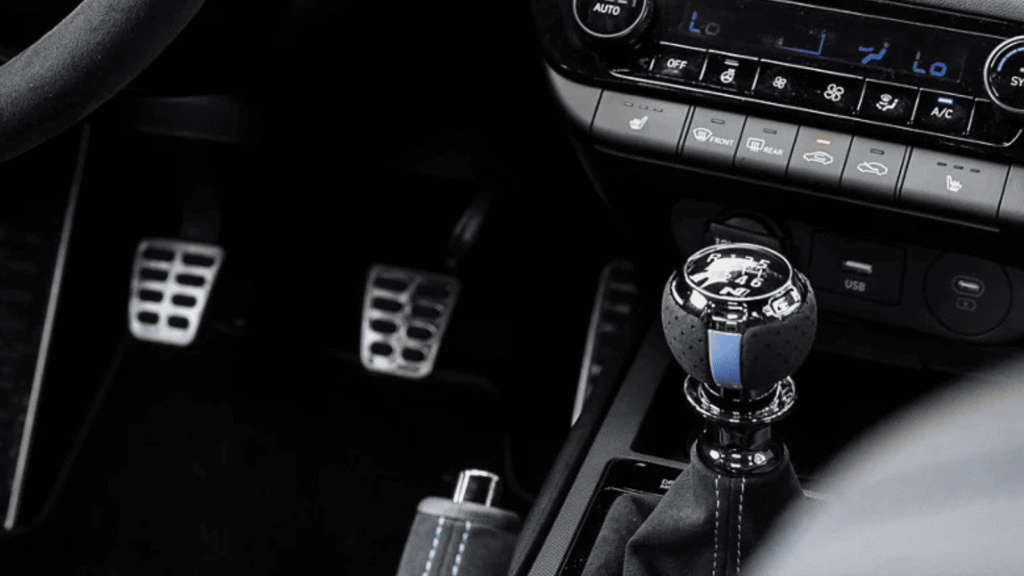
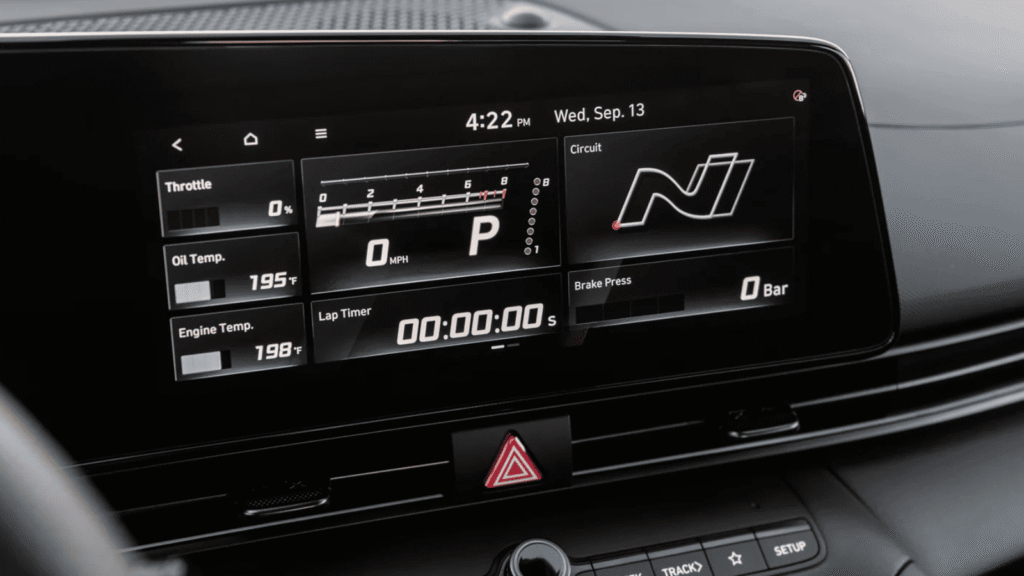
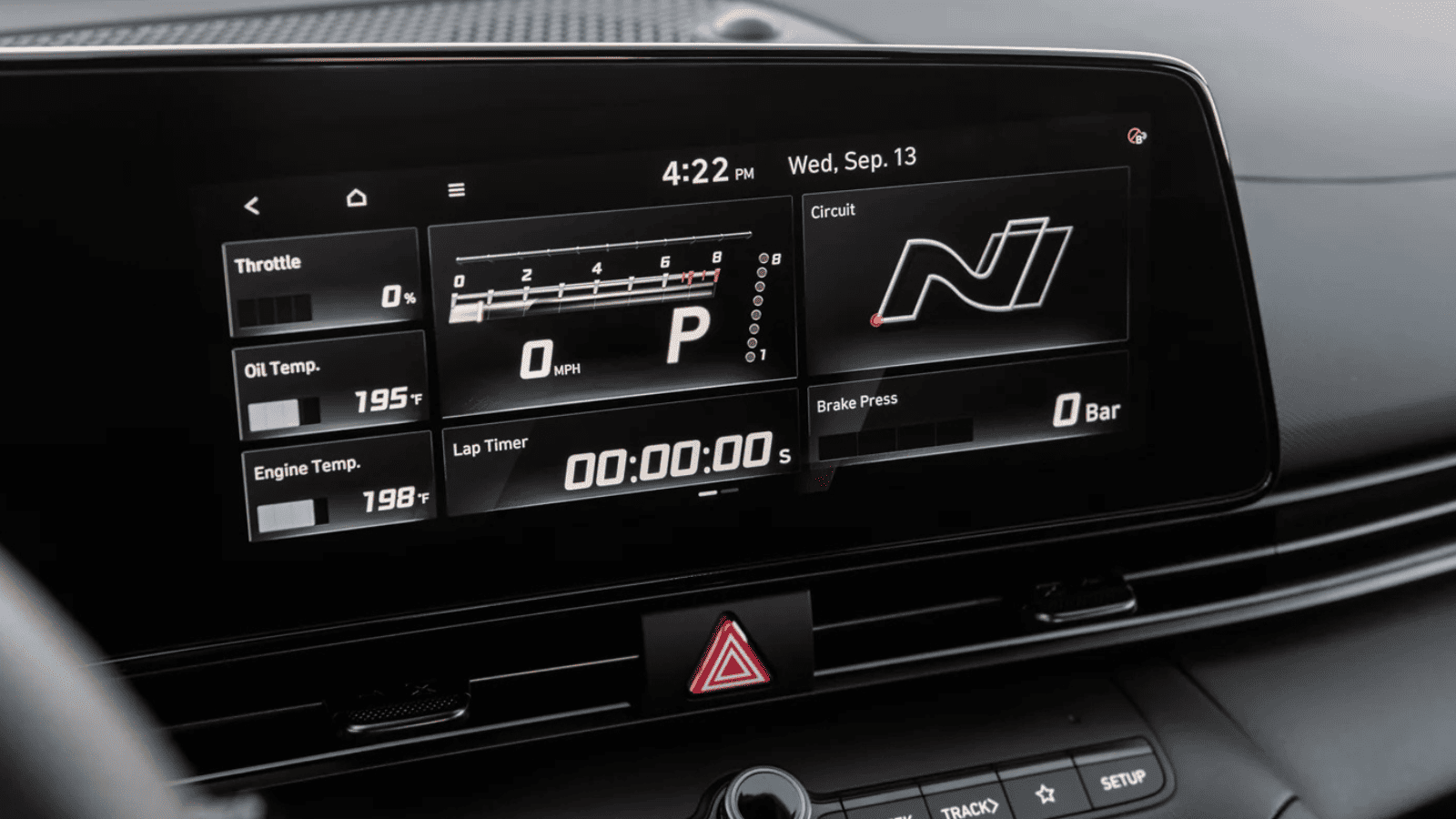
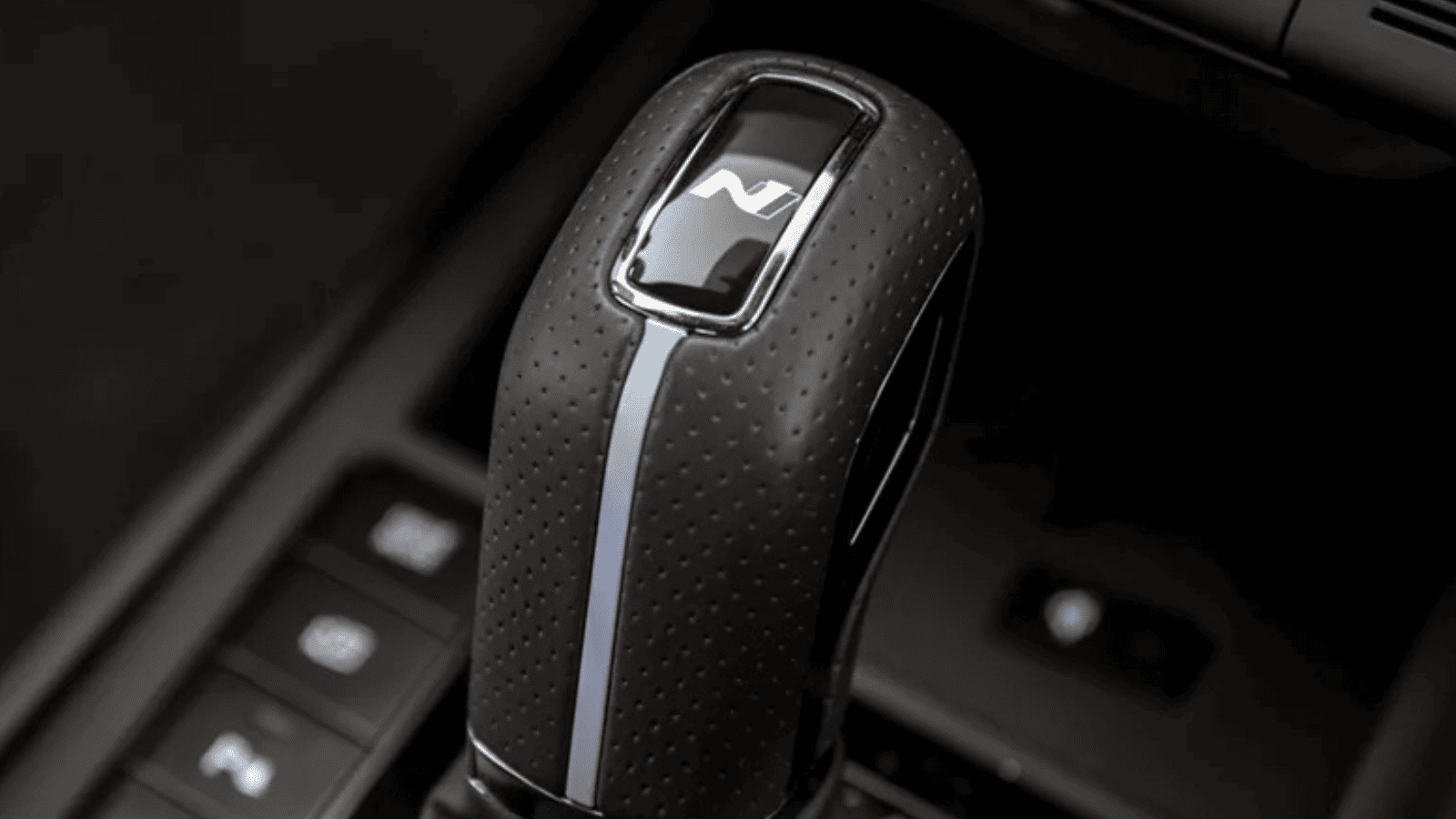
The Elantra N has a performance-focused cabin with sport seats, unique displays, red accents, metal pedals, and N-specific controls. It is more purposeful than luxurious, but Hyundai includes a strong level of standard technology.
Standard and available features include:
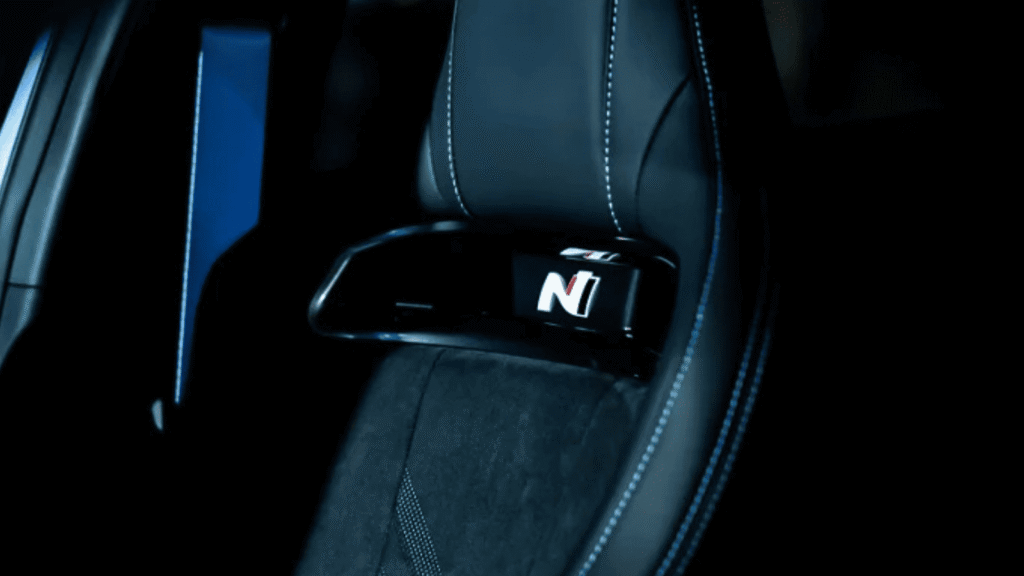
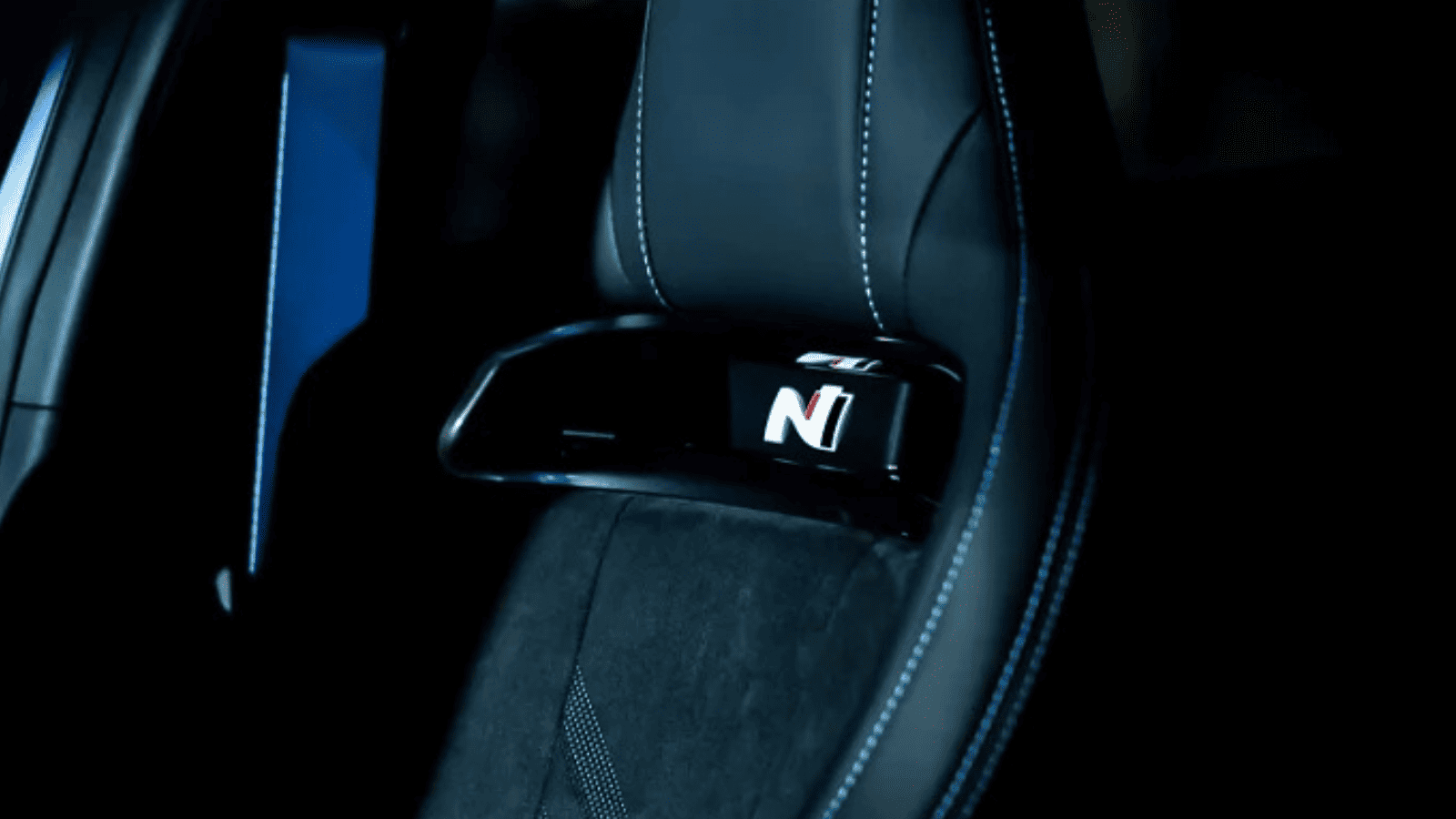
- N Light Sport bucket front seats with illuminated N logo
- Leather-trimmed and Alcantara-trimmed seating surfaces
- Heated front seats
- 10.25-inch digital instrument cluster
- 10.25-inch navigation touchscreen
- N performance displays, lap timer, and track-map functions
- Wireless device charging
- Hyundai Digital Key 2.0
- Bose premium audio system with eight speakers
- Apple CarPlay and Android Auto
- Bluelink connected-car services
- Dual-zone automatic climate control
- Available sunroof on DCT models
The front seats provide strong side support during spirited driving. Some larger drivers may find them restrictive, so a test drive is important before buying.
Rear-seat room is good for a compact sedan, though the rear bench is better suited to two passengers than three on longer trips.
Dimensions, Cargo, and Practicality
| Dimension | Measurement |
| Length | 184.1 in. |
| Width | 71.9 in. |
| Height | 55.7 in. |
| Wheelbase | 107.1 in. |
| Front legroom | 42.3 in. |
| Rear legroom | 38.0 in. |
| Trunk capacity | 14.2 cu. ft. |
| Seating | 5 passengers |
The Elantra N remains useful as a daily car. Its 14.2-cubic-foot trunk can handle groceries, work gear, luggage, and most normal errands.
The rear seat folds down for longer items, although the one-piece design is less flexible than a 60/40 split-folding seat.
The larger limitation is not cargo space but ride quality. If you need a softer ride, more ground clearance, or winter-ready all-wheel drive, a performance SUV may be a better fit.
Exterior Design
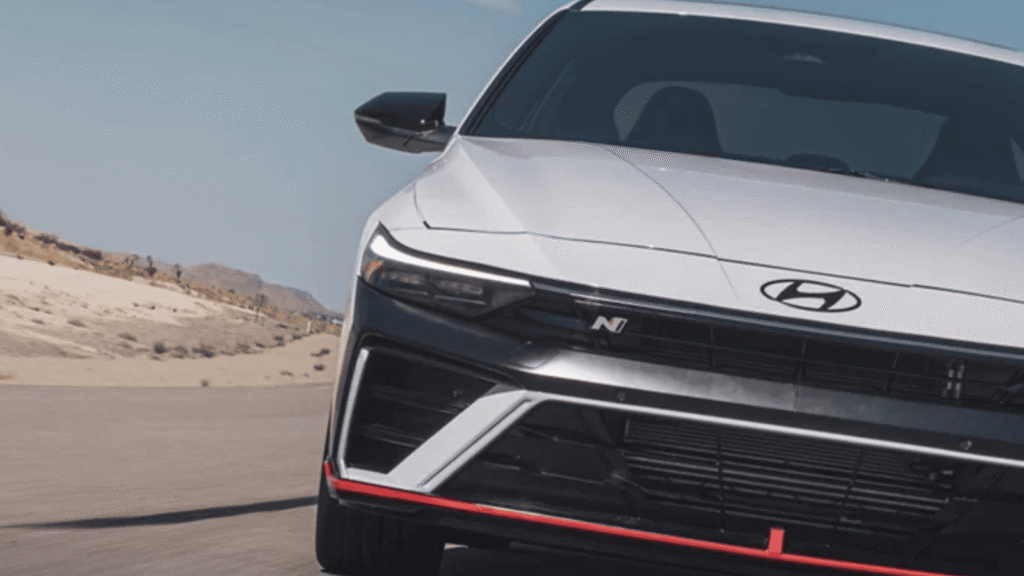
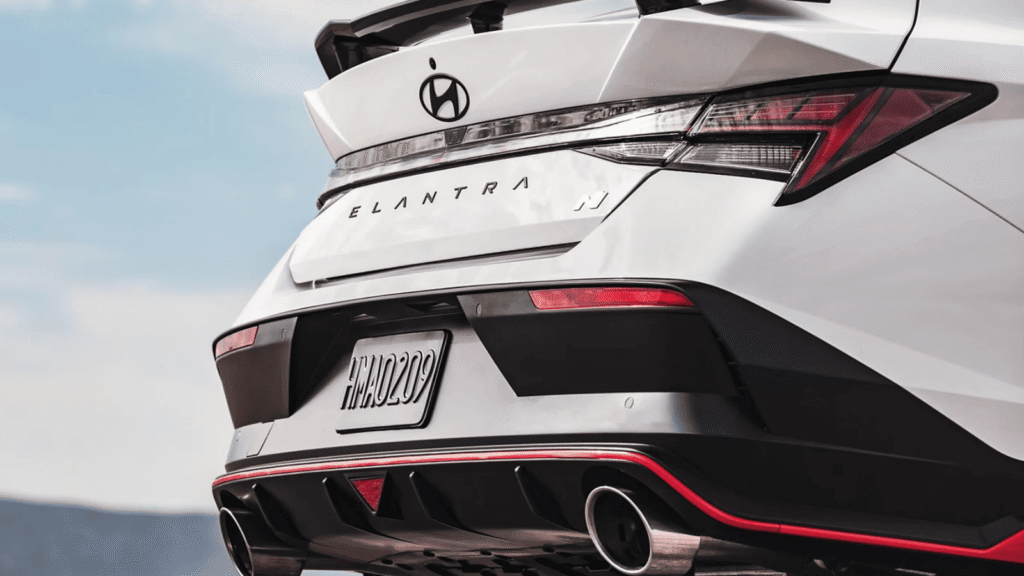
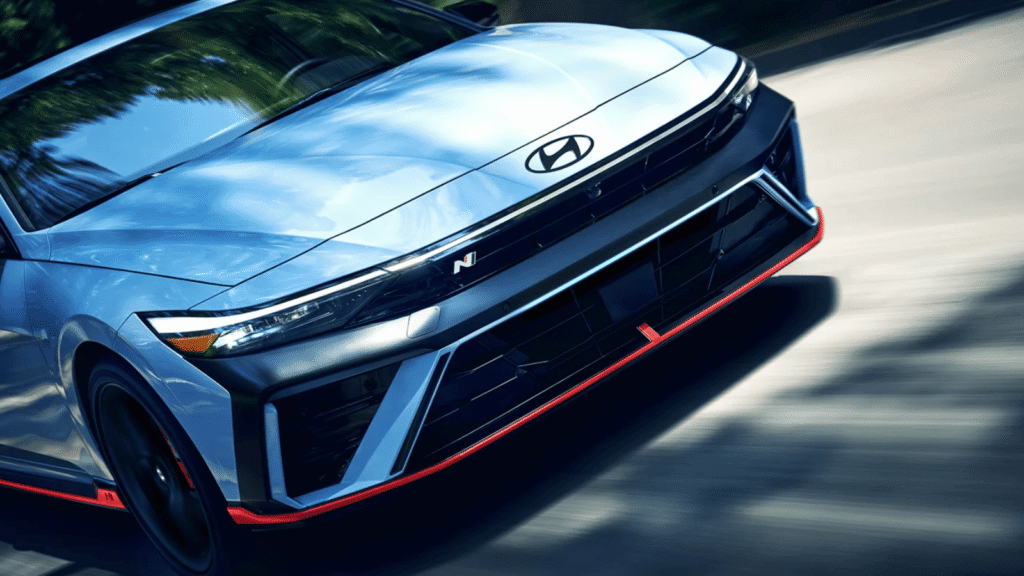
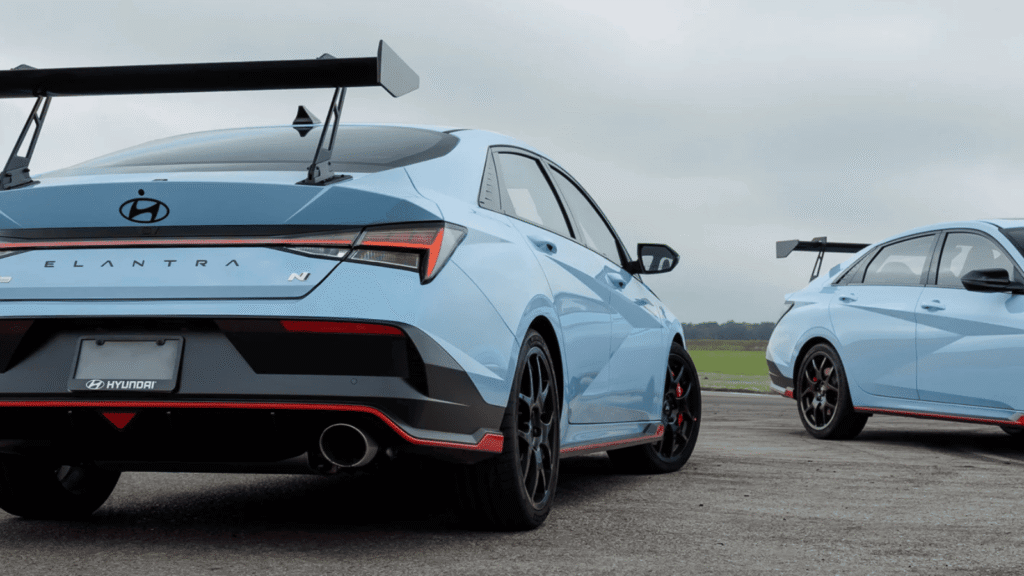
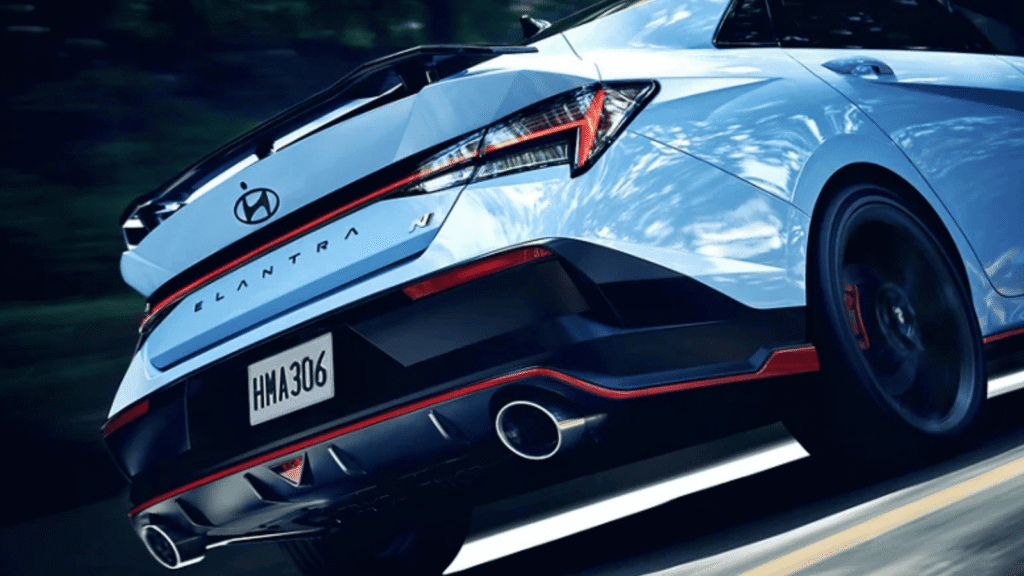
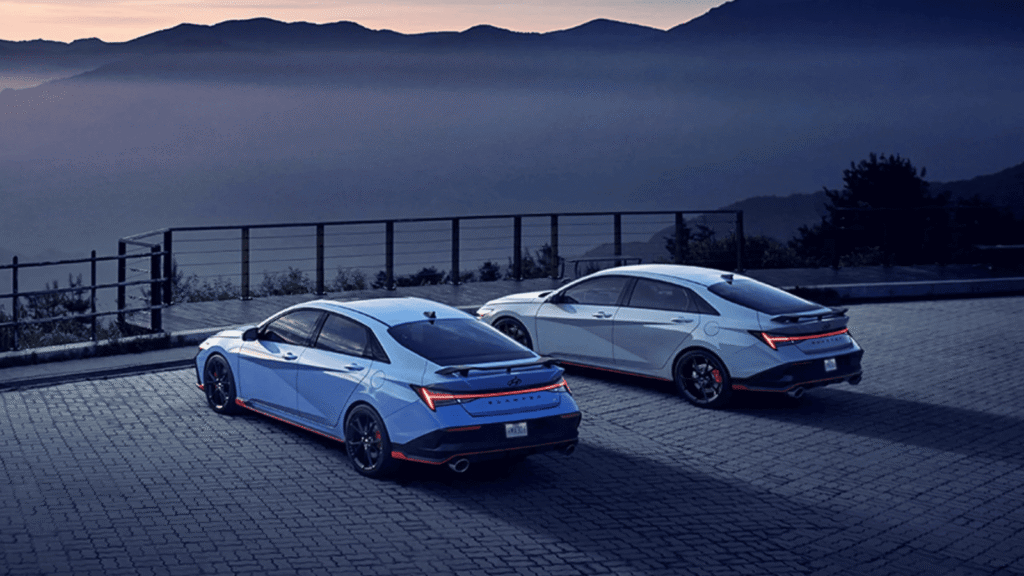
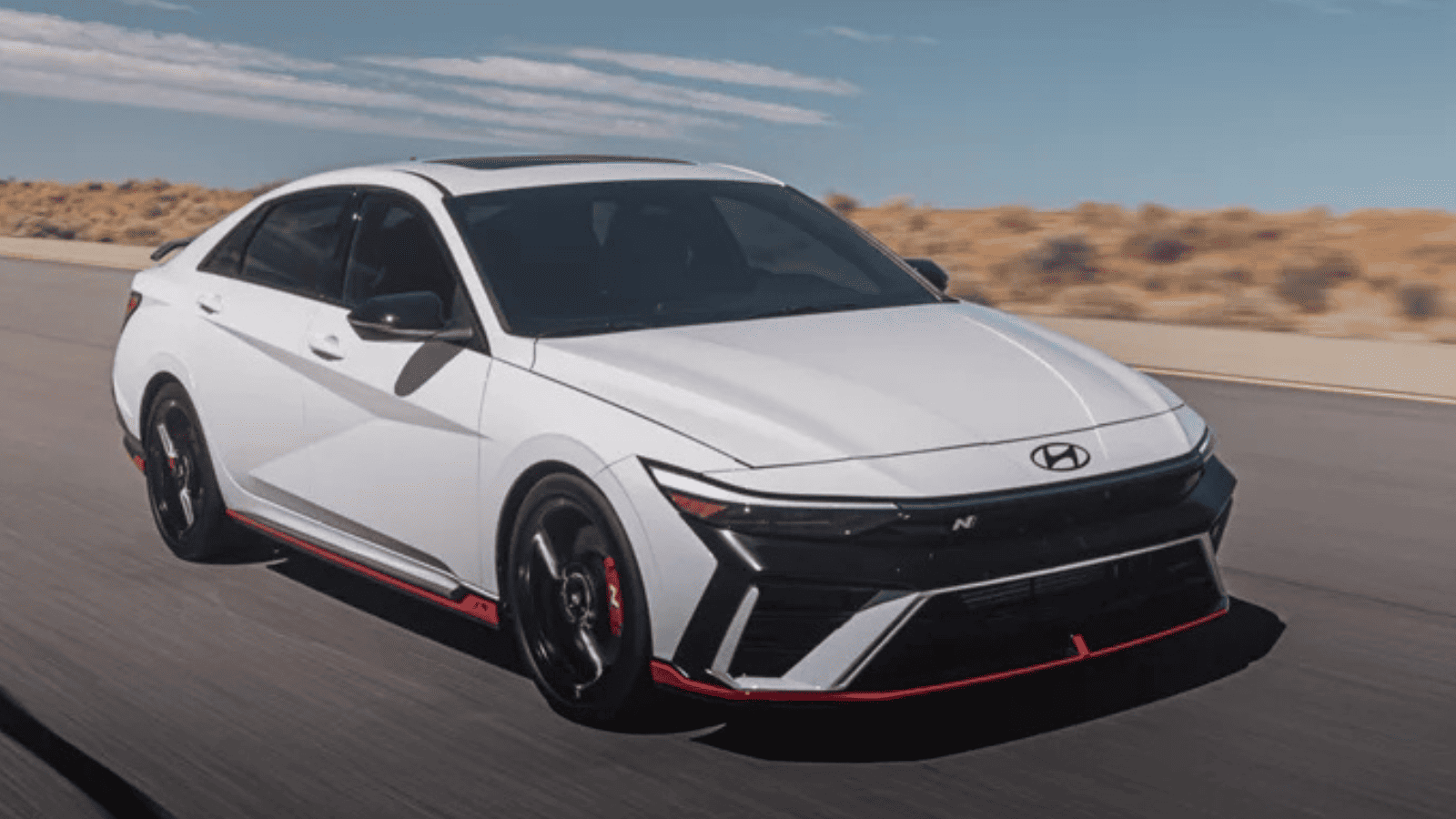
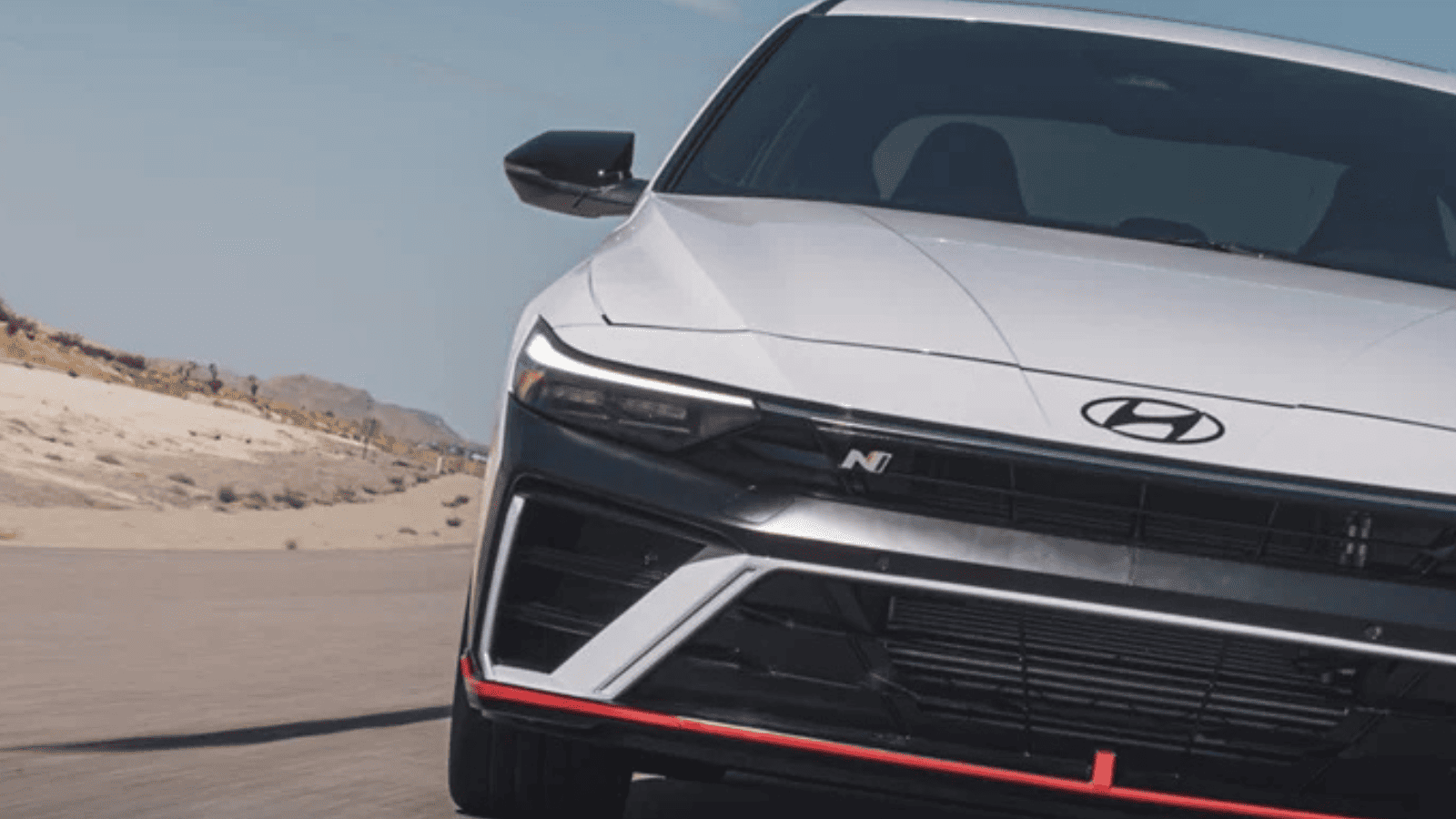
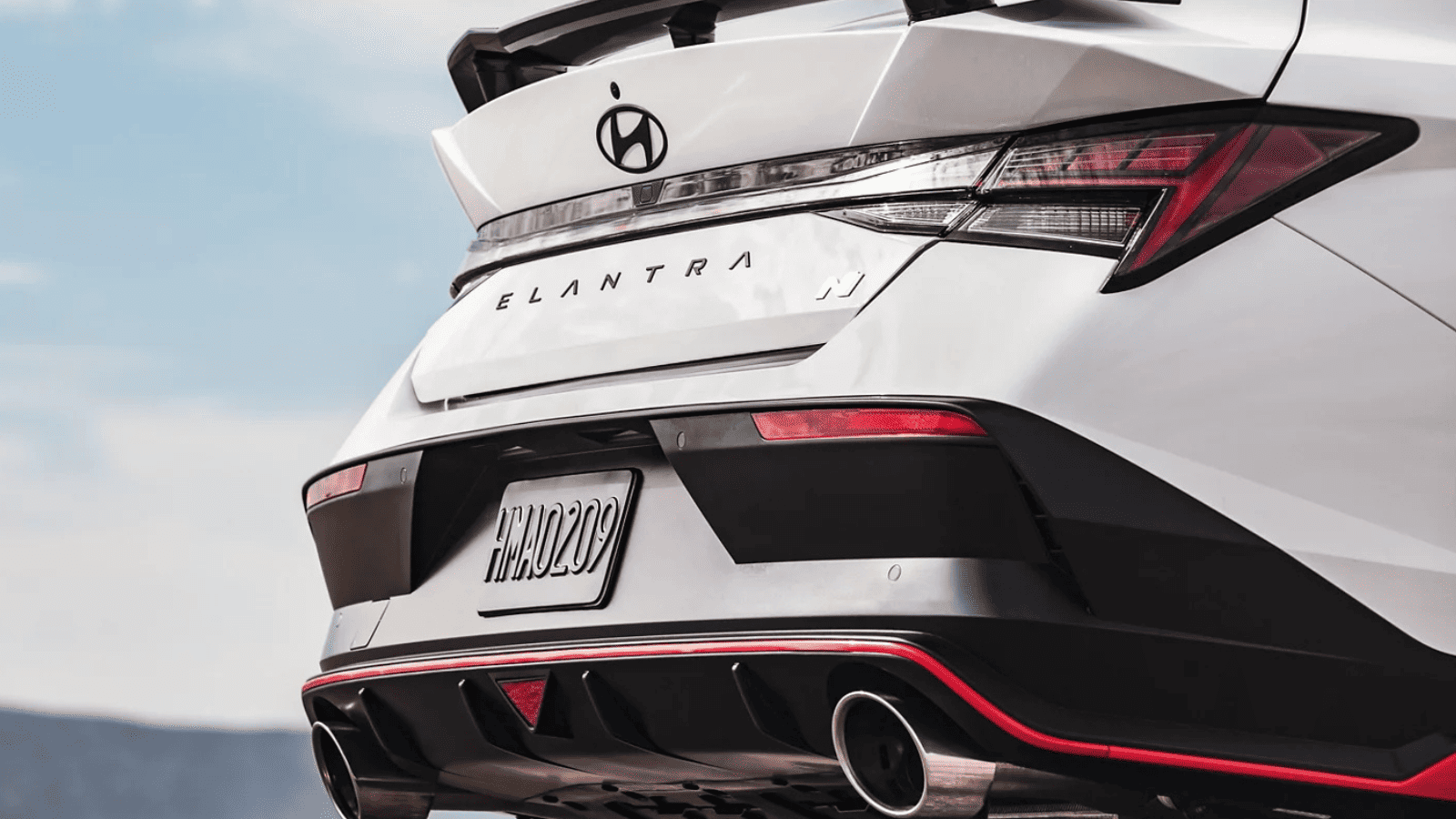
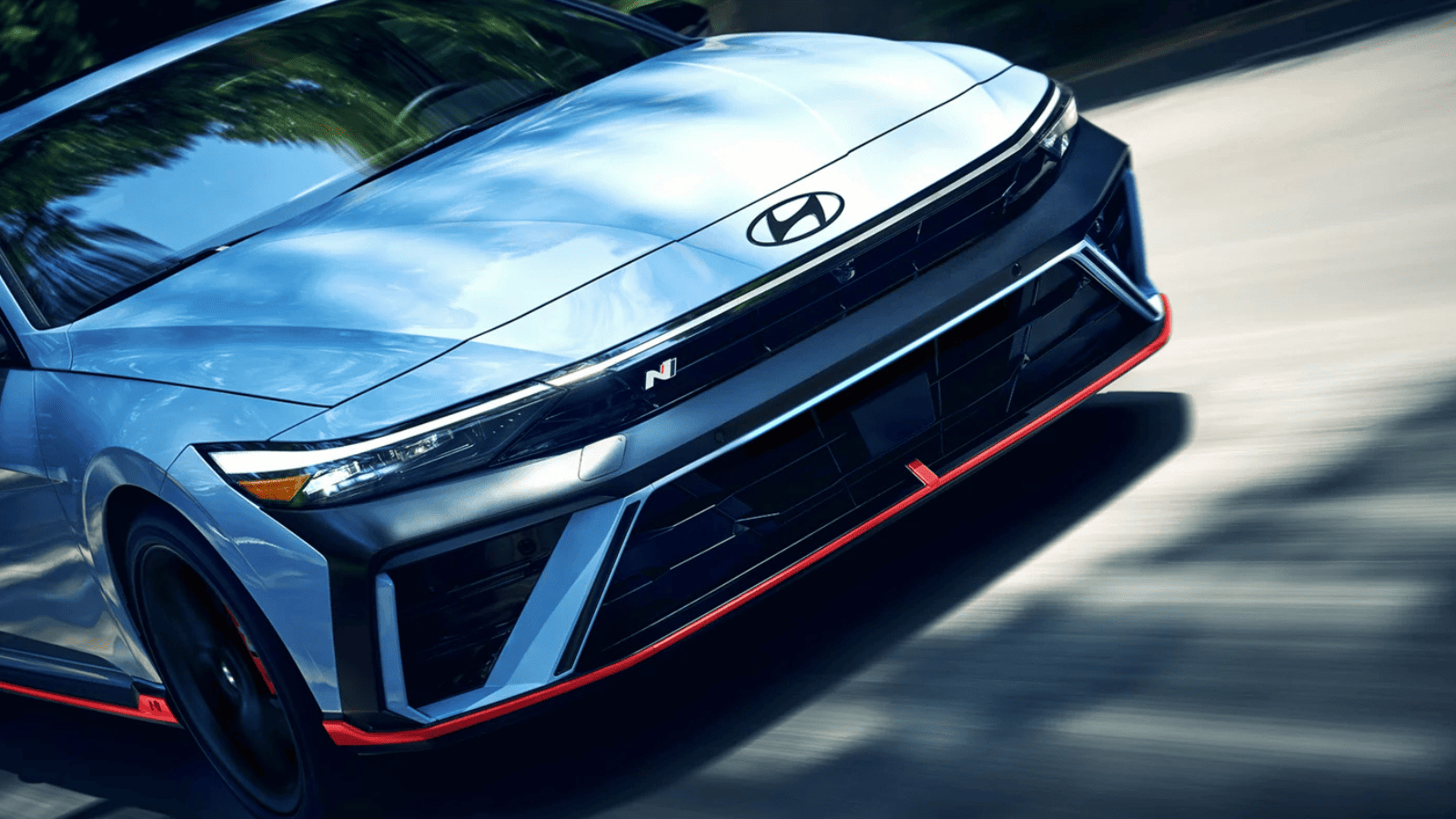
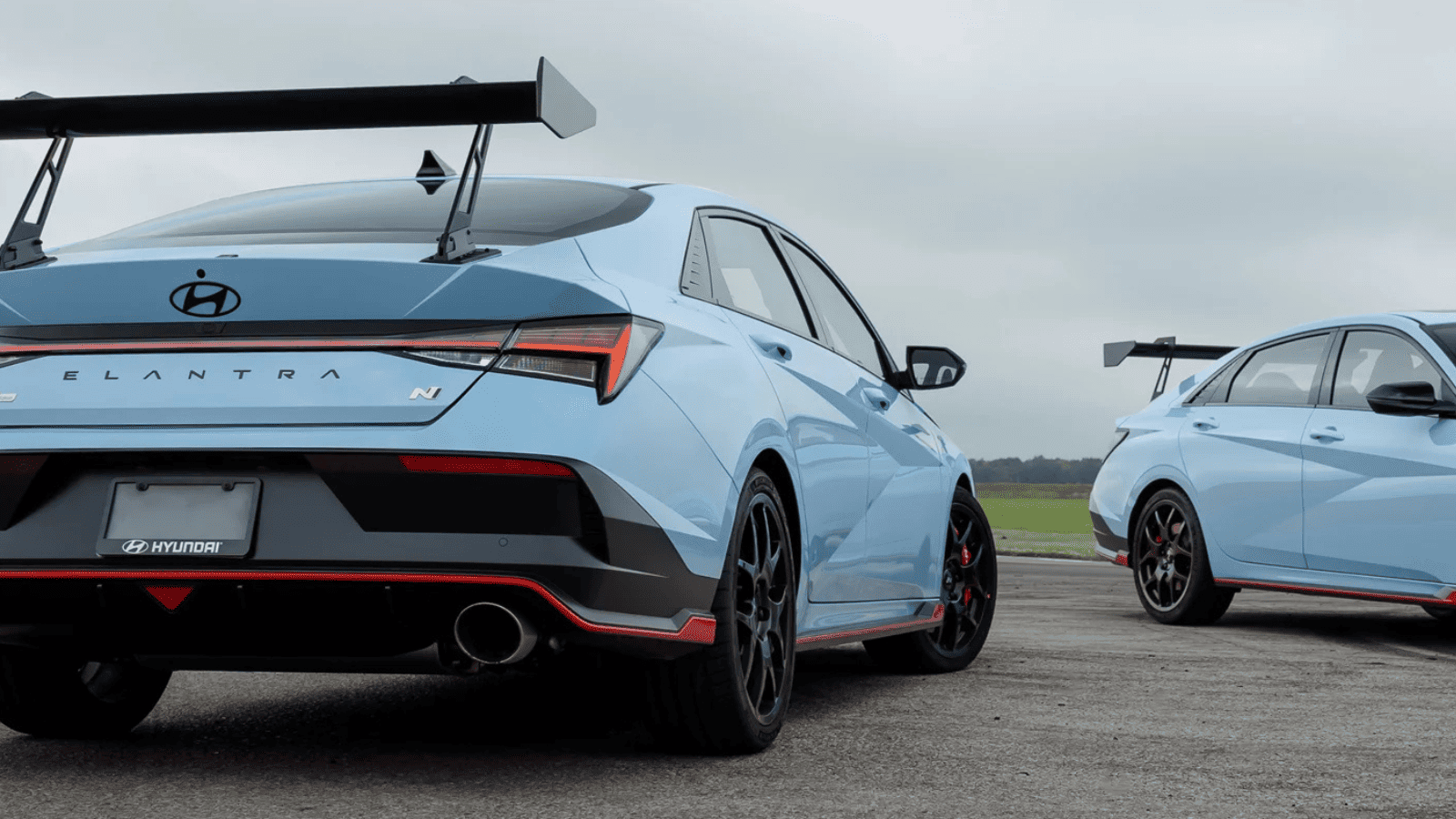
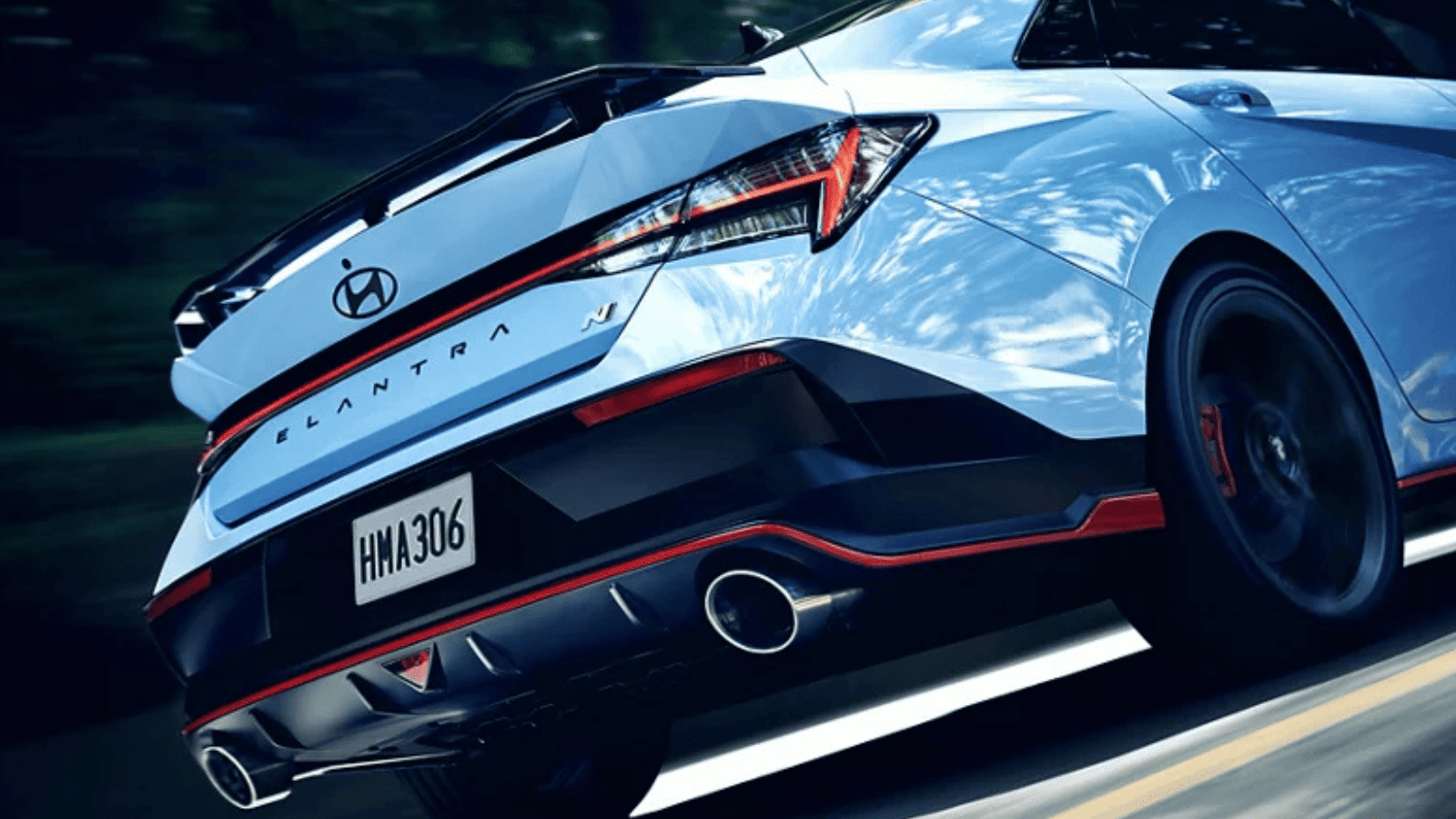
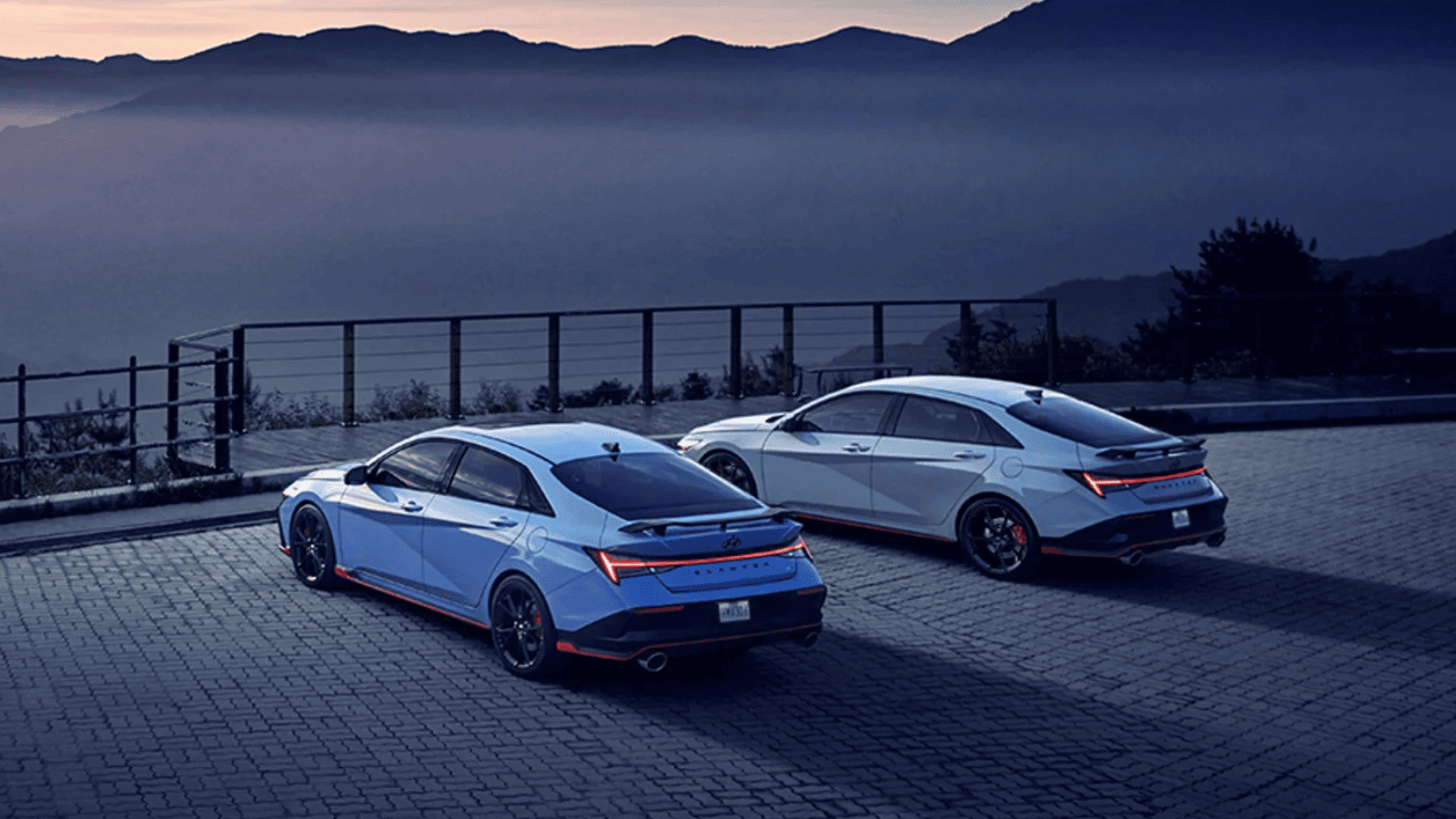
The Elantra N looks noticeably more aggressive than the regular Elantra. It has N-specific front and rear fascias, side sill moldings, a rear wing spoiler, large exhaust outlets, red exterior accents, and a rear diffuser.
Standard 19-inch forged wheels and Michelin Pilot Sport 4S tires give it a purposeful stance. The TCR Edition adds a larger carbon-fiber swan-neck spoiler and unique forged-wheel design.
Its styling is not subtle. That is part of its appeal for many buyers, but those who prefer a quieter appearance may want to consider a less visually aggressive performance sedan.
Safety Features and Ratings
Standard driver-assistance and safety features include:
- Forward Collision-Avoidance Assist with Pedestrian Detection
- Blind-Spot Collision Warning
- Rear Cross-Traffic Collision-Avoidance Assist
- Lane Keeping Assist
- Lane Following Assist
- High Beam Assist
- Driver Attention Warning
- Parking Distance Warning for the front and rear
- Rearview camera
- Safe Exit Warning
- Front, side, and curtain airbags
The 2026 Hyundai Elantra received an IIHS Top Safety Pick award. The rating page lists Good results in the small-overlap front, updated moderate-overlap front, updated side-impact, headlight, and pedestrian crash-prevention evaluations.
Buyers should verify that the exact vehicle they are considering falls within the applicable production dates and review the full IIHS Elantra safety results.
As with any performance car, safety technology supports the driver but does not offset unsafe speed, poor tire condition, or driving beyond road and weather conditions.
Reliability, Warranty, and Ownership
The Elantra N has Hyundai’s strong standard warranty coverage, which adds meaningful reassurance in a performance-car segment where repairs can become expensive.
| Coverage | Length |
| New vehicle limited warranty | 5 years / 60,000 miles |
| Powertrain limited warranty | 10 years / 100,000 miles |
| Roadside assistance | 5 years / unlimited miles |
| Anti-perforation warranty | 7 years / unlimited miles |
The performance hardware means ownership costs can still be higher than on a regular Elantra. Summer tires, larger brakes, performance-oriented maintenance, premium fuel requirements, insurance, and potential track use all add to the budget.
The Elantra N is best for buyers who are willing to maintain it properly. Follow the service schedule, use the recommended fuel and fluids, inspect tires regularly, and check the VIN for open recalls before purchasing new or used.
Pros and Cons
What We Like
- 276-hp turbocharged engine with strong performance value
- Six-speed manual transmission remains available
- DCT offers quicker acceleration and N Grin Shift
- Electronic limited-slip differential improves cornering and traction
- Adaptive suspension, strong brakes, and serious summer tires
- Practical four-door sedan layout
- Good trunk space for the class
- Strong standard technology and performance displays
- TCR Edition offers meaningful track-oriented upgrades
What We Don’t Like
- Firm ride on rough roads
- No all-wheel-drive option
- Lower fuel economy than standard compact sedans
- Summer tires require extra planning in winter climates
- Loud exhaust may not suit every daily driver
- Insurance, tires, and maintenance can cost more
- Rear-seat flexibility is limited by the one-piece folding seatback
Competitors
The Elantra N stands out because it gives buyers a manual-transmission option, strong performance hardware, and track capability at a lower entry price than many rivals.
The Toyota GR Corolla is a strong alternative for buyers who need all-wheel drive and hatchback practicality. The Honda Civic Type R is worth considering for buyers willing to spend more for a more refined front-wheel-drive track car. The Volkswagen Golf R is better suited to drivers who want all-wheel drive and a more understated design, but it costs more.
Related Content
Before financing an Elantra N, review how car financing works and consider arranging a car loan preapproval before visiting a dealership.
If you are deciding whether to buy new or used, read our guide to new vs. used cars. Used performance-car buyers should also learn how to check a car’s accident history before making an offer.
Should You Buy the Hyundai Elantra N?
Buy the Hyundai Elantra N if you want a high-performance compact sedan that feels genuinely special to drive while remaining practical enough for normal daily use.
Choose the manual if you value engagement, control, and the lower entry price. Choose the DCT if you want faster acceleration, paddle shifters, N Grin Shift, and better convenience in traffic. Choose the TCR Edition only if you will use its added braking, aero, and track-focused equipment.
Skip the Elantra N if you want a quiet commute, good fuel economy, all-wheel drive, a soft ride, or low-cost tire and brake replacements.
FAQs
How much does the Hyundai Elantra N cost?
The 2026 Hyundai Elantra N starts at $35,100 MSRP with the six-speed manual. The DCT version starts at $36,600 MSRP before freight, taxes, registration, options, and dealer charges.
How much horsepower does the Hyundai Elantra N have?
The Elantra N produces 276 horsepower and 289 lb-ft of torque from its turbocharged 2.0-liter four-cylinder engine.
Is the Hyundai Elantra N available with a manual transmission?
Yes. A six-speed manual transmission with rev matching is standard. An eight-speed wet dual-clutch automatic is also available.
Is the Hyundai Elantra N fast?
Yes. Independent testing has recorded 0–60 mph times around 4.8 seconds for the DCT model. The manual is slower in acceleration testing but offers a more hands-on driving experience.
Does the Hyundai Elantra N have all-wheel drive?
No. The Elantra N is front-wheel drive only. It uses an electronic limited-slip differential to improve traction and cornering.
What mpg does the Hyundai Elantra N get?
The manual Elantra N is EPA-rated at 21 mpg city, 29 mpg highway, and 24 mpg combined. The DCT is rated at 20 mpg city, 27 mpg highway, and 23 mpg combined.
Does the Elantra N require premium gas?
Hyundai recommends premium unleaded fuel for the Elantra N to support its performance. Check the fuel label and owner information for the exact requirement for your vehicle.
What is N Grin Shift?
N Grin Shift is a DCT-only performance feature that temporarily raises output to 286 hp and prioritizes faster transmission response for short bursts of acceleration.
Does the Hyundai Elantra N have a sunroof?
A power sunroof is available on DCT-equipped Elantra N models. It is not offered with the manual transmission.
Is the Hyundai Elantra N practical for daily driving?
Yes, if you accept its firm ride and higher running costs. It has four doors, room for five, a 14.2-cubic-foot trunk, useful technology, and everyday safety features.
Final Verdict
The Hyundai Elantra N is one of the best performance bargains in the compact-car market. It delivers serious power, sharp handling, strong brakes, an electronic limited-slip differential, and real track capability while remaining a practical four-door sedan.
The price is not low in absolute terms, but the performance hardware makes it excellent value against more expensive rivals. The key question is whether you can live with its firm ride, front-wheel-drive layout, summer tires, and higher ownership costs.
For most enthusiasts, the standard Elantra N manual is the version to choose. Buyers who care more about speed and daily convenience should spend extra for the DCT. The TCR Edition is impressive, but only worth its premium for drivers who will make use of its more focused track equipment.
Prices, specifications, features, safety ratings, and availability can change by model year, trim, production date, and market.