
Honda CR-V: Price, Specs & Review
The Honda CR-V is a compact SUV built for buyers who want a roomy back seat, a large cargo area, good fuel economy, and an easy vehicle to live with every day. It seats five, offers available all-wheel drive, and comes with either a 190-hp turbocharged gas engine or a 204-hp hybrid system.
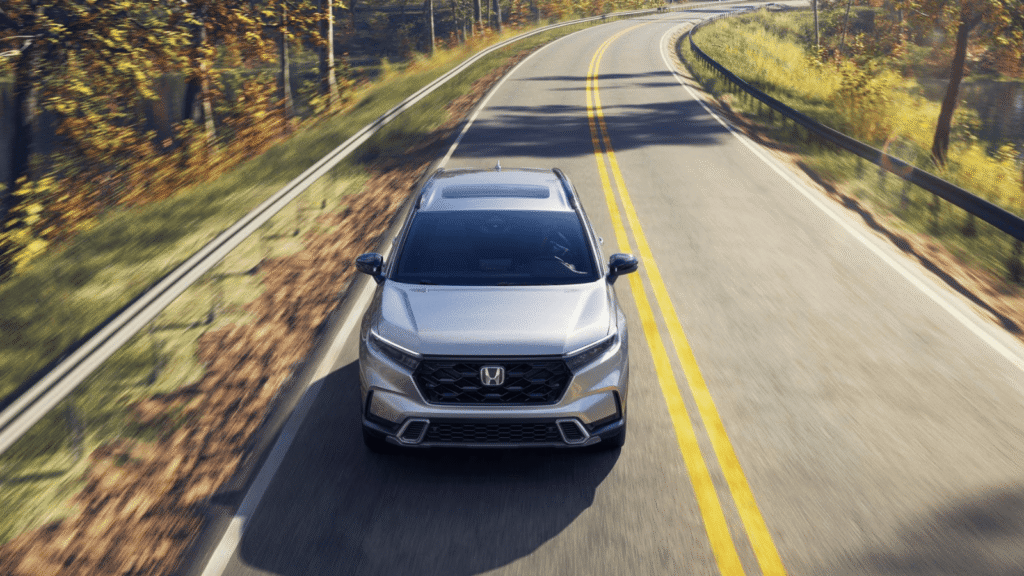
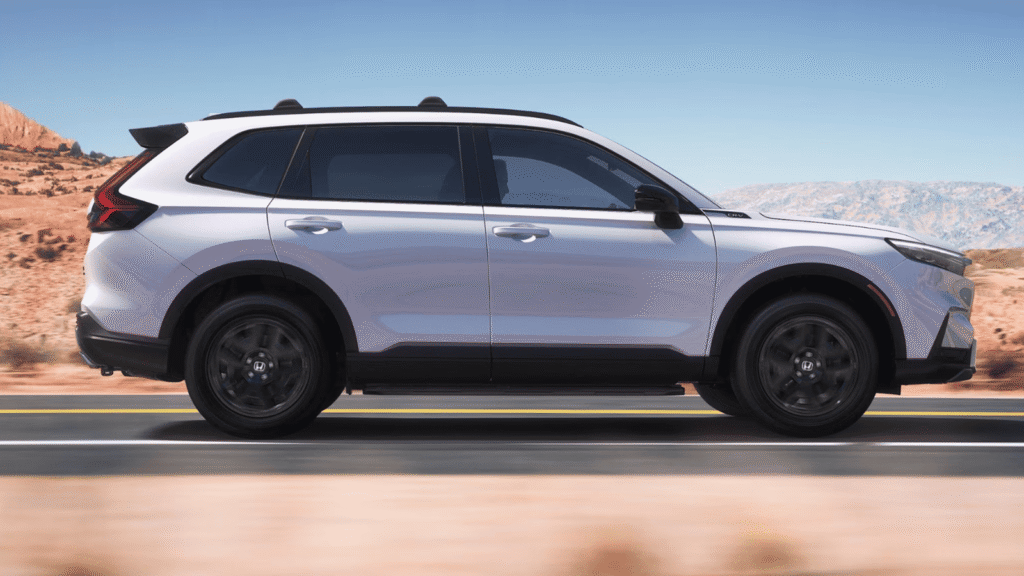
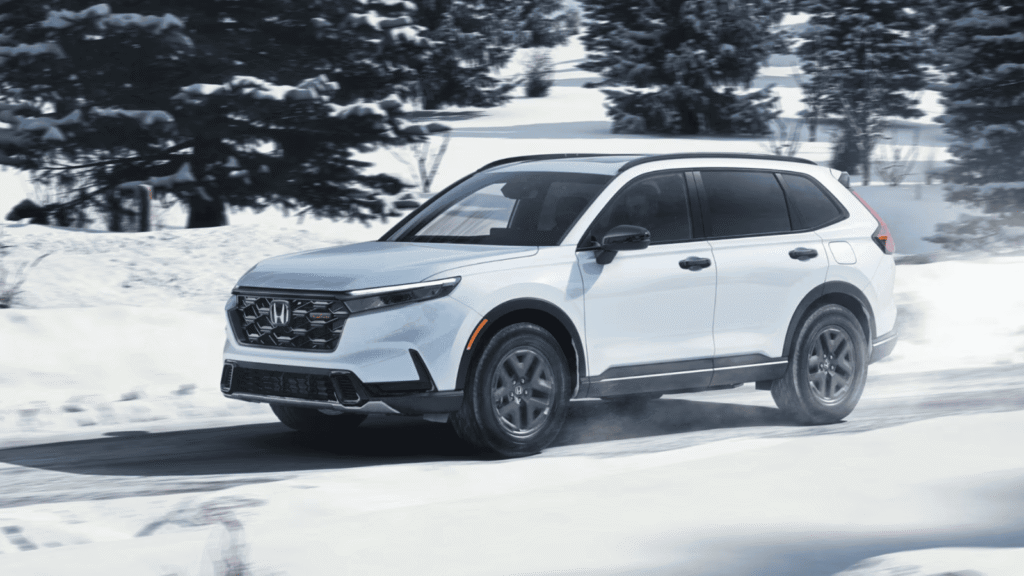
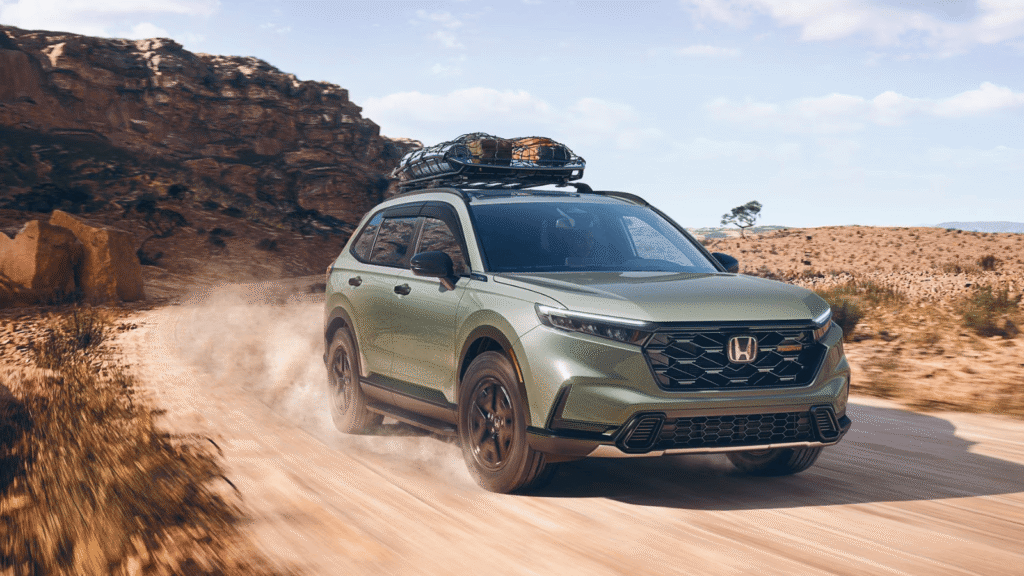
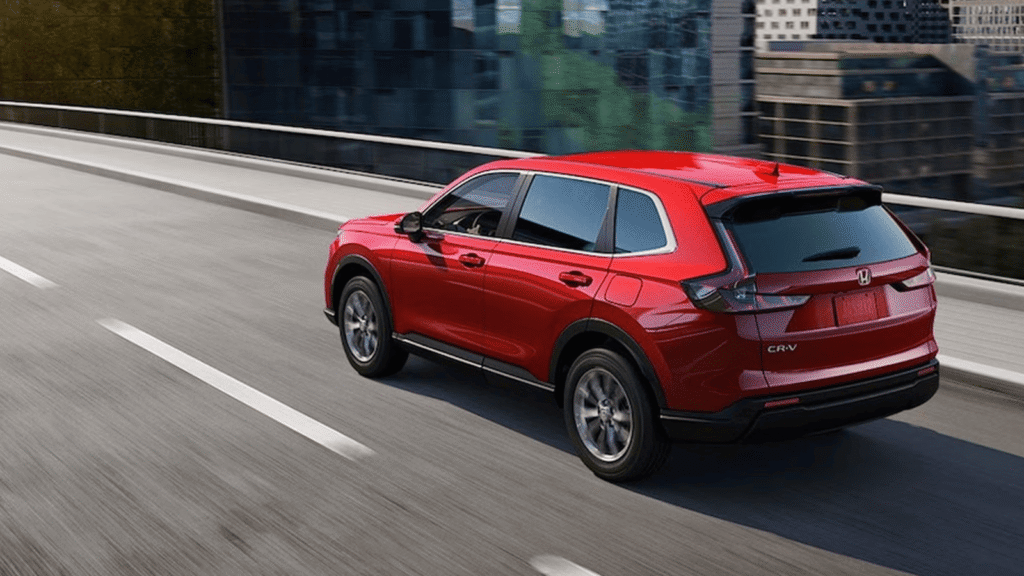

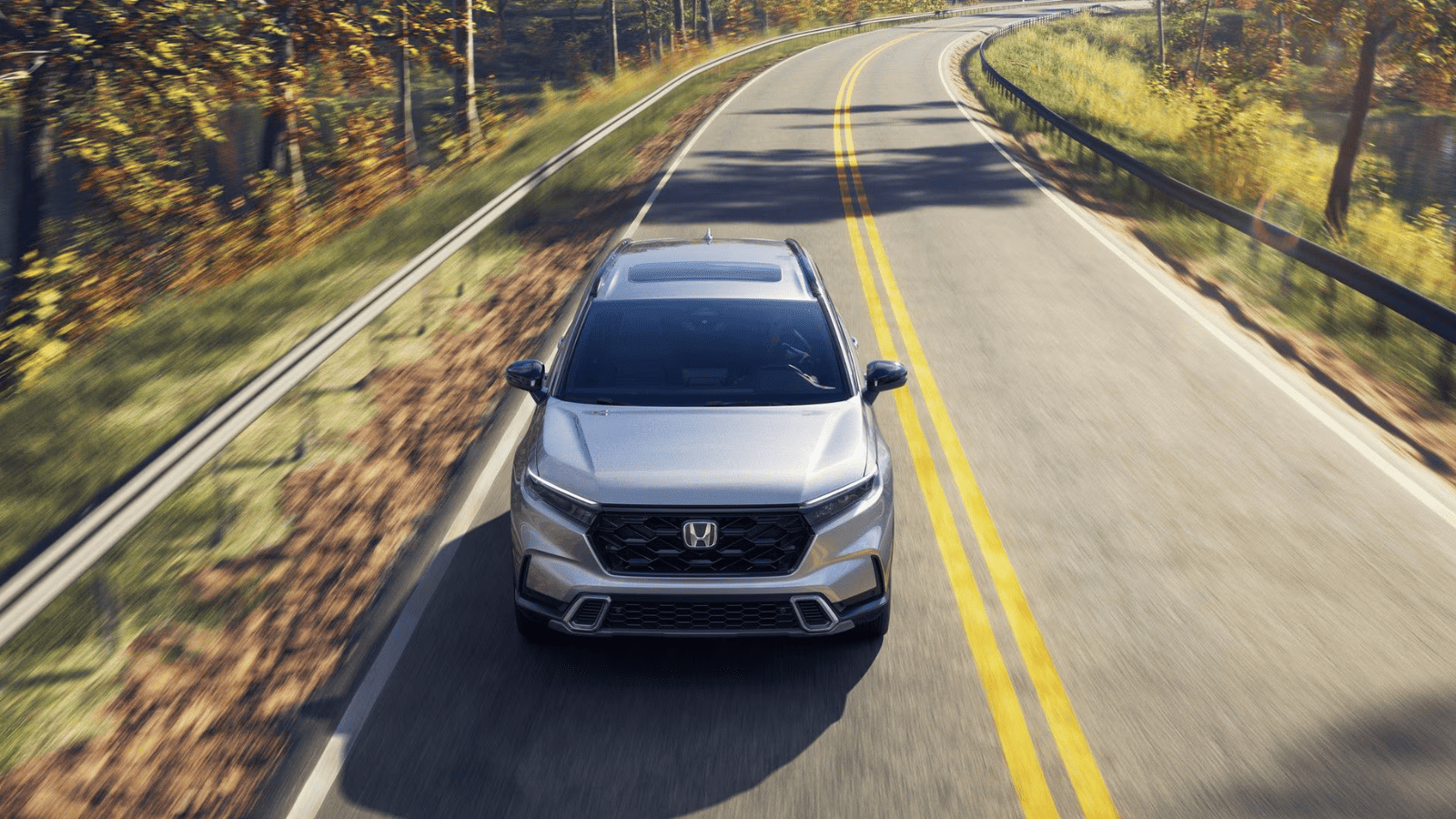
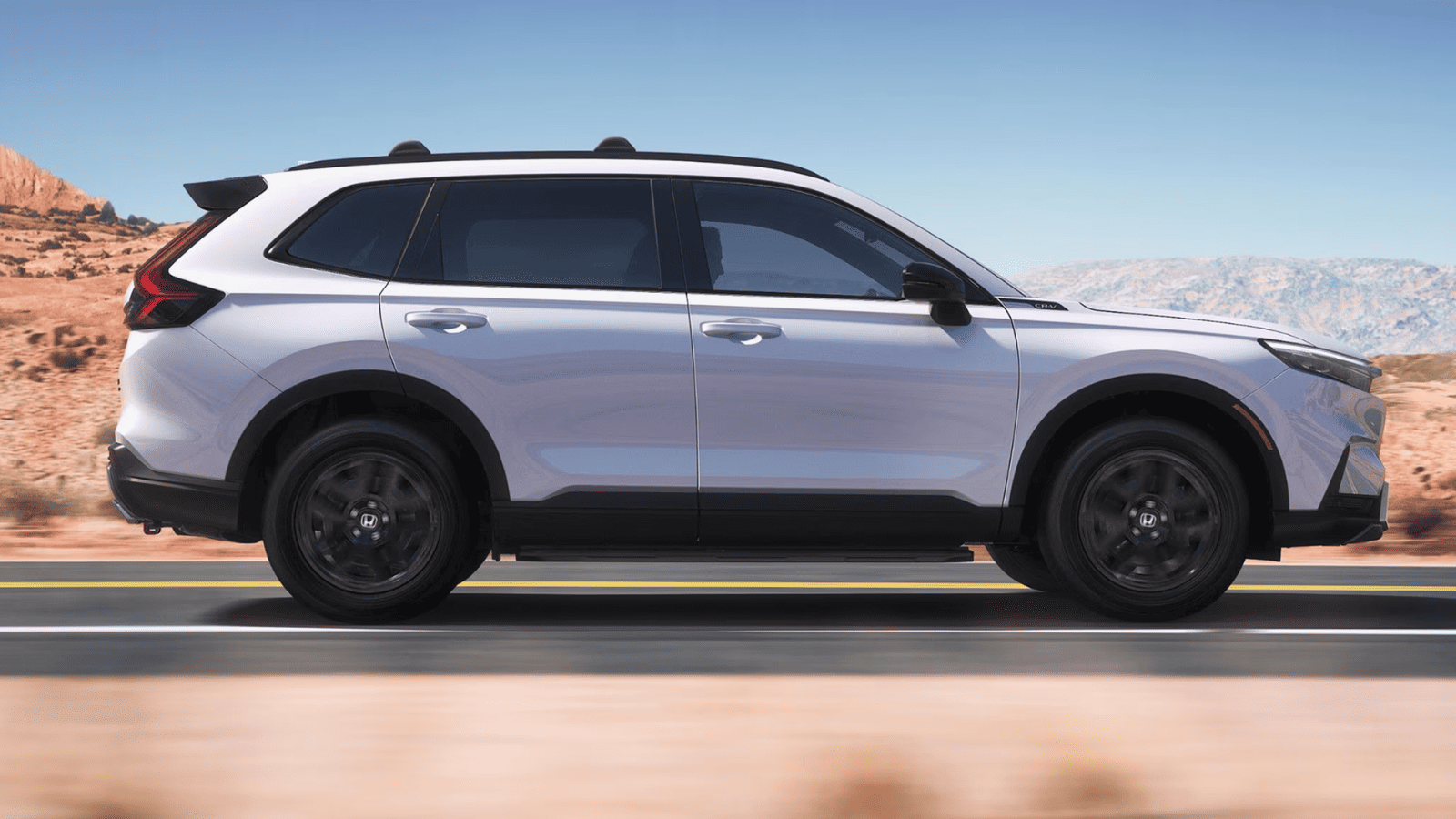
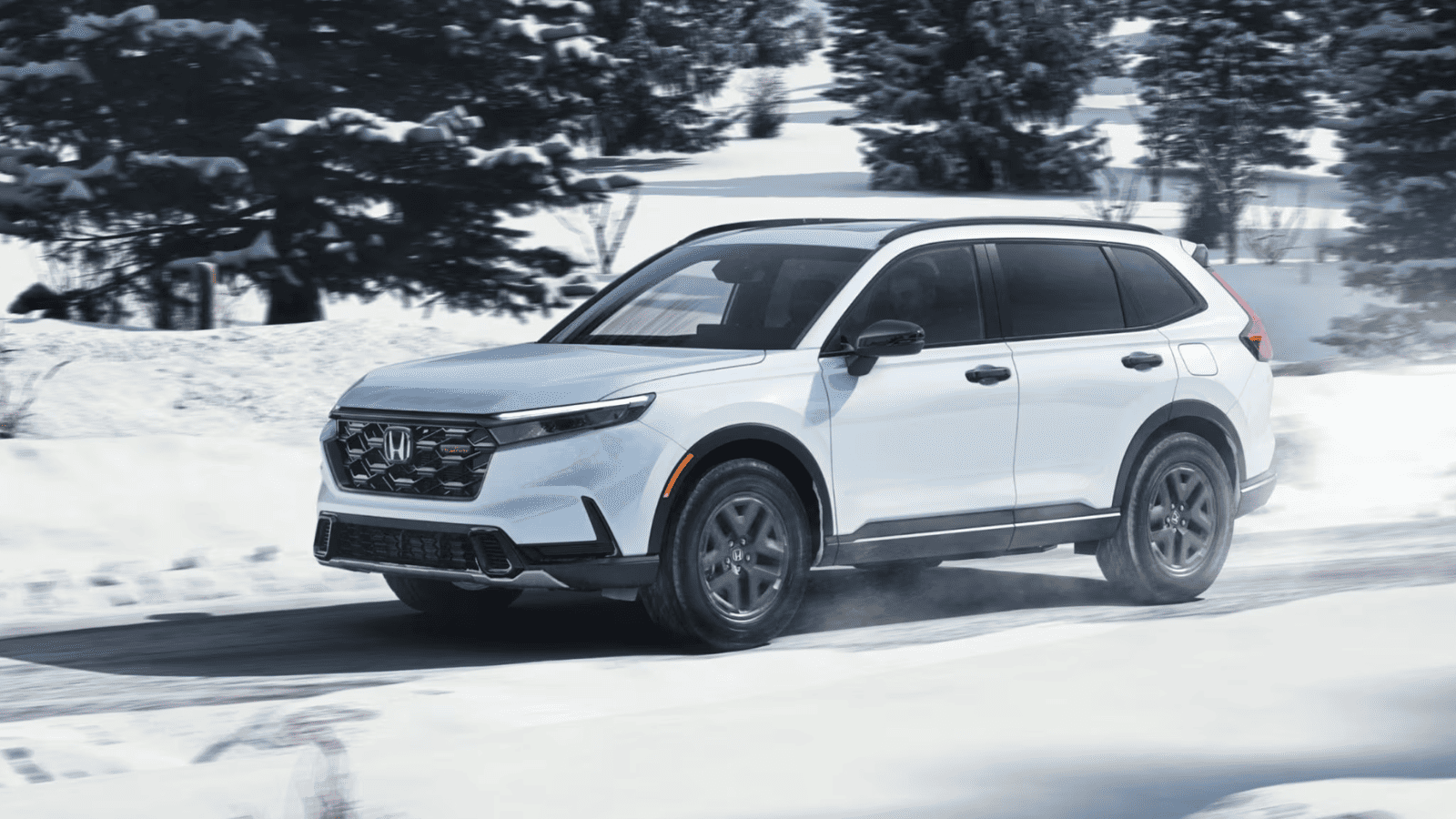
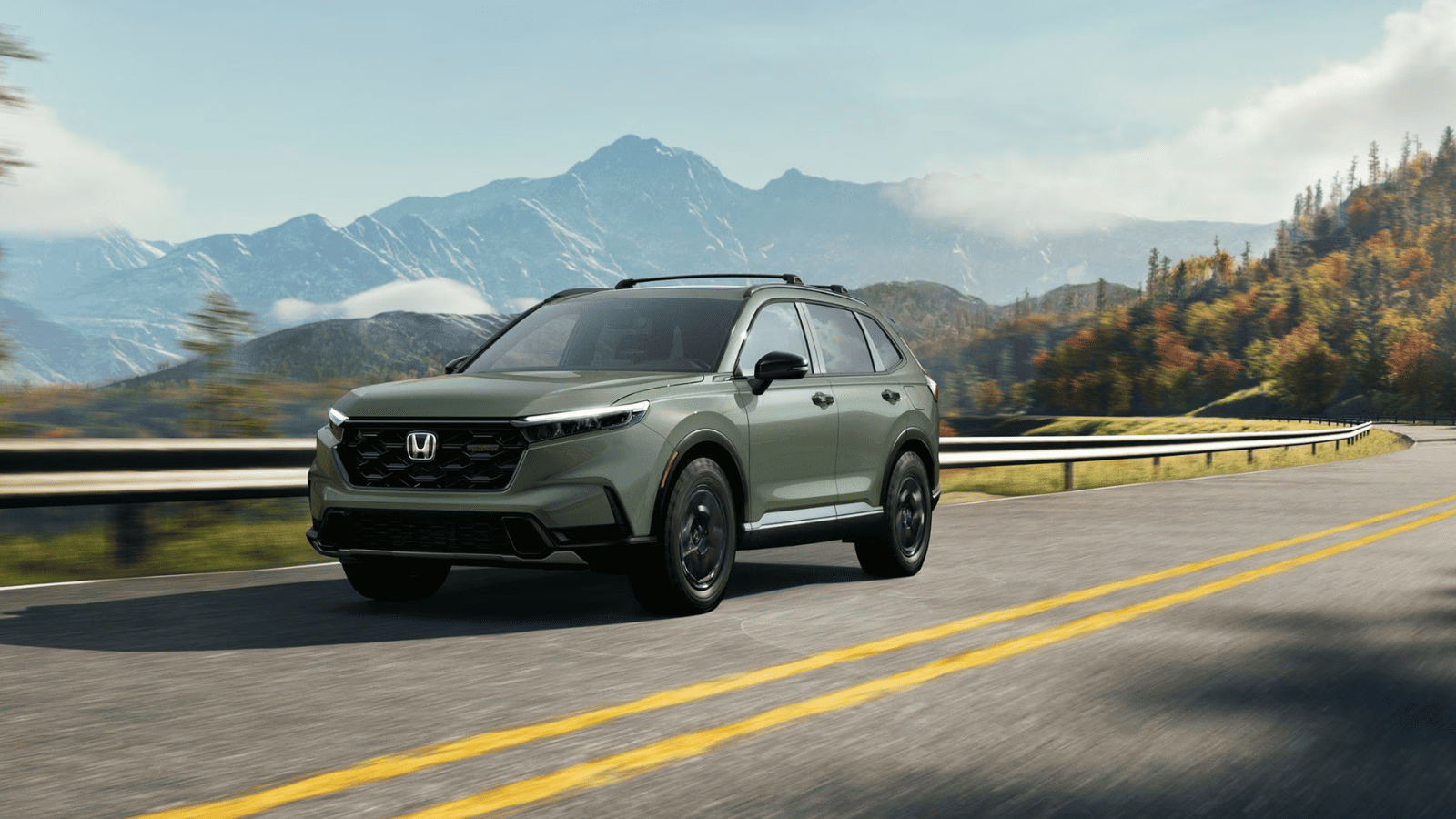
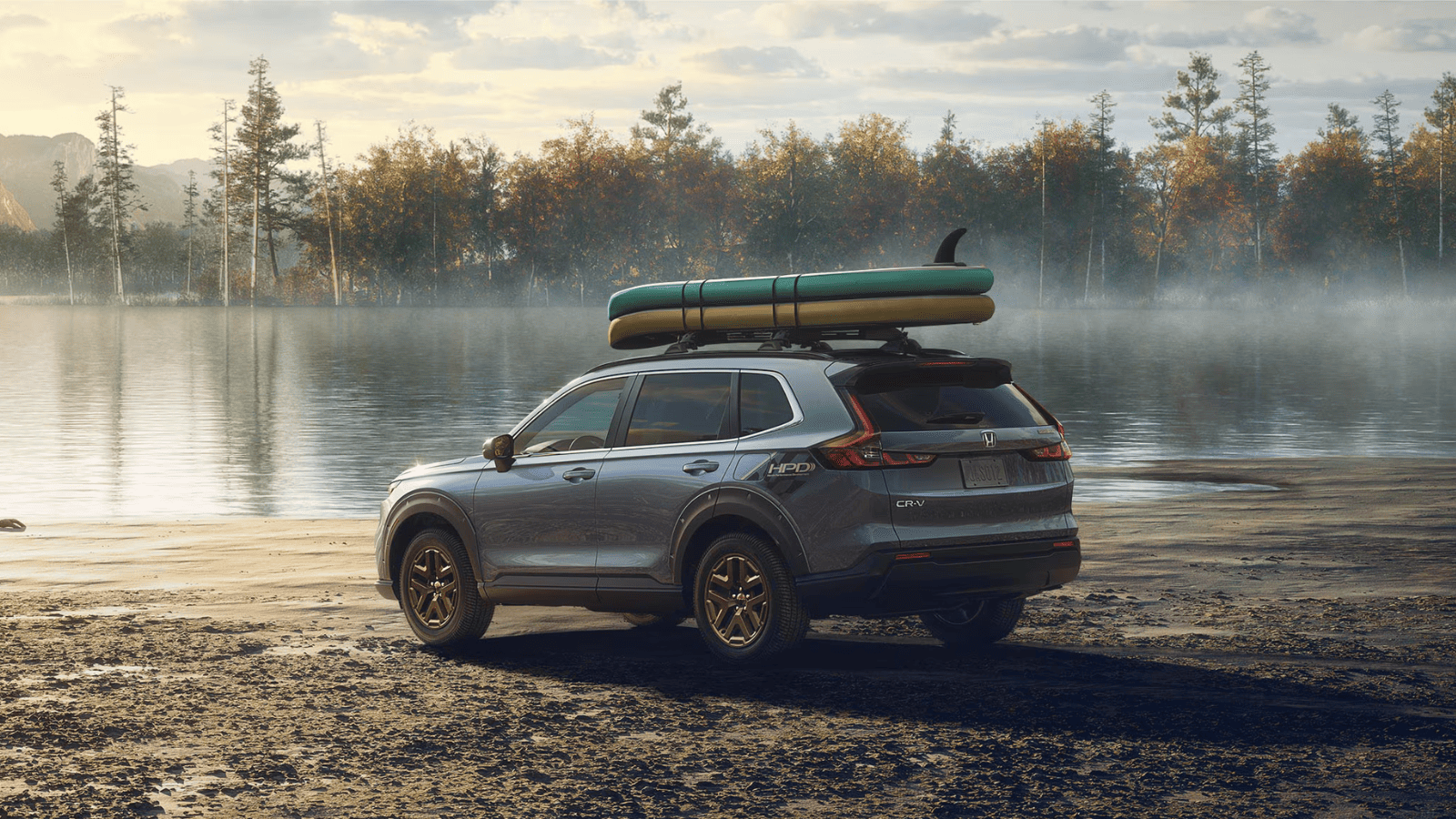
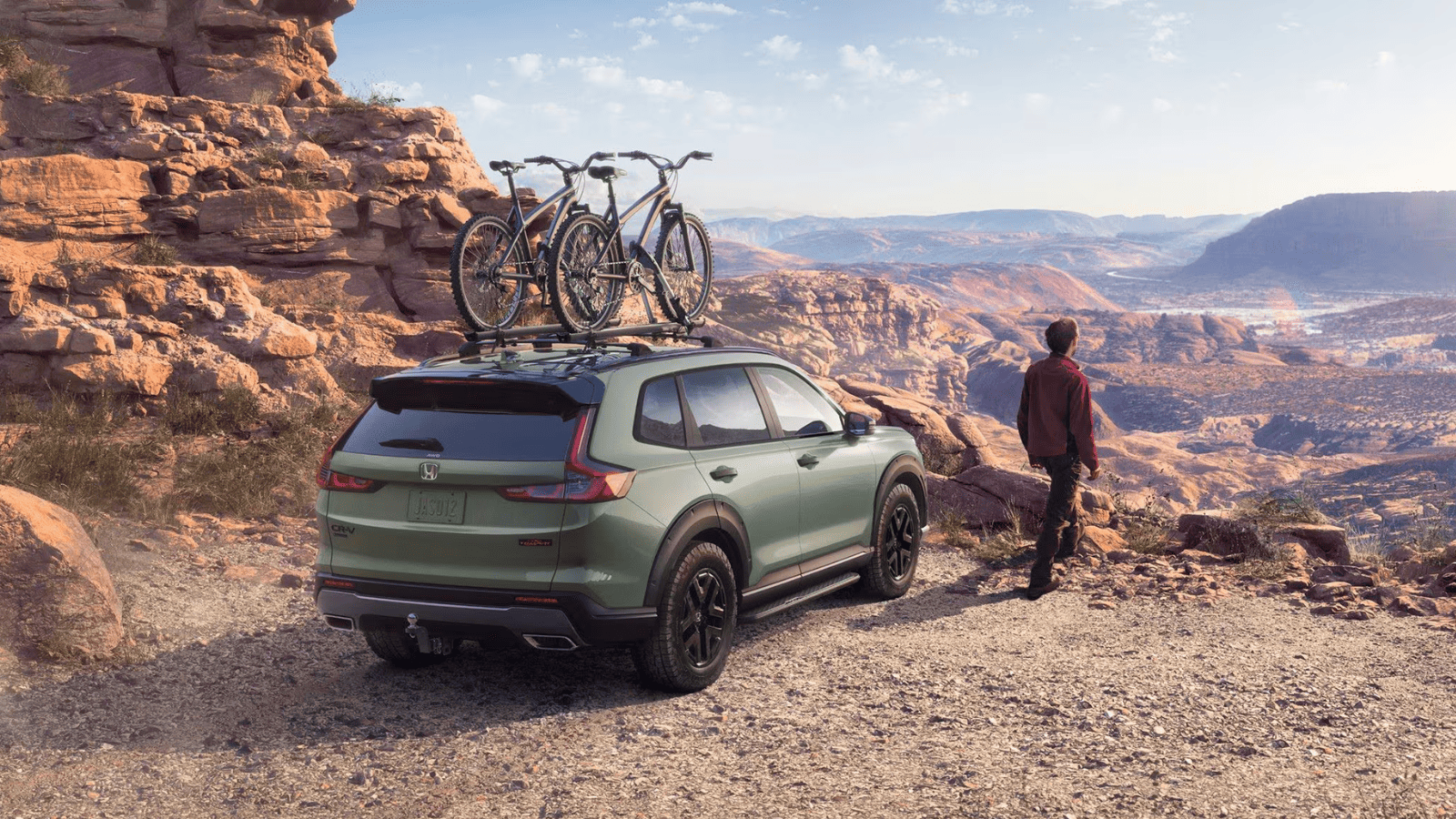
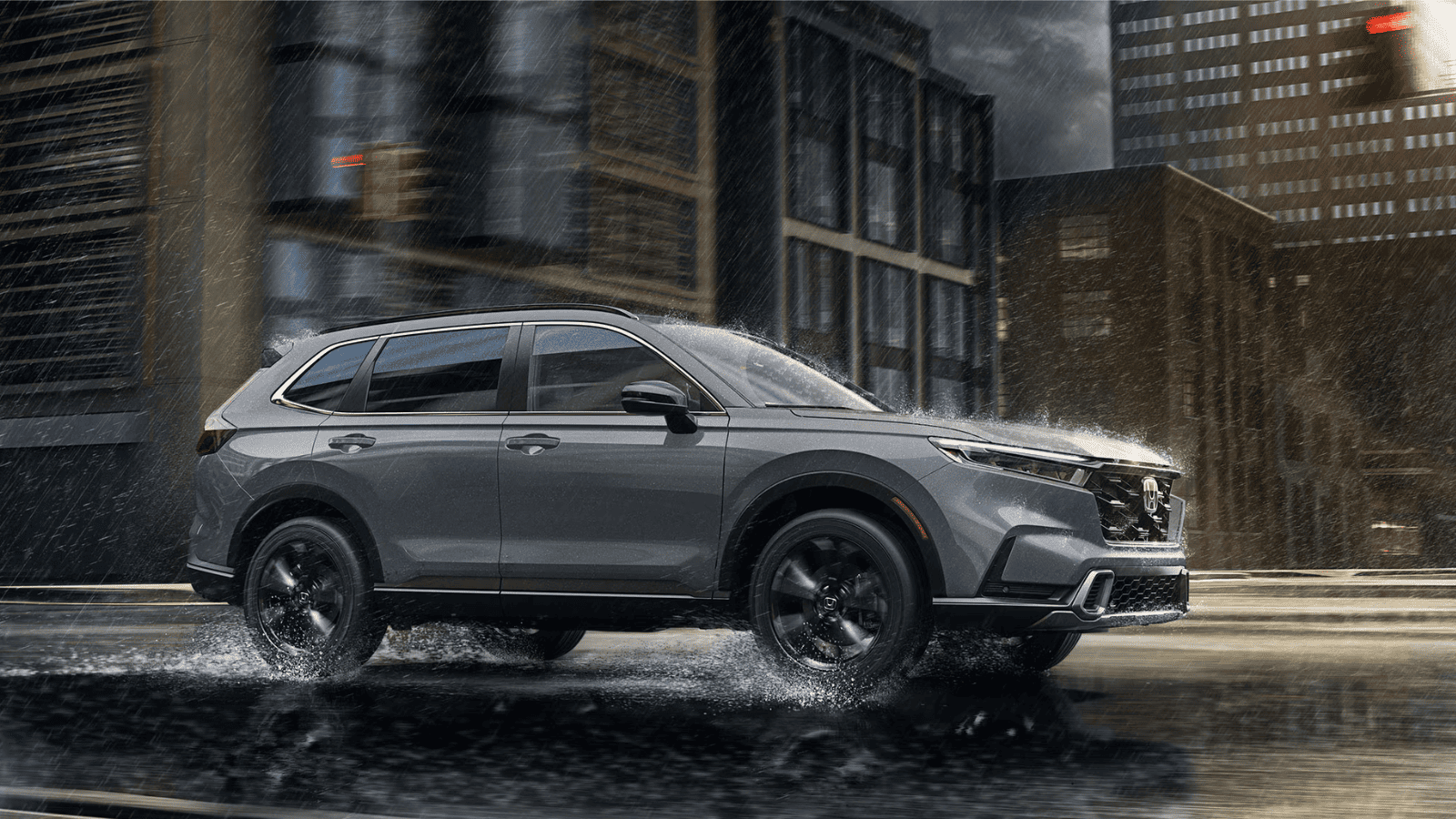
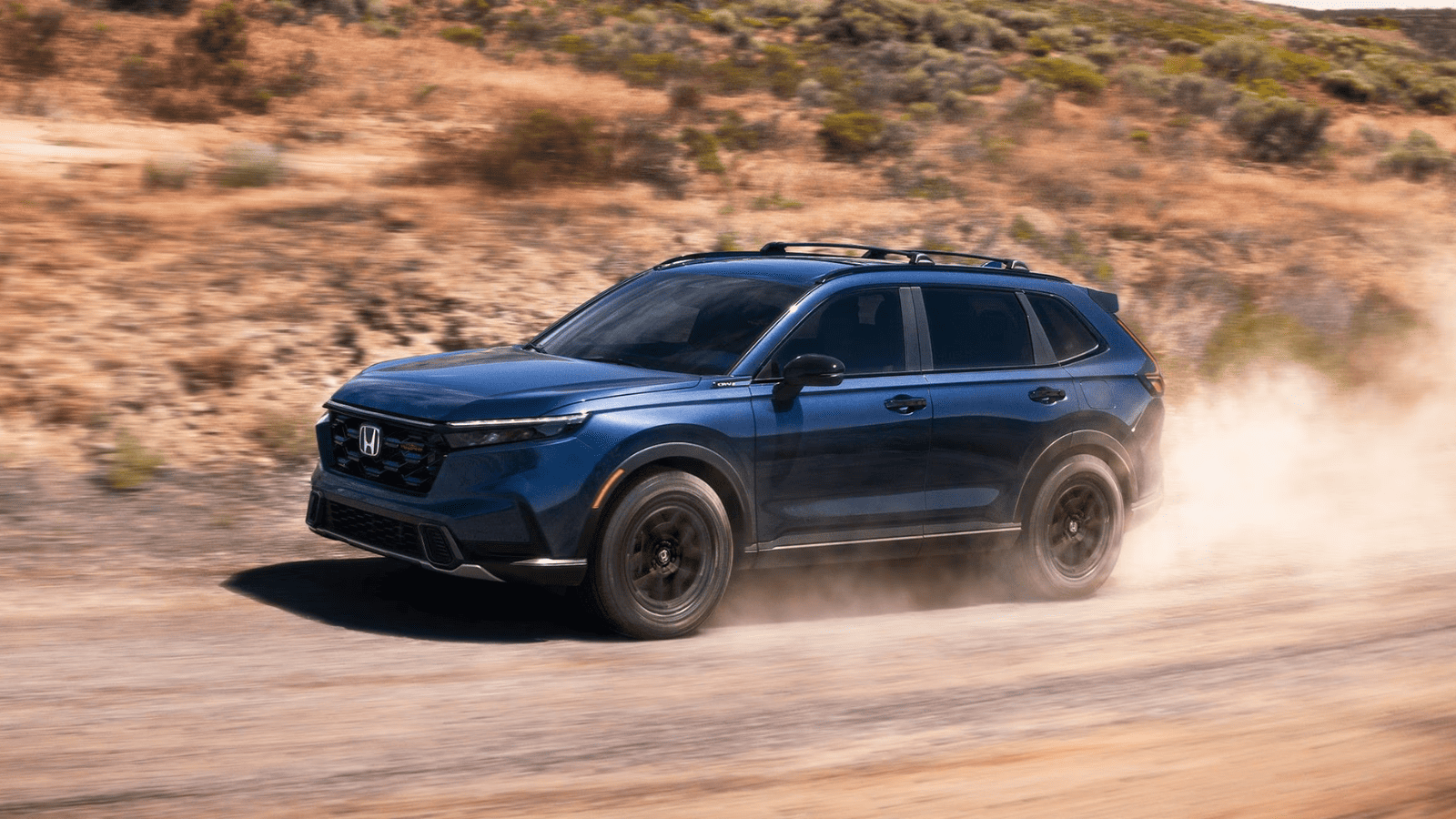
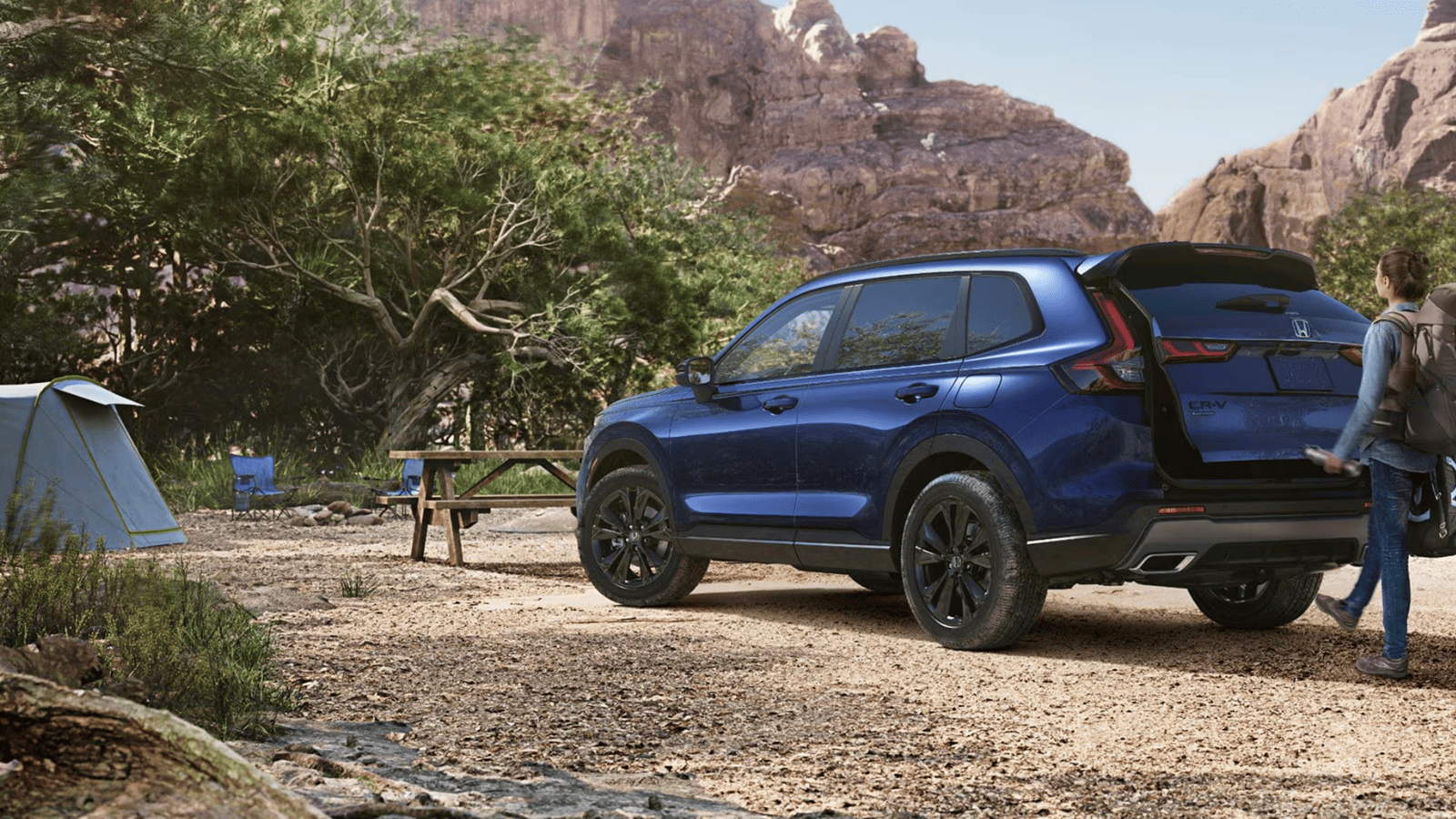
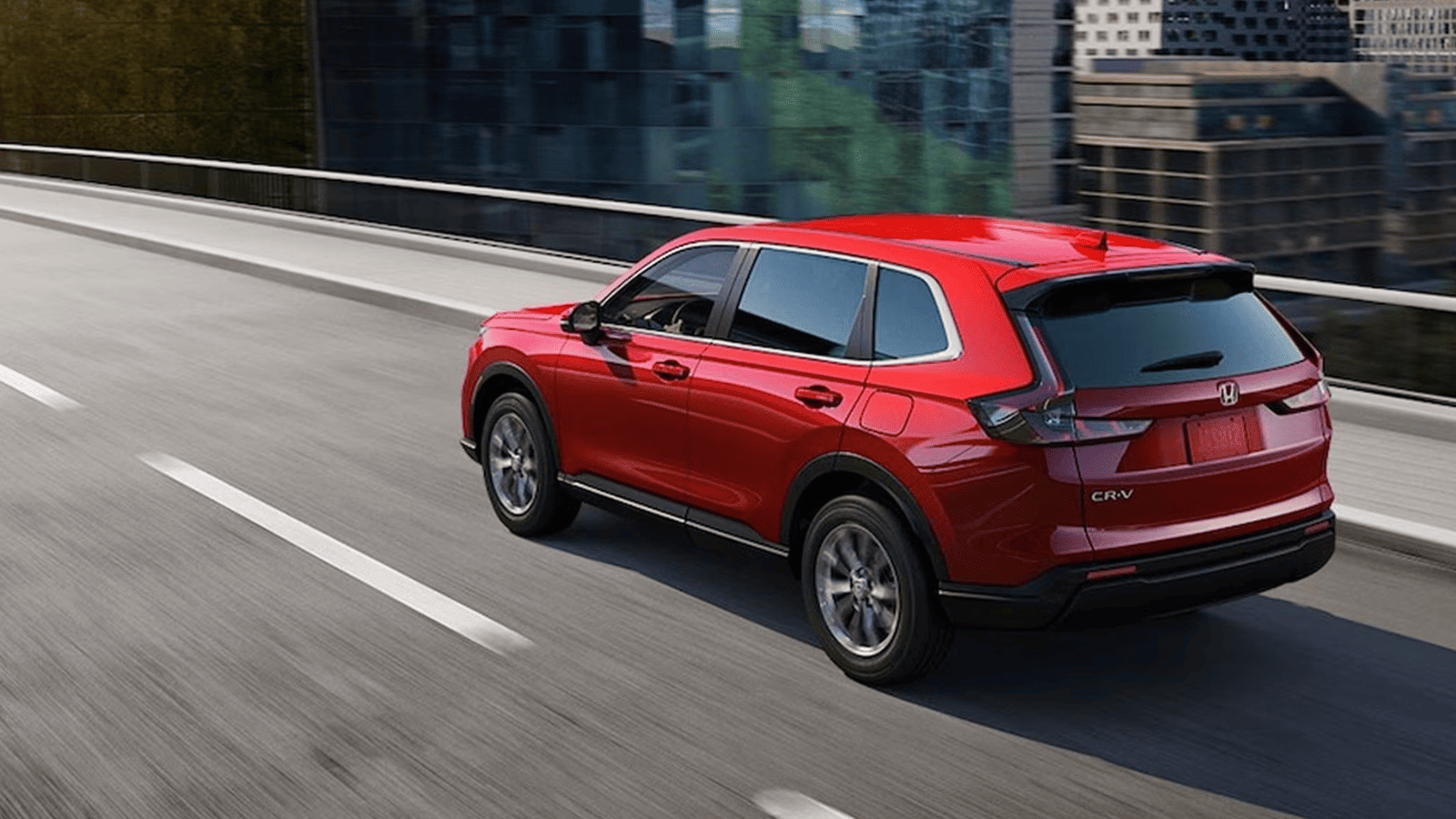

The hybrid versions make the strongest case for most buyers. They are quicker in normal driving and can return up to 40 mpg combined with front-wheel drive. The gas models cost less and offer more cargo space, which makes them a smart choice for buyers who regularly carry bulky gear or want the lowest purchase price.
WheelPedia Rating: 8.7/10
The Honda CR-V earns an 8.7/10 WheelPedia Rating for its spacious cabin, useful cargo area, efficient hybrid options, comfortable ride, and strong overall ownership appeal.
It is not the best compact SUV for towing, serious off-road use, or buyers who want a third row. Its current IIHS updated moderate-overlap test result is also an important safety consideration.
| Rating Category | Score | Weight |
| Safety | 8.2/10 | 20% |
| Reliability and ownership | 8.8/10 | 15% |
| Performance and driving | 8.5/10 | 15% |
| Comfort and practicality | 9.2/10 | 15% |
| Efficiency | 9.0/10 | 15% |
| Features and technology | 8.5/10 | 10% |
| Price and value | 8.5/10 | 10% |
| Overall WheelPedia Rating | 8.7/10 | — |
See how we rate cars for the full methodology.
Key Highlights
- Starts from $30,920 MSRP in the US.
- Seven trims, including three gas models and four hybrid models.
- Gas models use a 190-hp turbocharged 1.5-liter engine.
- Hybrid models use a 204-hp two-motor hybrid system.
- Front-wheel drive is standard on most trims; all-wheel drive is available or standard, depending on trim.
- The CR-V Hybrid returns up to 43 mpg city, 36 mpg highway, and 40 mpg combined in front-wheel-drive form.
- Gas models offer up to 39.3 cubic feet of cargo space behind the rear seats and 76.5 cubic feet with them folded.
- Hybrid trims have 36.3 cubic feet behind the rear seats and 71.8 cubic feet with them folded.
- Rear-seat legroom measures 41.0 inches.
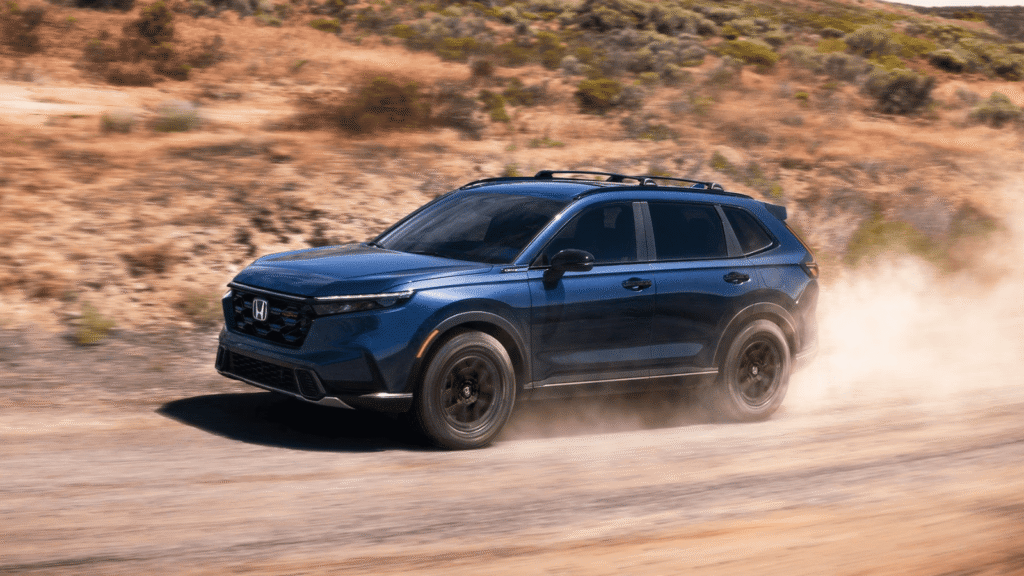
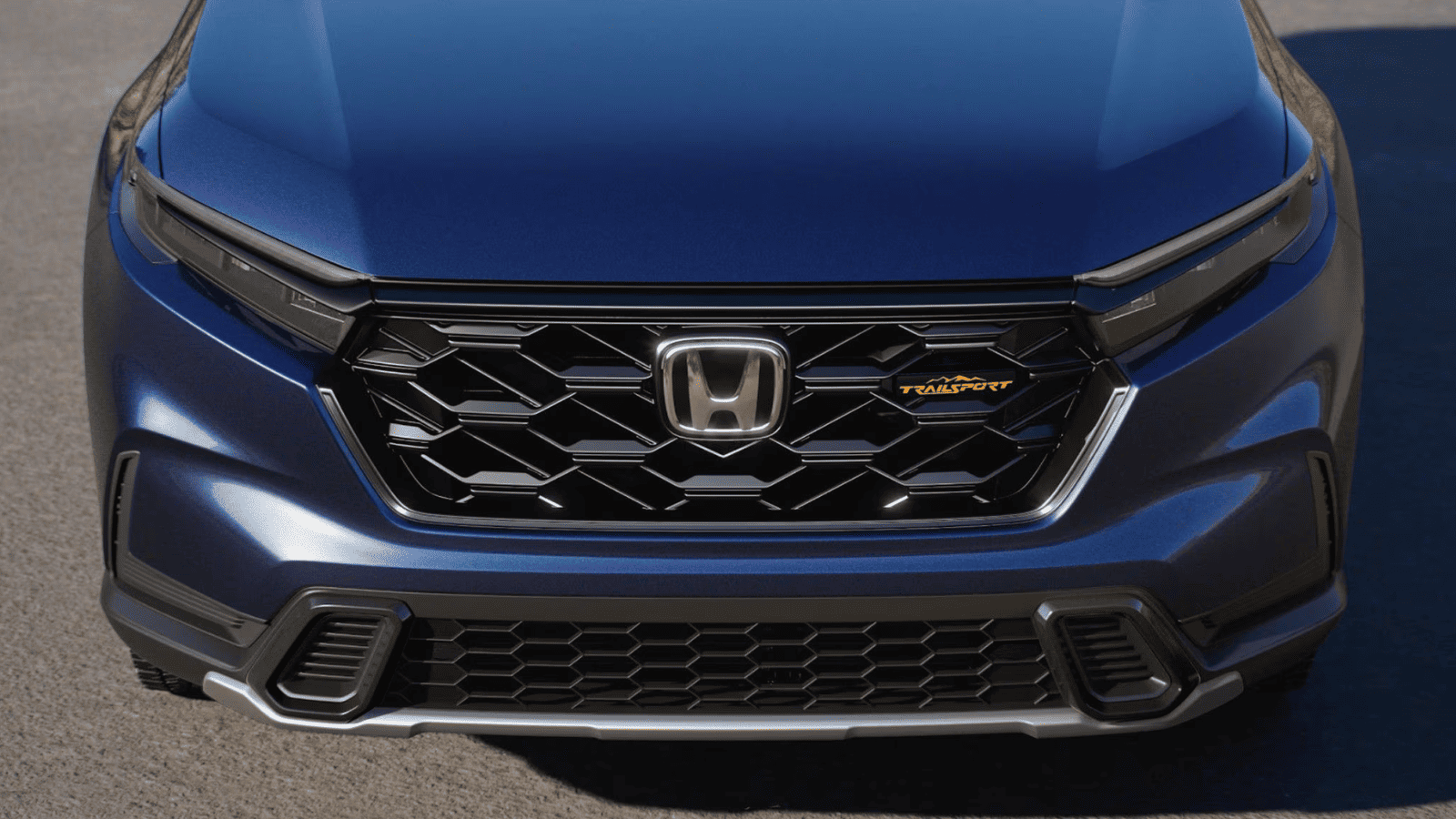
- A new TrailSport Hybrid adds all-terrain tires, standard AWD, and more rugged styling.
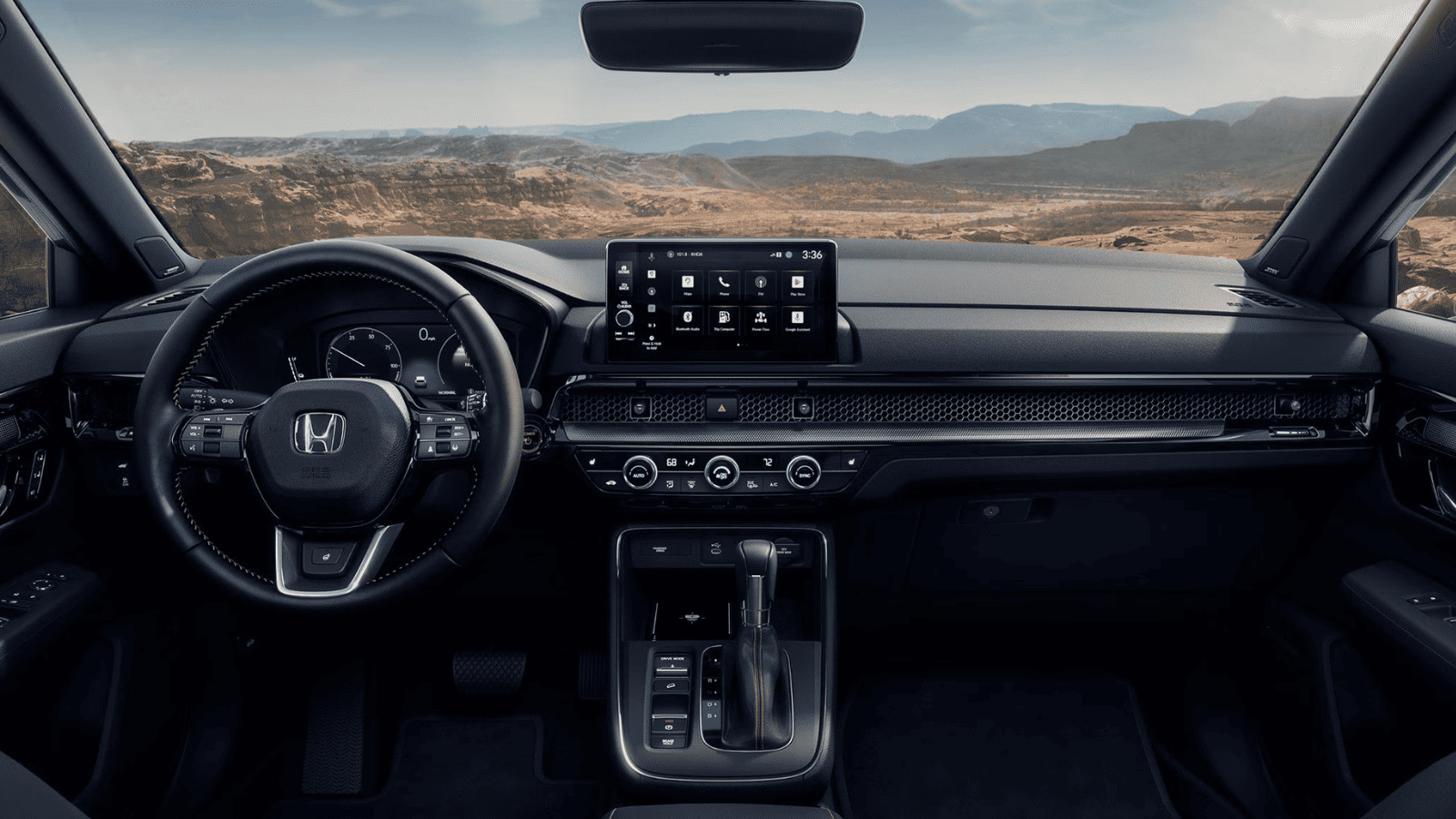
- Every trim includes a 9-inch touchscreen, wireless Apple CarPlay, wireless Android Auto, and a wireless phone charger.
- Best for small families, commuters, pet owners, and buyers who want SUV practicality without moving into a larger vehicle.
Quick Specifications
| Specification | Honda CR-V |
| Vehicle type | Compact SUV |
| Seating capacity | 5 |
| Gas engine | 1.5L turbocharged four-cylinder |
| Gas output | 190 hp / 179 lb-ft |
| Hybrid system | 2.0L two-motor hybrid |
| Hybrid output | 204 total system hp |
| Hybrid motor torque | 247 lb-ft |
| Transmission | CVT on gas models; direct-drive hybrid system on hybrid models |
| Drivetrain | FWD standard on selected trims; AWD available or standard |
| Best fuel economy | 43 / 36 / 40 mpg city/highway/combined |
| Maximum cargo capacity | 76.5 cu. ft. |
| Maximum towing capacity | 1,500 lbs |
| Length | 184.8 in. |
| Width | 73.5 in. |
| Wheelbase | 106.3 in. |
Expert Tip
The Sport Hybrid is the best CR-V for most buyers. It costs only slightly more than the gas-powered EX-L, but adds the stronger 204-hp hybrid powertrain and up to 40 mpg combined. Choose the EX-L instead if maximum cargo space and leather seats matter more than fuel savings.
About the Honda CR-V
The CR-V is one of the most practical vehicles in Honda’s lineup. It is easy to park, but it still gives adults genuine rear-seat room and enough cargo capacity for strollers, groceries, luggage, sports equipment, and many home-improvement runs.
Honda gives buyers two clear choices. The gas-powered LX, EX, and EX-L use a turbocharged 1.5-liter engine and have the largest cargo area. The Sport Hybrid, TrailSport Hybrid, Sport-L Hybrid, and Sport Touring Hybrid use Honda’s two-motor hybrid system, which offers stronger low-speed response and better fuel economy.
The hybrid is especially useful for city drivers. It feels more responsive when pulling away from a stop, spends more time running quietly on electric power in lower-speed traffic, and uses much less fuel than the gas model.
Price and Trims
These US starting prices exclude destination charges, taxes, registration, accessories, and dealer pricing. Check the current Honda CR-V lineup before buying because prices and equipment can change.
| Trim | Starting MSRP | Powertrain | Drivetrain | Best For |
| LX | $30,920 | 190-hp turbo gas | FWD; AWD available | Lowest upfront price |
| EX | $33,150 | 190-hp turbo gas | FWD; AWD available | Gas buyers wanting more comfort features |
| Sport Hybrid | $35,630 | 204-hp hybrid | FWD; AWD available | Best overall value |
| EX-L | $35,400 | 190-hp turbo gas | FWD; AWD available | Maximum cargo space and leather seating |
| TrailSport Hybrid | $38,800 | 204-hp hybrid | AWD standard | Light trails, snow, and rugged styling |
| Sport-L Hybrid | $38,725 | 204-hp hybrid | FWD; AWD available | Hybrid efficiency with leather seating |
| Sport Touring Hybrid | $42,550 | 204-hp hybrid | AWD standard | Best technology and premium features |
Which Honda CR-V Trim Is Best?
- Best on a tighter budget: CR-V LX
- Best gas-powered trim: CR-V EX-L
- Best overall: CR-V Sport Hybrid
- Best for rougher roads and light trails: CR-V TrailSport Hybrid
- Best with leather and hybrid power: CR-V Sport-L Hybrid
- Best for premium features: CR-V Sport Touring Hybrid
The LX is better equipped than many base compact SUVs. It includes a 9-inch touchscreen, wireless Apple CarPlay and Android Auto, a wireless phone charger, Honda Sensing, and two front USB-C ports. It is the choice for buyers who want a CR-V at the lowest possible price.
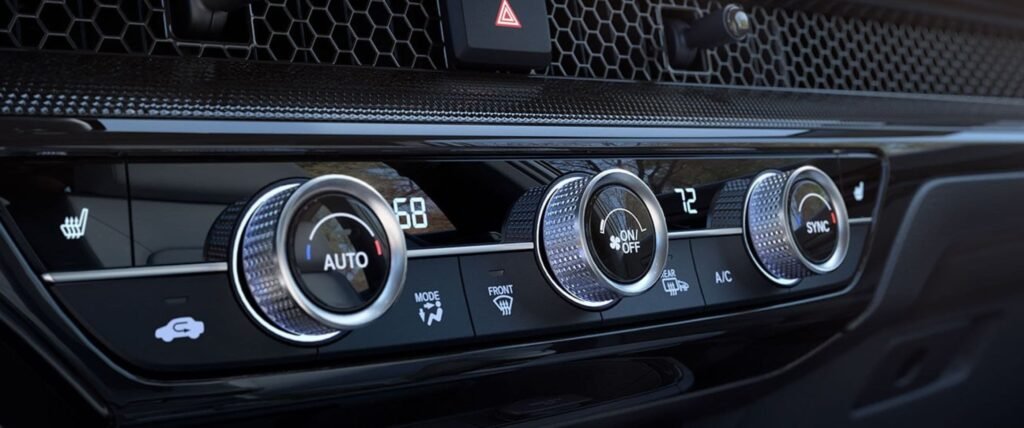
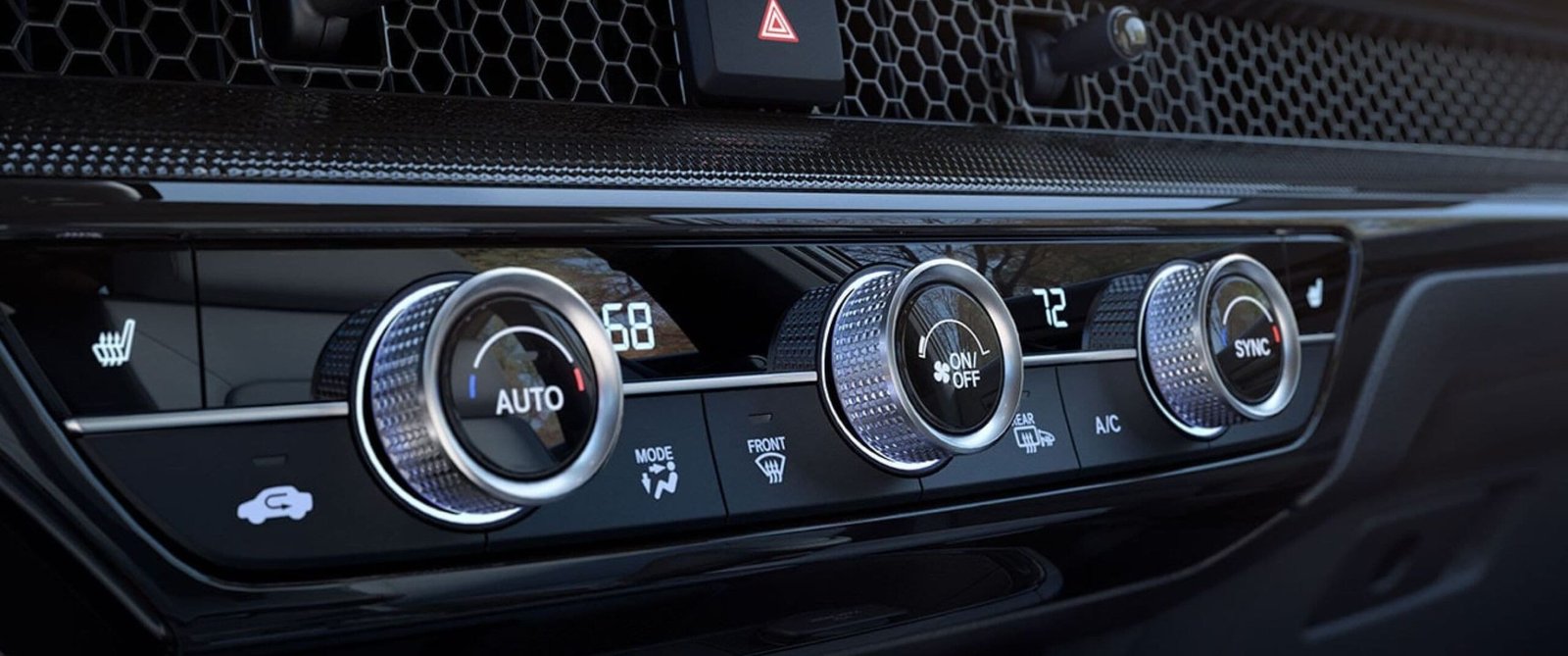
The EX adds features that matter in daily use, including heated front seats, a power moonroof, dual-zone automatic climate control, Smart Entry, Walk Away Auto Lock, and a power-adjustable driver’s seat.
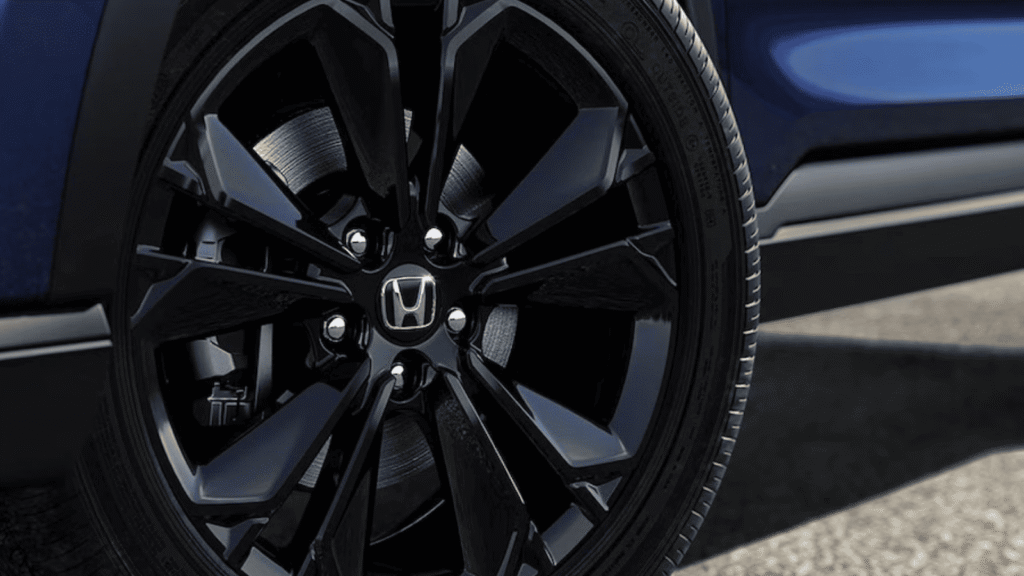
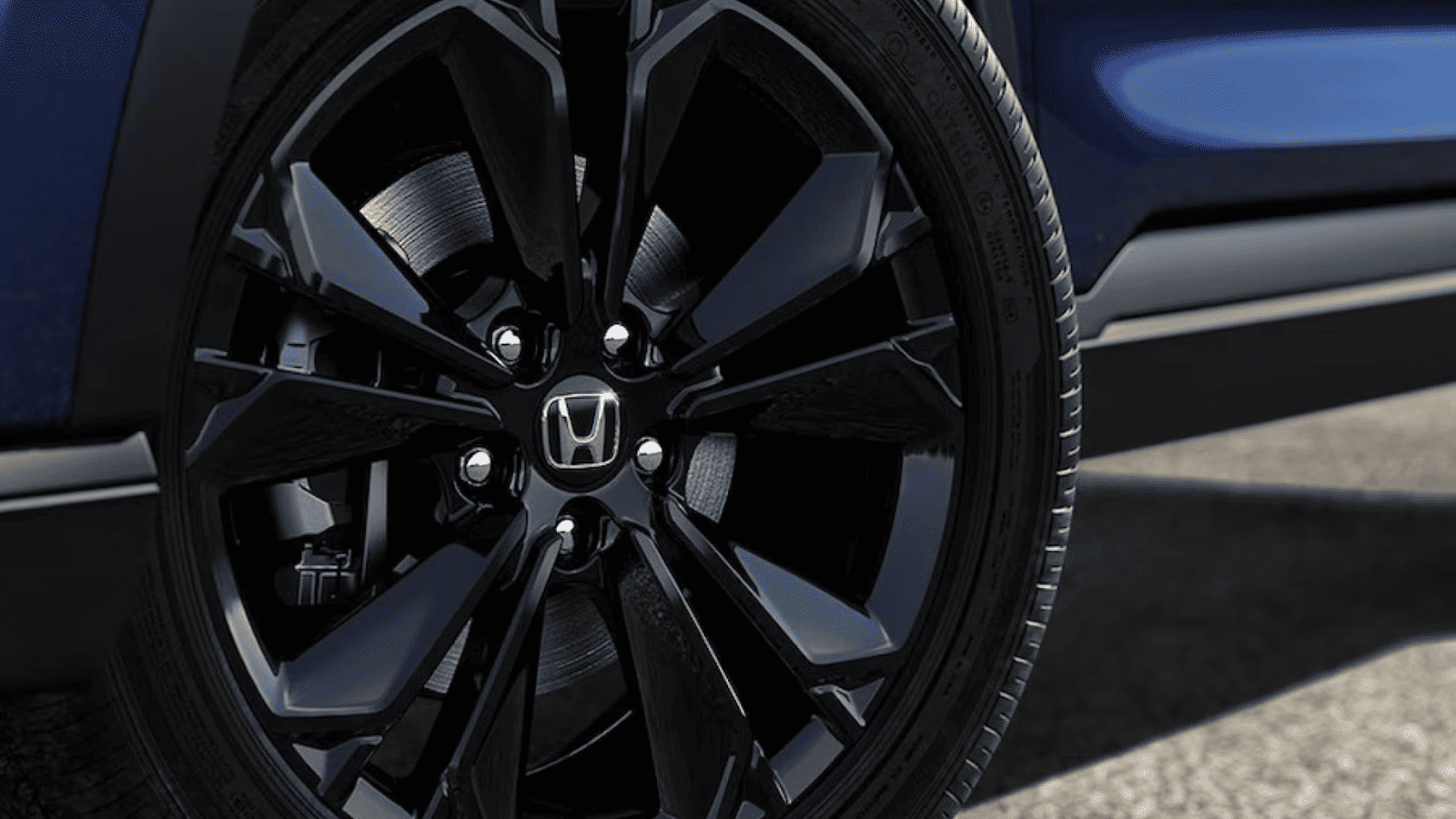
The Sport Hybrid is the trim most buyers should start with. It uses the 204-hp hybrid system, adds sportier styling, 18-inch gloss-black wheels, roof rails, and better everyday acceleration than the gas models.
The EX-L is the strongest gas model. It has leather-trimmed seats, a power tailgate, parking sensors, a power passenger seat, driver-seat memory, and the larger gas-model cargo area.
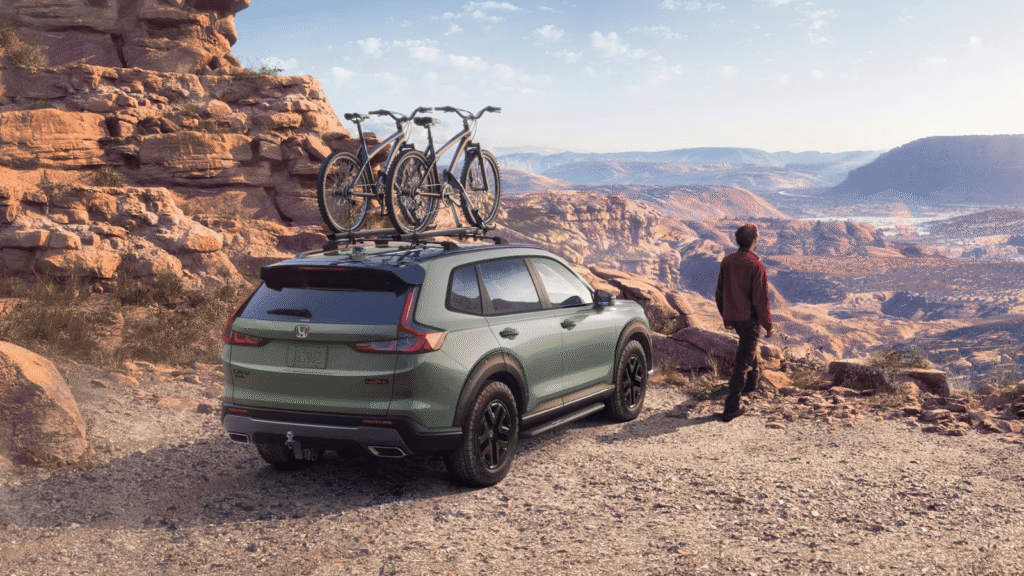
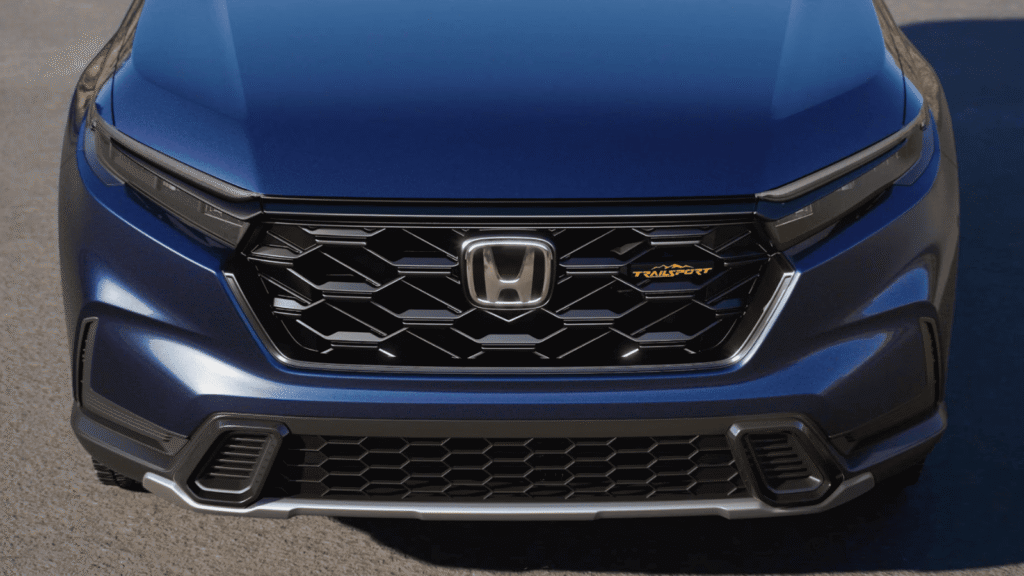
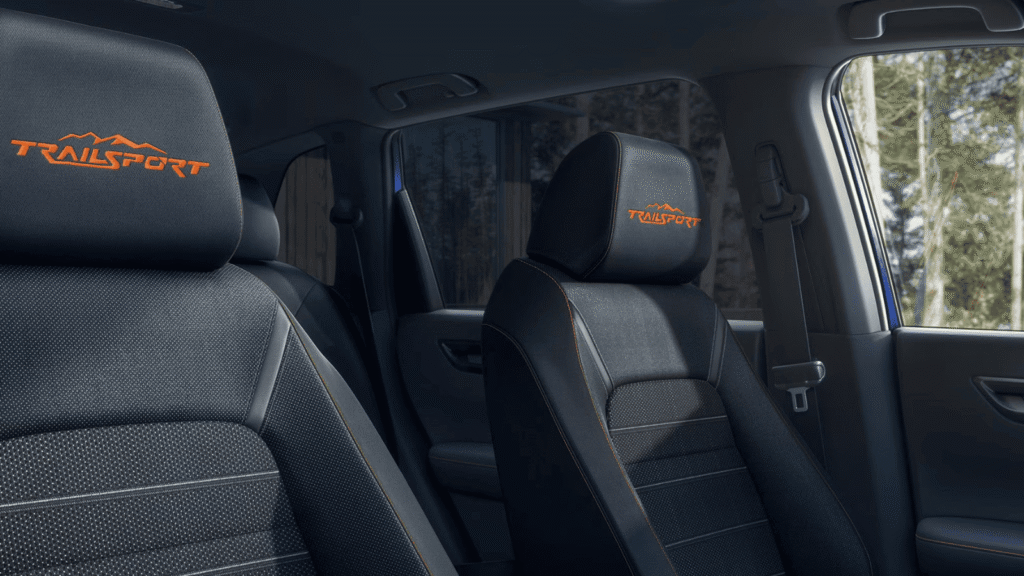
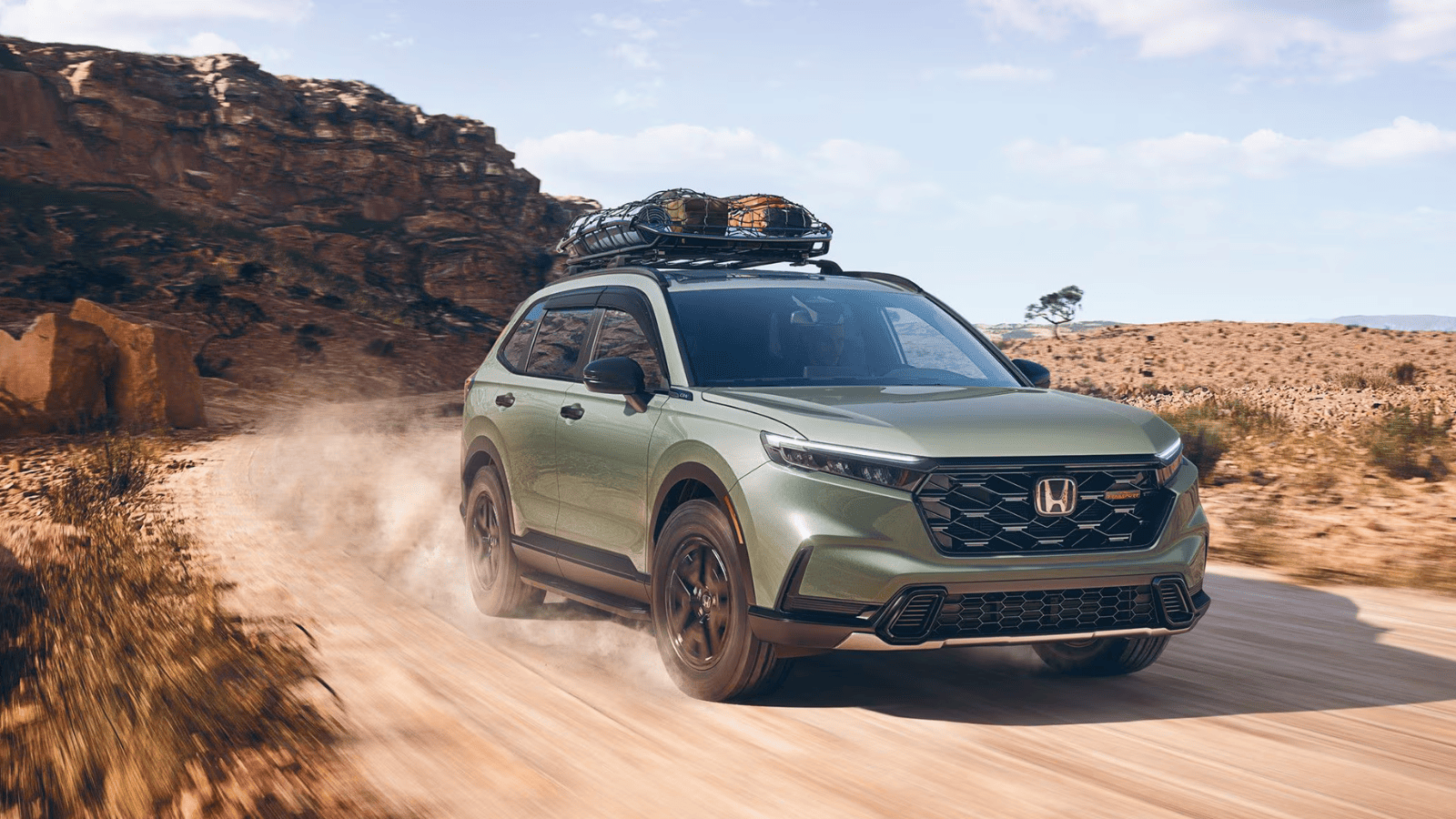
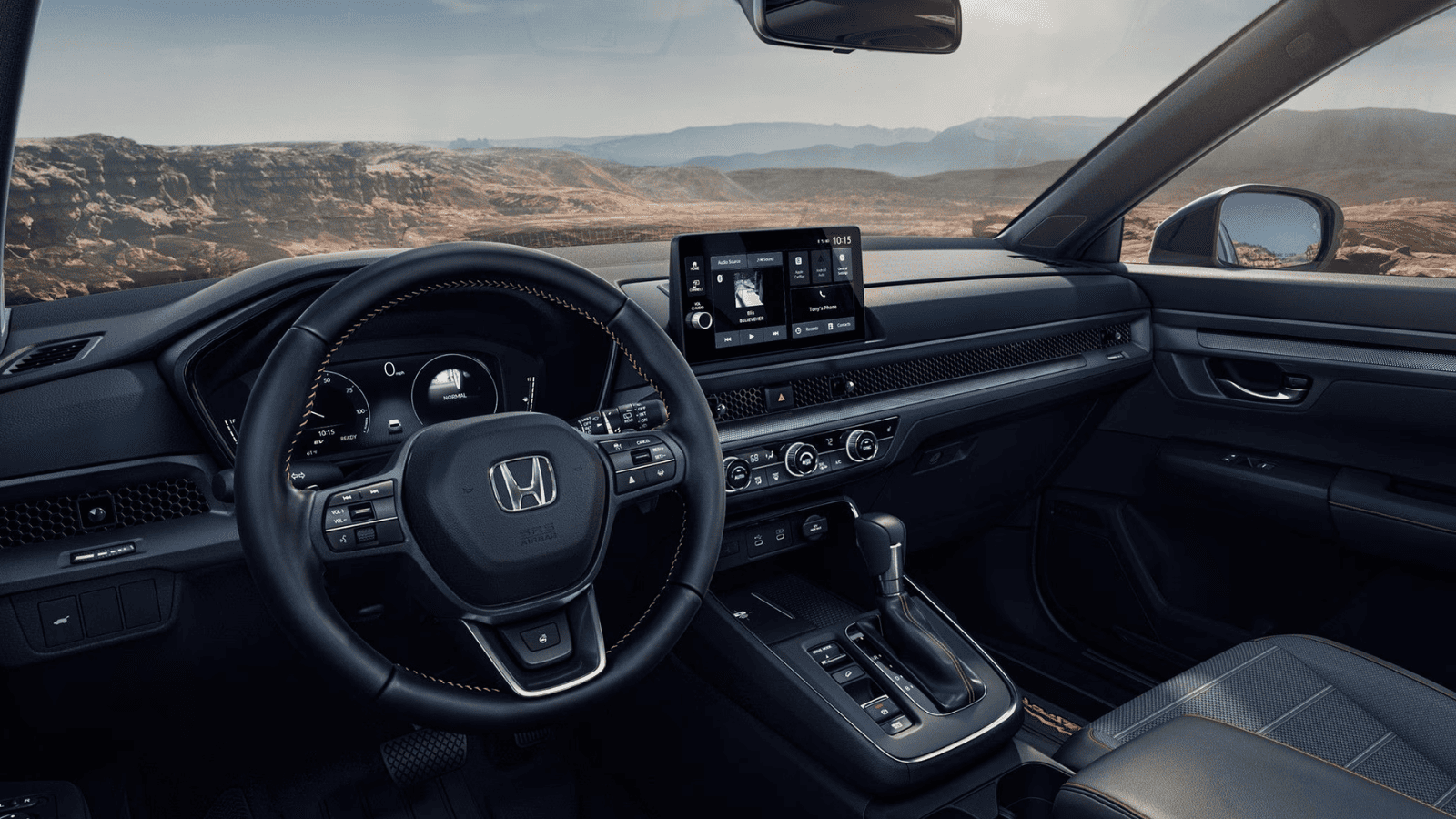
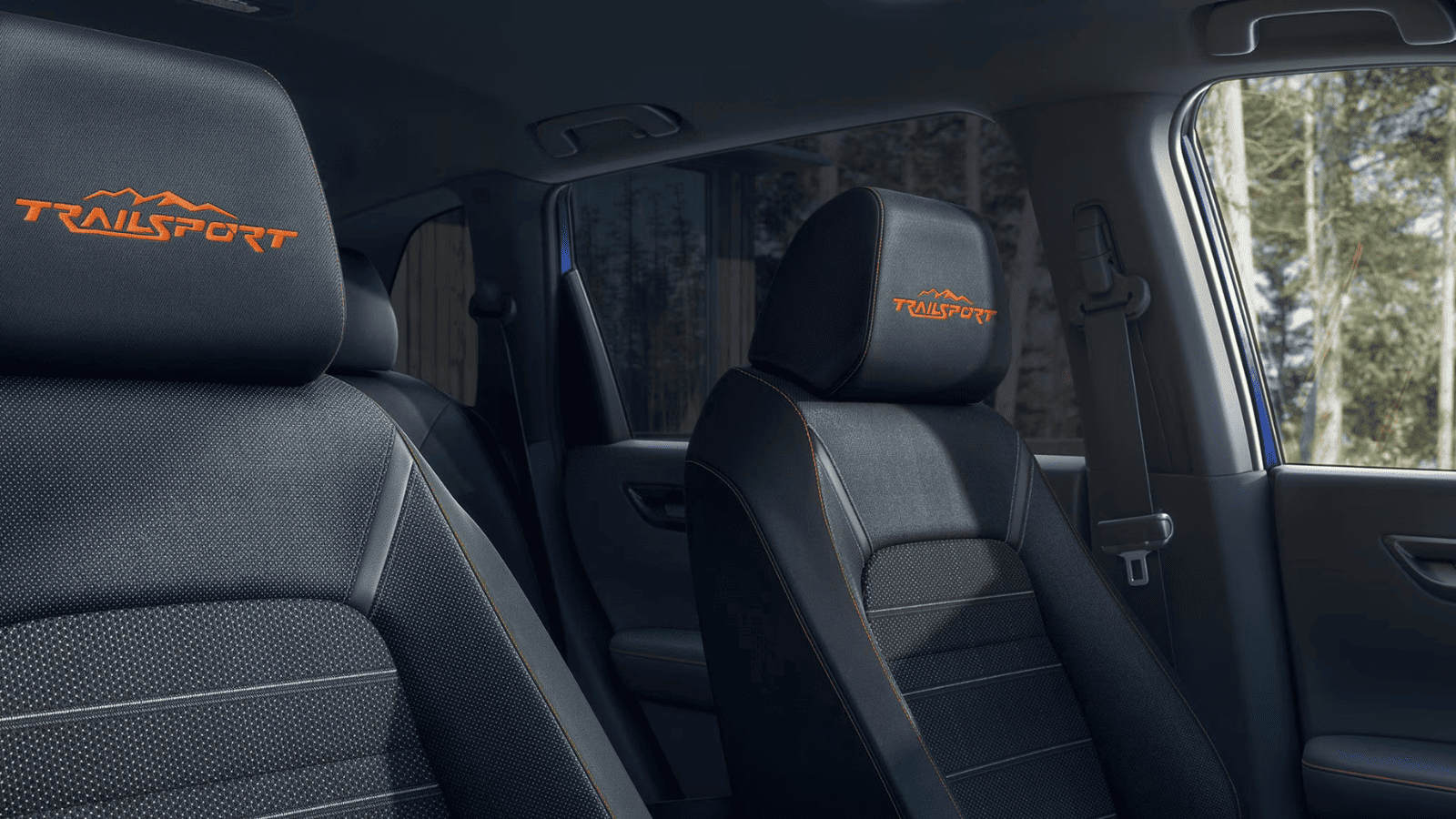
The TrailSport Hybrid is not a serious off-road SUV, but it is the best CR-V for unpaved roads, snowy conditions, and buyers who like a more rugged look. It comes with standard AWD, 18-inch all-terrain tires, TrailSport-specific styling, and orange interior accents.
The Sport-L Hybrid is for buyers who want the Sport Hybrid powertrain with leather seating, a power tailgate, and a more upscale cabin.
The Sport Touring Hybrid adds standard AWD, Google built-in, a 10.2-inch digital instrument cluster, a Bose 12-speaker audio system, hands-free power tailgate, heated steering wheel, and more advanced parking assistance.
Engine, Hybrid System, and Performance
| Model | Powertrain | Output | Transmission |
| CR-V LX / EX / EX-L | 1.5L turbocharged four-cylinder | 190 hp / 179 lb-ft | CVT |
| CR-V Sport Hybrid | 2.0L two-motor hybrid | 204 total system hp | Direct-drive hybrid system |
| CR-V TrailSport Hybrid | 2.0L two-motor hybrid | 204 total system hp | Direct-drive hybrid system |
| CR-V Sport-L Hybrid | 2.0L two-motor hybrid | 204 total system hp | Direct-drive hybrid system |
| CR-V Sport Touring Hybrid | 2.0L two-motor hybrid | 204 total system hp | Direct-drive hybrid system |
The 190-hp turbocharged gas engine is adequate for normal driving. Its 179 lb-ft of torque arrives early, helping it feel responsive around town. But under hard acceleration, the CVT can make the engine sound louder than buyers may expect.
The 204-hp hybrid system is the better powertrain. Its electric motor produces up to 247 lb-ft of torque, so it feels stronger when joining fast traffic, passing slower vehicles, or carrying passengers and cargo.
Every CR-V uses regular unleaded gasoline. Honda offers Real Time AWD with Intelligent Control on most trims. It is standard on the TrailSport Hybrid and Sport Touring Hybrid.
0–60 MPH Performance
Honda does not publish official 0–60 mph times for the CR-V.
Independent testing has recorded the CR-V Hybrid at roughly 7.1 seconds to 60 mph, while a gas-powered CR-V takes around 8.1 seconds. Neither is designed as a performance SUV, but the hybrid’s stronger response makes it the easier vehicle to drive confidently in everyday traffic.
Driving Experience
The CR-V is tuned for comfort, visibility, and easy daily driving. Its steering is light enough for parking lots but stable at highway speeds, and its suspension handles rough roads well for a compact SUV.
The hybrid versions feel smoother in urban traffic because electric power can move the vehicle at lower speeds. They also include Sport mode and deceleration selectors, allowing the driver to adjust the strength of regenerative braking.
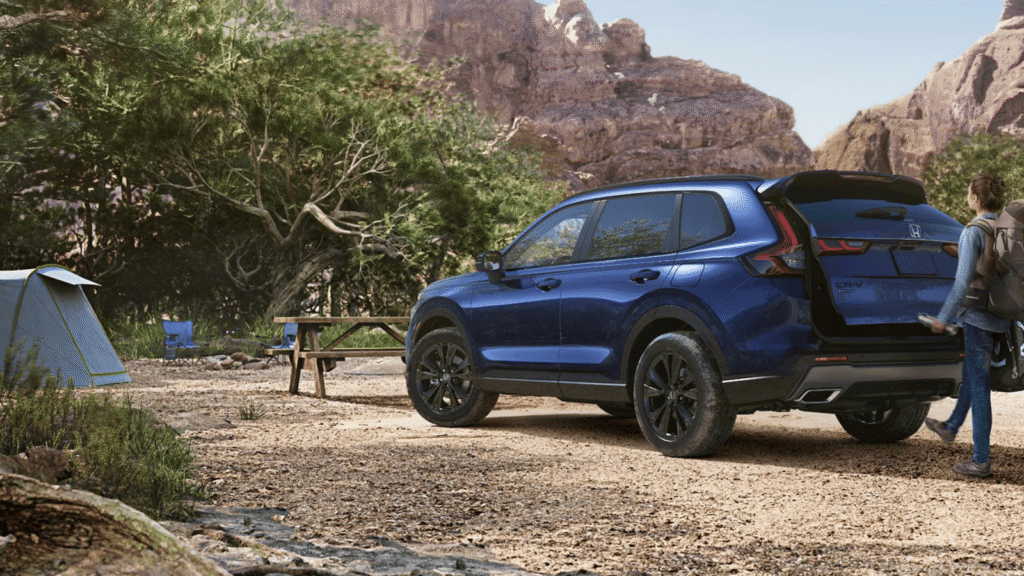
The TrailSport Hybrid has all-terrain tires and standard AWD, but buyers should set realistic expectations. It is suitable for gravel roads, campsite access roads, snow, and mild uneven terrain. It does not have low-range gearing, major underbody protection, or the clearance needed for serious off-roading.
Fuel Economy
| Trim and Drivetrain | EPA-Estimated City / Highway / Combined |
| LX / EX / EX-L FWD | 28 / 33 / 30 mpg |
| LX / EX / EX-L AWD | 27 / 31 / 29 mpg |
| Sport Hybrid FWD | 43 / 36 / 40 mpg |
| Sport Hybrid AWD | 40 / 34 / 37 mpg |
| TrailSport Hybrid AWD | 38 / 33 / 35 mpg |
| Sport-L Hybrid FWD | 43 / 36 / 40 mpg |
| Sport-L Hybrid AWD | 40 / 34 / 37 mpg |
| Sport Touring Hybrid AWD | 40 / 34 / 37 mpg |
The front-wheel-drive Sport Hybrid and Sport-L Hybrid are the most efficient CR-V models. They use about 300 gallons of fuel over 12,000 miles, compared with roughly 400 gallons for a 30-mpg gas CR-V.
That 100-gallon annual difference can add up quickly for commuters, rideshare drivers, and families who cover a lot of miles.
Interior, Comfort, and Technology
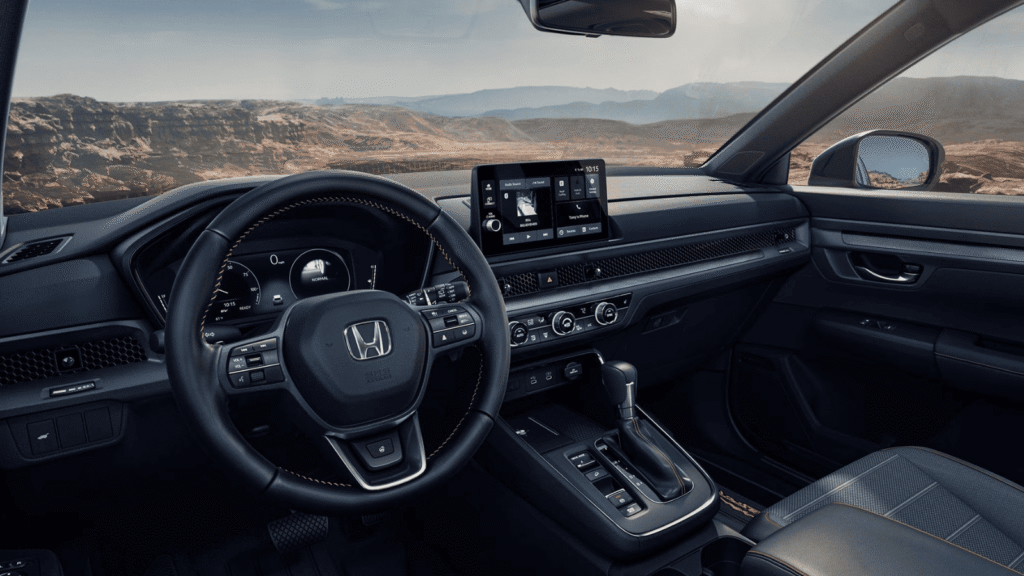
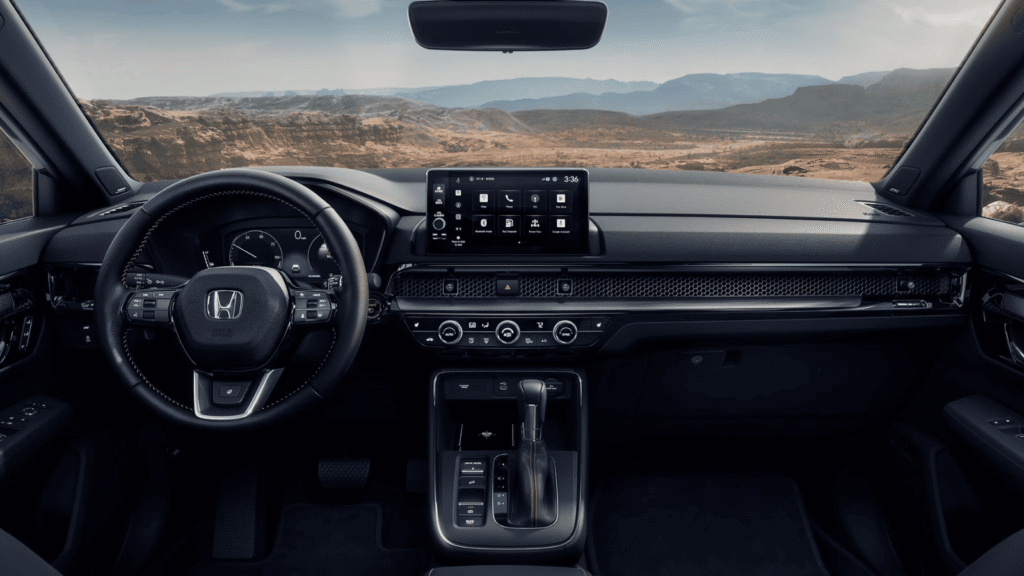
The CR-V has a clean, simple cabin with good outward visibility, useful storage, and controls that are easy to understand. It is not as flashy as some newer rivals, but it is designed around daily usability.
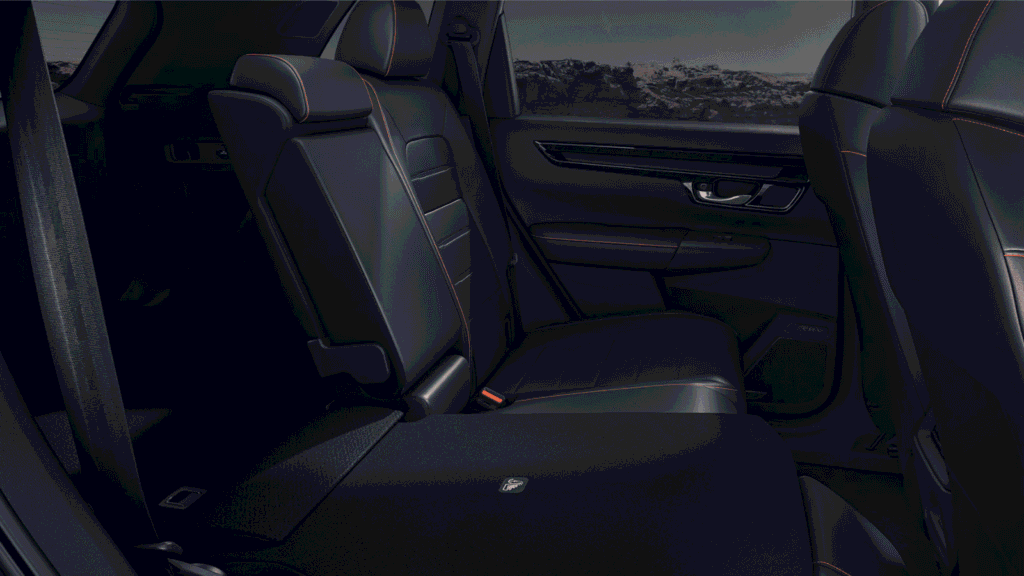
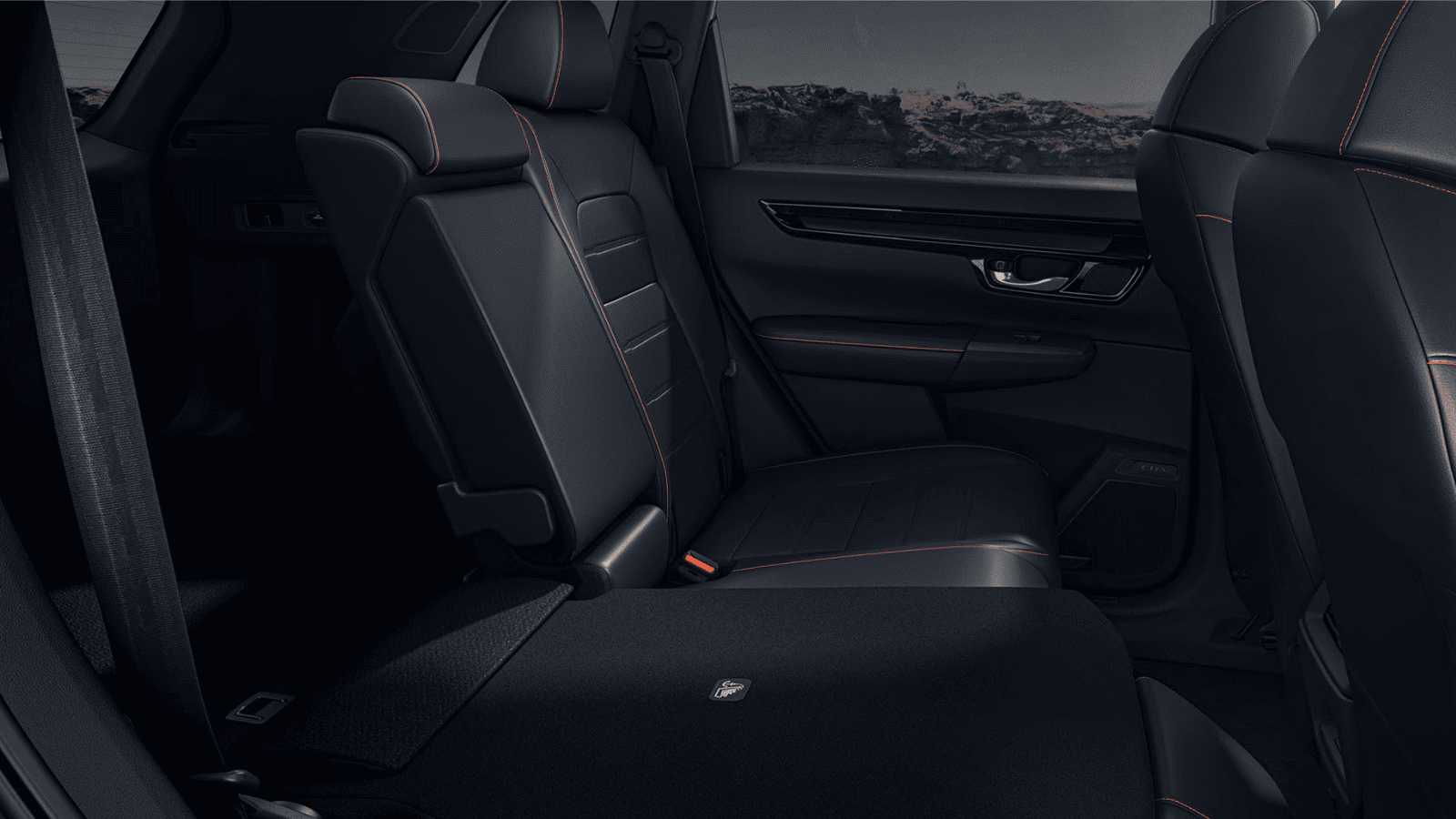
The rear seat is one of the CR-V’s biggest strengths. Adults can sit comfortably in the second row, and the 41.0 inches of rear legroom gives it an advantage over many compact SUVs.
Standard and available features include:
- 9-inch touchscreen
- Wireless Apple CarPlay and Android Auto
- Wireless phone charger
- 7-inch or available 10.2-inch digital instrument display
- Two front USB-C ports
- Rear USB-C charging ports on EX and above
- Heated front seats
- Dual-zone automatic climate control
- One-touch power moonroof
- Leather-trimmed seats
- Power-adjustable front seats
- Driver-seat memory
- Google built-in on Sport Touring Hybrid
- Bose 12-speaker premium audio system
- Heated steering wheel
- HondaLink connected services
Every trim includes wireless smartphone connectivity, a feature many rivals still reserve for more expensive models. The Sport Touring Hybrid is the only trim for buyers who want the Bose audio system and Google built-in.
Dimensions, Cargo, and Practicality
| Dimension | Measurement |
| Length | 184.8 in. |
| Width | 73.5 in. |
| Height | 66.2–66.5 in. |
| Wheelbase | 106.3 in. |
| Front legroom | 41.3 in. |
| Rear legroom | 41.0 in. |
| Front shoulder room | 57.9 in. |
| Rear shoulder room | 55.9 in. |
| Gas cargo space behind rear seats | 39.3 cu. ft. |
| Gas maximum cargo space | 76.5 cu. ft. |
| Hybrid cargo space behind rear seats | 36.3 cu. ft. |
| Hybrid maximum cargo space | 71.8 cu. ft. |
| Seating | 5 passengers |
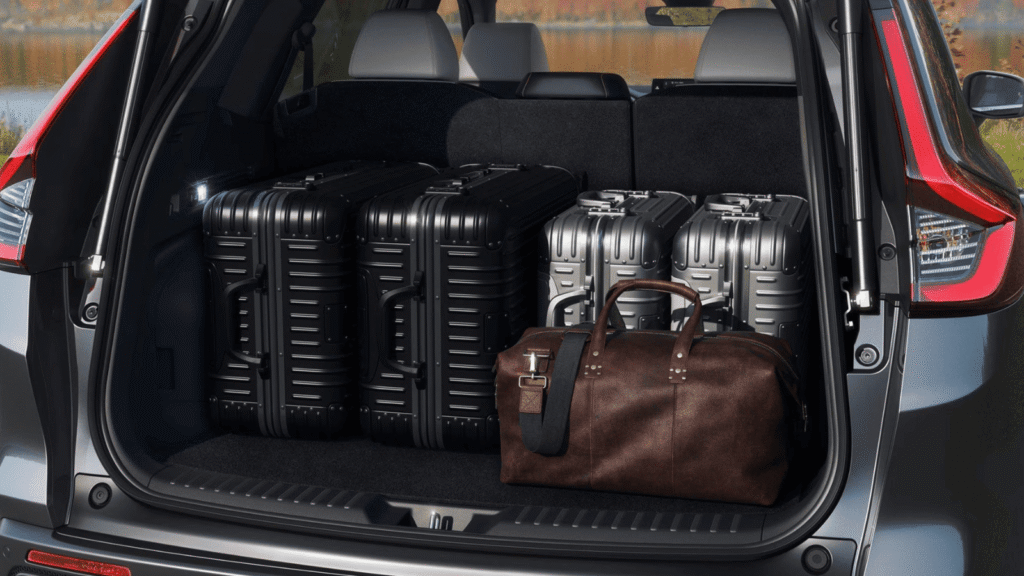
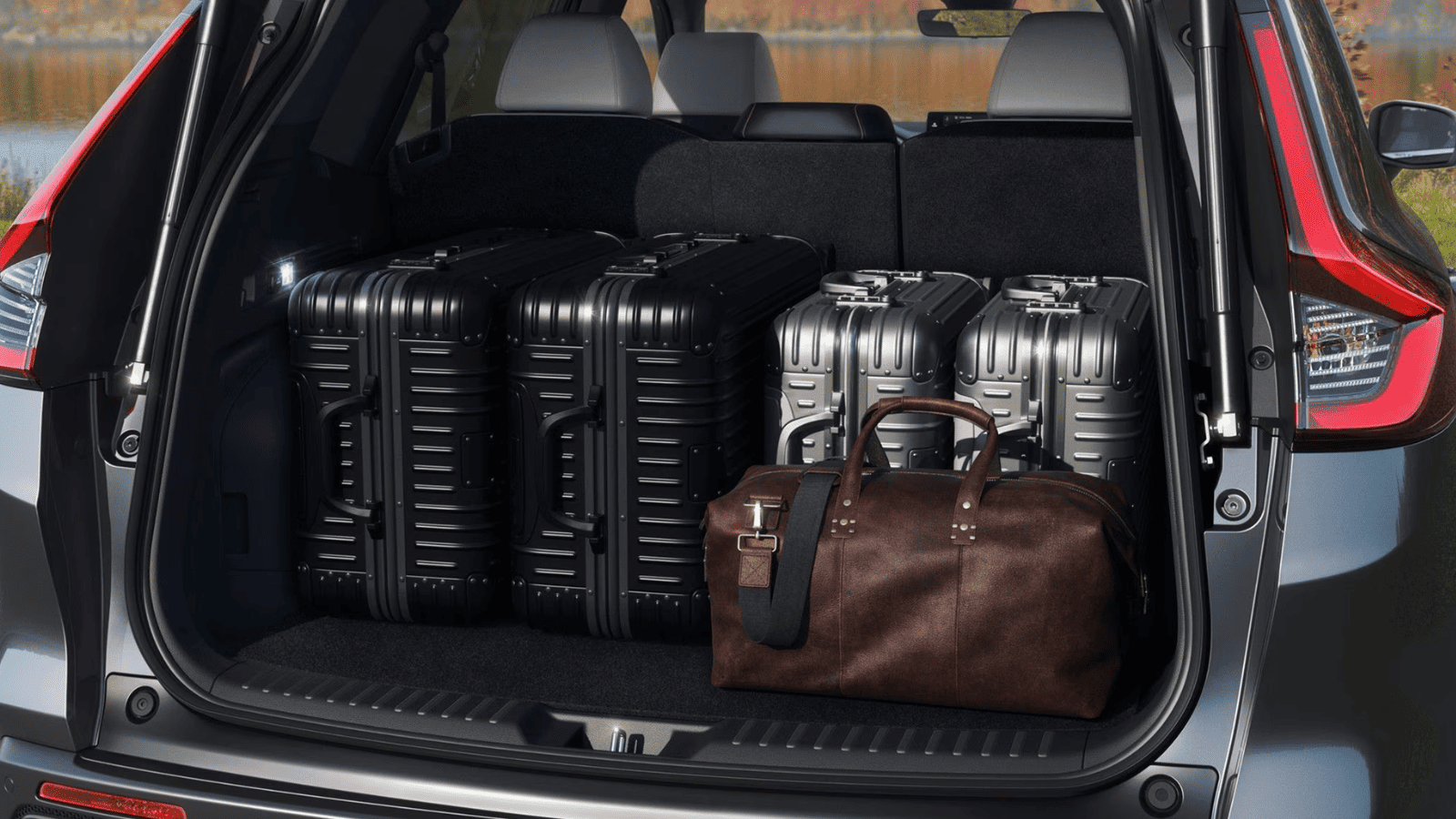
The gas-powered CR-V models have more cargo space because the hybrid battery takes up some room below the cargo floor. The difference is not huge, but buyers who often carry bulky boxes, large pet crates, or sports equipment should keep it in mind.
Every CR-V has a reclining, folding 60/40-split rear seat. The load floor is low and wide, making it easier to load grocery bags, suitcases, strollers, and heavier items.
Towing Capacity
| Powertrain | Maximum Towing Capacity |
| Gas CR-V | 1,500 lbs |
| Hybrid CR-V | 1,000 lbs |
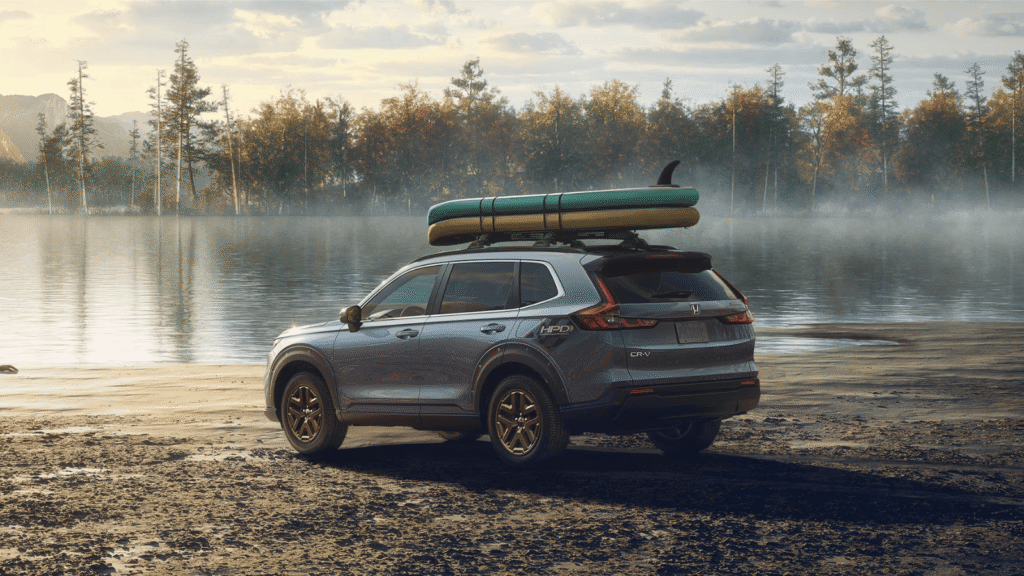
The CR-V can handle a small utility trailer, lightweight watercraft, or a small camping trailer within its rating. It is not the right SUV for frequent or heavy towing. Buyers who tow regularly should consider a larger SUV or pickup.
Exterior Design
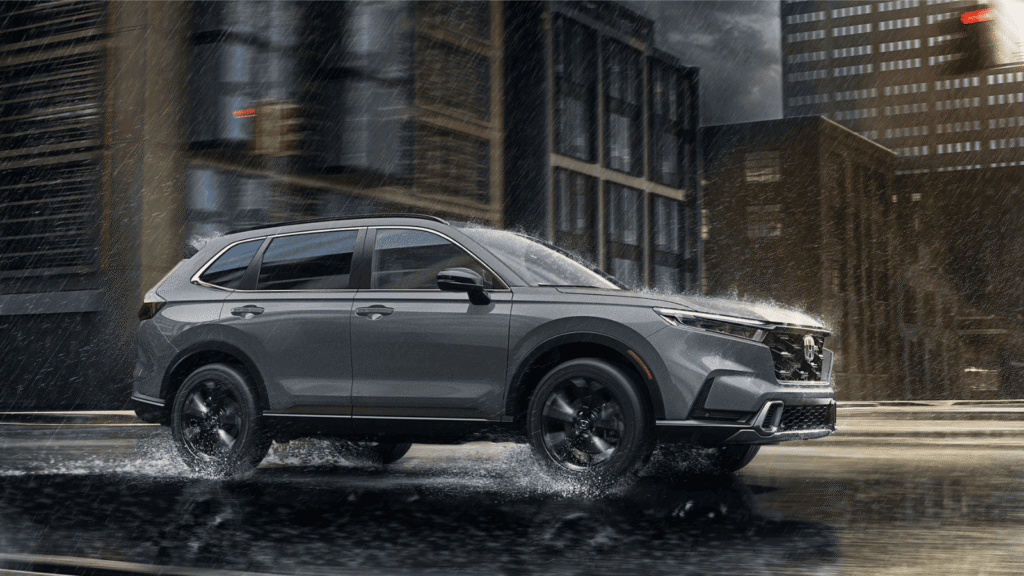
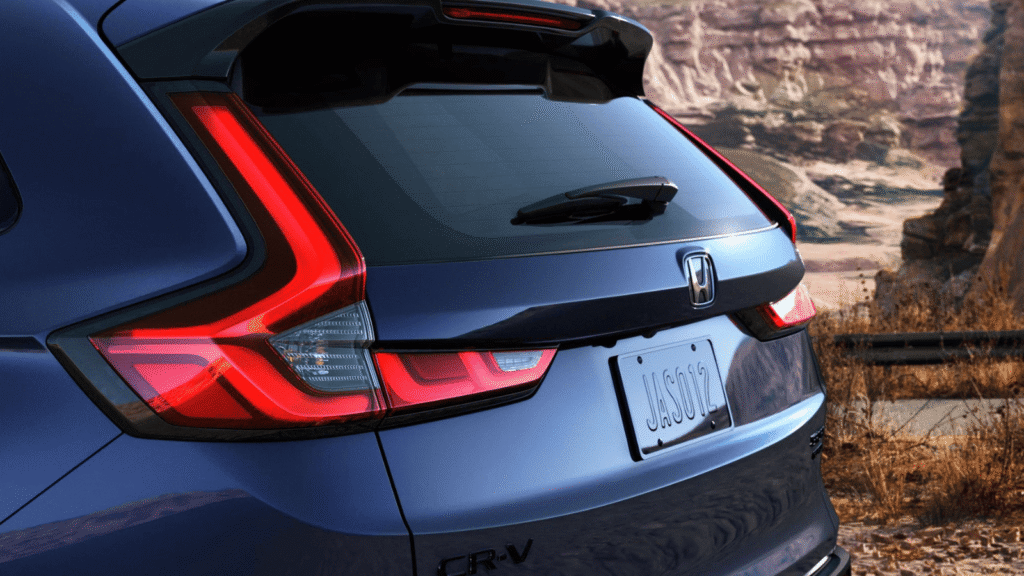
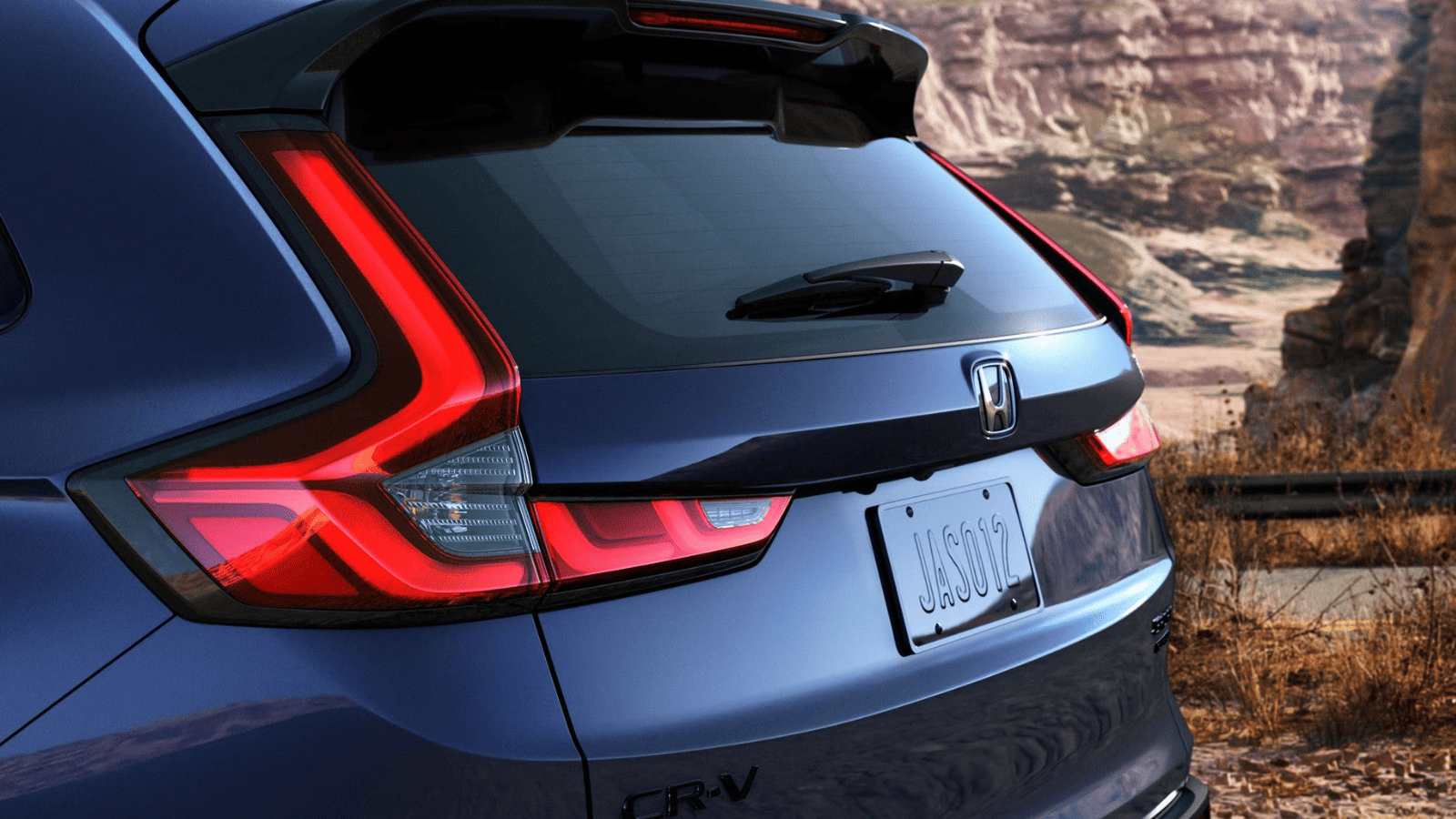
The CR-V has a clean, upright shape that gives it a more mature look than some compact SUVs. LED headlights and vertical LED taillights are standard, while hybrid trims add more black exterior details and gloss-black wheels.
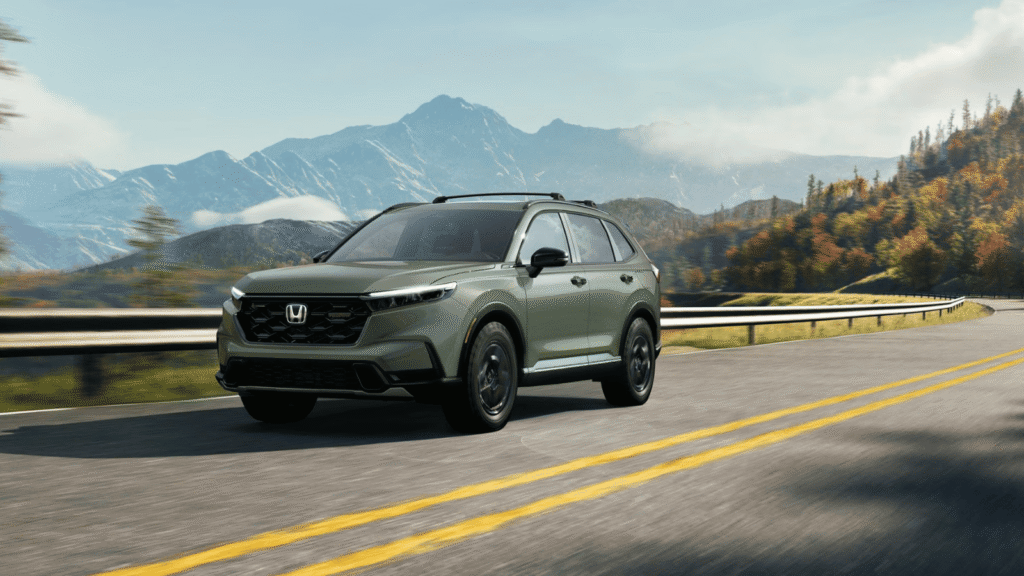
The TrailSport Hybrid is the most distinctive version. It gets shark-gray wheels, all-terrain tires, black roof rails, TrailSport badges, and an available Ash Green Metallic paint color.
The Sport Touring Hybrid sits at the top of the range with 19-inch gloss-black wheels, a hands-free power tailgate, and a platinum-accented lower front bumper.
Safety Features and Ratings
Every CR-V includes Honda Sensing and a broad set of safety and driver-assistance features:
- Forward Collision Warning
- Collision Mitigation Braking System
- Road Departure Mitigation System
- Lane Departure Warning
- Lane Keeping Assist System
- Adaptive Cruise Control with Low-Speed Follow
- Traffic Jam Assist
- Traffic Sign Recognition
- Automatic high beams
- Driver Attention Monitor
- Rearview camera with dynamic guidelines
- Rear-seat reminder
- Seat-belt reminders for all seating positions
- Vehicle Stability Assist and traction control
- Front, knee, front-side, rear-side, and side-curtain airbags
- LATCH anchors and tether anchors across the second row
Honda also lists blind-spot monitoring and cross-traffic monitoring across the current CR-V lineup. Parking sensors are available on higher trims, while low-speed braking control is reserved for the Sport Touring Hybrid.
The 2026 CR-V earns Good ratings from the IIHS in the small-overlap front test, updated side-impact test, and headlight evaluation. However, its result in the IIHS updated moderate-overlap front test is Poor, due in part to rear-passenger protection and restraint performance. That result means the CR-V does not currently qualify for an IIHS Top Safety Pick award.
Read the current IIHS CR-V rating for the complete test details.
Reliability, Warranty, and Ownership
The CR-V has a strong reputation as a practical long-term family vehicle. Honda has a large dealer network, parts availability is generally good, and the CR-V’s mainstream mechanical design should make ownership straightforward compared with a luxury SUV.
The gas models are simpler mechanically and offer more cargo space. The hybrid models add a battery and electric-drive components, but they also reduce fuel use and provide better daily response.
| Coverage | Length |
| New vehicle limited warranty | 3 years / 36,000 miles |
| Powertrain limited warranty | 5 years / 60,000 miles |
| Rust perforation warranty | 5 years / unlimited miles |
| Roadside assistance | 3 years / 36,000 miles |
| Honda Service Pass maintenance | 1 year / 12,000 miles |
| Hybrid battery coverage | 8 years / 100,000 miles* |
*Hybrid battery coverage can differ in states with separate emissions rules. Confirm coverage for your location before buying.
For used CR-V buyers, check maintenance records, tire wear, brake condition, infotainment functions, driver-assistance systems, and open recalls by VIN number. On hybrid models, ask for a pre-purchase inspection and confirm the remaining hybrid-system warranty.
Pros and Cons
What We Like
- Spacious rear seat with 41.0 inches of legroom
- Large cargo area, especially on gas models
- Strong, efficient 204-hp hybrid powertrain
- Up to 40 mpg combined
- Available all-wheel drive
- Comfortable ride and easy everyday manners
- Standard wireless Apple CarPlay and Android Auto
- Standard wireless phone charger
- Clear controls and excellent visibility
- TrailSport Hybrid gives buyers a more rugged option
- Strong overall ownership appeal
What We Don’t Like
- Current IIHS updated moderate-overlap front rating is Poor
- Hybrid models have less cargo space than gas versions
- No third-row seating
- Limited towing ability
- Gas-model CVT can get loud under hard acceleration
- TrailSport Hybrid is not designed for serious off-roading
- Sport Touring Hybrid is expensive for a compact SUV
- No plug-in hybrid CR-V is currently offered nationwide
Competitors
The CR-V is one of the strongest compact SUV choices, but different rivals make more sense for certain buyers.
- The Toyota RAV4 is worth considering for buyers who want a hybrid-focused lineup and available all-wheel drive.
- The Mazda CX-5 is a better fit for drivers who place more value on a premium-feeling cabin and sharper handling.
- The Subaru Forester is a strong alternative for buyers who want standard all-wheel drive and better visibility.
- The Hyundai Tucson offers a more distinctive design and a spacious interior.
- The Kia Sportage is worth a look for buyers who want a roomy cabin and a long warranty.
- The Volkswagen Tiguan may suit buyers who want a more modern cabin and available third-row seating in selected versions.
Related Content
Compare the CR-V with the Honda Civic Hatchback if you are deciding whether a compact SUV’s extra space is worth the higher purchase price and lower fuel economy.
The Honda Accord is a better fit for buyers who want a larger back seat and hybrid efficiency but prefer a sedan.
Before financing a CR-V, read how car financing works and consider getting car loan pre approval before you visit a dealership.
You can also browse all current Honda models.
Should You Buy the Honda CR-V?
Buy the Honda CR-V if you want a compact SUV that is comfortable, practical, easy to drive, and large enough for everyday family use. It is especially strong for commuters, couples with young children, pet owners, and drivers who need more cargo capacity than a sedan can provide.
Choose the LX if upfront cost is your main concern. Choose the EX-L if you want the gas model’s larger cargo area, leather seats, and extra convenience equipment.
For most buyers, the Sport Hybrid is the best choice. It adds meaningful power and much better fuel economy without moving too far above the price of a well-equipped gas CR-V.
Choose the TrailSport Hybrid if you deal with snow, gravel roads, campsites, or simply prefer its rugged look. Choose the Sport Touring Hybrid if you want the full technology package, Bose audio, Google built-in, and standard AWD.
Skip the CR-V if you need a third row, regularly tow more than 1,500 pounds, want a serious off-road SUV, or place the highest priority on the latest IIHS rear-passenger crash-test performance.
FAQs
How much does the Honda CR-V cost?
The Honda CR-V starts from $30,920 MSRP in the US. Hybrid models start from $35,630 MSRP. Final pricing varies with destination charges, taxes, registration, accessories, and dealer pricing.
Is the Honda CR-V available as a hybrid?
Yes. The Sport Hybrid, TrailSport Hybrid, Sport-L Hybrid, and Sport Touring Hybrid use a 204-hp two-motor hybrid powertrain.
What fuel economy does the Honda CR-V get?
The gas-powered CR-V is rated at up to 28 mpg city, 33 mpg highway, and 30 mpg combined. The most efficient hybrid versions are rated at 43 mpg city, 36 mpg highway, and 40 mpg combined.
Is the CR-V Hybrid faster than the gas CR-V?
Yes. Independent testing places the CR-V Hybrid at about 7.1 seconds from 0–60 mph, compared with about 8.1 seconds for the gas CR-V.
Does the Honda CR-V have all-wheel drive?
Yes. All-wheel drive is available on the LX, EX, Sport Hybrid, EX-L, and Sport-L Hybrid. It is standard on the TrailSport Hybrid and Sport Touring Hybrid.
Which Honda CR-V trim has the most cargo space?
The gas-powered LX, EX, and EX-L have the most cargo space: 39.3 cubic feet behind the rear seats and 76.5 cubic feet with the seats folded.
How much can the Honda CR-V tow?
Gas-powered CR-V models can tow up to 1,500 pounds. Hybrid models can tow up to 1,000 pounds when properly equipped.
Is the Honda CR-V good for families?
Yes. The CR-V seats five, has generous rear-seat legroom, a large cargo area, LATCH anchors across the second row, and standard driver-assistance features. Families needing three rows should consider a larger SUV or minivan.
Does every Honda CR-V have Apple CarPlay and Android Auto?
Yes. Every current CR-V includes wireless Apple CarPlay and wireless Android Auto.
Does every Honda CR-V have a wireless phone charger?
Yes. A wireless phone charger is standard on every current CR-V trim.
Is the Honda CR-V safe?
The CR-V has a broad set of standard safety features and earns Good IIHS ratings in several crashworthiness and crash-avoidance categories. However, its current updated moderate-overlap front IIHS rating is Poor, which buyers should consider alongside other safety information.
Does the Honda CR-V require premium fuel?
No. Every Honda CR-V uses regular unleaded gasoline.
Final Verdict
The Honda CR-V remains one of the most well-rounded compact SUVs for buyers who value space, comfort, fuel economy, and everyday usability. Its rear seat is genuinely roomy, its cargo area is useful, and its cabin design makes daily driving uncomplicated.
The gas models are sensible for buyers who want the lowest price or the largest cargo area. But the hybrid models are where the CR-V is most compelling. The Sport Hybrid is the strongest all-around choice because it offers better acceleration and up to 40 mpg combined without pushing into top-trim pricing.
The CR-V is not ideal for heavy towing, serious trails, or buyers who need three rows. Its current IIHS updated moderate-overlap front rating also deserves careful attention. But for a buyer who wants a capable five-passenger SUV with strong practical value, the CR-V remains one of the class’s most complete options.
Prices, specifications, fuel-economy ratings, safety ratings, warranties, and feature availability can change by trim, model year, and market. Verify the exact vehicle before purchase.