
Kia Sportage Plug-in Hybrid: Price, Range, Review
The Kia Sportage Plug-in Hybrid is a compact SUV for drivers who can charge at home or work and want to complete many short trips on electric power. It combines a turbocharged gasoline engine, electric motor, and larger battery for 268 horsepower, standard all-wheel drive, and a Kia-estimated 34 miles of electric-only driving range.


It is more expensive than both the gasoline Sportage and the regular Kia Sportage Hybrid, but it is also quicker and can use far less gasoline when charged regularly. It makes the most sense for drivers whose usual daily travel fits within its electric range.
The important condition is charging. If you cannot plug in often, the standard Sportage Hybrid is usually the better-value choice.
WheelPedia Rating: 8.4/10
The Kia Sportage Plug-in Hybrid earns an 8.4/10 WheelPedia Rating for its useful electric range, strong acceleration, standard AWD, roomy cabin, and long warranty coverage. Its higher price, smaller cargo area, and need for regular charging keep it below the standard Sportage Hybrid for many buyers.
| Rating Category | Score | Weight |
| Safety | 8.8/10 | 20% |
| Reliability and Ownership | 8.0/10 | 15% |
| Performance and Driving | 8.6/10 | 15% |
| Comfort and Practicality | 8.4/10 | 15% |
| Efficiency, Fuel Economy, or Range | 8.3/10 | 15% |
| Features and Technology | 8.6/10 | 10% |
| Price and Value | 7.5/10 | 10% |
| Overall WheelPedia Rating | 8.4/10 | — |
See how WheelPedia rates cars for the full scoring method.
Key Highlights
- Starts from $40,590 MSRP in the US, before destination, taxes, registration, and dealer charges.
- Turbocharged 1.6-liter plug-in-hybrid system produces 268 horsepower and 271 lb-ft of torque.
- Standard all-wheel drive on both trims.
- Kia-estimated 34 miles of electric-only range on a full battery.
- EPA-estimated 83 MPGe combined when using electricity and gasoline.
- EPA-estimated 36 mpg combined after the battery is depleted.
- A 240-volt Level 2 charger can recharge the battery in about two hours.
- Uses a 13.8-kWh lithium-ion battery.
- Seats five and offers 34.5 cubic feet of cargo space behind the rear seats.
- Can tow up to 2,000 pounds with trailer brakes when properly equipped.
Quick Specifications
| Specification | Kia Sportage Plug-in Hybrid |
| Vehicle type | Compact plug-in hybrid SUV |
| Seating capacity | 5 |
| Gas engine | 1.6L turbocharged four-cylinder |
| Battery | 13.8-kWh lithium-ion |
| Combined output | 268 hp / 271 lb-ft |
| Transmission | 6-speed automatic |
| Drivetrain | AWD standard |
| Electric-only range | Kia-estimated 34 miles |
| EPA combined efficiency | 83 MPGe |
| Gas-only fuel economy | EPA-estimated 36 mpg combined |
| Level 2 charging time | About 2 hours |
| Level 1 charging time | About 11 hours |
| Cargo space behind rear seats | 34.5 cu. ft. |
| Maximum cargo space | 65.5 cu. ft. |
| Maximum towing capacity | 2,000 lbs with trailer brakes |
Expert tip:
Buy the Sportage Plug-in Hybrid only if charging will be part of your routine. If you will mostly drive it with an empty battery, the less expensive Sportage Hybrid provides more cargo room and better overall value.
About the Kia Sportage Plug-in Hybrid
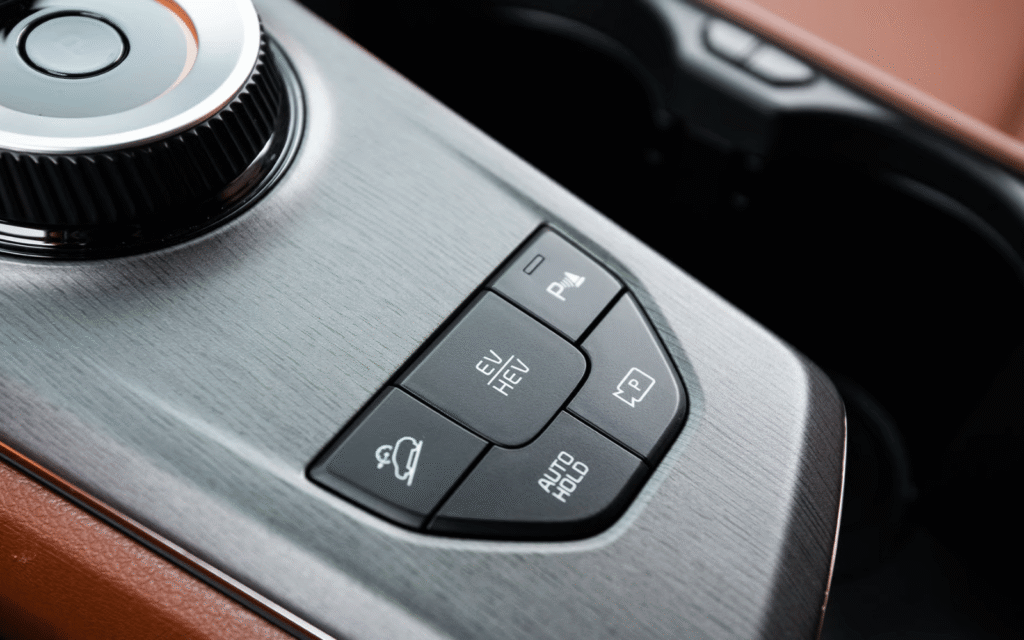
The Sportage Plug-in Hybrid, often called the Sportage PHEV, is the most powerful electrified Sportage. It has a larger battery than the standard hybrid, allowing it to drive on electric power before the gasoline engine needs to run.
For a driver with a short daily commute and reliable charging, that can mean using little or no gasoline during the week. On longer journeys, the gas engine takes over, so there is no need to plan long-distance travel around charging stops.
It is not an electric SUV and it does not support DC fast charging. It is best viewed as a hybrid SUV with enough battery capacity to cover many local trips electrically.
Price and Trims
The following figures are 2027 US base MSRPs, excluding Kia’s $1,495 destination charge. Options, dealer accessories, taxes, registration, and local pricing will change the final amount.
| Trim | Starting MSRP | Drivetrain | Key Reason to Choose |
| X-Line AWD | $40,590 | AWD | Lower-cost PHEV with strong standard equipment |
| X-Line Prestige AWD | $47,390 | AWD | More comfort, technology, and parking-assistance features |
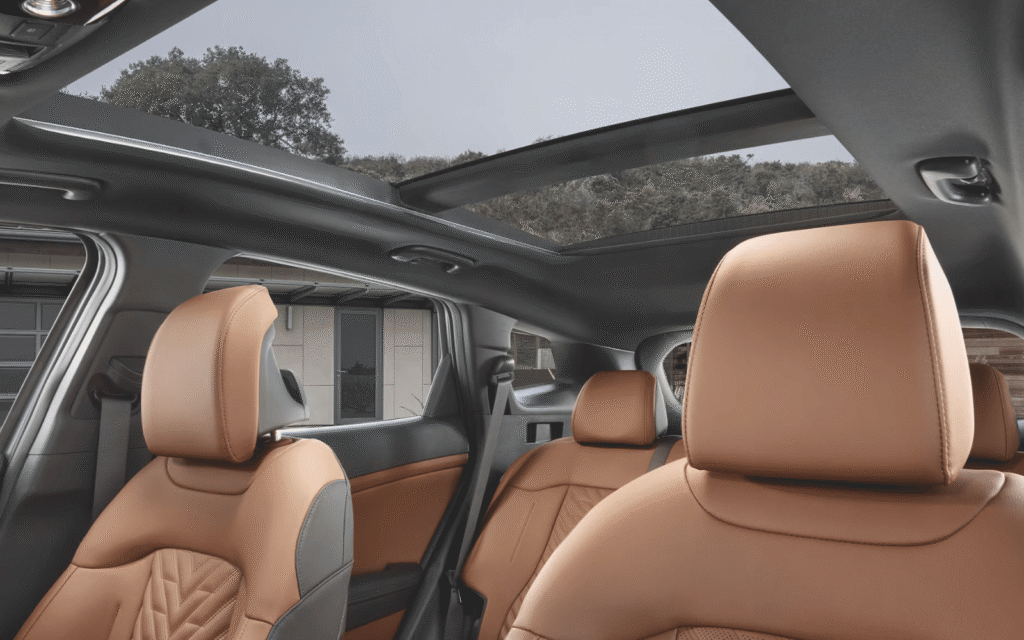
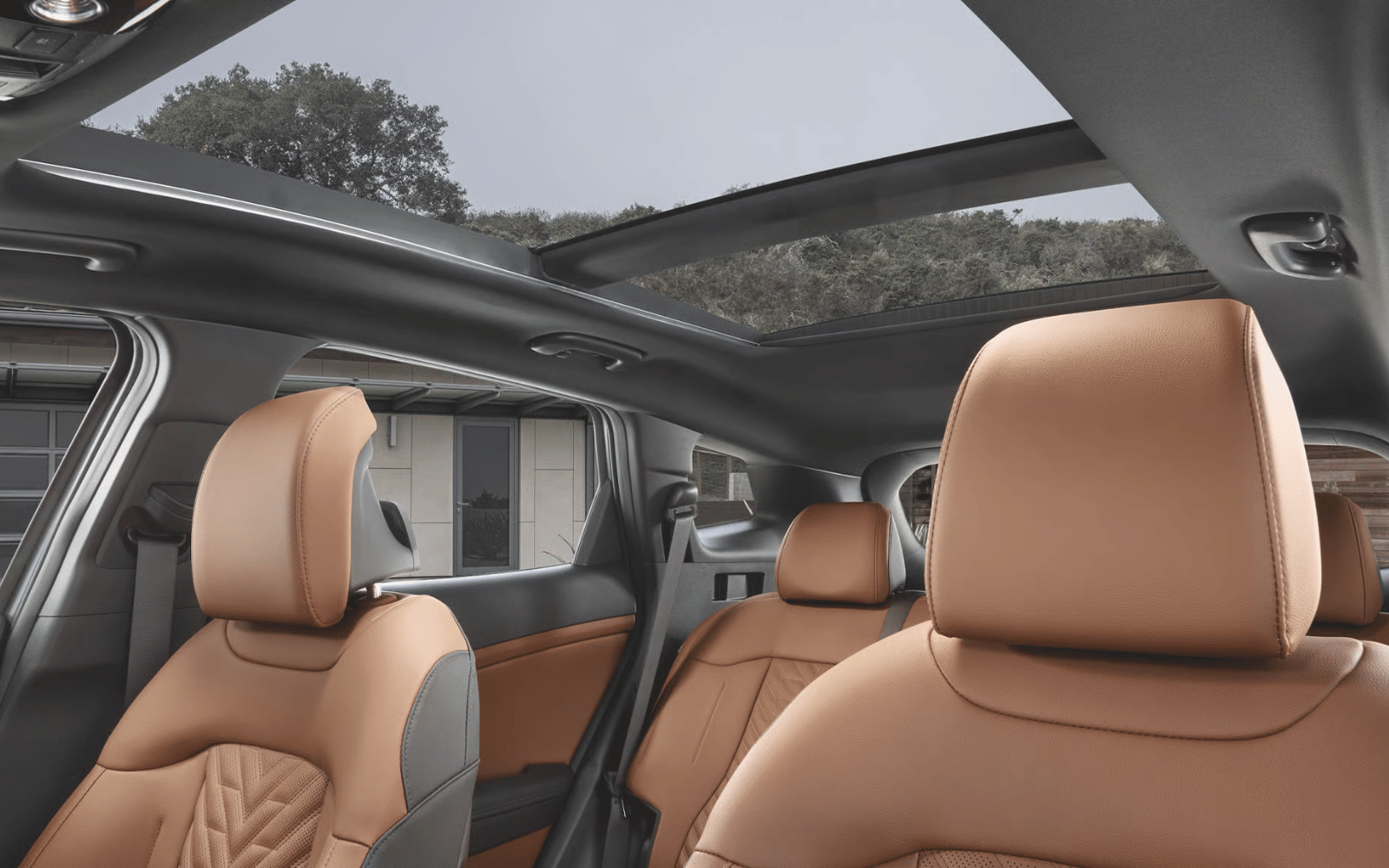
The X-Line is the more sensible choice for most buyers. It already includes AWD, the plug-in-hybrid system, a panoramic sunroof, power liftgate, heated front seats, wireless charging, and X-Line exterior details.
The X-Line Prestige adds features such as ventilated front seats, heated rear outboard seats, a heated steering wheel, driver-seat memory, premium audio, and additional camera and parking assistance. It is well equipped, but the price increase is substantial.
Plug-in Hybrid Powertrain and Driving Experience
The Sportage Plug-in Hybrid combines a turbocharged 1.6-liter four-cylinder gasoline engine with an electric motor and a 13.8-kWh battery. Together, they produce 268 horsepower and 271 lb-ft of torque.
All-wheel drive is standard, and power is sent through a six-speed automatic transmission. The PHEV has noticeably stronger acceleration than both the gasoline Sportage and the regular Sportage Hybrid.
Around town, it can drive quietly on electric power when the battery has charge. Once the battery is depleted, it continues as a conventional hybrid vehicle. It remains usable for long trips, but the main financial benefit comes from plugging in regularly.
Ride quality is comfortable and the Sportage’s high seating position gives drivers a clear view out. It is not a sporty SUV, but it has enough power for confident merging and passing.
0–60 MPH Performance
Kia does not publish an official 0–60 mph time for the Sportage Plug-in Hybrid.
Independent testing of a current-generation Sportage Plug-in Hybrid recorded a 0–60 mph time of about 6.9 seconds. That makes it the quickest Sportage powertrain currently available.
The extra power is useful in daily driving, especially when joining fast-moving traffic or carrying passengers and cargo.
Electric Range, Charging, and Fuel Economy
| Measure | Kia Sportage Plug-in Hybrid |
| Electric-only range | Kia-estimated 34 miles |
| Combined efficiency | EPA-estimated 83 MPGe |
| Gas-only city fuel economy | EPA-estimated 35 mpg |
| Gas-only highway fuel economy | EPA-estimated 36 mpg |
| Gas-only combined fuel economy | EPA-estimated 36 mpg |
| Level 2 charging time | About 2 hours at 240 volts |
| Level 1 charging time | About 11 hours at 120 volts |
A Level 2 charger is the practical option for most owners. It can refill the battery in roughly two hours, allowing convenient overnight, workplace, or daytime charging.
A regular household outlet can charge the Sportage Plug-in Hybrid, but the process takes about 11 hours. It can work for overnight use, though a dedicated Level 2 setup is more convenient.
Electric range varies with temperature, speed, hills, passenger load, climate-control use, and driving style. Cold weather can reduce electric range noticeably.
Interior, Comfort, and Technology
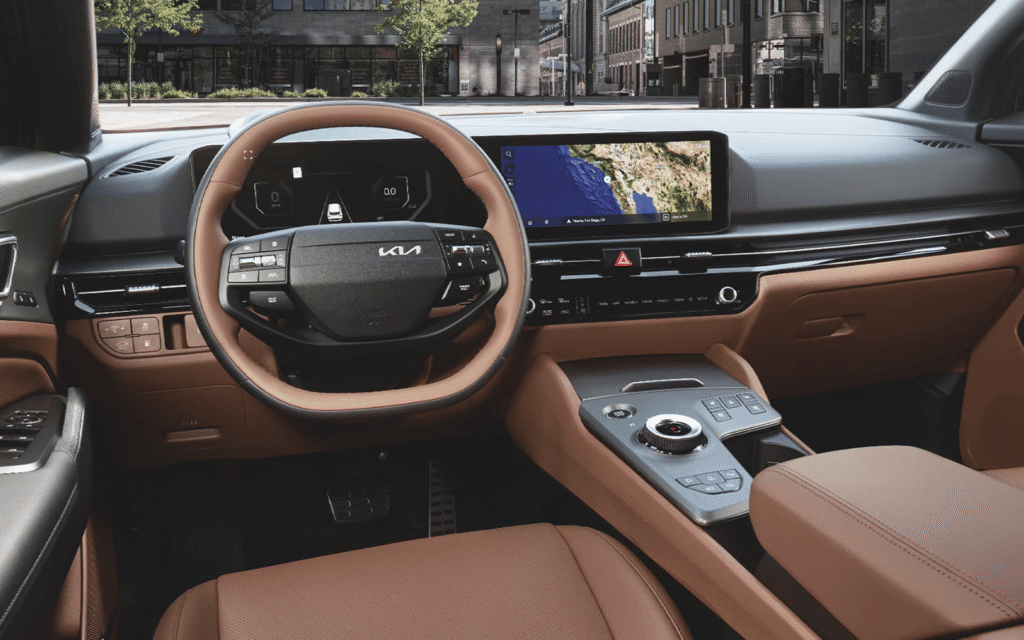
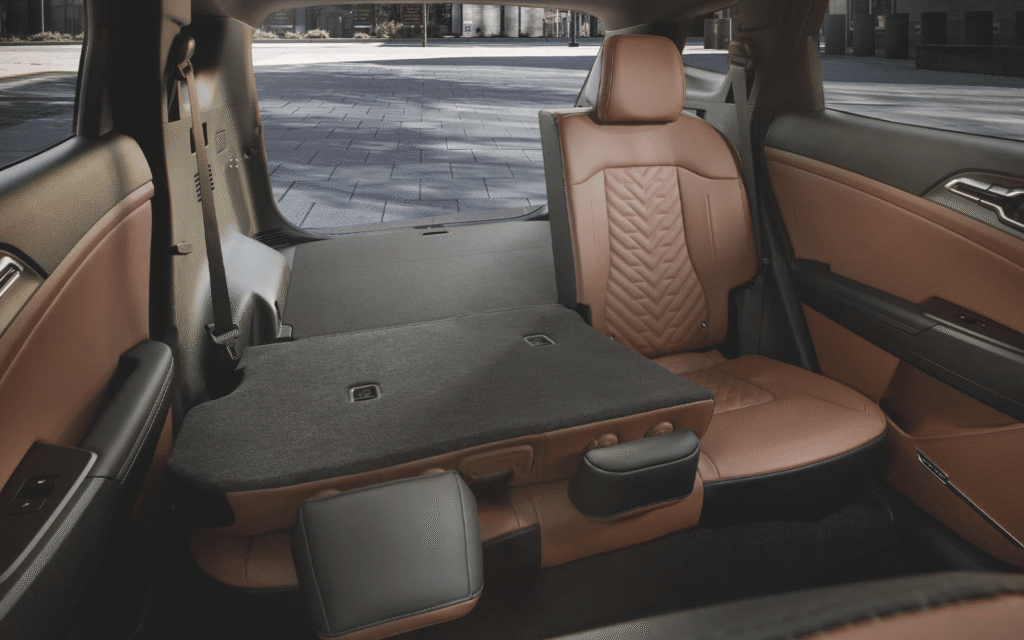
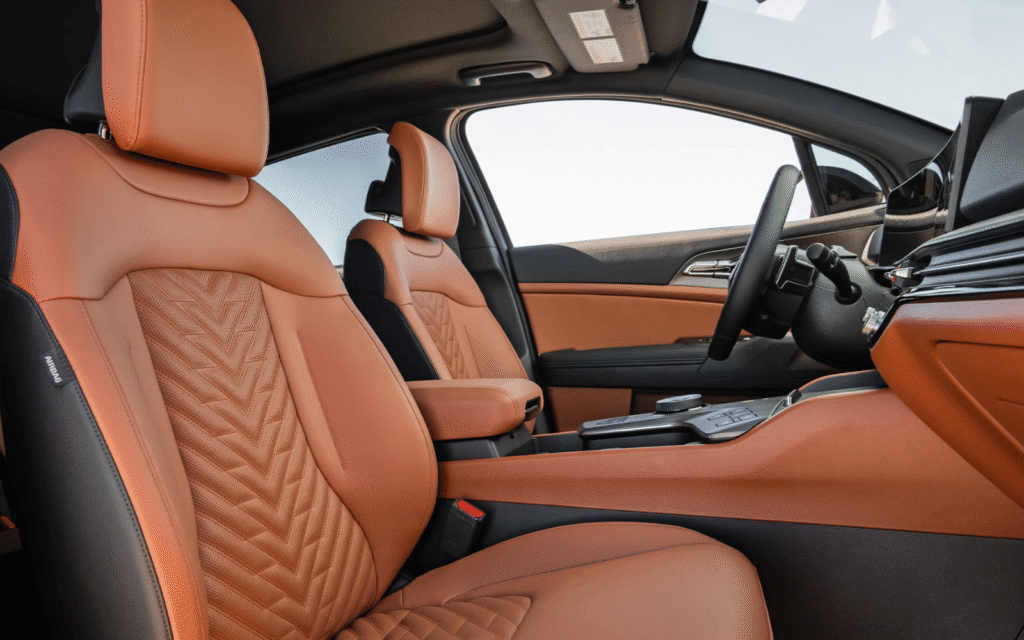
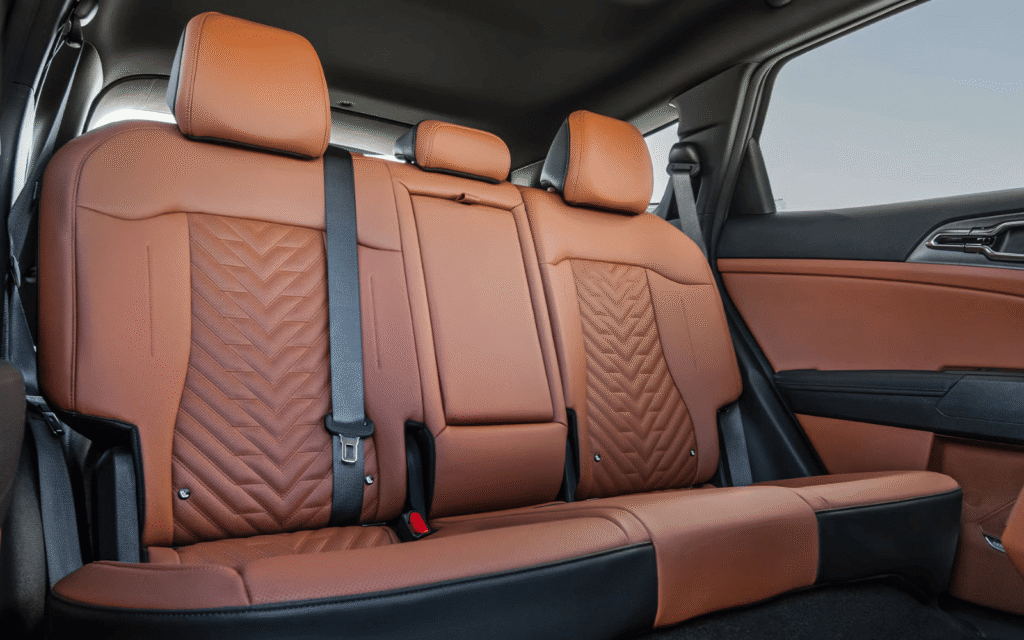
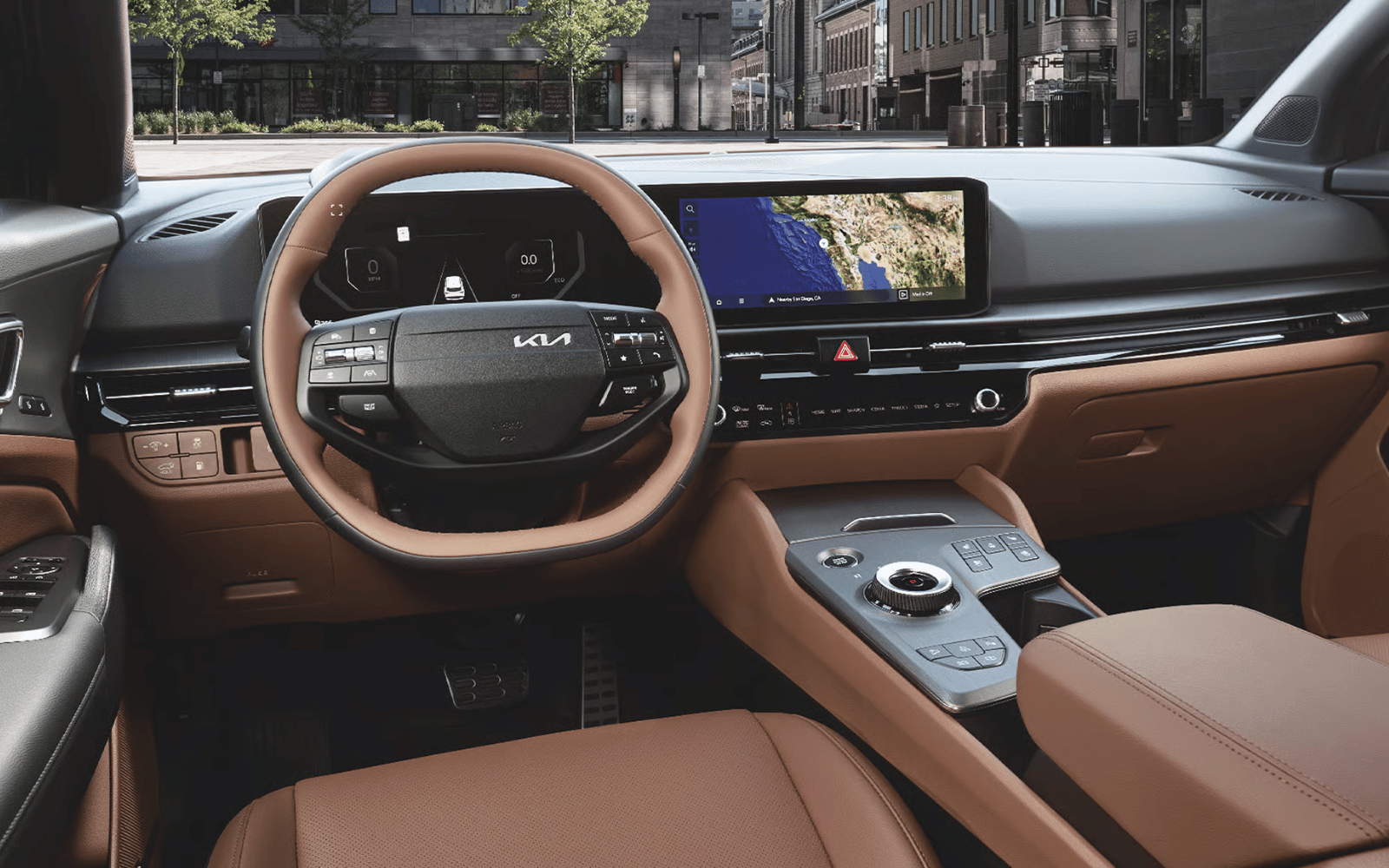
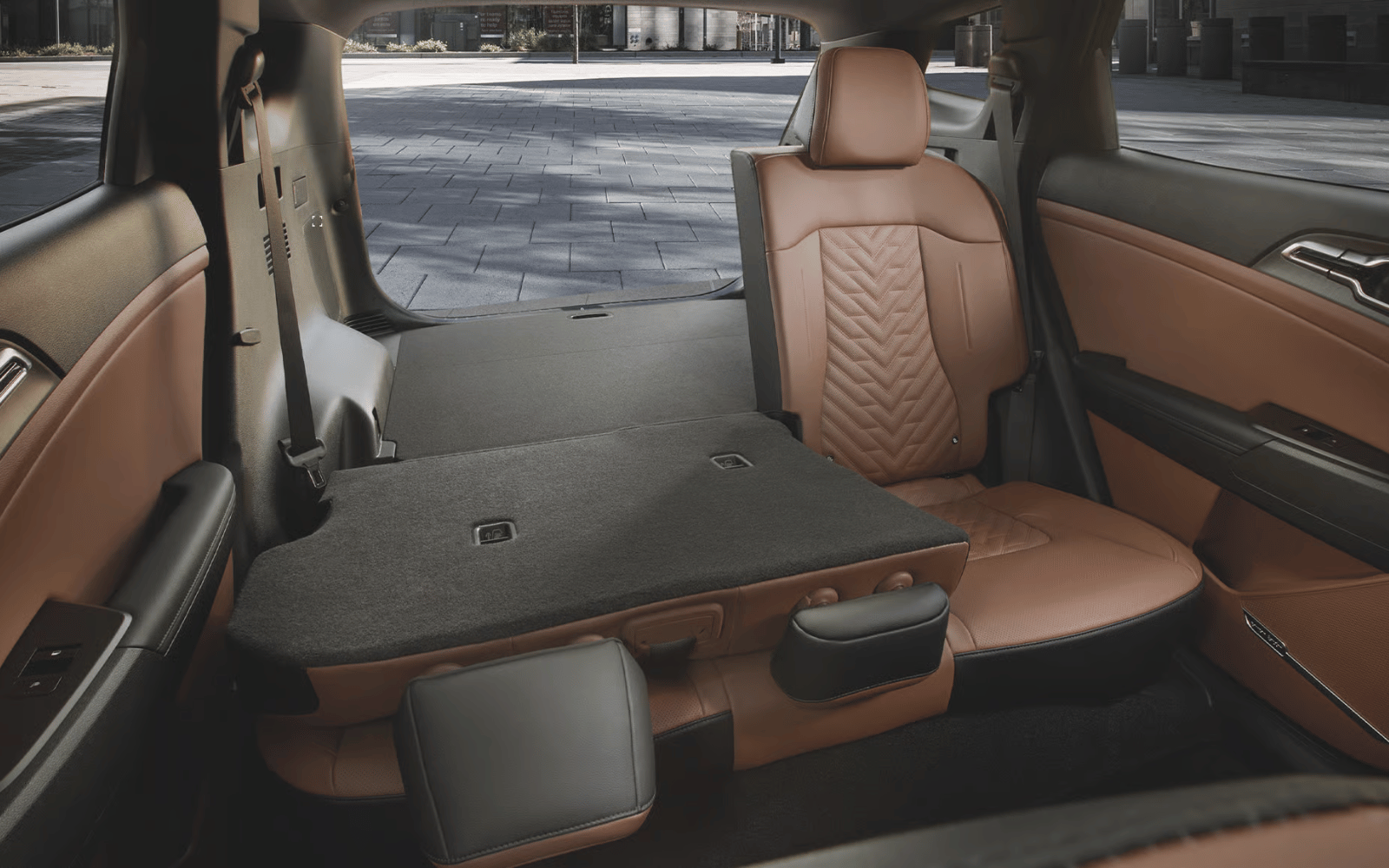
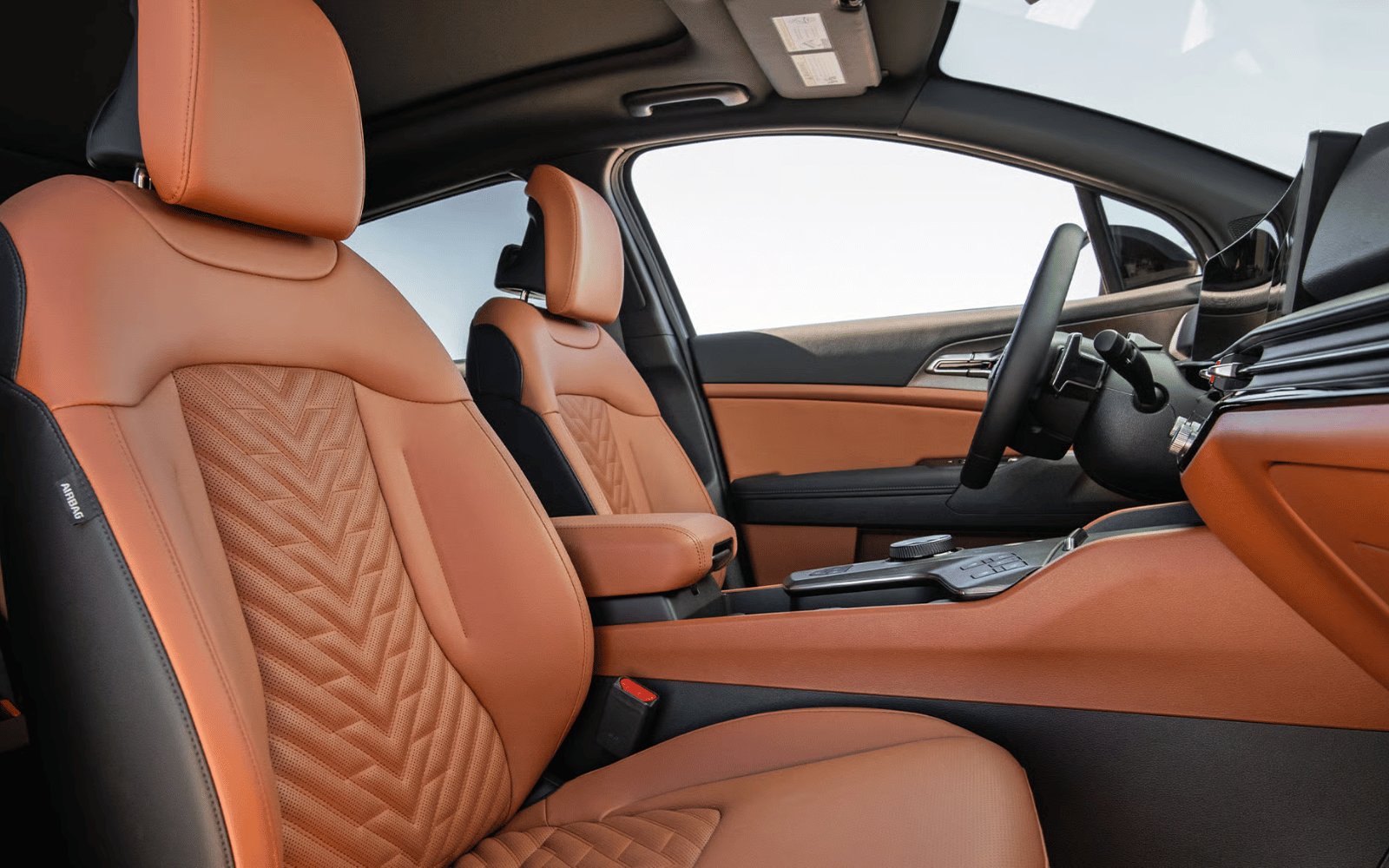
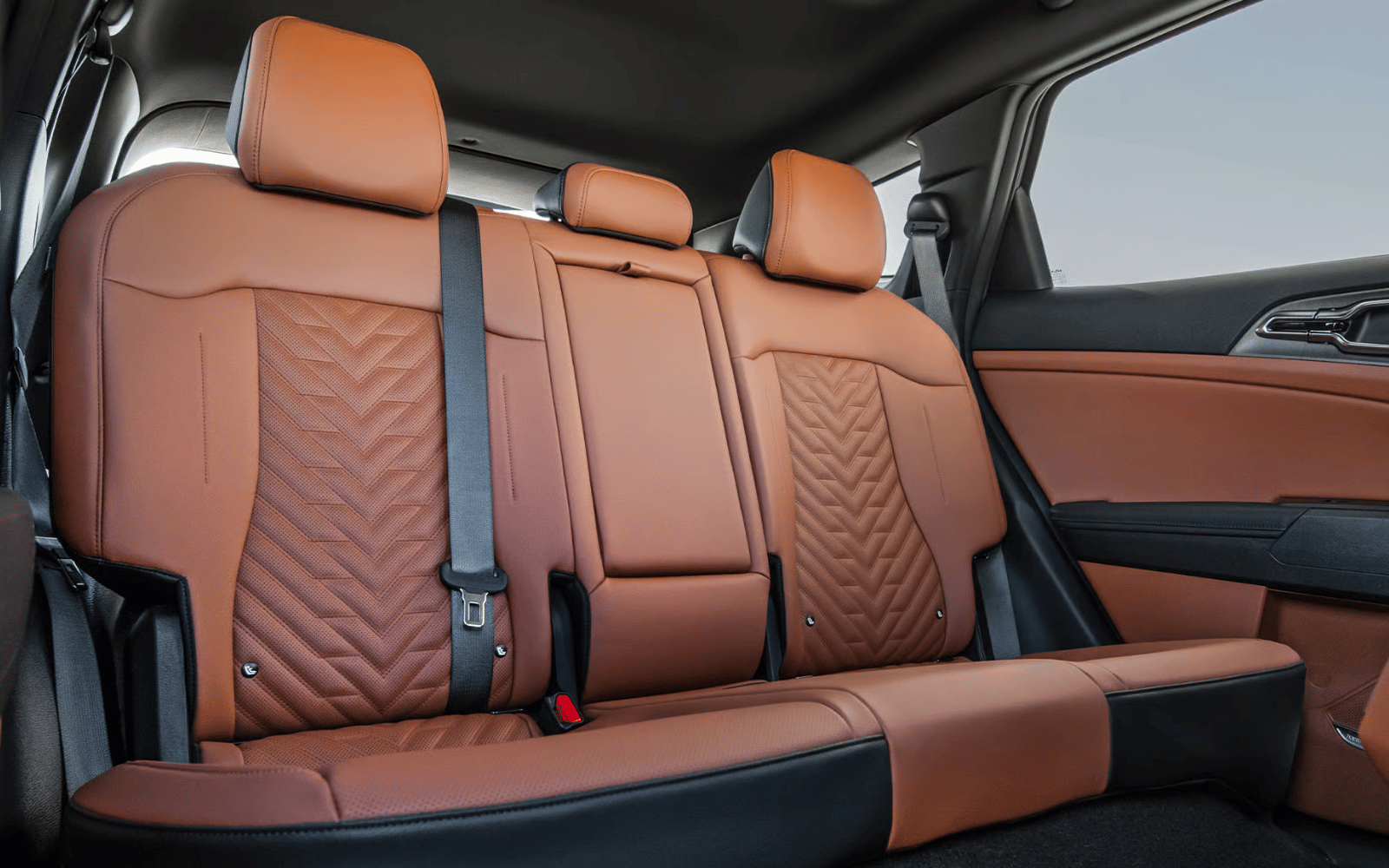
The Sportage Plug-in Hybrid has a modern, spacious cabin with good front-seat comfort and useful rear-seat room. The battery reduces cargo capacity compared with the gasoline and standard-hybrid Sportage, but it remains practical for a compact SUV.
Standard and available features include:
- Dual 12.3-inch display layout
- Wireless Apple CarPlay and Android Auto
- Digital instrument display
- USB-C charging ports
- Wireless phone charging
- Panoramic sunroof
- Heated front seats
- Available ventilated front seats
- Available heated rear outboard seats
- Available heated steering wheel
- Available Harman Kardon premium audio system
- Power liftgate
- Available surround-view monitor
- Available remote parking assistance
The X-Line already has the main features most buyers will use. The X-Line Prestige is better suited to buyers who want a more premium cabin and regularly park in tight spaces.
Dimensions, Cargo, and Practicality
| Dimension | Measurement |
| Length | 184.4 in. |
| Width | 73.4 in. |
| Height | 66.9 in. |
| Wheelbase | 108.5 in. |
| Ground clearance | 8.3 in. |
| Front legroom | 41.4 in. |
| Rear legroom | 39.5 in. |
| Cargo space behind rear seats | 34.5 cu. ft. |
| Maximum cargo space | 65.5 cu. ft. |
| Seating | 5 passengers |
The Sportage Plug-in Hybrid still offers enough room for everyday family use, but its cargo area is smaller than the standard Sportage Hybrid’s 39.5-cubic-foot space.
That difference matters if you regularly carry a large stroller, bulky sports gear, camping equipment, or several suitcases. Buyers who need maximum space should compare the PHEV with the Kia Sportage Hybrid.
Exterior Design
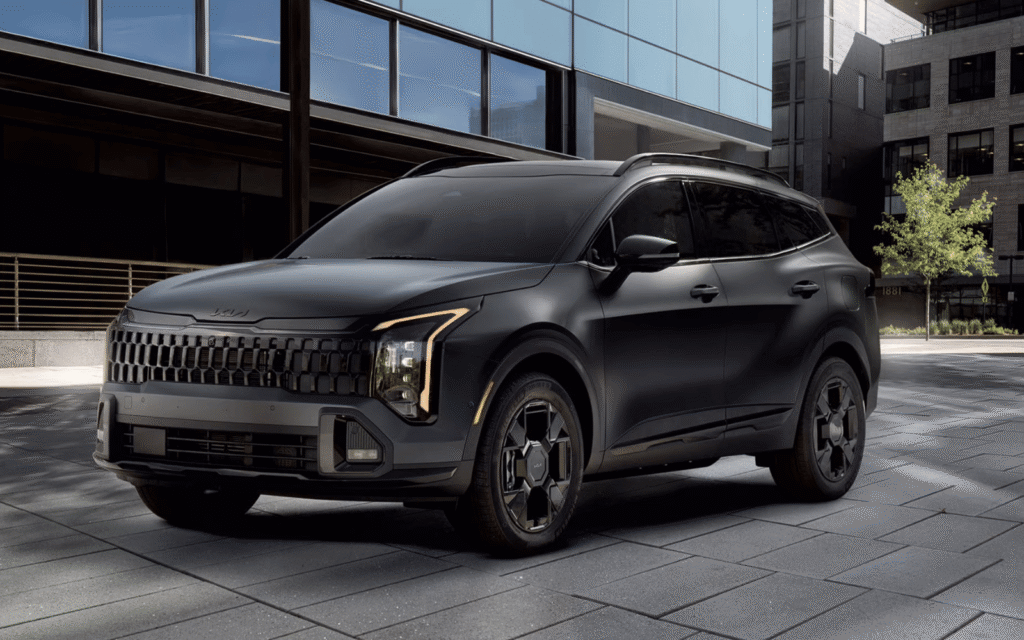
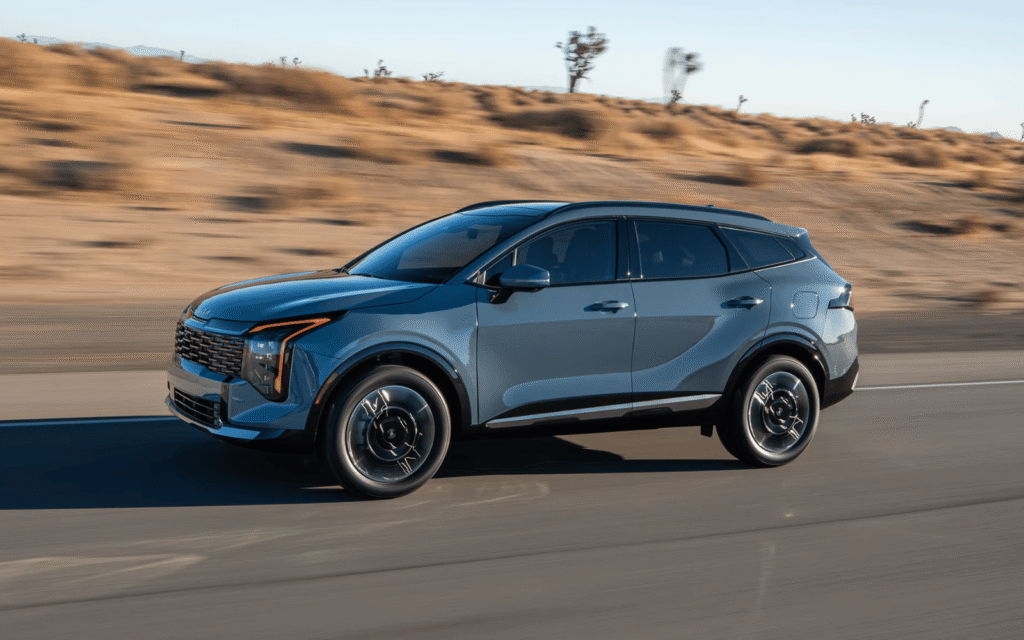
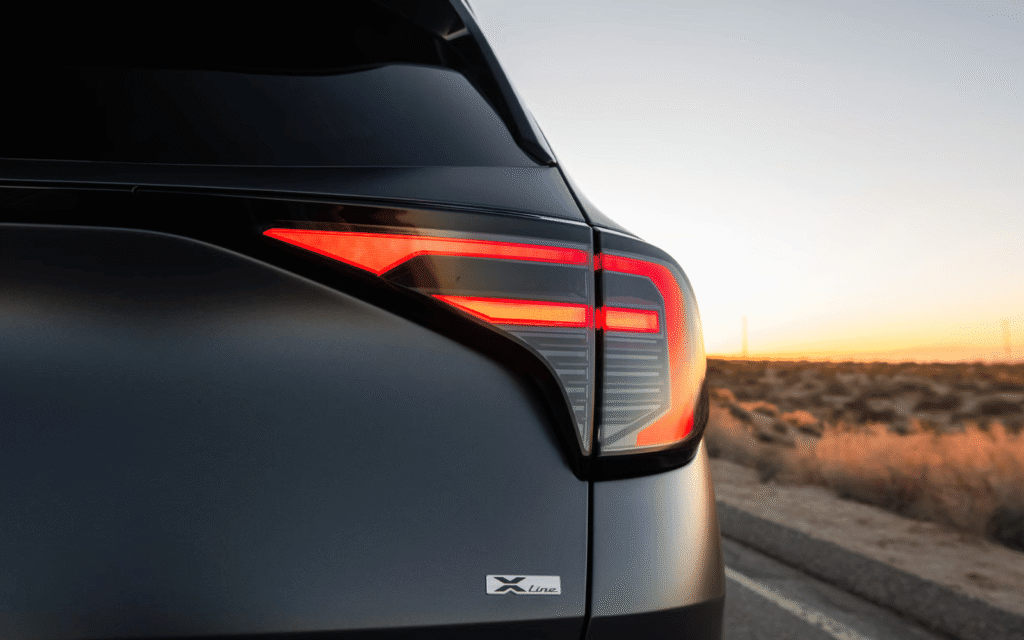
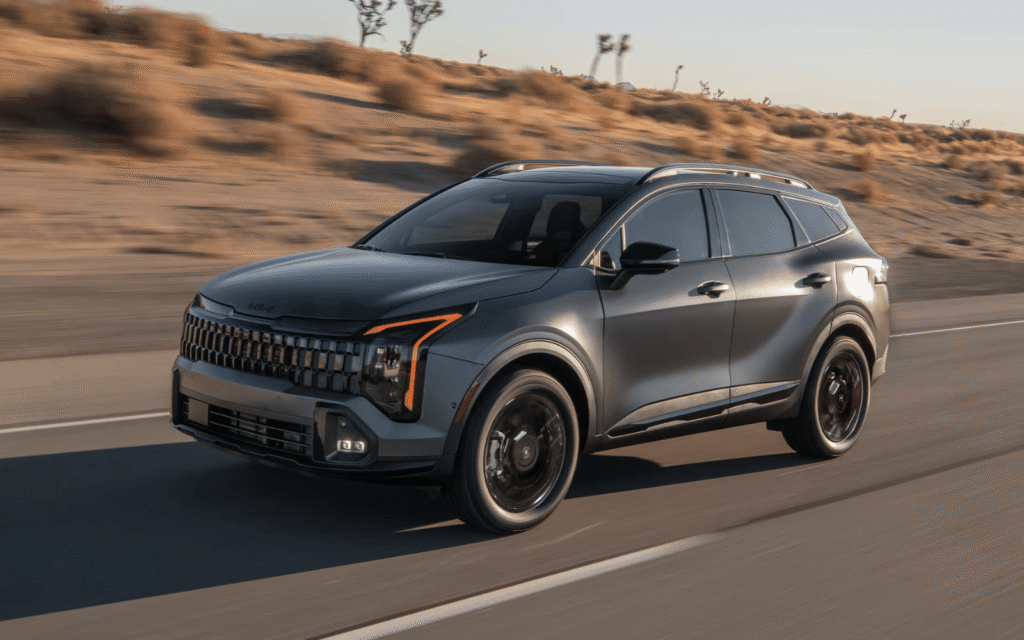
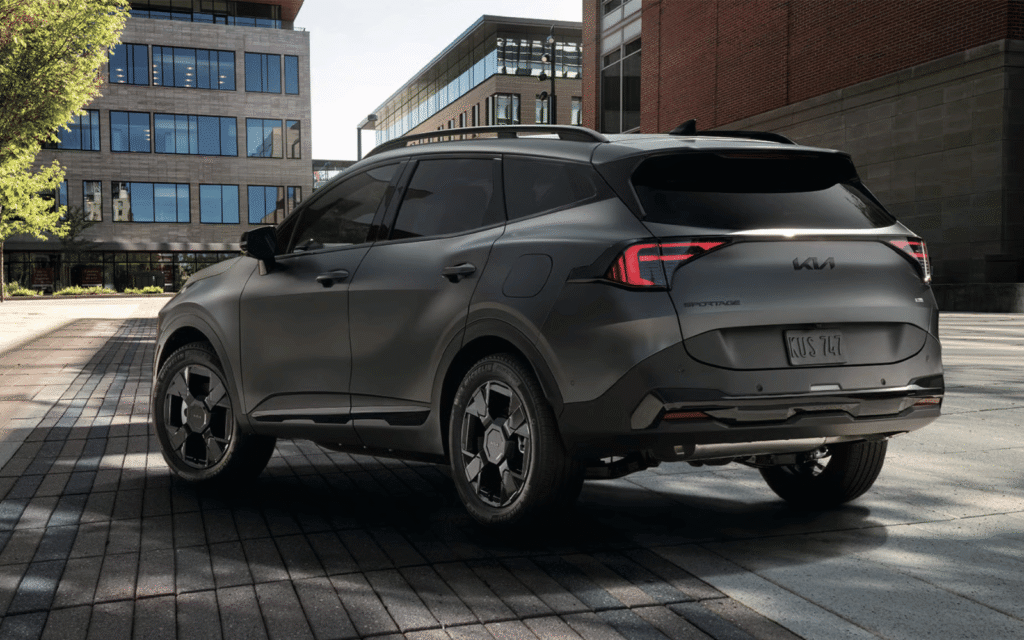
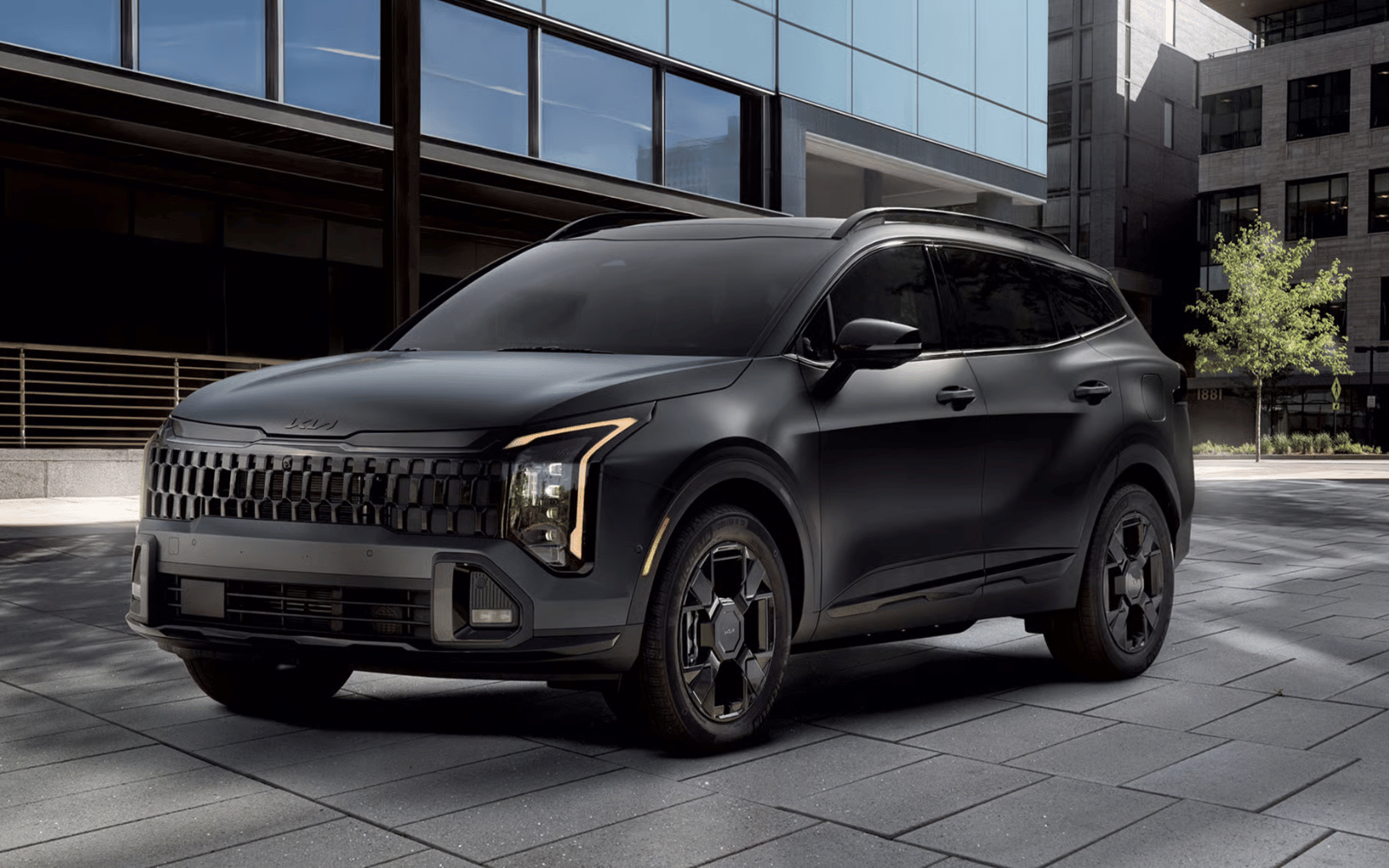
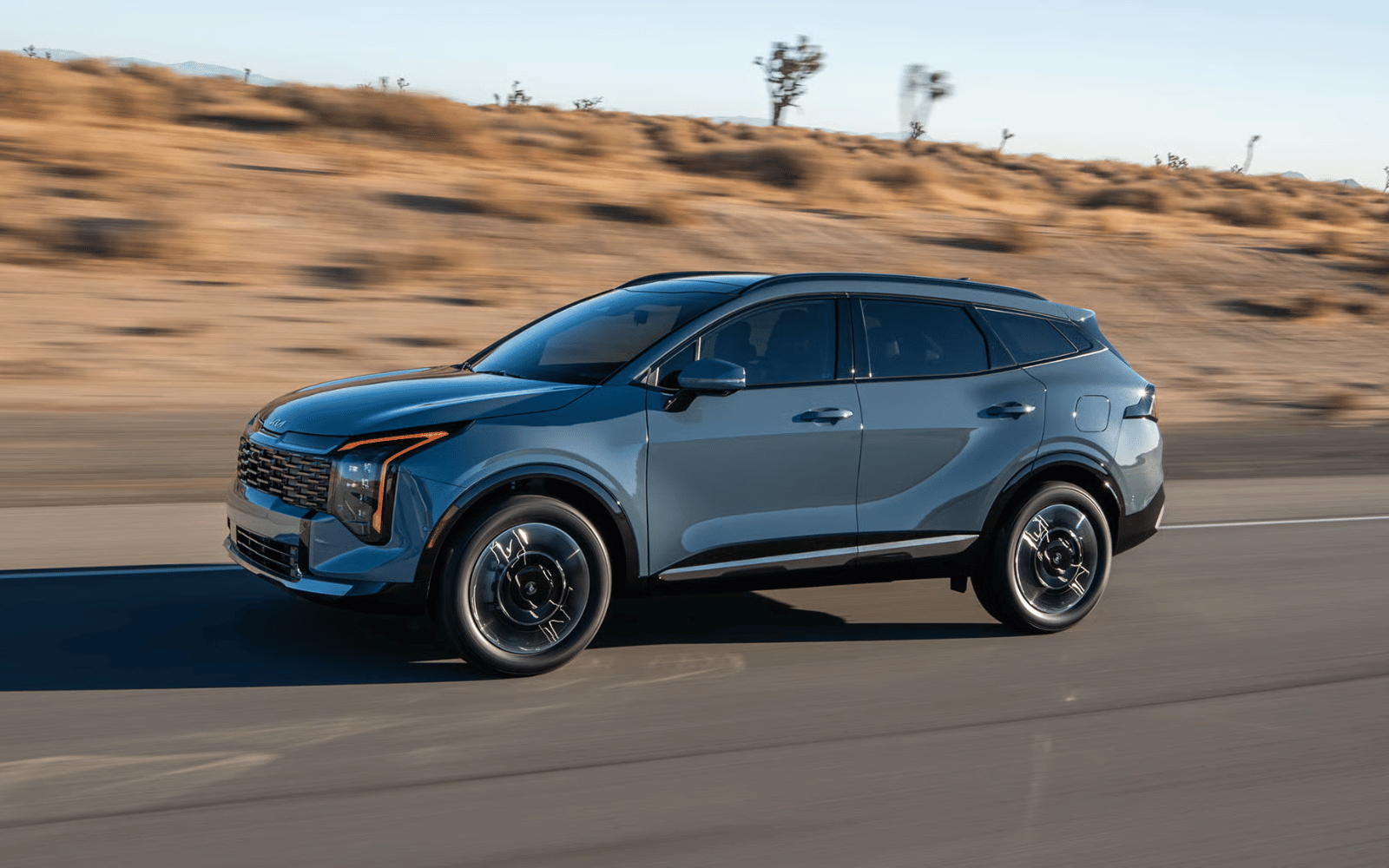
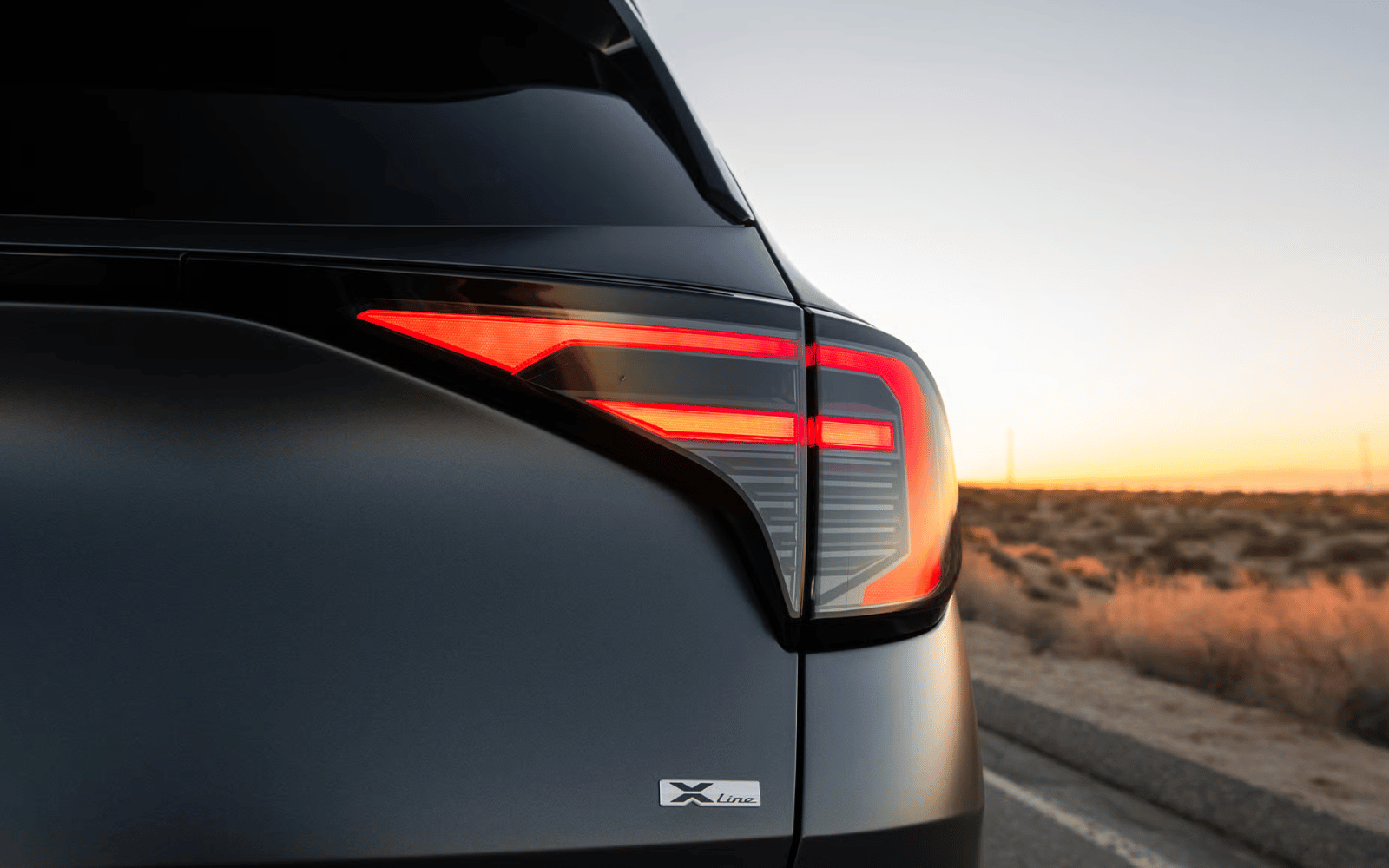
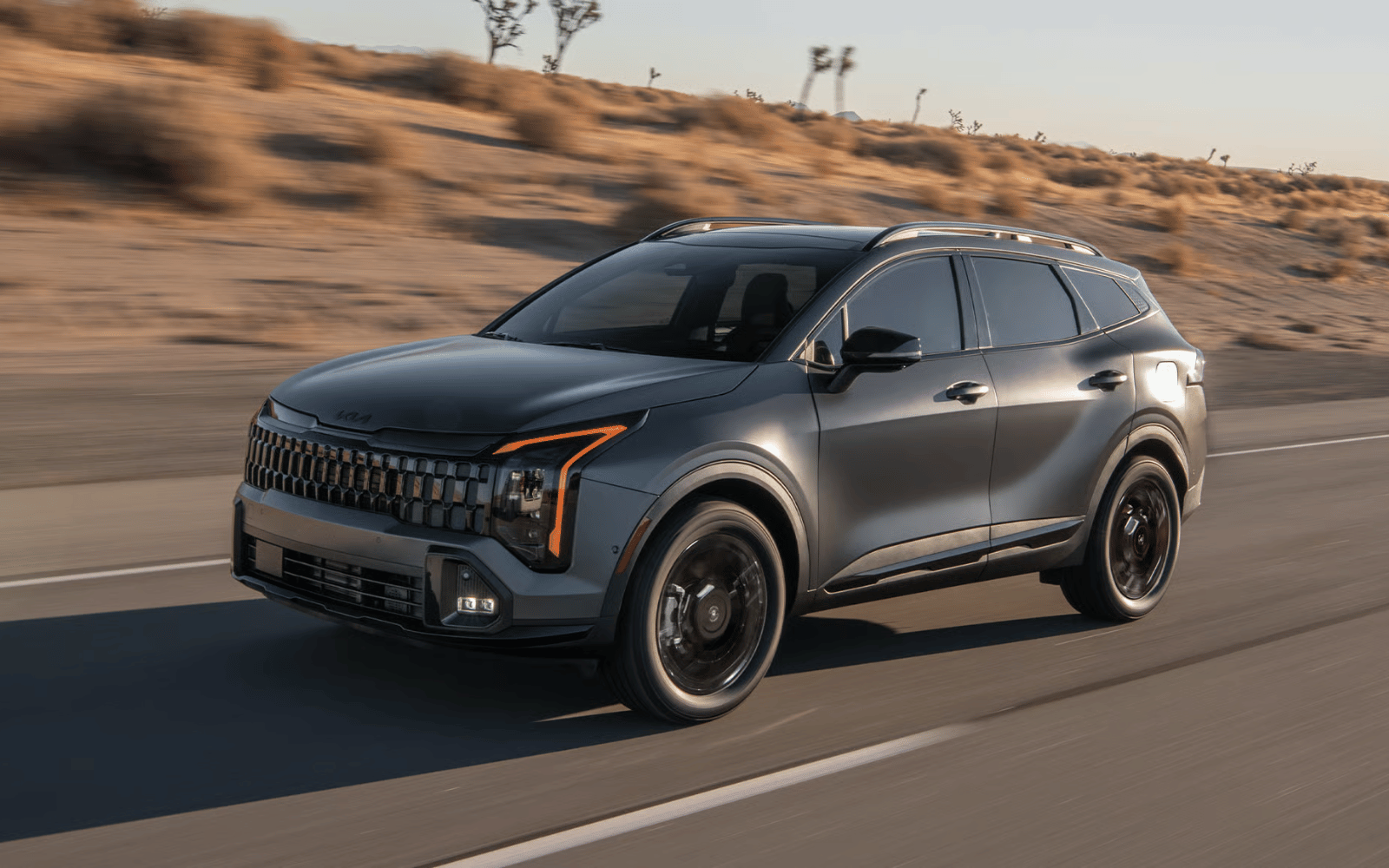
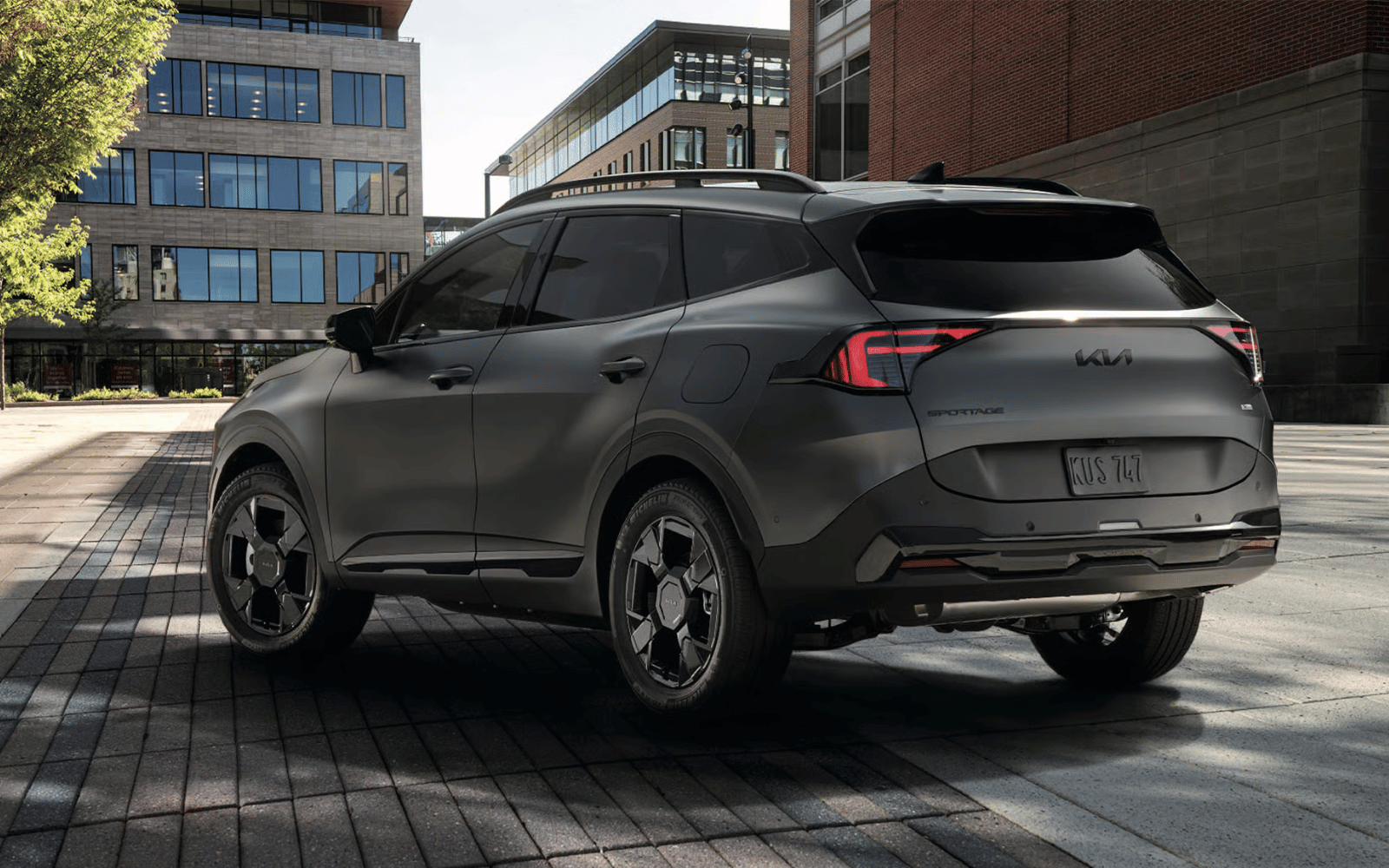
The Sportage Plug-in Hybrid is available only in X-Line styling. It has darker exterior trim, gloss-black roof rails, a more rugged appearance, and standard AWD.
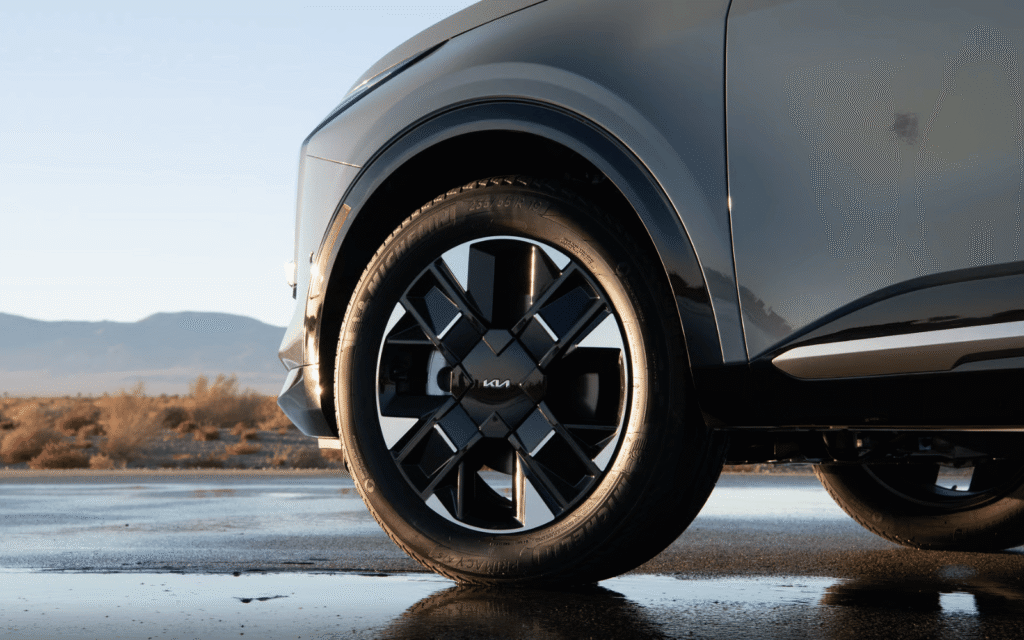
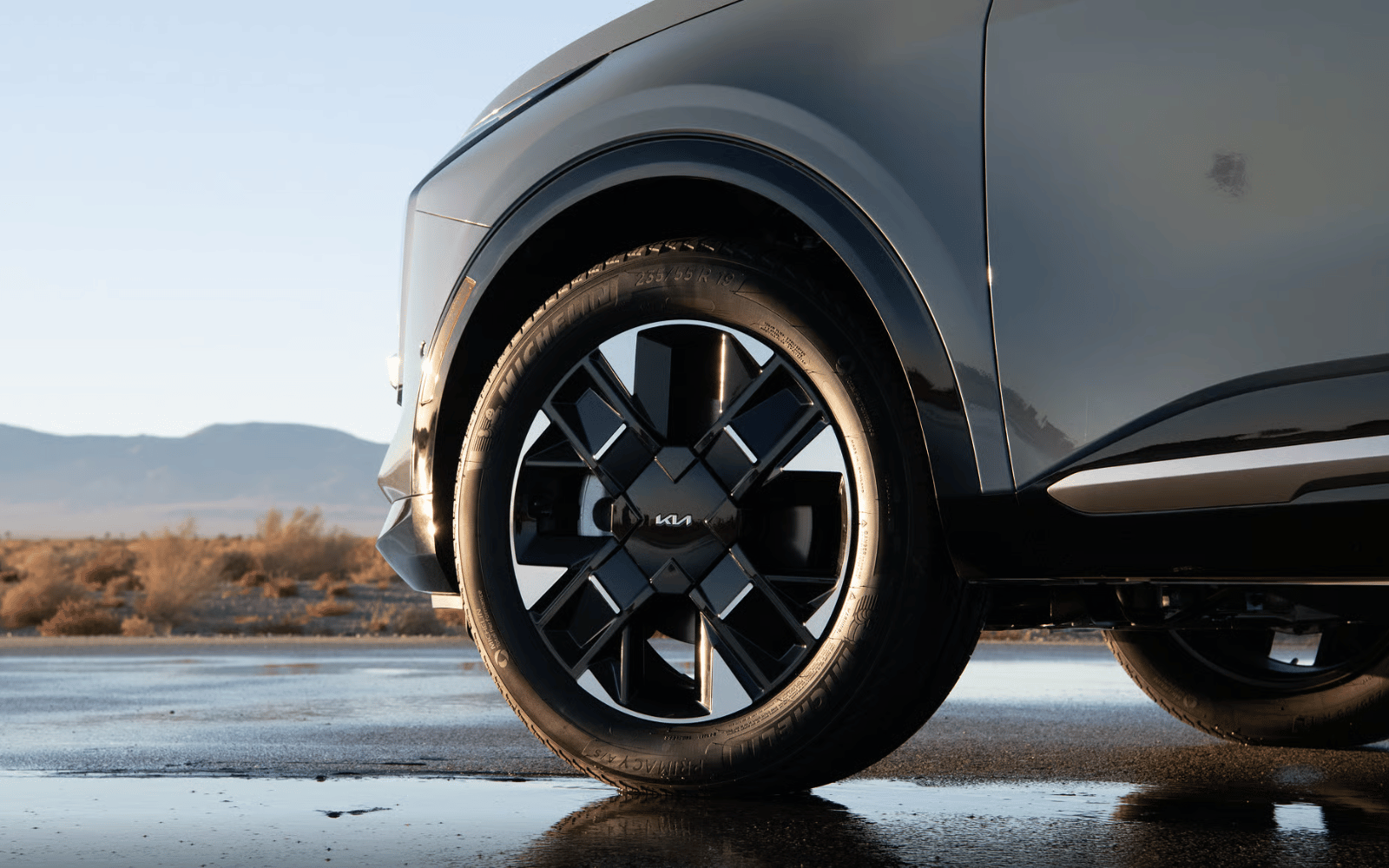
Both trims use 19-inch wheels and have the same general X-Line exterior look. The Prestige adds more equipment inside rather than a major visual change outside.
The design gives the Sportage PHEV more road presence than many compact plug-in SUVs, but it is not intended for serious off-road driving.
Safety Features and Ratings
Standard and available driver-assistance systems include:
- Auto Emergency Braking
- Forward Collision-Avoidance Assist
- Pedestrian and cyclist detection
- Lane Keeping Assist
- Lane Following Assist
- Driver Attention Warning
- Blind-Spot Collision-Avoidance Assist
- Rear Cross-Traffic Collision-Avoidance Assist
- Smart Cruise Control
- Highway Driving Assist
- Rear parking sensors
- Available surround-view monitor
- Available remote parking assistance
The current Sportage body design has a strong recent IIHS safety record. The 2026 Kia Sportage, when built after May 2025, earned an IIHS Top Safety Pick+ award, with Good ratings in the updated moderate-overlap front, updated side-impact, and small-overlap front tests. See the full IIHS Sportage results for test details and eligibility.
NHTSA had not published a separate 2027 Sportage Plug-in Hybrid safety rating at the time of writing. Buyers should check the latest ratings before purchase.
Reliability, Warranty, and Ownership
The Sportage Plug-in Hybrid has more components than the gasoline Sportage, including the larger battery, electric motor, charging hardware, and hybrid system. Kia’s long coverage helps reduce concern for buyers who plan to keep the vehicle for several years.
The ownership calculation depends heavily on charging habits. Charging at home or work regularly can reduce gasoline use substantially. Relying on public charging or rarely charging the battery reduces the PHEV’s financial advantage.
| Coverage | Length |
| Basic limited warranty | 5 years / 60,000 miles |
| Powertrain limited warranty for original owners | 10 years / 100,000 miles |
| Hybrid system component coverage | 10 years / 100,000 miles |
| High-voltage battery coverage | 10 years / 100,000 miles |
| Anti-perforation warranty | 5 years / 100,000 miles |
| Roadside assistance | 5 years / 60,000 miles |
The Sportage Plug-in Hybrid does not include complimentary scheduled maintenance. Factor in charging costs, electricity rates, insurance, tires, and regular service before comparing its long-term costs with the standard hybrid.
Pros and Cons
What We Like
- Useful 34-mile electric-only range
- Strong 268-hp plug-in-hybrid powertrain
- Standard AWD
- Quick acceleration for a compact SUV
- Level 2 charging takes about two hours
- No range anxiety on long trips
- Comfortable cabin and good rear-seat room
- Strong feature list, even in the base X-Line
- Long hybrid-system and battery coverage
What We Don’t Like
- Much more expensive than the standard Sportage Hybrid
- Smaller cargo area than other Sportage versions
- Maximum range depends on regular charging
- No DC fast-charging capability
- Only two expensive trims
- Gas-only efficiency is not dramatically better than the regular Hybrid
- Top trim costs close to some luxury-brand compact SUVs
Competitors
The Sportage Plug-in Hybrid should be compared with other compact plug-in hybrid SUVs based on your ability to charge and your typical daily driving distance.
- The Toyota RAV4 Plug-in Hybrid is worth considering for buyers who prioritize stronger performance and a longer-established PHEV option.
- The Hyundai Tucson Plug-in Hybrid is a closely related alternative with similar packaging and powertrain technology.
- The Mitsubishi Outlander Plug-in Hybrid may suit buyers who want a third row and more electric range flexibility.
- The Ford Escape Plug-in Hybrid is worth considering for drivers who do not need AWD.
- The Kia Sportage Hybrid is the better value for buyers who cannot charge consistently.
- The Kia Sportage is the lower-cost option for buyers who prefer a conventional gasoline SUV.
Related Content
Compare the plug-in model with the Kia Sportage Hybrid before paying the PHEV premium. The regular Hybrid is the stronger choice for drivers without dependable charging access.
If you need a more affordable compact SUV, compare the Kia Seltos. Before financing, read how car financing works and consider arranging car loan preapproval before visiting a dealership.
Should You Buy the Kia Sportage Plug-in Hybrid?
Buy the Kia Sportage Plug-in Hybrid if you can charge at home or work, drive fewer than roughly 34 miles on many days, and want a compact SUV with standard AWD and strong acceleration.
Choose the X-Line AWD if you want the PHEV system at the lowest price. Choose the X-Line Prestige AWD only if you will use its added seat comfort, premium audio, camera, and parking features.
Skip the Sportage Plug-in Hybrid if charging will be inconvenient, if you need the largest possible cargo area, or if the added upfront cost stretches your budget. In those cases, the Sportage Hybrid EX FWD or EX AWD is usually the better purchase.
FAQs
How much does the Kia Sportage Plug-in Hybrid cost?
The 2027 Kia Sportage Plug-in Hybrid starts from $40,590 MSRP in the US before destination, taxes, registration, options, and dealer charges.
Does the Kia Sportage Plug-in Hybrid need to be charged?
It can still drive after the battery is depleted, but regular charging is needed to get the full benefit of the plug-in-hybrid system and electric-only range.
What is the electric range of the Kia Sportage Plug-in Hybrid?
Kia estimates up to 34 miles of electric-only driving range on a full battery charge.
How long does the Kia Sportage Plug-in Hybrid take to charge?
It takes about two hours using a 240-volt Level 2 charger and about 11 hours from a standard 120-volt household outlet.
Does the Kia Sportage Plug-in Hybrid have all-wheel drive?
Yes. AWD is standard on both X-Line and X-Line Prestige trims.
What fuel economy does the Kia Sportage Plug-in Hybrid get?
It is EPA-estimated at 83 MPGe combined when using electricity and gasoline. Once the battery is depleted, it is EPA-estimated at 36 mpg combined.
Is the Kia Sportage Plug-in Hybrid fast?
It is the quickest Sportage model. Independent testing of a current-generation PHEV recorded a 0–60 mph time of about 6.9 seconds.
How much cargo space does the Kia Sportage Plug-in Hybrid have?
It has 34.5 cubic feet of cargo space behind the rear seats and up to 65.5 cubic feet with the rear seats folded.
Can the Kia Sportage Plug-in Hybrid tow?
Yes. When properly equipped with trailer brakes, it can tow up to 2,000 pounds. Without trailer brakes, the maximum rating is 1,653 pounds.
Does the Kia Sportage Plug-in Hybrid qualify for tax incentives?
Federal, state, utility, and local incentives can change and depend on vehicle eligibility, purchase date, tax liability, and location. Check current rules before relying on any incentive in your buying decision.
Final Verdict
The Kia Sportage Plug-in Hybrid is a compelling option for drivers who can make charging part of their normal routine. Its 34-mile electric range can cover many local trips, while its gas engine and standard AWD make longer drives straightforward.
It is quicker and more capable than the regular Sportage Hybrid, but it is also much more expensive and gives up useful cargo capacity. The X-Line is the best choice for most buyers because it includes the PHEV system and key comfort features without the Prestige trim’s large price increase.
For drivers who charge regularly, the Sportage Plug-in Hybrid can be an excellent daily SUV. For everyone else, the Sportage Hybrid remains the more practical and better-value choice.
Prices, electric-range estimates, charging times, fuel-economy estimates, incentives, safety ratings, features, and availability can change by model year, trim, market, and charging conditions.