
Ford Mustang GTD: Price, Specs Review
The Ford Mustang GTD is an ultra-low-volume, road-legal track car built from the Mustang platform. It uses an 815-hp supercharged V8, carbon-fiber body panels, carbon-ceramic brakes, active aerodynamics, and a rear-mounted dual-clutch transaxle.
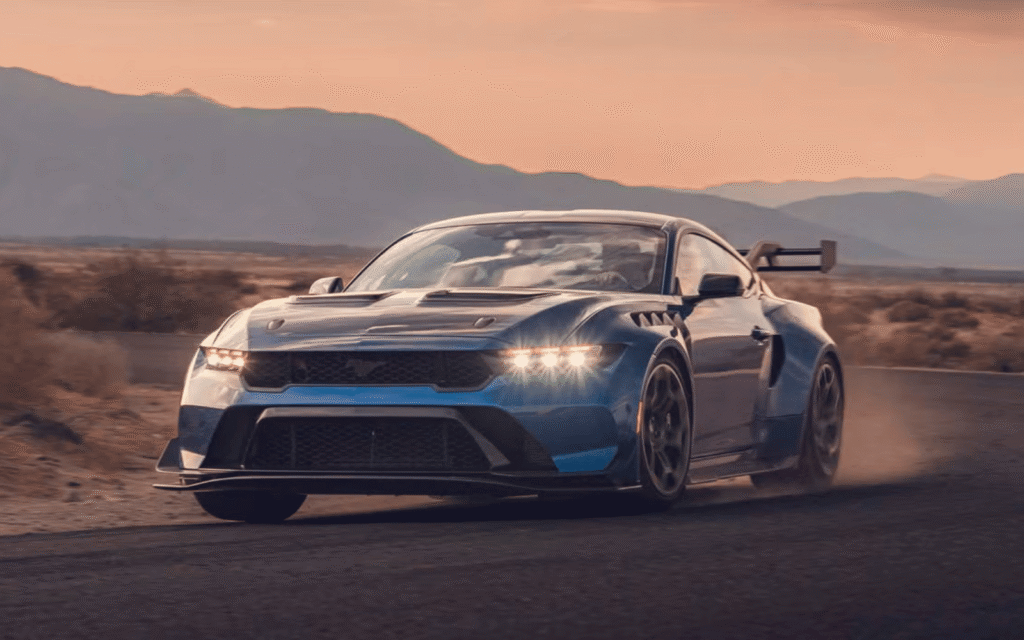
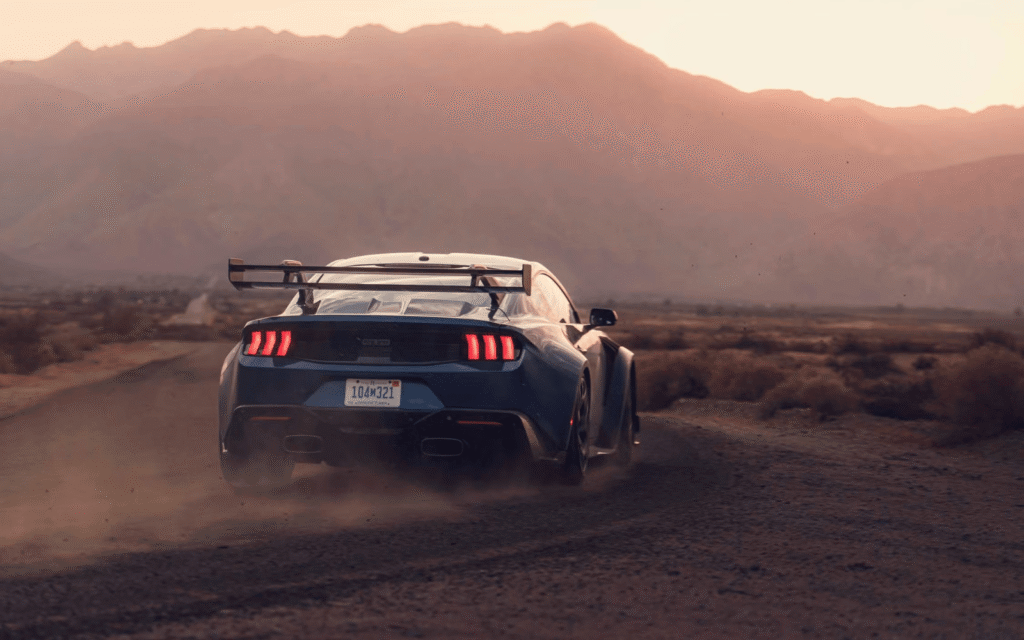
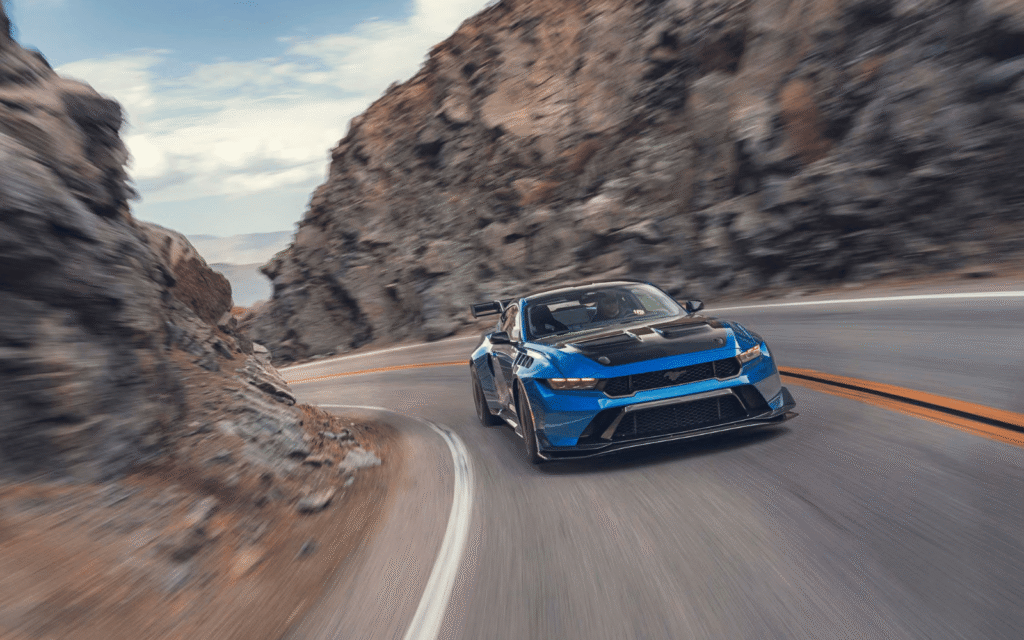
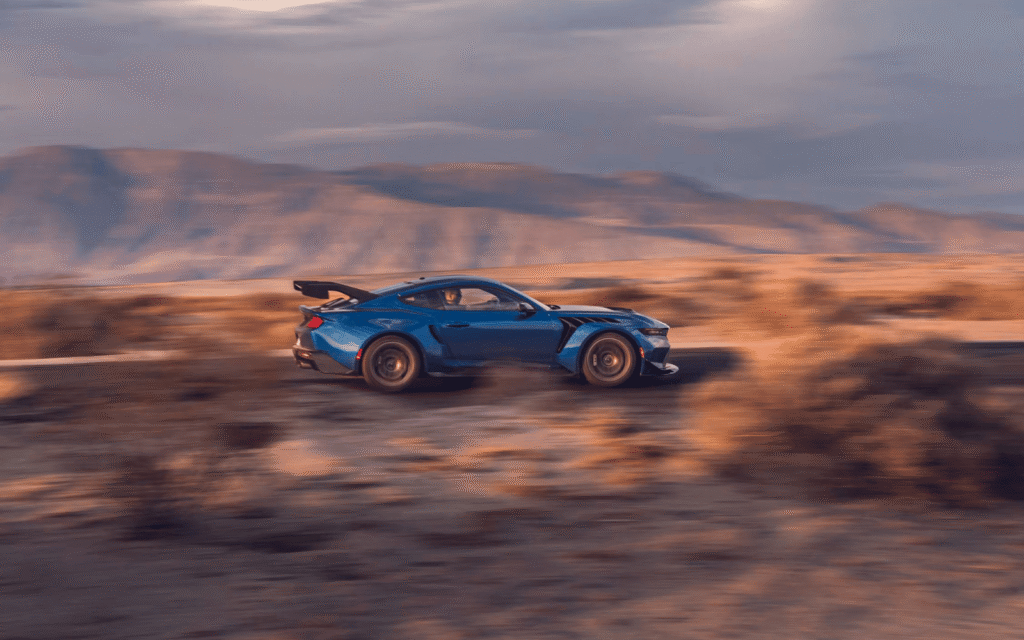
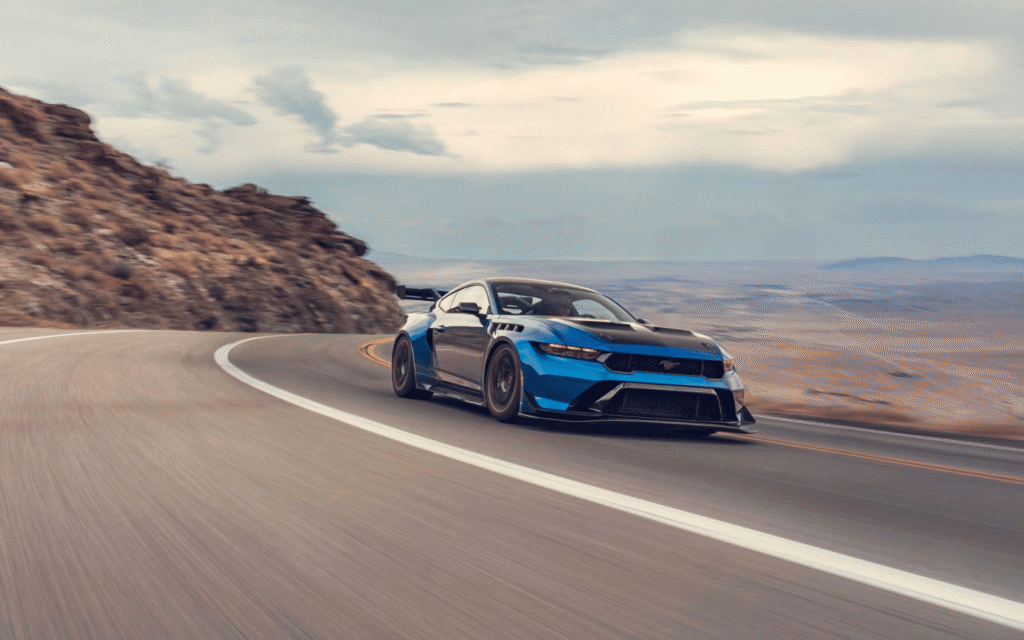
This is not a regular Mustang GT with extra power. The GTD is for experienced buyers who want a highly capable track car that can still be driven on public roads, and who are prepared for a very high purchase price, limited availability, and serious running costs.
It has only two seats, no manual transmission, and little everyday practicality. What it offers instead is Nürburgring-level pace and engineering that goes far beyond the standard Mustang lineup.
WheelPedia Rating: 7.1/10
The Mustang GTD earns a 7.1/10 WheelPedia Rating. Its performance capability is exceptional, but this is a specialist purchase with a six-figure price, very limited availability, high fuel use, costly consumables, and limited usefulness away from a track or special driving road.
| Rating Category | Score | Weight |
| Safety | 7.0/10 | 20% |
| Reliability and ownership | 7.0/10 | 15% |
| Performance and driving | 10.0/10 | 15% |
| Comfort and practicality | 6.5/10 | 15% |
| Efficiency | 4.0/10 | 15% |
| Features and technology | 8.5/10 | 10% |
| Price and value | 7.0/10 | 10% |
| Overall Rating | 7.1/10 | — |
See how we rate cars for the full methodology.
Key Highlights
- Ford lists the current model as the 2026 Mustang GTD.
- Supercharged 5.2-liter V8 produces 815 horsepower and 664 lb-ft of torque.
- Rear-wheel drive with a rear-mounted eight-speed dual-clutch transaxle.
- Ford claims a 202 mph top speed.
- Official Nürburgring Nordschleife lap time: 6 minutes, 40.835 seconds.
- Two-seat layout; rear seats are deleted.
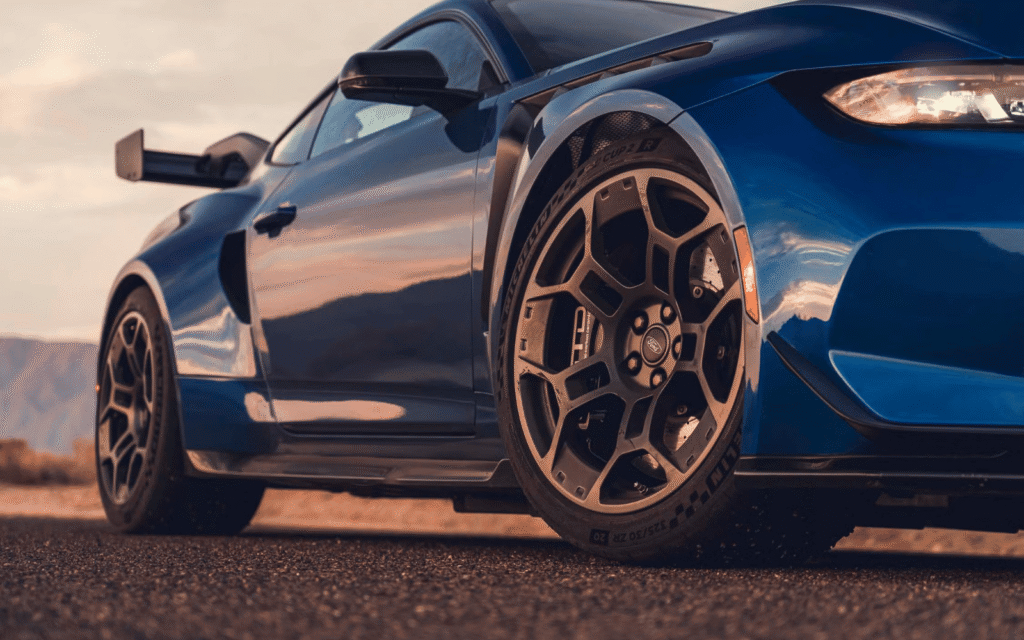
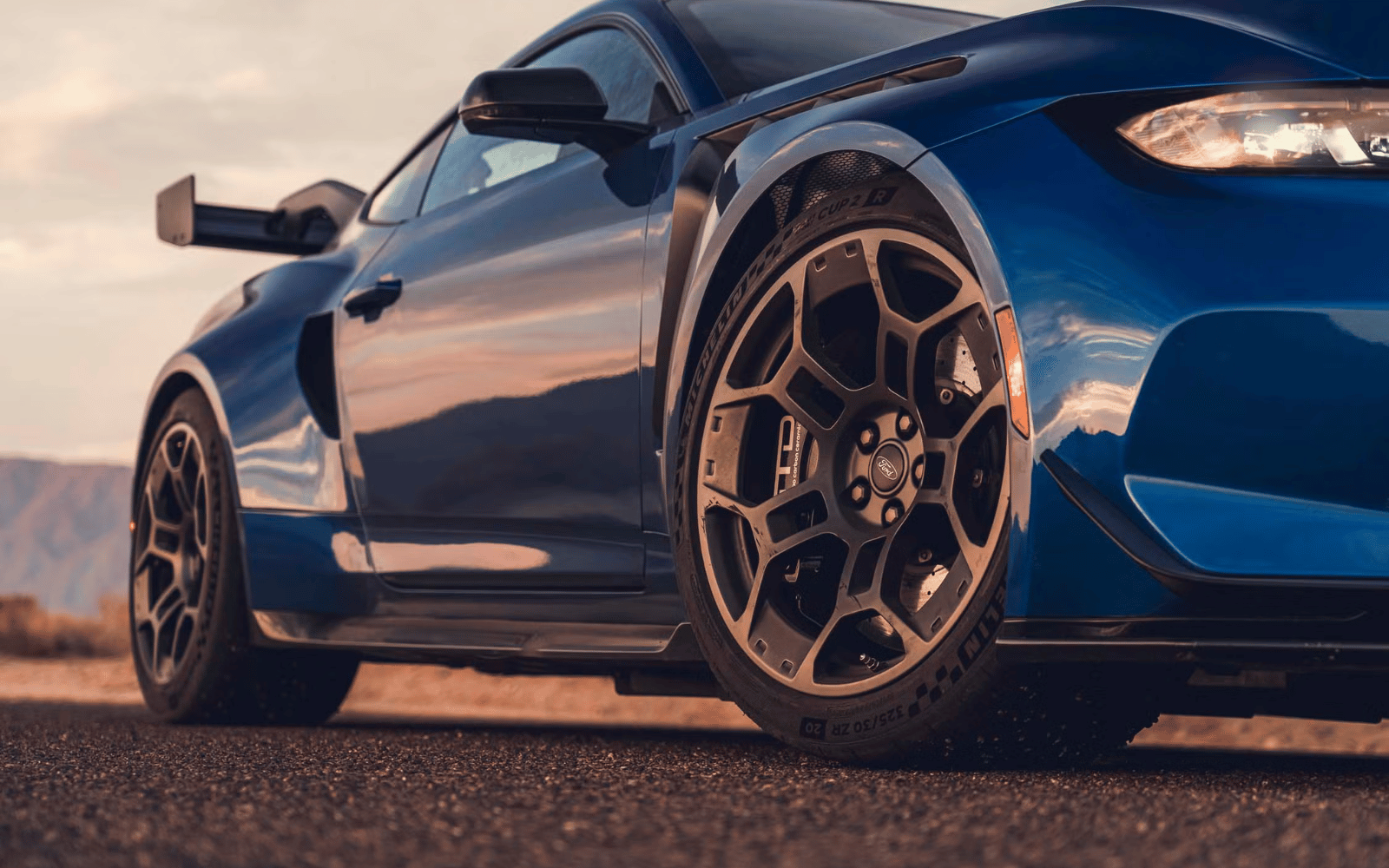
- Carbon-ceramic Brembo brakes and ultra-wide Michelin Pilot Sport Cup 2 R tires.
- Track mode lowers the ride height by 40 mm.
- Built in very limited numbers; Ford does not publish a current production total.
- Best for experienced enthusiasts, collectors, and drivers who will use its track hardware.
Quick Specifications
| Specification | Ford Mustang GTD |
| Vehicle type | Two-seat, track-focused performance coupe |
| Body style | Fastback coupe |
| Seating capacity | 2 |
| Engine | Supercharged 5.2L V8 |
| Output | 815 hp / 664 lb-ft |
| Drivetrain | Rear-wheel drive |
| Transmission | Rear-mounted 8-speed dual-clutch transaxle |
| Driveshaft | Carbon fiber |
| Oil system | Dry sump |
| Brakes | Carbon-ceramic Brembo brakes |
| Tires | Michelin Pilot Sport Cup 2 R |
| Top speed | 202 mph |
| Official Nürburgring lap | 6:40.835 |
| Rear seats | Not fitted |
| Cargo space | Ford does not publish a standard cargo-volume figure |
Expert Tip
Do not buy the GTD because it is the most powerful Mustang. Buy it only if you value its chassis, braking, cooling, aero, and track durability as much as its 815-hp V8. A regular Mustang GT or Dark Horse will be the better choice for most road-focused buyers.
About the Ford Mustang GTD
The GTD sits apart from the normal Mustang range. It starts with a Mustang body shell but receives major changes to its suspension, cooling, drivetrain layout, aerodynamics, bodywork, brakes, and interior.
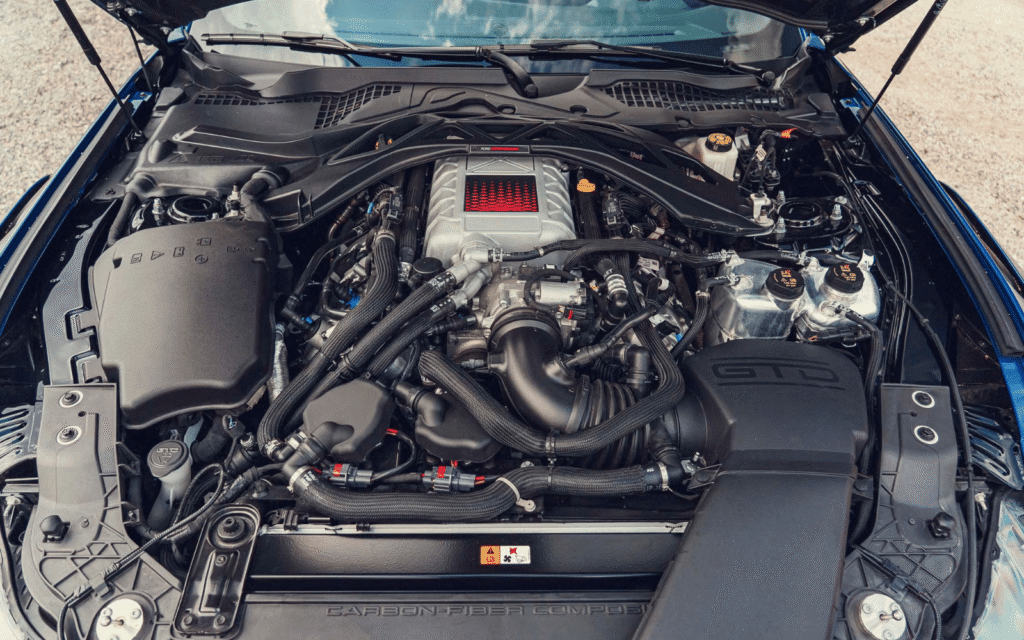
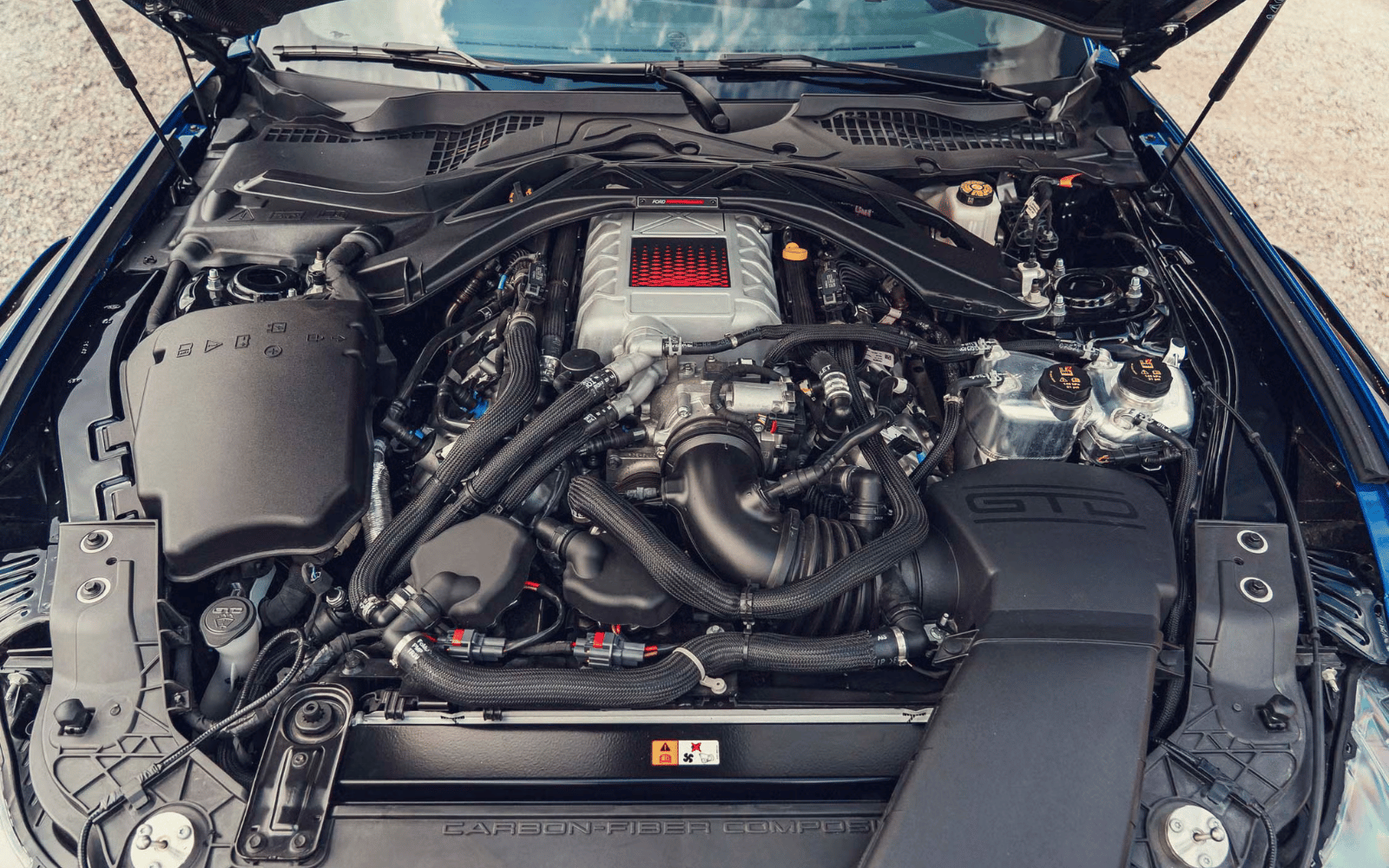
The engine is a supercharged 5.2-liter V8 with dry-sump lubrication. Instead of mounting the transmission directly behind the engine, Ford uses a carbon-fiber driveshaft and rear-mounted eight-speed dual-clutch transaxle. This helps the GTD achieve near 50/50 weight distribution.
Its purpose is clear: deliver the pace and stamina of a serious track car without becoming a race-only vehicle. Ford’s official website confirms the 815-hp output, 202-mph top speed, and 6:40.835 Nürburgring lap time.
Price and Availability
The Mustang GTD originally entered the market at roughly $325,000 before options, taxes, registration, and dealer charges. Final purchase costs can rise well beyond that figure depending on specification, destination charges, taxes, and availability.
Ford does not currently show a public MSRP on its website. This is not a normal walk-in dealership purchase: production is very limited, and interested buyers should contact Ford or join its GTD contact list for current availability.
| Version | Availability | What Changes |
| Mustang GTD | Very limited | Core 815-hp GTD specification |
| Mustang GTD with Performance Package | Very limited | More track-focused aero and hardware choices, depending on configuration |
| Mustang GTD with magnesium wheels | Very limited | Lower unsprung weight and a more serious track-oriented setup |
Engine, Powertrain, and Performance
The GTD’s 5.2-liter V8 uses a supercharger to produce 815 horsepower at 7,400 rpm and 664 lb-ft of torque at 4,800 rpm. It sends power only to the rear wheels.
The dry-sump oil system is important. Unlike a normal oil pan, it is designed to maintain oil pressure during sustained hard cornering and high-G track driving. That is the kind of hardware normally associated with serious race-derived road cars.
The rear-mounted eight-speed dual-clutch transaxle shifts quickly and moves mass toward the rear of the car. It also means the GTD has no manual-transmission option.
0–60 MPH Performance
Ford does not publish an official 0–60 mph time for the GTD. Independent testing has generally placed it in the high-2- to low-3-second range, depending on surface conditions, tires, weather, launch method, and test equipment.
Straight-line speed is only part of the GTD’s point. Its aero, cooling, tire width, suspension, and brake package are designed to let it repeat hard laps with more control than a conventional muscle car.
Driving Experience
The GTD is built for drivers who want confidence at speeds and cornering loads that would overwhelm a normal road car. It uses race-inspired suspension hardware, adaptive dampers, wide tires, and a track-focused chassis setup.
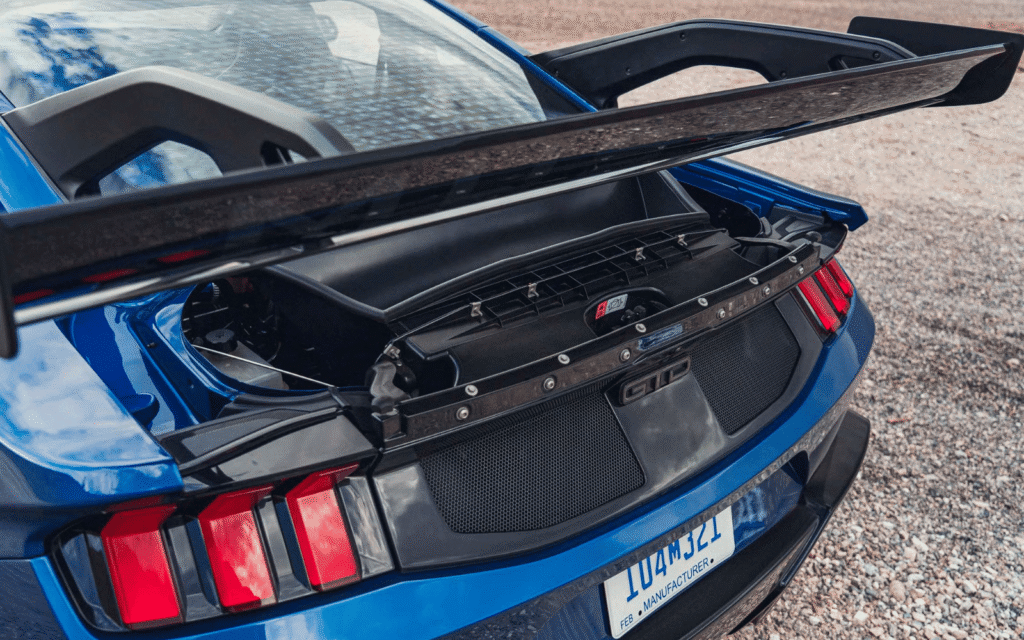
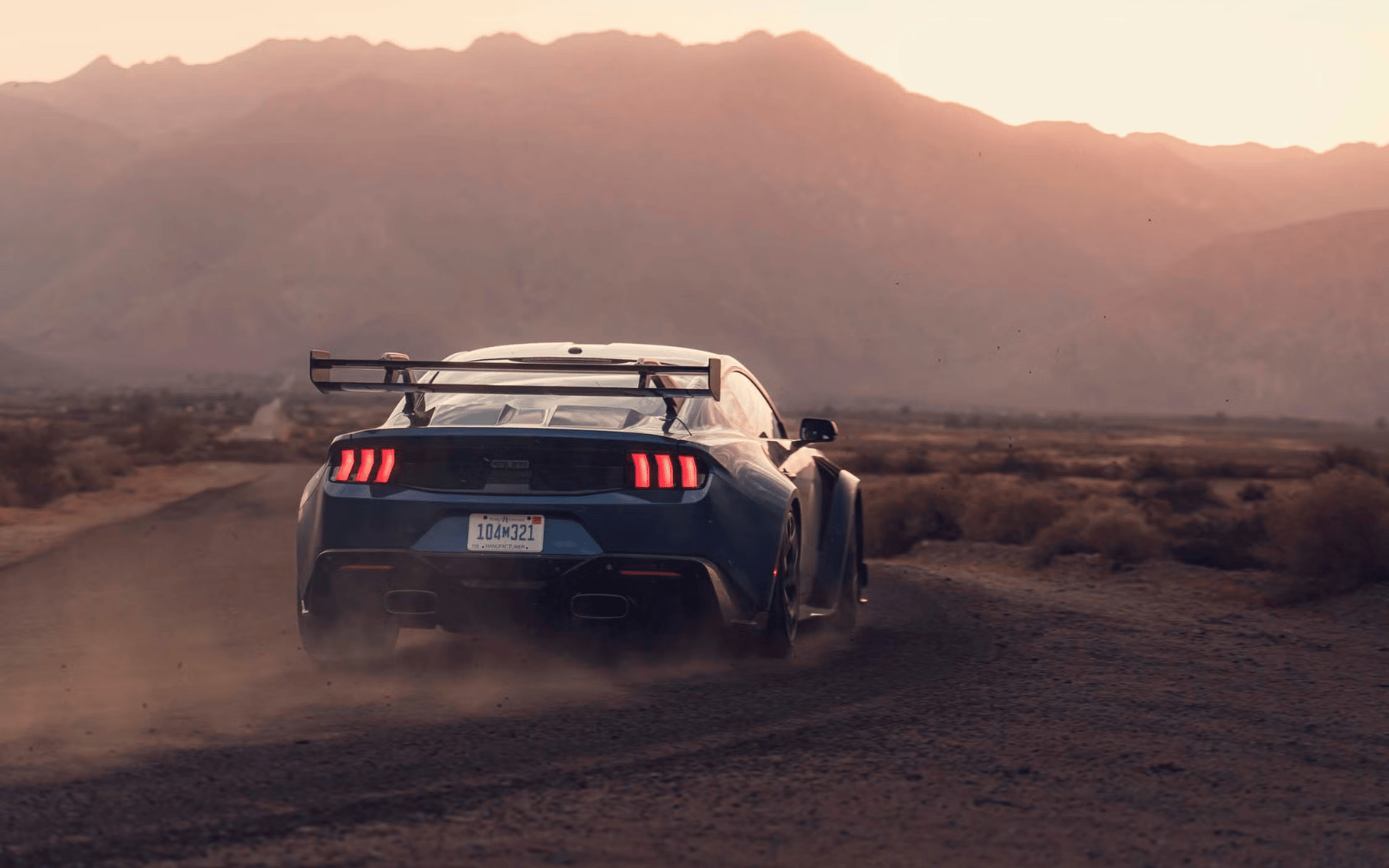
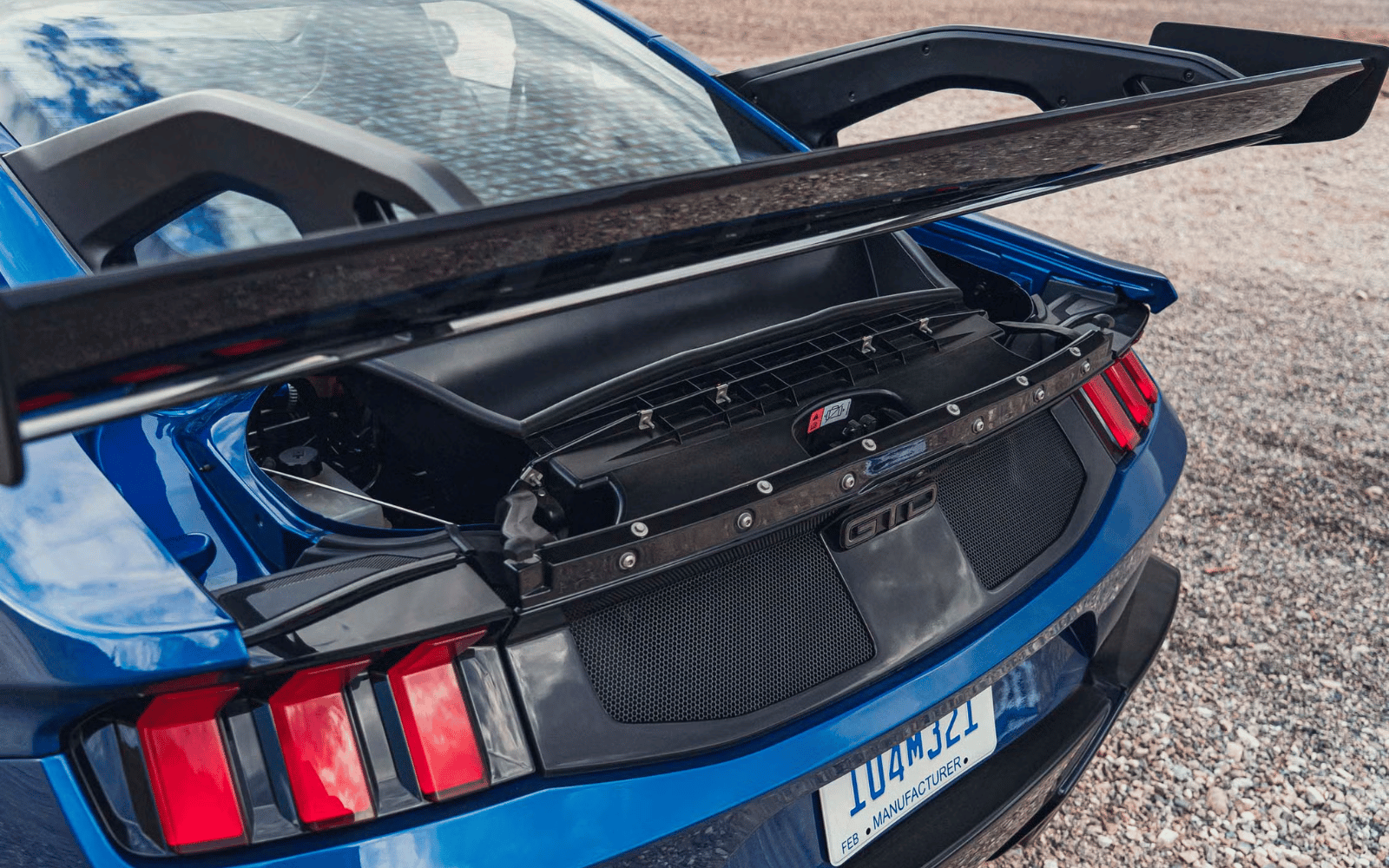
Track mode lowers the car by 40 mm, reducing its center of gravity and helping its aerodynamics work more effectively. The rear wing and available active aerodynamic elements are intended to add downforce at speed, not simply make the car look more aggressive.
On public roads, the GTD will be far more usable than a dedicated race car, but it will still demand compromises. Its wide tires, low ride height, carbon-fiber parts, aggressive brakes, and stiff chassis make it less relaxed in daily use than a regular Mustang GT or Dark Horse.
Fuel Economy
Fuel economy is not a main reason to buy the Mustang GTD. Ford’s public GTD page does not list an EPA fuel-economy rating, but buyers should expect very high fuel use in city driving, track use, and hard acceleration.
| Ownership Factor | What to Expect |
| Fuel | Premium gasoline and high consumption |
| Tires | Expensive track-focused tires with shorter life under hard use |
| Brakes | Carbon-ceramic parts are capable but costly to replace |
| Insurance | Likely far higher than a regular Mustang |
| Track use | Extra costs for tires, fluids, transport, inspections, and repairs |
The GTD is not a car to budget by monthly payment alone. Running costs can be substantial even if the vehicle is driven only occasionally.
Interior, Comfort, and Technology
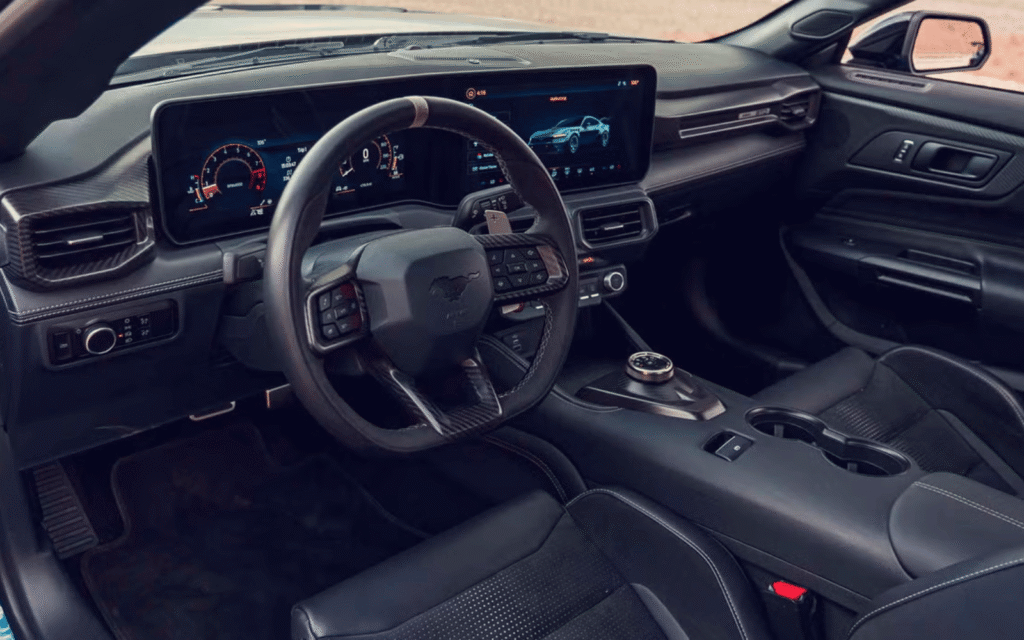
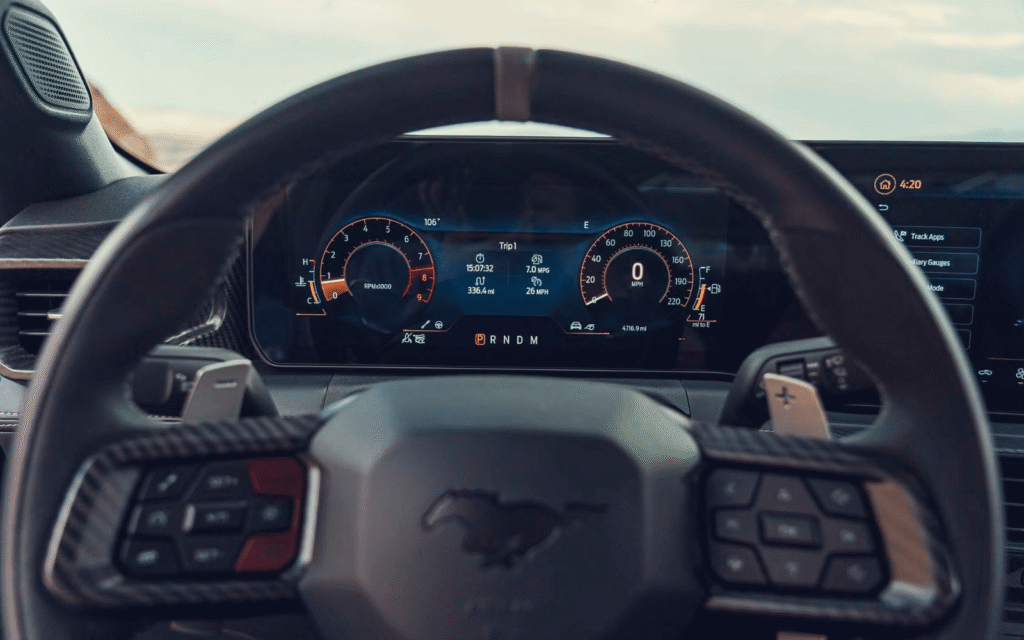
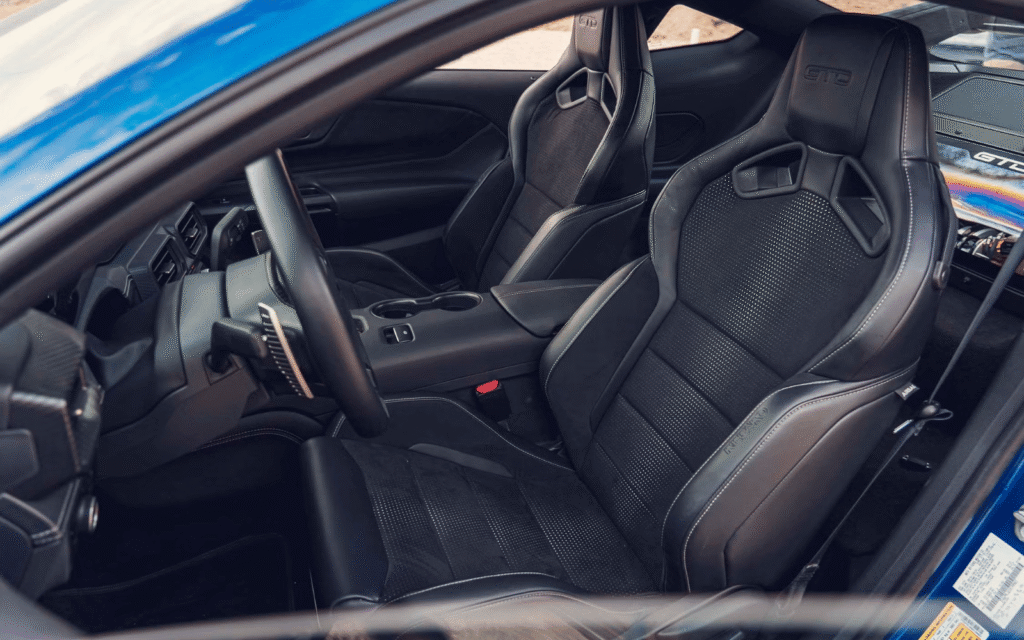
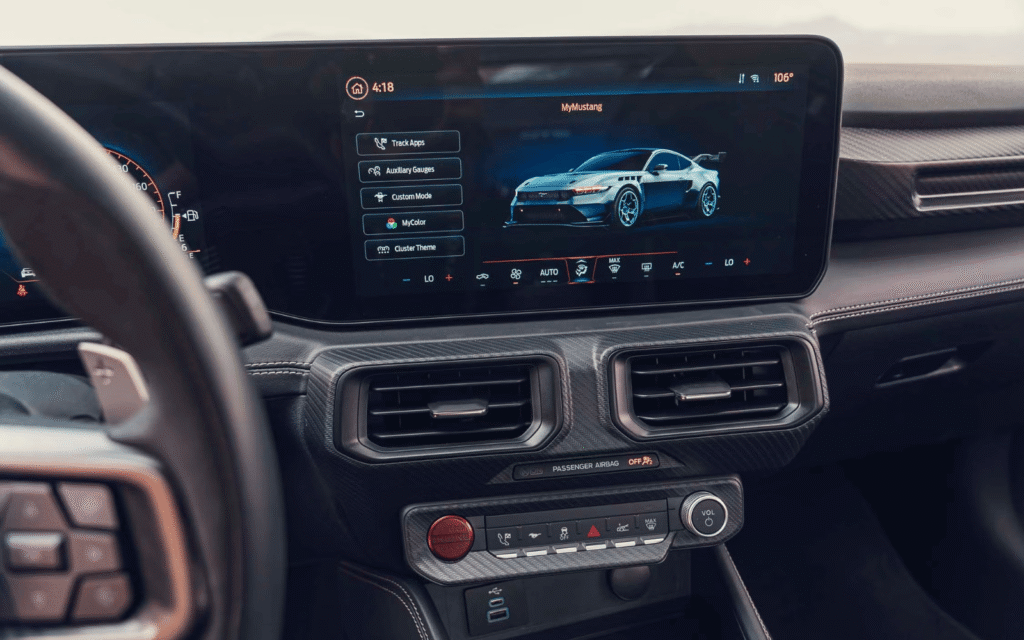
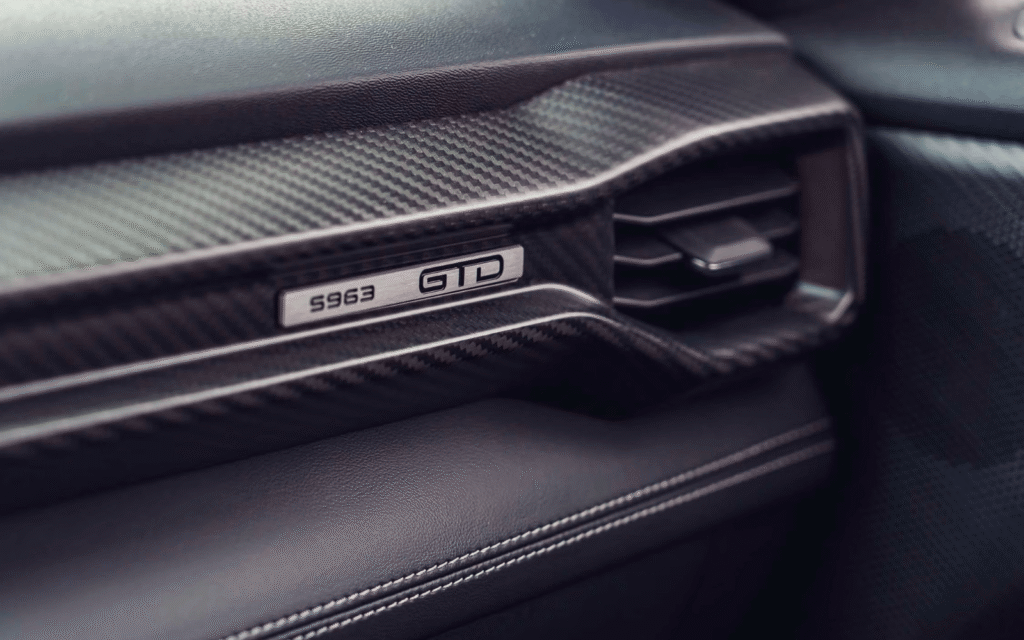
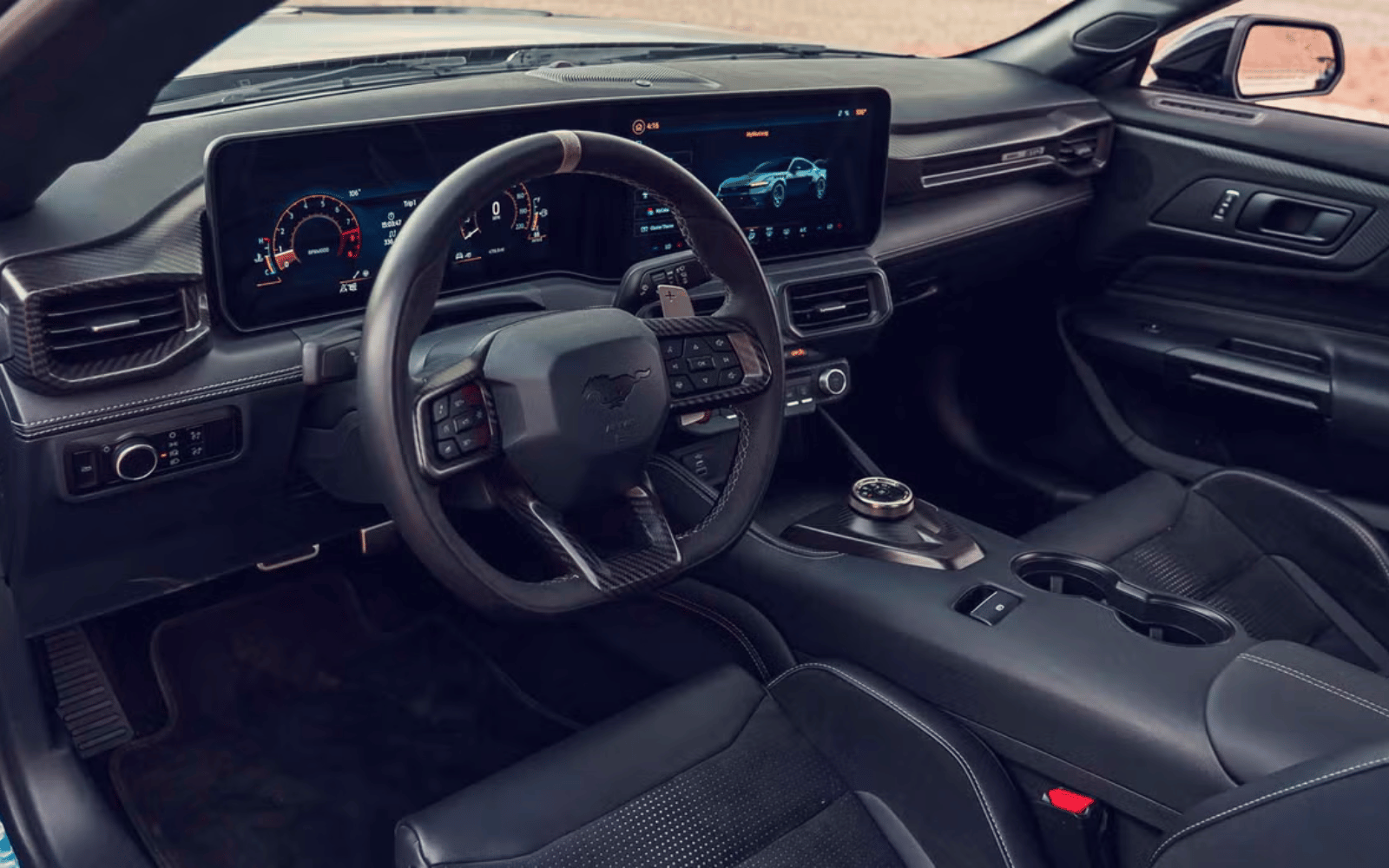
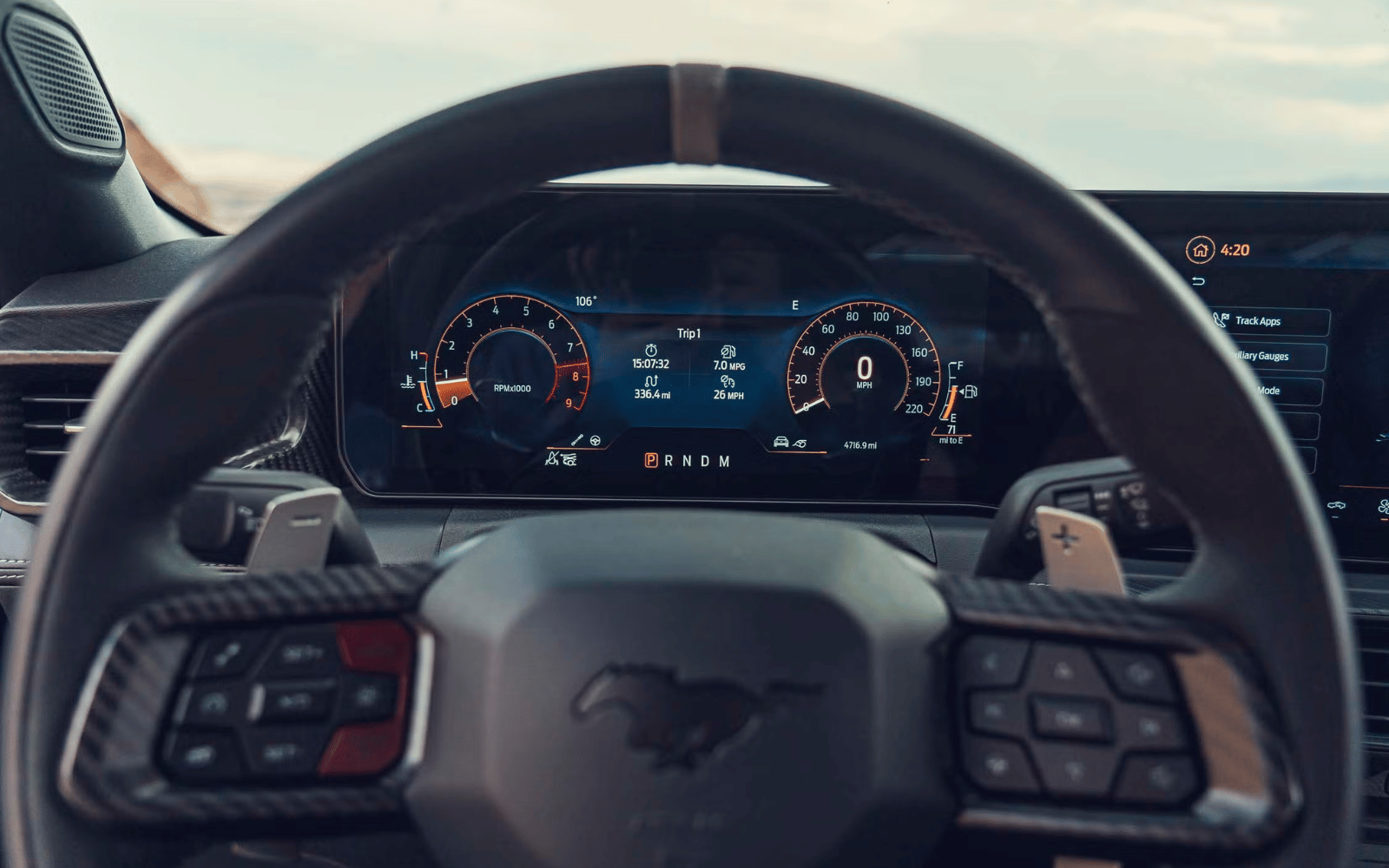
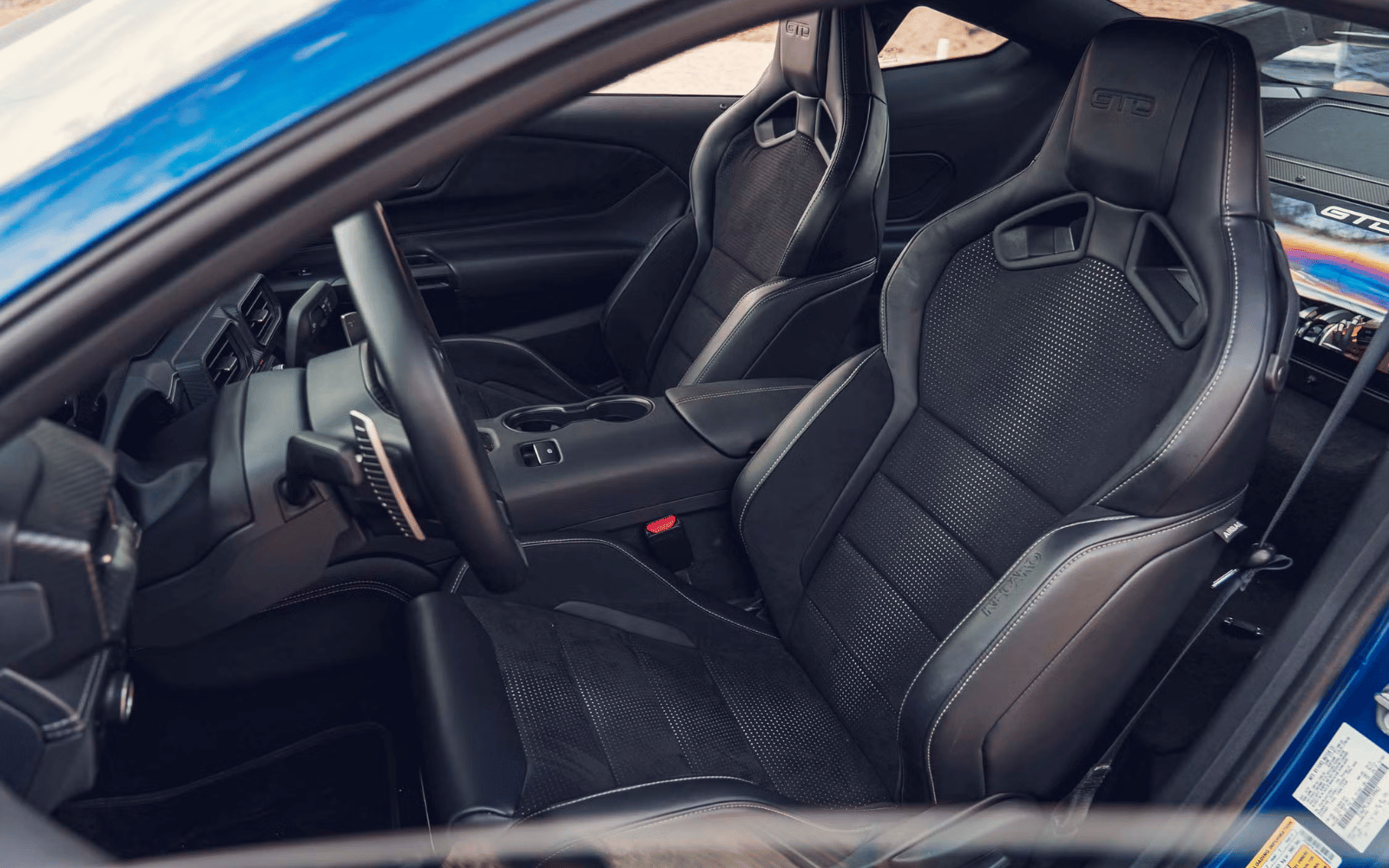
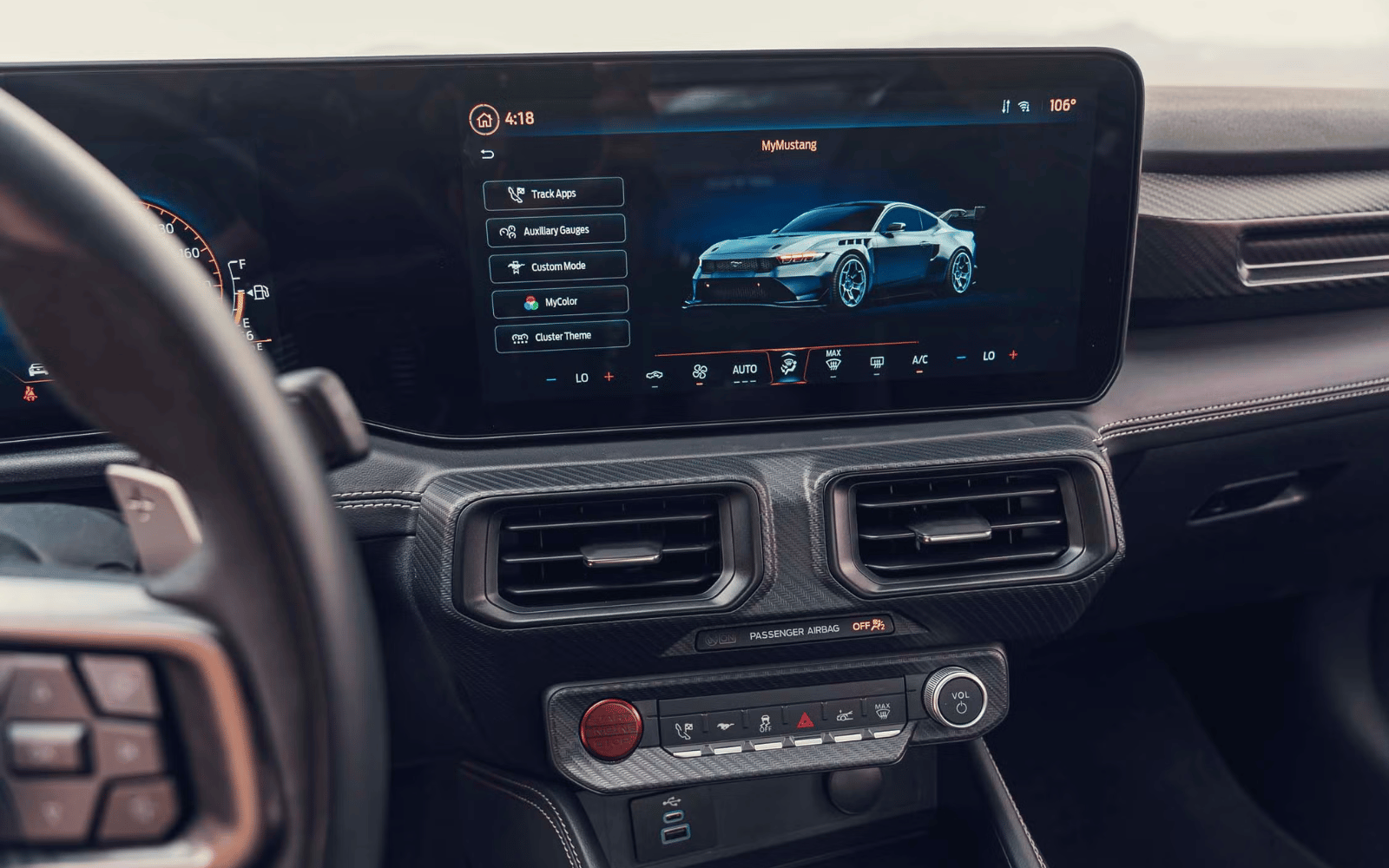
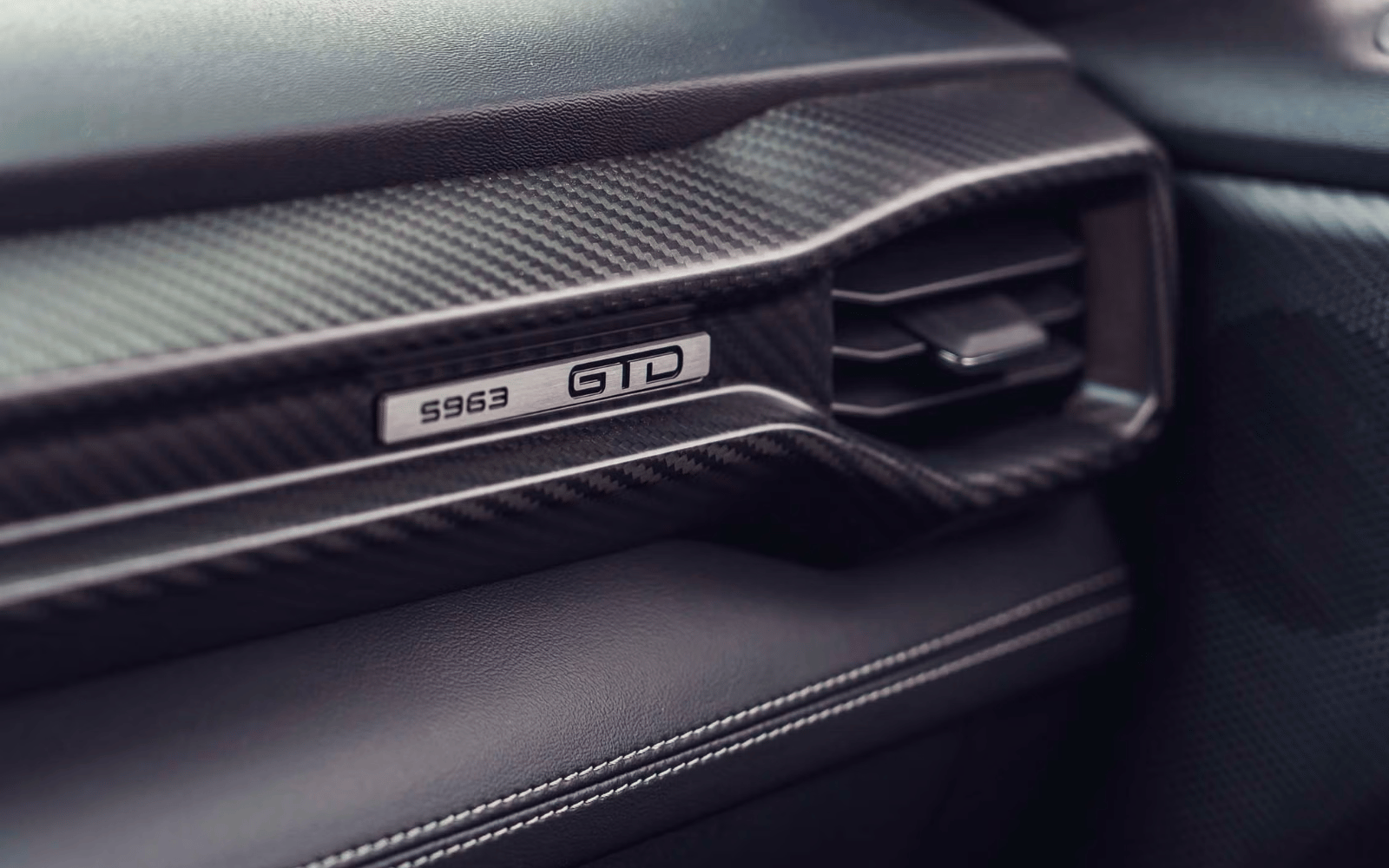
The GTD keeps the Mustang’s digital layout but turns the cabin into a more focused cockpit. It has RECARO front seats, GTD-specific trim, a serialized plaque, and available titanium shift paddles and rotary controls made with materials from retired F-22 fighter-jet components.
Standard and available features include:
- 12.4-inch digital gauge display
- 13.2-inch center touchscreen
- Track-focused display graphics
- RECARO performance seats
- Miko suede upholstery details
- Available titanium shift paddles
- Drive-mode controls
- GTD-specific serial plate
- Climate control and daily-use infotainment features
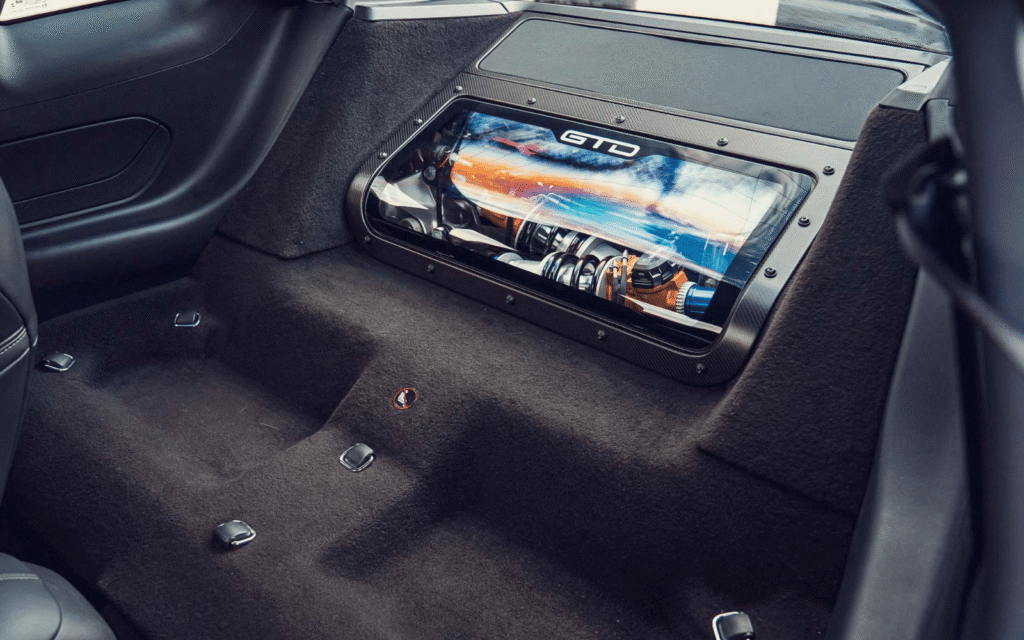
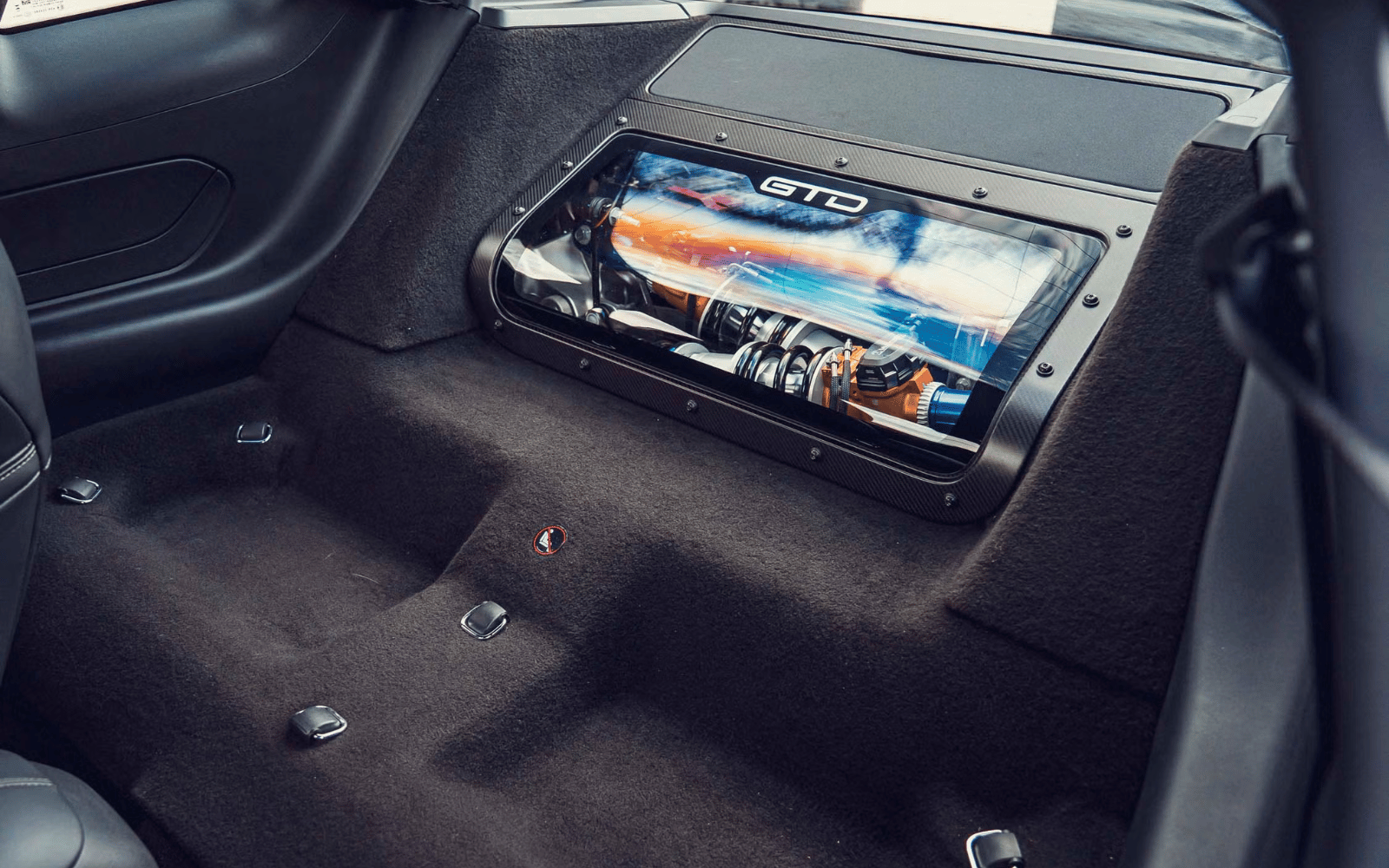
The GTD has two seats only. The rear-seat area is removed as part of the car’s performance-focused layout.
Dimensions, Cargo, and Practicality
Ford does not provide a complete public GTD dimensions and cargo table. What matters more is that the GTD is much less practical than a normal Mustang.
The rear seats are deleted, and the rear-mounted transaxle and cooling hardware reduce the usefulness of the rear area. It can handle light luggage and essentials, but it should not be considered a practical touring coupe or everyday family car.
Exterior Design
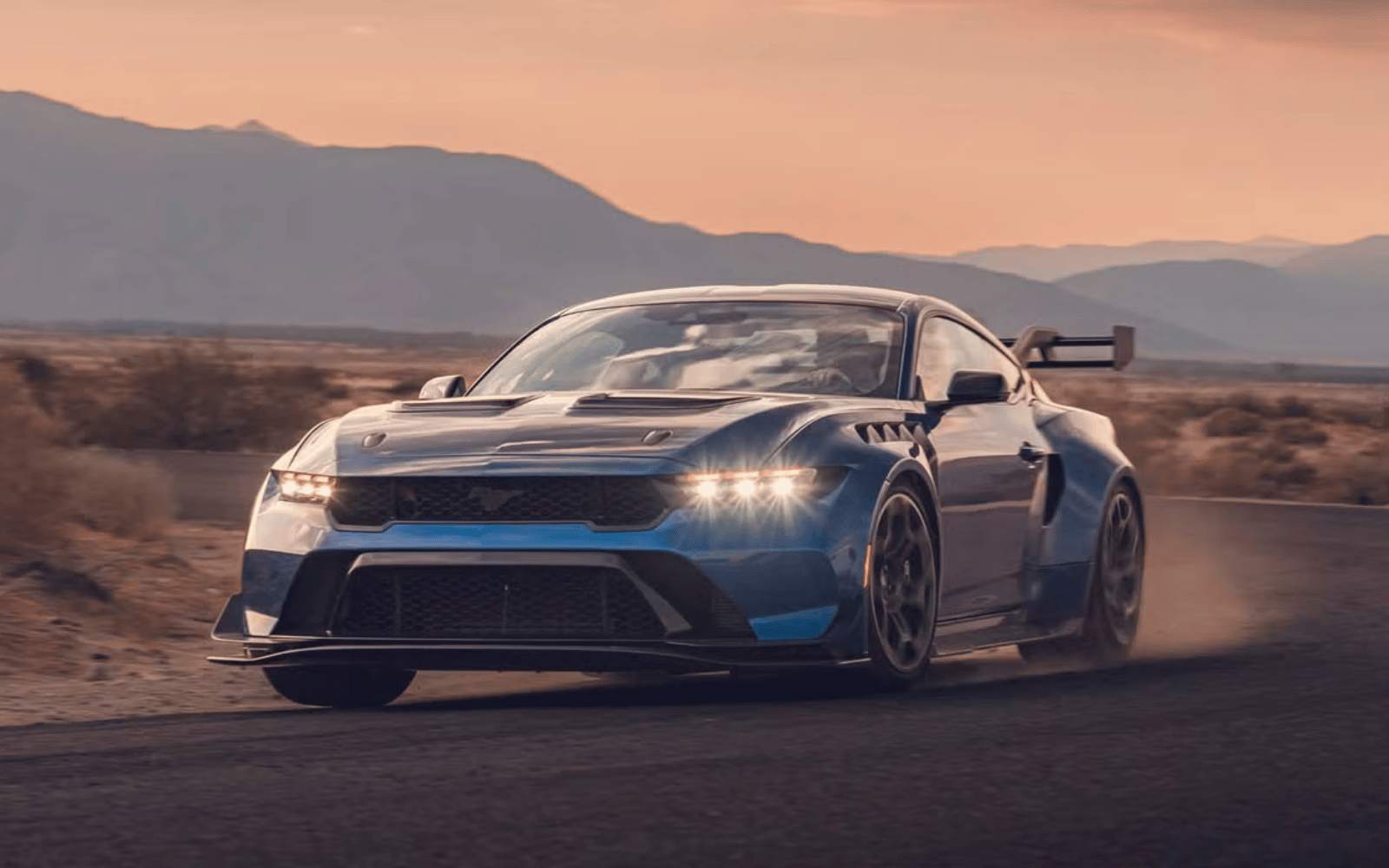
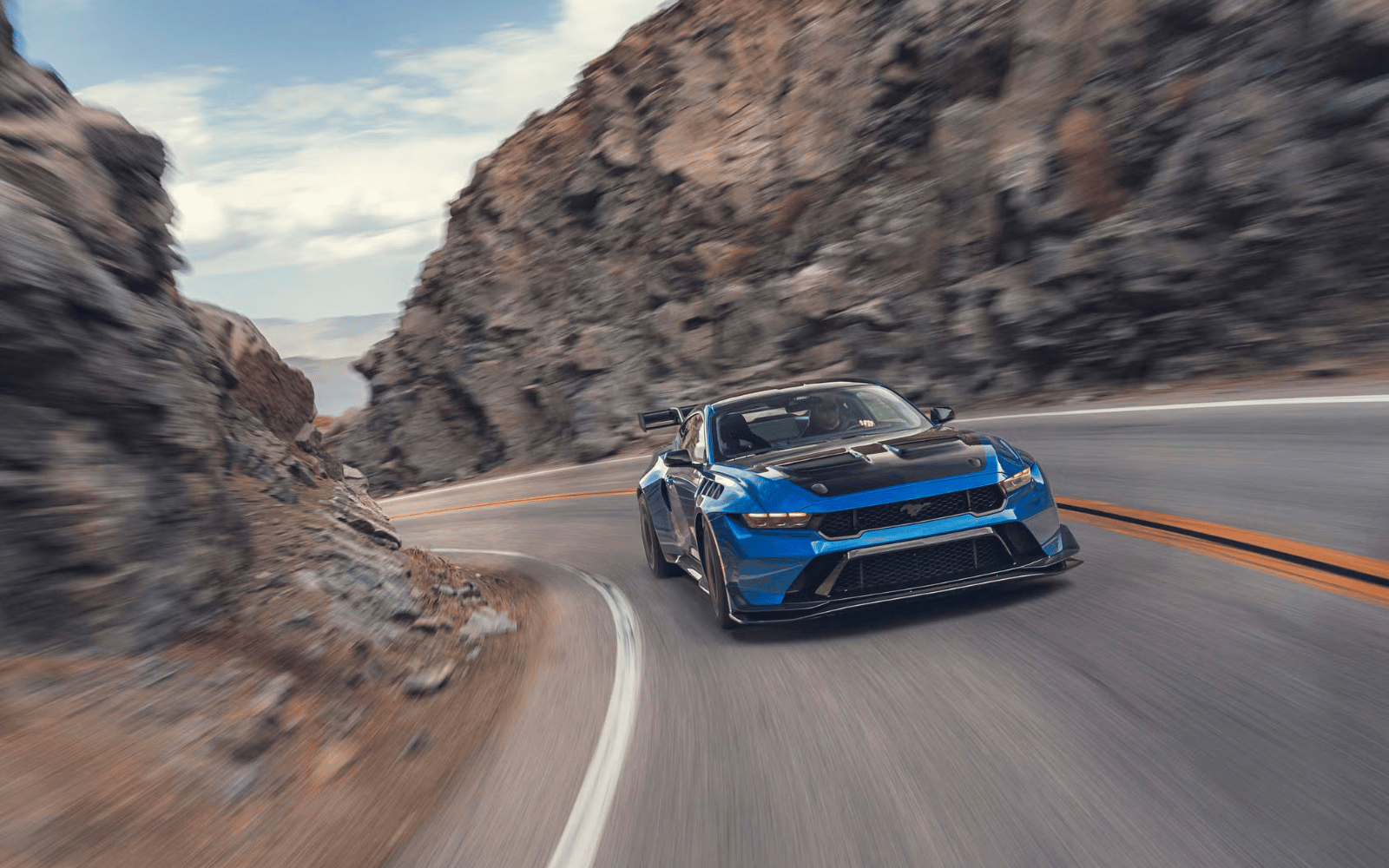
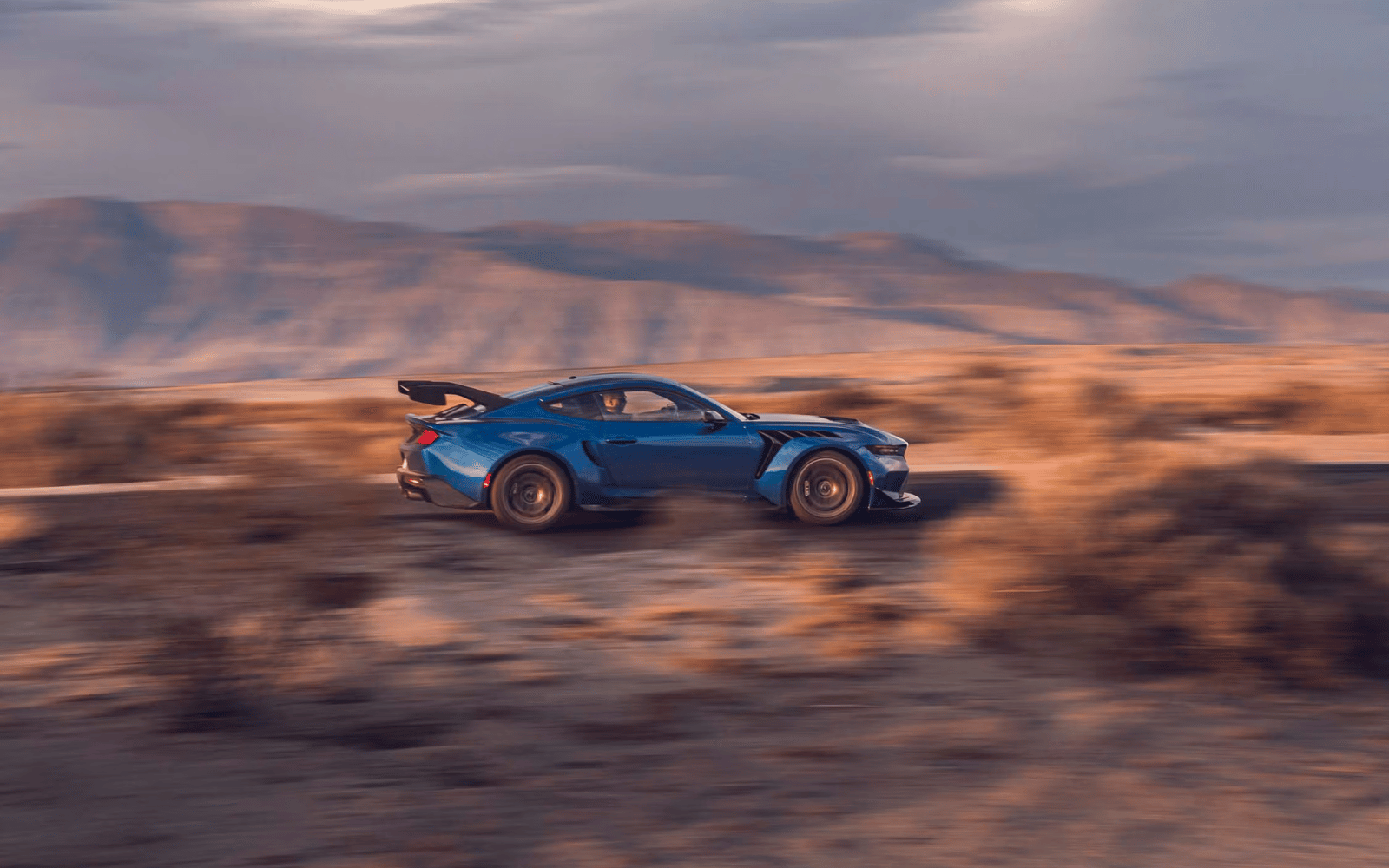
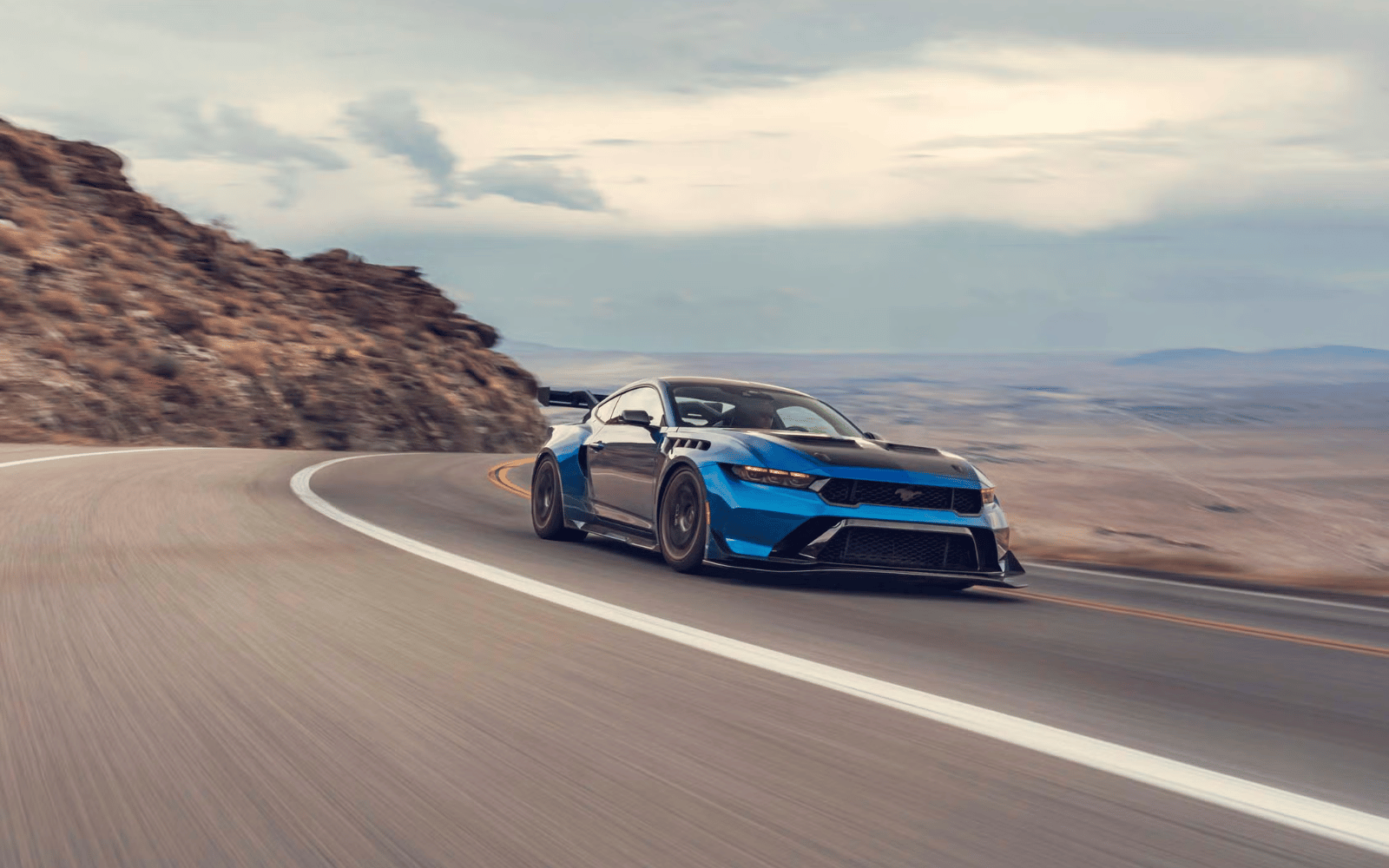
The GTD looks more extreme than any regular Mustang because much of its bodywork serves a functional purpose.
Key exterior details include:
- Carbon-fiber body panels
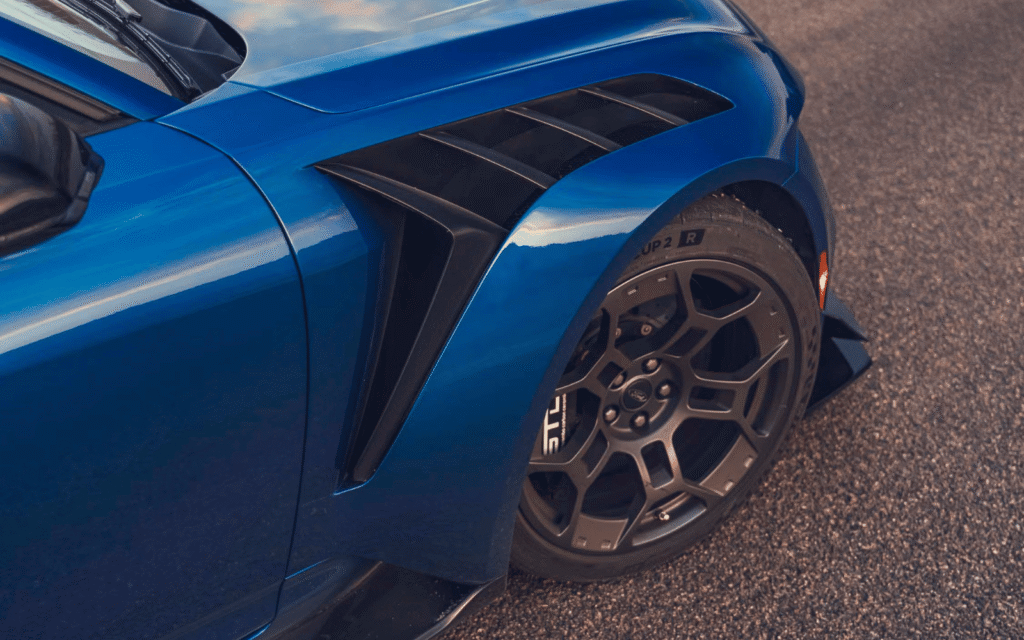
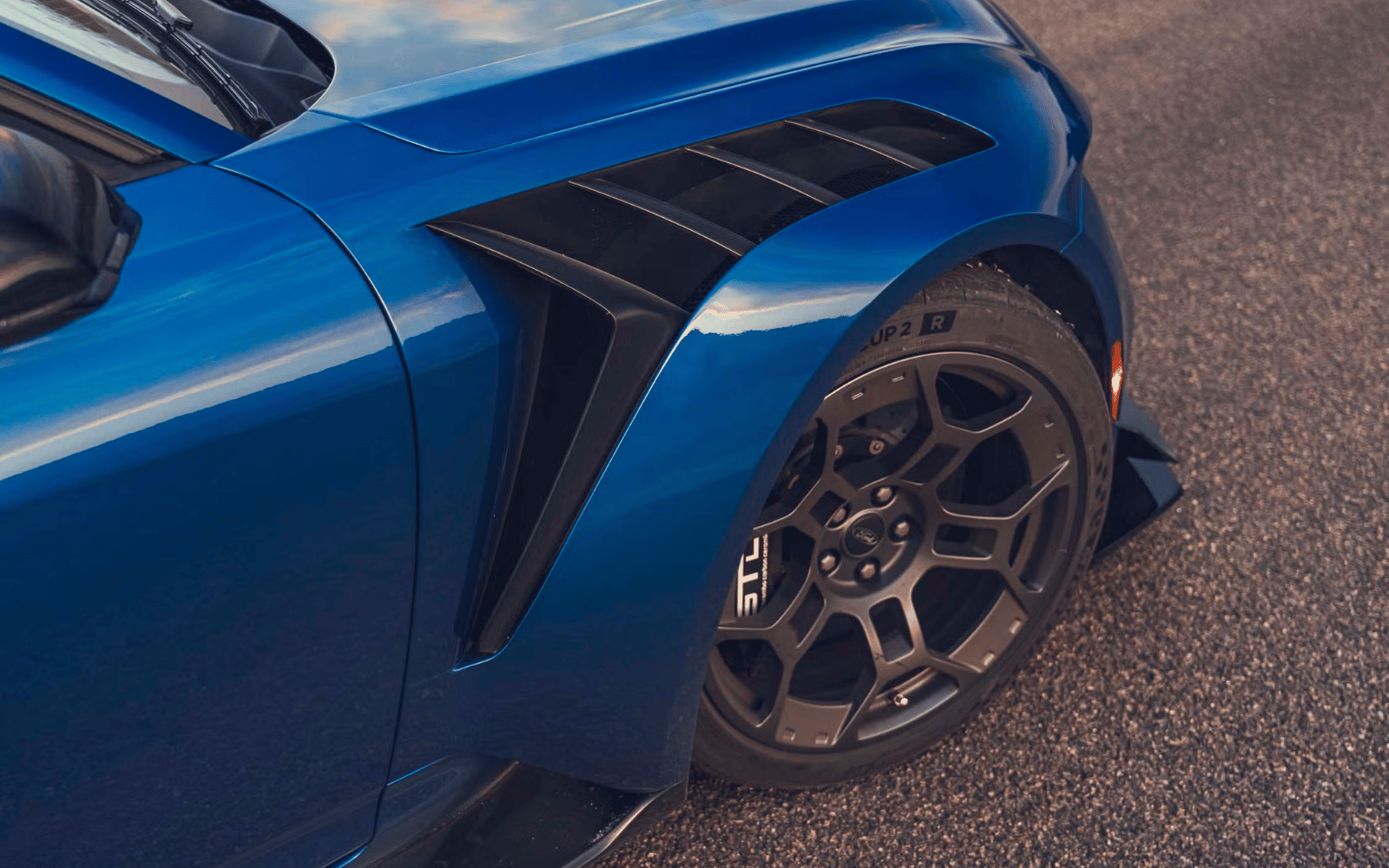
- Large front-fender vents
- Wide front and rear track
- C-pillar-mounted rear wing
- Available active aerodynamic components
- Larger cooling openings
- Race-style hood and fender venting
- Titanium Akrapovič exhaust system
The body changes help control airflow, reduce lift, cool key components, and support high-speed stability.
Safety Features and Ratings
The GTD is based on the current Mustang platform, but it has not received separate crash-test ratings from IIHS or NHTSA. Buyers should not assume that standard Mustang ratings apply directly to the GTD.
The 2025 Mustang coupe’s IIHS record is incomplete. IIHS lists an Acceptable driver-side small-overlap front result for the 2015–2026 Mustang design, while noting that only one side has been tested. The Mustang’s LATCH ease-of-use result is rated Marginal. Review the IIHS Mustang rating details.
The GTD’s limited production, two-seat layout, and track-focused specification also make it a poor fit for buyers who prioritize family use or broad crash-test data.
Reliability, Warranty, and Ownership
The GTD uses some familiar Ford and Mustang components, but it is not an ordinary ownership proposition. Its limited production and specialized hardware mean parts, service, repairs, and bodywork may require more time and money than a regular Mustang.
Ford’s standard new-vehicle warranty structure generally includes:
| Coverage | Length |
| Basic warranty | 3 years / 36,000 miles |
| Powertrain warranty | 5 years / 60,000 miles |
| Corrosion perforation warranty | 5 years / unlimited miles |
| Roadside assistance | 5 years / 60,000 miles |
Confirm the exact GTD warranty, maintenance requirements, track-use terms, and coverage exclusions with Ford before purchase.
Ownership Considerations
- Track driving can accelerate tire, brake, and fluid wear.
- Carbon-fiber repair work can be costly and may require specialist facilities.
- Insurance may be difficult or expensive to arrange.
- Limited production can affect parts availability.
- Dealer support may vary by location.
- Modifications can reduce value, complicate warranty claims, and hurt collector appeal.
Pros and Cons
What We Like
- Exceptional 815-hp supercharged V8
- Genuine track-focused chassis and cooling hardware
- Official 202-mph top speed
- Carbon-ceramic brakes and serious tire package
- Near 50/50 weight distribution
- Rear-mounted dual-clutch transaxle
- Official sub-seven-minute Nürburgring lap time
- More distinctive and capable than any previous road-going Mustang
What We Don’t Like
- Price sits deep into supercar territory
- Very limited availability
- No manual transmission
- Only two seats
- Little practicality or cargo usefulness
- High fuel, tire, brake, insurance, and repair costs
- Separate GTD crash-test data is unavailable
- Much of its capability will be wasted in normal road driving
Popular Competitors
The GTD belongs in a comparison set with track-focused, street-legal performance cars rather than normal muscle cars.
Consider comparing it with:
- Chevrolet Corvette ZR1
- Porsche 911 GT3 RS
- Mercedes-AMG GT Black Series
- BMW M4 CSL
- Regular Ford Mustang Dark Horse
Compare more than horsepower. Look at track access, dealer support, maintenance costs, insurance, warranty terms, tire costs, resale expectations, and whether you will genuinely use the GTD’s extra capability.
Before making a high-value vehicle purchase, read how car financing works and review new vs. used car considerations.
Should You Buy the Ford Mustang GTD?
Buy the Mustang GTD if you are an experienced enthusiast or collector who wants an extremely capable road-legal track car, has the budget to maintain it properly, and can access tracks or roads where its chassis and aerodynamic package matter.
Choose it because you want its full engineering package—not because you simply want the fastest Mustang badge.
Skip the GTD if you want a manual transmission, rear seats, daily-driver comfort, easy ownership, lower running costs, or a car you can purchase directly from regular dealer inventory. For most buyers, the Mustang GT or Dark Horse will provide more than enough performance at a far more manageable cost.
FAQs
How much does the Ford Mustang GTD cost?
The GTD originally entered the market at roughly $325,000 before options, taxes, and fees. Ford does not currently list a public MSRP, so buyers should contact Ford for current purchase and allocation information.
How much horsepower does the Mustang GTD have?
The Mustang GTD produces 815 horsepower and 664 lb-ft of torque from its supercharged 5.2-liter V8.
Is the Mustang GTD faster than a regular Mustang Dark Horse?
Yes. The GTD has far more power, more advanced aerodynamics, carbon-ceramic brakes, a rear-mounted dual-clutch transaxle, wider tires, and much more track-focused suspension hardware.
Does the Mustang GTD have a manual transmission?
No. It uses a rear-mounted eight-speed dual-clutch transaxle.
Is the Mustang GTD rear-wheel drive?
Yes. The GTD sends all power to the rear wheels.
How fast is the Mustang GTD?
Ford claims a 202-mph top speed. Independent testing has generally placed its 0–60 mph time in the high-2- to low-3-second range.
How many seats does the Mustang GTD have?
It has two seats. The rear seats are deleted.
What is the Mustang GTD Nürburgring lap time?
Ford reports an official Nürburgring Nordschleife lap time of 6 minutes and 40.835 seconds.
Is the Mustang GTD practical for daily driving?
It can be driven on public roads, but it is not practical in the usual sense. It has two seats, limited cargo usefulness, expensive tires and brakes, and a track-focused setup.
Is the Mustang GTD limited production?
Yes. Ford says production is very limited but does not publish an exact number.
Final Verdict
The Ford Mustang GTD is an extraordinary performance car, but it is not the right Mustang for most buyers. It delivers huge power, serious track hardware, and an official Nürburgring lap that places it among the quickest production cars in the world.
Its price, availability, ownership costs, and limited practicality are equally serious. The GTD makes sense for buyers who can afford both the purchase and the use of its capability.
Prices, availability, specifications, package details, ratings, and warranty coverage can change.